The Coolest Dessert
Snow with honey in ancient Greece, a seller with no bowls at a World's Fair, and a whole month for one dessert. Eight toppings, seven flavors, and the small words that go in front of them: a, an, some and any.
Warm-up
Ask and answer with a partner, or with me. Tap a card when you have answered it.

Everybody has an ice cream opinion. Cone or cup, one scoop or three, chocolate sauce or no sauce. Today you say yours, you read how this dessert got from ancient Greece to your freezer, and you learn the four small words that go in front of every food: a, an, some and any.
Useful language
Toppings
A topping is what goes on top of the ice cream. Click a topping, then click its meaning. Correct pairs turn green. The audio button says the word.
Complete the sentences
Click a topping in the bank, then click a gap. Click a filled gap to clear it. Read the whole sentence: the clues tell you which topping it is.

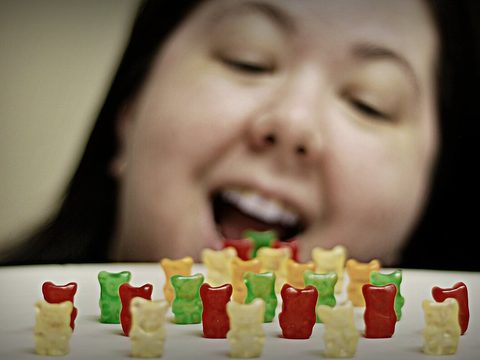 My friend puts her
_____ in a line on the table. Then she eats them one by one, and she always eats their heads first.
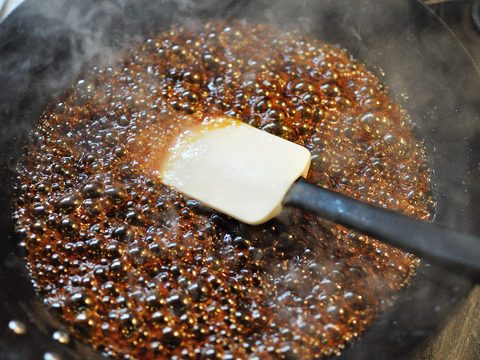 Don't touch the pot! The sugar in it is turning golden brown, and in a minute the
_____ will be ready.
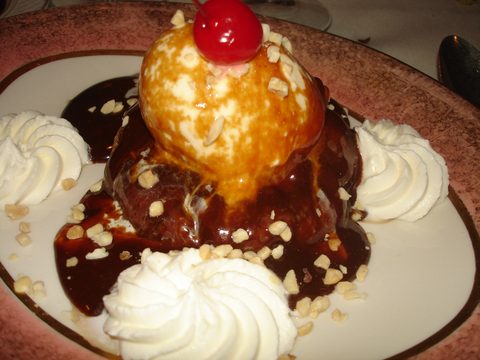 My sister can't eat almonds or peanuts, so she always orders her sundae without any
_____.
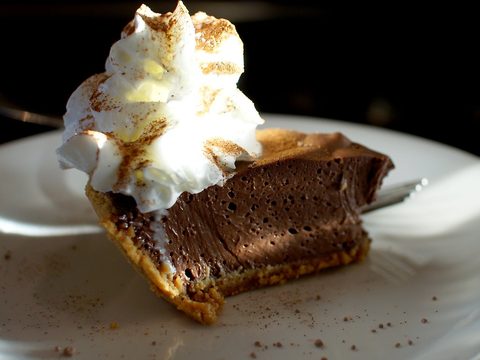 Shake the can, press the top, and a soft white cloud of
_____ comes out.
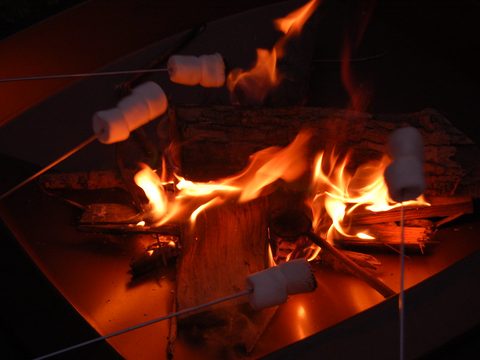 On our camping trip, the kids held soft white candies over the fire on long sticks and made
_____.
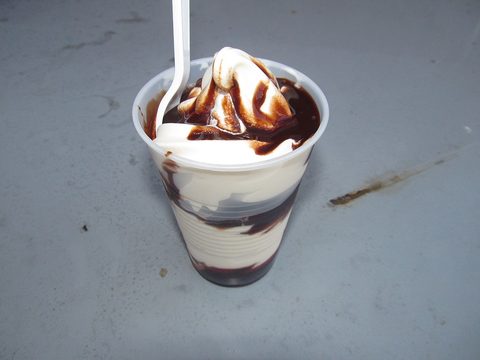 Careful! The
_____ is still very hot from the stove, and that thick chocolate sauce is melting my ice cream.
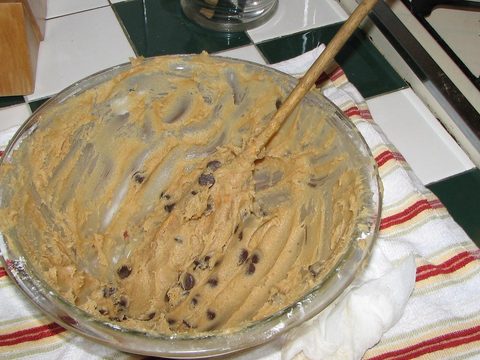 Grandma puts a whole bag of
_____ in her cookie dough, so every bite has a little piece of chocolate.
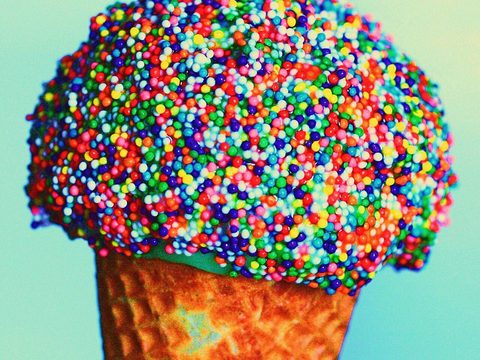 We shook hundreds of tiny
_____ over the cones: red, blue, yellow and green, too small to count.
History of the coolest dessert
Twenty-five centuries in ten short paragraphs. Read the story, and look at the small words in bold in front of the nouns: a, an, some and any. Tap a dotted word to see what it means.
About 2,500 years ago, people in ancient Greece enjoyed a cold dessert: snow with some honey and some fruit. It wasn't ice cream yet.
The idea of a cold dessert traveled far. Many people say the Italian traveler Marco Polo brought "water ice" from Asia to Europe in the 1300s.
In the 1700s, ice cream crossed the ocean to America, but only rich families ate it: the ingredients were expensive, and there weren't any refrigerators.
Still, more and more people wanted it, so in 1776 America's first ice cream parlor opened its doors in New York.
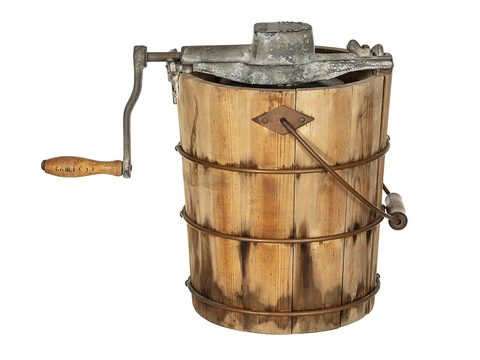
Making ice cream by hand was slow, but in the 1840s a machine, the churn, made a lot at once. In 1851, the first ice cream factory opened.
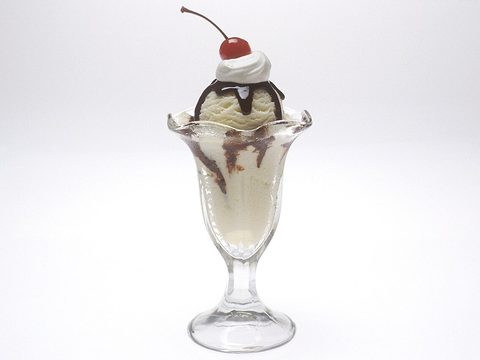
With so much ice cream, people had new ideas. In the late 1800s, the sundae appeared: ice cream with some sweet sauce on top.
Ice cream still needed bowls, and at the 1904 St. Louis World's Fair that was a problem: the story says a seller didn't have any bowls left.
A waffle seller helped him: he rolled a waffle into a cone, the first waffle cone. Now nobody needed a bowl, and people could eat the cone too.
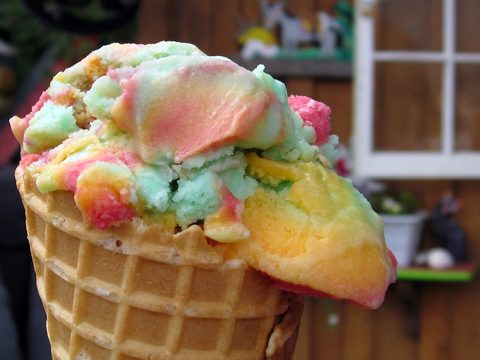
With a cone, ice cream was easy to eat anywhere, and people tried new flavors. In 1983, cookies 'n cream, with real cookies inside, was an instant hit.
Americans loved it so much that in 1984 July became National Ice Cream Month. Today, ice cream is one of the best-selling treats in America.
Multiple choice
Twelve questions about the story. Click an answer and read why.

-
About 2,500 years ago, what did people in ancient Greece enjoy?
Snow, honey and fruit: no milk and no cream. That's why the text says it wasn't ice cream yet. And it was in Greece, not in ancient Rome.
-
Many people say one man brought "water ice" from Asia to Europe. Who?
The Italian traveler, in the 1300s. The text says "many people say", because it's an old story and nobody can be 100% sure. The text doesn't say who brought ice cream to America.
-
In the 1700s, who ate ice cream in America?
It was expensive, not a cheap dessert for families with little money. The same sentence in the text tells you why.
-
Why was it so hard to get ice cream in the 1700s?
Two problems: the ingredients cost a lot, and there was nothing to keep the ice cream cold at home.
-
What happened in New York in 1776?
1776, not 1876. A parlor is a shop where you sit down and eat ice cream, and America's first one was in New York.
-
What changed in the 1840s?
Before the churn, people made ice cream by hand, and it was slow. A few years later, in 1851, the first ice cream factory opened.
-
What is a sundae?
It appeared in the late 1800s, at the end of the 19th century, in different towns at about the same time. So we can't name one person or one company that made the first sundae.
-
What was the problem at the 1904 St. Louis World's Fair?
No bowls, no way to serve a scoop. The text says "the story says": it's a famous story, not a 100% sure fact.
-
How did the waffle seller help?
That was the first waffle cone, the story says. Nobody needed a bowl, and people could eat the cone too.
-
How did people feel about cookies 'n cream in 1983?
An instant hit is something people love right away. It had real cookies inside, and people loved it from the start.
-
Which month is National Ice Cream Month?
Since 1984. Americans loved ice cream so much that they gave it a whole month. The text doesn't say how people celebrate it: no word about a big festival.
-
Which sentence best summarizes the story?
Snow in Greece, a dessert only for the rich in the 1700s, then machines, sundaes and cones for everybody. Today it's one of the best-selling treats in America (the text talks about America, not Europe): nine in ten freezers in the USA have some ice cream inside.
Flavor or topping?
The flavor is the taste of the ice cream itself: you ask for a scoop of it. The topping goes on top. Choose the right answer and read why.
-
Hot fudge, caramel, whipped cream, sprinkles, nuts, fruit syrup. What are they?
All of them go on top of the scoop. The word comes from top.
-
Vanilla, strawberry, chocolate, coconut, pineapple, mango. What are they?
Each one is a taste of the ice cream itself. "Which flavor?" is the first question at the counter.
-
"Which flavor would you like?" "___, please."
The question asks for a flavor, the taste of the scoop. Gummy bears and whipped cream go on top of it.
-
Which one is a flavor?
Cookies 'n cream is vanilla ice cream with pieces of chocolate cookies inside. A coating covers the outside, and gummy bears go on top.
-
"I'd like two scoops: one ___ and one chocolate."
A scoop is one ball of ice cream, so you name a flavor. Nobody serves a scoop of hot fudge.
-
"Pour some ___ over the ice cream."
You pour a liquid. Fruit syrup is a sweet, thick liquid made from fruit, so it's a topping.
-
"Anything on top?" "Yes, ___, please."
On top asks for a topping. Vanilla and cookies 'n cream are flavors of the scoop under it.
-
"Wait one minute: the ___ gets hard on the cold ice cream. Crack!"
A coating is a thin layer that covers something. The chocolate goes on soft and gets hard on the cold ice cream. Whipped cream and syrup stay soft.
Countable and uncountable nouns: a, an, some, any

Ask two questions. First: can I count it? One ice pop, two ice pops: yes. Milk: no, so no a in front of it. Second: is the sentence positive, negative or a question? Positive takes some; negatives and questions take any.
- Some nouns are both, depending on the context: an ice cream cone (one cone: countable) · some ice cream (in a bowl: uncountable).
- Countable, positive: a / an for one, some for more than one. We bought an ice pop. · We need some bananas for the banana split.
- Countable, negative: a / an for one, any for more than one. We didn't buy a pineapple to make the ice cream. · We don't have any bananas.
- Countable, question: a / an or any. Did you buy a strawberry ice pop? · Do you need any toppings?
- Uncountable, positive: some. We bought some vanilla ice cream for the dessert.
- Uncountable, negative: any. We don't have any fudge for the sundae. · We don't have any fruit.
- Uncountable, question: any. Do we have any whipped cream?
-
Which one is countable?
One cone, two cones, ten cones. Sauces and creams have no plural: you can't say
two caramelsfor a sauce. -
Which one is uncountable?
Hot fudge is a sauce: some hot fudge, never
three hot fudges. Bears and sprinkles are small, but you can count them. -
The cake needs ___ egg and some milk.
Egg is singular and countable, and it starts with a vowel sound: an. Some goes with the milk, which you can't count.
-
There is ___ ice cream in the freezer, in a big box.
In a box it has no shape, so it is uncountable. The sentence is positive: some.
-
We need ___ nuts for the sundae.
Positive sentence, plural noun: some. A never goes in front of a plural.
-
Is there ___ caramel left in the jar?
A question with an uncountable noun: any. The sauce caramel never takes a or an.
-
I don't want ___ gummy bears on mine, thanks.
Don't makes the sentence negative, so any. Not even one.
-
Would you like ___ mango ice pop or ___ orange one?
One ice pop each. Mango starts with a consonant sound, orange with a vowel sound.
-
Which sentence is WRONG?
Whipped cream is uncountable, so it never takes a. With some, or with no word at all, it's fine. (When you ask for something, some is normal in a question.)
-
Which sentence is correct?
Negative sentence, plural noun: any. And a can never go in front of a plural.
-
Honey is uncountable. Which one is correct?
You can't count the honey, so you count what it comes in: a jar, two jars, a spoon of honey.
Write a, an, some or any
One word in each gap. Ask the two questions first: can I count it? Is the sentence positive, negative or a question?
-
aDid you buy ___ tub of ice cream at the supermarket?
-
bSorry, but we don't have ___ coconut ice cream today.
-
cI'd really like to have ___ ice pop. It's really hot today.
-
dGo to the supermarket and get ___ sprinkles for the dessert.
-
eThis flavor of ice cream would be delicious with ___ toasted marshmallows.
-
fSorry, but I don't want ___ fruit syrup on my ice cream.
-
gIs there ___ fruit in the fridge?
-
hAre there ___ bananas if we want to make a banana split?
-
iIs there ___ apple too?
-
jThey didn't buy ___ chocolate for dessert.
-
kI'd like ___ vanilla cone, please.
Say the flavors
Listen to each flavor with the audio button, then choose the strong syllable. The strong syllable is in CAPITAL letters.

- Most food words are strong at the start: SUN-dae · CAR-a-mel · SPRIN-kles.
- Careful with the Portuguese habit: in Portuguese the strong syllable is often near the end (choco-LA-te). In English it usually moves to the front.
- Two words, two beats: HOT FUDGE, WHIPPED CREAM. The small words in between ('n, of) are very weak.
-
vanilla
The exception in the list: the strong syllable is in the middle, and the first a is very weak, almost "vuh-NIL-uh".
-
strawberry
Strong at the start: STRAW. The -berry part is softer, like in BLUE-ber-ry.
-
chocolate
In American English it usually has only two syllables, "CHOC-lit", strong at the start. Not four syllables like in Portuguese.
-
cookies 'n cream
Two strong beats, COOK and CREAM. The 'n is a short and: you almost don't hear it.
-
coconut
Strong at the start, and the first o sounds like "oh". The middle syllable is very weak: "CO-cuh-nut".
-
pineapple
PINE, like the tree, is the strong part. The apple part is softer.
-
mango
Strong at the start, like in Portuguese. But the a is the English "a" of man, not the "a" of manga.
At the ice cream shop
Part A is about the story, Part B is about you, and Part C asks for your opinion. Use a, an, some and any in your answers.
Useful language
My perfect ice cream
40–70 words. Describe the perfect ice cream you planned in Exercise 10: the flavors, the toppings, cone or cup, and one thing you don't want on it. Use a, an, some and any.

My results
Check your score, then copy it and send it to your teacher on WhatsApp.

One job for this week. At the supermarket, say what goes in your cart in English, with the small word in front: a melon, some milk, some cookies, and one thing you don't buy: I don't need any sugar. Ten sentences a week, and some and any stop being a rule.