Am I Talking Too Much?
A quiet old farmer, a girl who never stops talking, and one question on a country road. Eight words from the scene, five expressions everybody uses, and the difference between I and me.
Warm-up
Ask and answer with a partner, or with me. Tap a card when you have answered it.

Some people talk a lot. Some people listen. Today you meet one of each, in a cart on a country road, and you learn two tiny words that many students mix up: I and me.
Useful language
Words from the scene
Click a word, then click its meaning. Correct pairs turn green. The audio button says the word.
Complete the sentences
Click a word in the bank, then click a gap. Click a filled gap to clear it. Read the whole sentence first: the second half tells you which word.

 Be
_____ with that glass! It is very old, and it breaks easily.
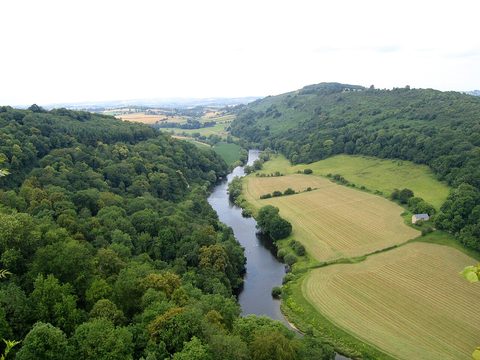 From the top of the hill you can see the whole
_____: the river, the forest and the small farms.
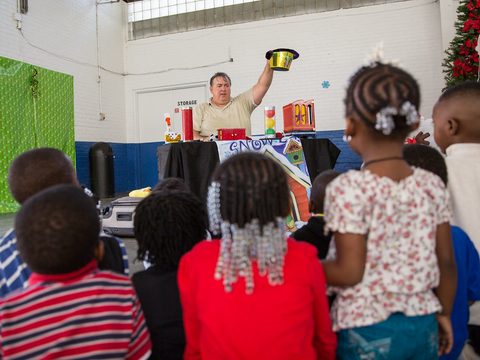 The children were
_____ by the magic show: their eyes were big and their mouths were open.
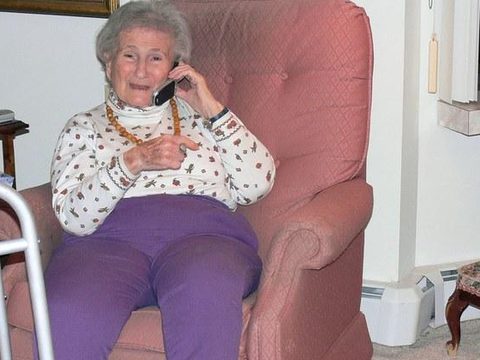 My grandmother is very
_____: she can spend two hours on the phone with one friend.
 Loud music at two in the morning, every night, is a real
_____ for the neighbors.
 That comedian is so funny that people start to
_____ before he says a word.
 Her email was very
_____: she gave me the color, the size and the price of every chair.
 The last five minutes of the game were so
_____ that nobody in the stadium sat down.
A question on the road
First, watch the scene with the sound off and describe what is happening. Then watch it again with sound and captions, and read the story. The words from Exercise 02 are in bold. Tap a dotted word to see what it means.
Anne talks and talks as she rides along a country road in an old farmer's cart. The farmer, Matthew, drives the horse and says almost nothing.
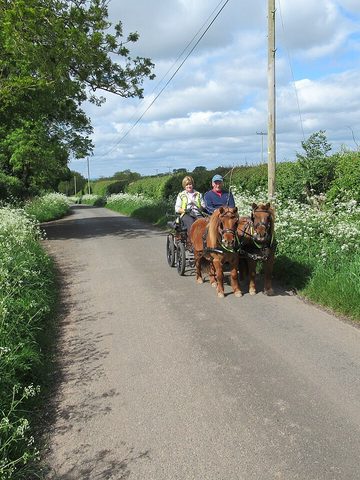
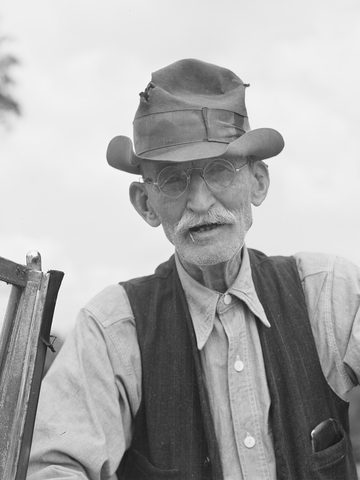

Suddenly she stops and asks: is she talking too much? People always tell her that she is too talkative, and it often causes aggravation.
So she makes him an offer: if he prefers silence, she will stop. She can stop when she makes up her mind, although it is difficult.
Matthew thinks about her offer for a moment. Then he gives a very short answer, just three words: "I don't mind."
His answer makes Anne so glad. She is sure that the two of them are going to get along just fine.
At last, she can talk when she wants to. That is a relief, because adults always tell her that children should be seen and not heard.
Now she feels free to tell him more: people laugh at her big words, like "enraptured" and "glorious". But to her, they are exciting and descriptive.
Her reason is simple: if you have big ideas, you need big words to express them. Matthew, a man of few words, only answers, "I suppose so."
To show him, she gives an example. She looks at the countryside and says, with real feeling, that she is enraptured by this glorious landscape!
She gets so excited that Matthew has to tell her to be careful. Maybe it is the start of a friendship: she talks, he listens.
Multiple choice
The stamp shows the moment in the video. Click an answer and read why.

-
What is Anne's first question in the scene? 00:04
It is the first thing we hear. She has talked the whole way, and now she wants to know if that is a problem for him.
-
What do people always tell Anne? 00:07
"People are always telling me that I do," she says, and it seems to cause aggravation: people get annoyed.
-
What does Anne offer to do? 00:10
"Would you rather I didn't talk? If you say so, I'll stop." She gives him the choice. Would you rather is one of the expressions of Exercise 09.
-
Is it easy for Anne to stop talking? 00:12
She can stop when she makes up her mind to it, she says, "although it's difficult". Honest!
-
What is Matthew's answer? 00:19
Three words, after a pause: "I don't mind." For a man who almost never talks, that is a big answer.
-
How does Anne feel about the two of them? 00:22
"You and I are gonna get along together just fine." Look at you and I: that is the grammar point of this lesson, in Exercise 07.
-
In Anne's experience, what do adults often tell children? 00:28
"Children should be seen and not heard" is an old saying: children should stay quiet when adults are around. At 00:31 she says she has heard it "a million times".
-
Why do people laugh at Anne? 00:35
Big words like "enraptured" sound strange from a young girl, so people laugh. She doesn't care: for her, they are exciting and descriptive words.
-
Which two words does Anne give as examples of big words? 00:41
"Exciting and descriptive" is what she thinks about big words, not her examples. Her examples are "enraptured" (in Exercise 02) and "glorious" (very beautiful).
-
According to Anne, why do you have to use big words? 00:45
"If you have big ideas, you have to use big words to express them." Matthew's answer, at 00:50: "Well… I suppose so."
-
What does Matthew say at the end of the scene? 01:01
Anne gets excited about the glorious landscape, and Matthew, who is driving the cart, tells her to be careful. It is the last line of the scene.
-
Which sentence best summarizes the story?
One question, one short answer, and a lot of talking: that is the whole scene. Nobody argues, and Matthew doesn't teach any words. He listens.
What comes first?
Watch the scene again. These eight moments are in the wrong order. Write the number of each one, from 1 (the first thing that happens) to 8 (the last).
-
aMatthew tells her to be careful.
-
bAnne asks if she is talking too much.
-
cAnne says the two of them are going to get along fine.
-
dMatthew says he doesn't mind.
-
eAnne says that big ideas need big words.
-
fAnne offers to stop talking if Matthew prefers.
-
gAnne says that people laugh at her big words.
-
hAnne gives an example: the glorious landscape.
I and me

One question decides it. Is the person doing the action, before the verb? Then I. Is the person receiving the action, after the verb or after a word like with, to, for? Then me. "You and I" before are: subject. "Tell me": object.
- Subject, before the verb: I watch the game. · Tom and I watch the game.
- Object, after the verb: He loves me. · He loves Tom and me.
- After a preposition (to, with, for, between): Come with me. · This is for you and me. · Between you and me, …
- The test: take the other person out. Tom and I watch → I watch. He loves Tom and me → He loves me.
- Polite order: the other person comes first. Tom and I, not
I and Tom. - Careful: Me and Tom are friends is common in speech, but in standard English it is Tom and I are friends.
-
Anne says: "I know that you and I are gonna get along together just fine." Is "you and I" grammatically correct? 00:22
Perfect English. Gonna is informal for going to, but the pronouns are exactly right.
-
"You and I" is used in this way because it is…
Who is going to get along? You and I. They do the action, and they come before the verb are: subject, so I.
-
Which sentence is correct?
Take your cousin out: I play tennis, not
me play tennis. Subject before the verb, so I, and the other person comes first. -
Which sentence is correct?
She does the action (subject: she), and I receive the call (object: me).
-
"My parents made a cake for my brother and ___."
After for, the pronoun is an object. Take your brother out: a cake for me, never
a cake for I. -
In "Give the book to me", the word "me" is…
Who gives? You (the subject, hidden in the imperative). Who receives the book? Me, after the preposition to: the object.
-
Which sentence is WRONG?
After the verb help, the person who receives the help is the object: help me, never
help I.
Write I or me
One word in each gap. Use the test from the box: take the other person out and read the sentence again. Sentence e has two gaps: write the two words in order.
-
aPlease come to the store with Georgina and ___.
-
bNext summer Katy and ___ will spend our vacation in Spain.
-
cMy brothers and ___ went to the beach.
-
dMy mother and ___ prepared dinner for our friends.
-
eLisa told ___ her secret, because she and ___ are friends!
-
fCan you send the photos to Paula and ___, please?
-
gWait for ___! I'm coming!
-
hAna and ___ are going to the movies tonight. Do you want to come?
Five expressions from the scene
Anne and Matthew use five expressions that you hear every day. Read each one in its line from the scene and find what it means. Then use them in new sentences.

- I can stop when I make up my mind to it. (Anne)
- I don't mind. (Matthew)
- I'm so glad. (Anne)
- Would you rather I didn't talk? (Anne)
- You and I are gonna get along together just fine. (Anne)
-
"I can stop when I make up my mind to it." Here, make up my mind means…
She can stop when she decides to stop. Make up your mind = decide, choose.
-
Matthew says "I don't mind." What does he mean?
Her talking is okay for him. That is why the next thing Anne says is "I'm so glad."
-
"I'm so glad." Here, glad means…
Matthew doesn't mind her talking, so she is happy. Glad = happy, pleased, delighted.
-
"Would you rather I didn't talk?" Here, would you rather means…
She asks what Matthew prefers: her talking or silence. After would you rather, the next verb has no to: Would you rather walk?
-
"You and I are gonna get along together just fine." Here, get along means…
They are on the same road, yes, but that is not the meaning. Anne means that they are going to be friends. With a person, you say get along with.
-
Blue or red? The store closes in five minutes, so please ___!
Two colors, five minutes: it is time to decide. Make up your mind is what you say to a person who can't choose.
-
Which question means "Do you prefer the beach or the mountains?"
Would you rather + verb + or: a question about preference. You get along with people, not with beaches.
-
The new coworker is very friendly, and everybody ___ him.
Friendly, so everybody has a good relationship with him. After get along, the person comes with with.
-
You got the job? I'm so ___ to hear that!
Good news makes you happy: I'm so glad to hear that. The other two words don't work after I'm so.
-
"Can I open the window? It's hot in here." You say yes, it's no problem for you. What do you answer?
An open window is okay for you: I don't mind. That is exactly what Matthew tells Anne about her talking.
Talking points
Part A is about the scene. In Part B, interview a partner (or me) with the expressions from Exercise 09, and then tell the class one thing about your partner with and I or and me. Part C is for your opinions.
Useful language
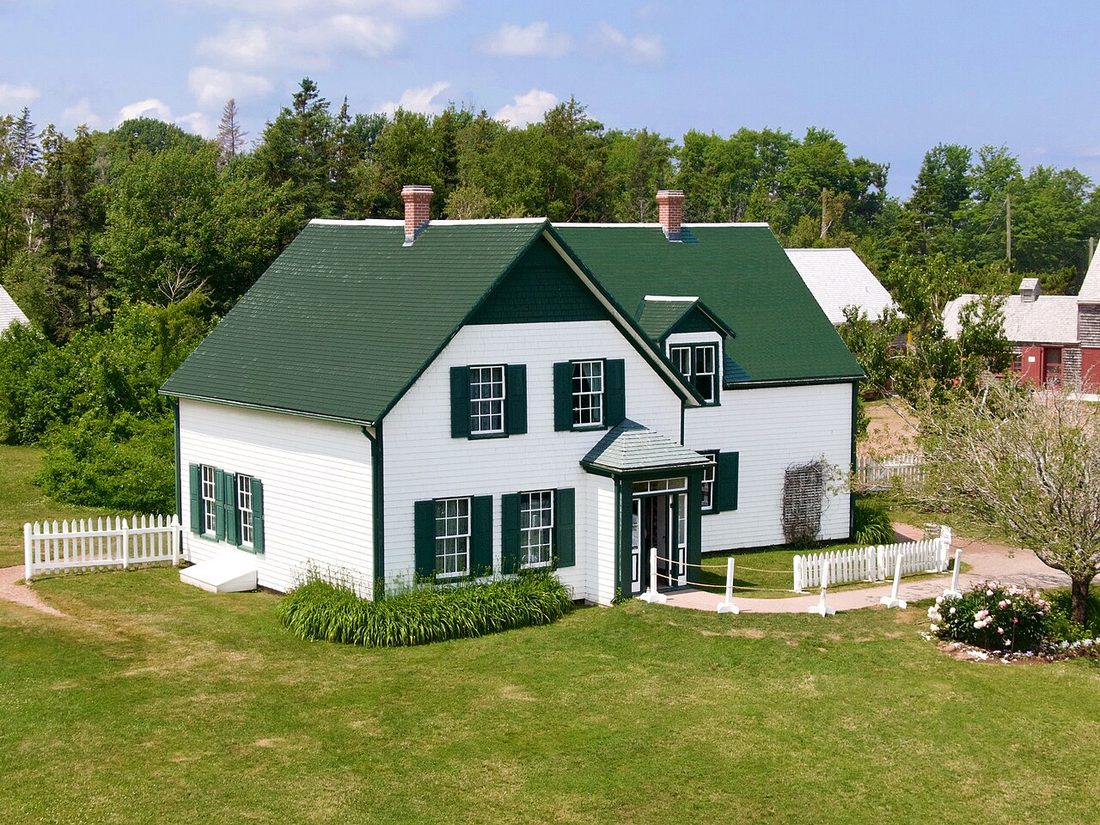
A trip to Prince Edward Island
50–80 words. Plan a trip to Prince Edward Island, in Canada, and present it in the next class. Look the island up at home first. Say how you get there, which places you visit, where you stay and what typical food you eat. Use and I and and me at least once each: My friend and I fly to…, …is perfect for my friend and me.

My results
Check your score, then copy it and send it to your teacher on WhatsApp.

One job for this week. Every day, say one sentence with … and I and one with … and me out loud: "My friend and I went…", "Call my friend and me…". And find one big English word that you love, like Anne.