May the Fourth Be with You
Six famous words from a 1977 movie, one small joke, and a day for fans all over the world. Plus the ordinal numbers from 1st to 31st, and the two ways to write a date: month first or day first.
Warm-up
Ask and answer with a partner, or with me. Tap a card when you have answered it.

May the Force be with you! It is one of the most famous lines in movie history, and today it is also a date. You learn how a movie line became a day for fans, and how to write and say any date in English.

Useful language
Words of the story
Click a word, then click its meaning. Correct pairs turn green. The audio button says the word.
Complete the sentences
Click a word in the bank, then click a gap. Click a filled gap to clear it. Read the whole sentence first: the clue is always inside it.

 We bought popcorn, turned off our phones and sat in the dark in front of the big screen at the
_____.
 "Welcome aboard! We land in two hours," said the
_____ before the plane took off.
 My son wants to look like a pirate at the school party, so I'm making him a
_____ with a black hat and a long coat.
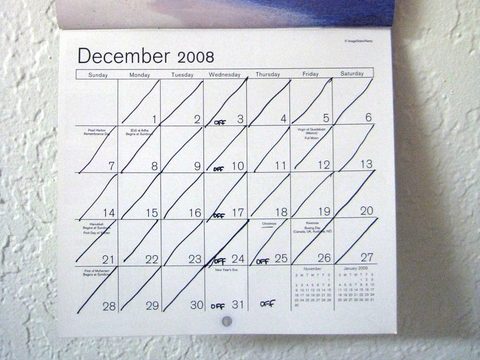 I write every appointment on the
_____ in my kitchen, so I never forget a date.
 Grandpa reads the
_____ every morning with his coffee: first the sports pages, then the news from the city.
 My sister is a big
_____ of that band: she has all their albums and goes to every show.
 The kids loved the
_____: they rode the roller coaster five times and watched a show with dancing animals.
 There is a
_____ for the new movie at the bus stop: a big picture of the hero, the title and the date.
From a movie line to a date
Watch the video first: about a minute and a half, with the same famous line again and again. Then read the story and listen to it. The dates are in bold. Tap a dotted word to see what it means.
On May 25, 1977, a new movie came to American movie theaters. Its name was Star Wars, and it told a story about a war in space.


Near the end, before a big battle, a general said six words to his pilots: "May the Force be with you."
Fans loved these six words. In Star Wars, the Force is an energy in all living things, so the sentence means "Good luck, and stay safe."
Millions of people saw the movie, so the six words became famous very fast. Soon, fans said them to each other in real life.
With the line everywhere, English speakers noticed something funny. "Force" sounds a lot like "fourth," and "May" is also the name of a month.
So they changed one word, and "May the Force be with you" became "May the Fourth be with you": a date, May 4.
The joke is old: a British newspaper printed it in 1979. For years, fans told the joke every May 4, just for fun.
Then, in 2011, fans in Toronto, Canada, turned the joke into a party: the first Star Wars Day, in a movie theater.
The idea spread fast. In 2013, Disney, the company behind Star Wars today, started to celebrate the day officially, with events at its theme parks.
Today, every May 4, fans all over the world share posters and watch the movies, where they hear the famous line again and again, like in the video.
Multiple choice
Answer from the story. Click an answer and read why.

-
When did the first Star Wars movie come to American movie theaters?
May 25, 1977: the first movie. May 4 is Star Wars Day, and 1979 is the year of the newspaper joke.
-
Near the end of the movie, who says "May the Force be with you"?
A general says the six words to his pilots. The fans in the theater only watch and listen.
-
When does the general say it?
The pilots are going to fight, so he wishes them luck before they go.
-
What does "May the Force be with you" mean?
In Star Wars, the Force is an energy in all living things. The sentence is a wish for the other person, like "Good luck."
-
Why did the six words become famous so fast?
The movie was a big success, so millions of people heard the line, and soon fans said it to each other. The newspaper and Disney come much later in the story.
-
What funny thing did English speakers notice?
Force and fourth sound a lot alike, and May is also a month. Put them together and you get a date: May the fourth.
-
In the movie line "May the Force be with you," what does may mean?
In the movie, may is a wish: "I hope the Force is with you." In the joke, May is the month. Same word, two meanings: that is the joke.
-
When did a British newspaper print the joke?
The joke is old: 1979, only two years after the first movie. The party in Toronto came much later, in 2011.
-
What happened in Toronto, Canada, in 2011?
For years the joke was only a joke. In Toronto, fans turned it into a real party: the first Star Wars Day.
-
What did Disney start to do in 2013?
Disney bought the company behind Star Wars in 2012. From 2013, it celebrated the fans' day officially, with events at its theme parks.
-
What do fans all over the world do every May 4?
Posters and movies, with the famous line again and again, like in the video. Look at the date on the posters: "May the 4th," with the month first. Exercise 07 tells you why that is important.
-
Which sentence best summarizes the story?
One line, step by step: the movie (1977), the six words, the joke (Force → Fourth), the first party (2011), Disney (2013) and fans all over the world today.
Ordinal numbers: from 1st to 31st
A month has up to 31 days, so for dates you need 31 ordinal numbers. Read the rules, then write the word (sixth) or the short form (6th). Part 1 goes up to 16th, Part 2 is 17th to 31st.
- Most numbers: number + -th: thirty-six → thirty-sixth · forty-seven → forty-seventh.
- Numbers that end in 1, 2 or 3: forty-one → forty-first · fifty-two → fifty-second · sixty-three → sixty-third.
- But the teens (from ten to nineteen) always end in -th, even with 1, 2 or 3 at the end.
- Spelling traps: -ve becomes -f: thirty-five → thirty-fifth · the e goes away: ninety-nine → ninety-ninth · only an h: forty-eight → forty-eighth · -ty becomes -tieth: forty → fortieth, fifty → fiftieth.
- Big numbers: only the last part changes: seventy-four → seventy-fourth.
- Short form: the number + the last two letters of the word: forty-fifth → 45th · sixty-first → 61st · seventy-second → 72nd · eighty-third → 83rd.
a2nd
bthird
cfourth
dfifth
e6th
f7th
g8th
h9th
i10th
jeleventh
ktwelfth
lthirteenth
m14th
n15th
o16th
a17th
b18th
cnineteenth
dtwentieth
e21st
f22nd
g23rd
h24th
itwenty-fifth
jtwenty-sixth
ktwenty-seventh
ltwenty-eighth
m29th
n30th
o31st
Month first or day first?
Read the rules. Then decide: is each date American or British? Click and read why.

Same numbers, two dates. In the US, the month comes first; in the UK, the day comes first. So when you see only numbers, look for a number bigger than 12. There are only twelve months, so that number must be the day.
- British English: day, month, year: 20 January 1993 · 14 November 2005. In numbers, 4/7/2000 is 4 July 2000.
- American English: month, day, a comma, year: January 20, 1993. In numbers, 7/4/2000 is July 4, 2000: Independence Day in the US.
- A month always starts with a capital letter: June, never june.
- Saying the date: British: It's the first of June. · American: It's June first. or It's June the first. We can write 1 or 1st, but we always say the ordinal.
- Saying the year: in two parts: 1993 → nineteen ninety-three · 2024 → twenty twenty-four (Americans also say two thousand twenty-four). From 2000 to 2009: 2005 → two thousand five.
- A date takes on: The party is on June 1.
-
The famous poster: "May the 4th be with you."
Month first, then the day: May the 4th. That is the American order. The British order is the 4th of May.
-
19th January 2018
Day, month, year, with no comma: the British order. American: January 19th, 2018.
-
31/12/2011
There is no month 31, so the 31 is the day, and it comes first: British. It is the last day of the year, December 31.
-
March 12th, 1991
Month, day, a comma and the year: the American order.
-
07/23/2012
There is no month 23, so 23 is the day. The month (07, July) comes first: American.
-
It's the seventeenth of May 2017.
The day comes first: the seventeenth of May. Americans usually say May seventeenth. (They use the British order for a few special days, like the Fourth of July.)
-
My birthday is on October 24th.
Month first, then the day: American. In British English: on 24th October or on the 24th of October.
-
25-02-2000
No month 25, so 25 is the day, and it comes first: British. Dashes (-) instead of slashes (/) do not change the order.
-
Star Wars Day is celebrated on May 4.
May 4: month first, American. In British style you write 4 May. And a date takes on: on May 4.
How do you say these dates?
Write each date in words, the way you say it. First decide: British (day first) or American (month first)? Example: 1/11/1977, British → the first of November, nineteen seventy-seven. Careful with item e: no number is bigger than 12, so two answers are possible.
-
a6/13/1983
-
b13/12/2020
-
c01/31/2017
-
d11/11/1998
-
e5/08/1992
-
f5/25/1977
-
g22/4/2015
The calendar game
Play with a partner, or with me. Each player needs a calendar: the one on your cell phone is perfect. Tap a card when you have played it.

- 1. Open the calendar on your cell phone, or use a paper calendar.
- 2. Choose five or more important dates. The cards below give you ideas.
- 3. Tell your partner: "Take me to the second of May." or "Take me to May second."
- 4. Your partner finds the date and shows it to you.
- 5. Talk about the date: Is it your birthday? What do you usually do on that day? What did you do last year? Then change roles.
Useful language
Movies, dates and special days
Part A is about the video and the story. In Part B, talk about your life. Part C is for your opinions. Tap a card when you have talked about it.
Useful language
My special date
40–70 words. Write about an important date for you or your family. Write the date the American way (May 4) and in words (May fourth). Say why the day is important, what you usually do on that day, and what you did last time. Example start: My special date is December 24, December twenty-fourth. On that day, …

My results
Check your score, then copy it and send it to your teacher on WhatsApp.

One job for this week. Every morning, say the date out loud in two ways: It's the fourth of May and It's May fourth. Then say one thing you did on the same day last year. Thirty seconds, in English. And may the Force be with you!