Just Start
A very short video with a big idea: there is no right or wrong time to start. You read what Simon Sinek says about first steps, and you learn how English talks about number one: the fastest, the simplest, the highest.
Warm-up
Ask and answer with a partner, or with me. Tap a card when you have answered it.

Everybody has a dream. But many people never start. Today you read about a very short video with a very simple message, and you learn the words for number one in a group: the fastest, the simplest, the most interesting.
Useful language
Words for a first step
Click a word, then click its meaning. Correct pairs turn green. The audio button says the word.
Complete the sentences
Click a word in the bank, then click a gap. Click a filled gap to clear it.

 You can wear the red shirt or the blue one:
_____. Both look great on you.
 The math problem was very hard, but after twenty minutes Sam was able to
_____ the answer.
 My grandfather wants to
_____ a small wooden house for the birds in his backyard.
 Our baby is only ten months old, and yesterday she took her
_____ without holding my hand.
 The sky is dark and full of clouds, so the
_____ of rain this afternoon is 90%.
 Don't climb that tree! It's too
_____, and you can fall and get hurt.
 Please don't drive so
_____! There are children playing on this street.
 The party was a big
_____: all the guests danced and stayed until midnight.
No right or wrong time
Simon Sinek's video is on Instagram, so it can't play in this lesson: the story tells you what he says. The superlatives are in bold. Tap a dotted word to see what it means.
In March 2022, the writer Simon Sinek posted a very short video on Instagram. Under it, he wrote: "There is no right or wrong time. Just start."
His message was for people with a dream who never begin. They wait for the right time to start, but for Sinek, there is no right time.
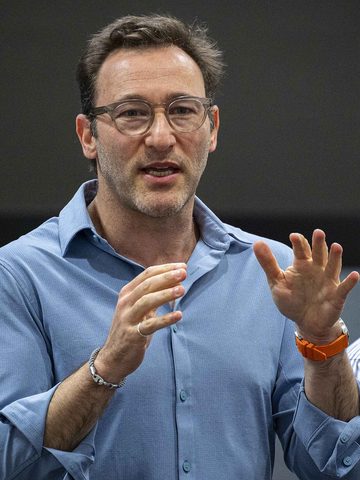

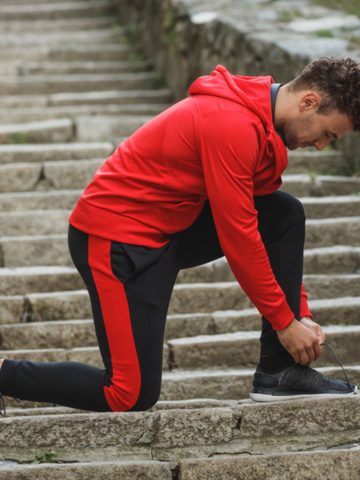
So in the video, he tells them two things. First, the time doesn't matter. Second, the place doesn't matter: you can start anywhere.
For him, only one thing really matters: that you start. But a dream is often very big, so how do you start it?
His answer: figure out the easiest, quickest thing that you can do right now. It is a small step, not the whole dream.
Why this step? Because a small, easy step has the best chance of success. So, for Sinek, you should begin with that step.
And what about the big thing in your head, the dream that you imagine? You don't have to build it all at once.
You only need to take the first step. And because there is no wrong time, you can take it today.
The message was short and simple, and many people liked it. Today, the video has more than 60,000 likes on Instagram.
So the next time you wait for the right moment, remember Sinek's short message: there is no right or wrong time. Just start.
Multiple choice
Click an answer and read why.

-
Where did Simon Sinek post his short video?
He posted it on Instagram on March 21, 2022. Sinek is famous for a book and a talk about why people do what they do: Start with Why.
-
What did he write under the video?
Two short sentences, and they are the whole idea of the video. They are also the title of this lesson's worksheet.
-
Who was his message for?
People with a dream who never begin. The problem is not the dream: it is the start.
-
Why don't these people begin?
They wait for the right time to start. But for Sinek, there is no right time, so they can wait forever.
-
For Sinek, only one thing really matters. Why?
First, the time doesn't matter. Second, the place doesn't matter: you can start anywhere. So only one thing is left.
-
What is that one thing?
Not when, not where, not with a perfect plan: only the start. Everything else can come later.
-
What is the problem with a dream?
A dream is often very big, so it is hard to know how to start. The next part of the story answers that question.
-
What does Sinek tell people to figure out?
A small step that you can do right now. In the video, he says it with three superlatives: the simplest, the fastest and the highest. You find them in Exercise 06.
-
Why should you begin with that step?
A small, easy step is the step with the best chance of success. In the video, Sinek says "probability" for "chance".
-
What don't you have to do all at once?
The dream that you imagine can be very big. You don't need to build all of it now: you only need the first step.
-
When can you take the first step?
There is no wrong time, so you don't need to wait. "At the right time" is the idea that Sinek says no to.
-
Which sentence best summarizes the story?
The whole story says it: the time and the place don't matter, so start with the easiest step, and take it today. More than 60,000 people liked that idea.
Sinek's own words
Part A: answer yes or no with the story. Part B: these are Sinek's real words in the video. Complete them with the words in the bank. The word in parentheses helps you.
-
Does it matter when you start?
For Sinek, the time doesn't matter: there is no right or wrong time.
-
Does it matter where you start?
The place doesn't matter either: you can start anywhere.
-
Can you start with something simple and fast?
That is exactly his advice: the easiest, quickest thing that you can do right now.
- It doesn't matter _____ we start. (the time)
- It doesn't matter _____ we start. (the place)
- All that matters is _____ we start.
- Figure out the simplest — the _____ (fast), _____ (simple) thing you can do to the _____ (high) probability of success. That's where you want to start.
- You don't need to build the thing that you _____.
- You just need to take the _____ step to doing it.
Superlatives

Number one in a group. Sinek puts three superlatives in one sentence. Short adjectives take -est, long adjectives take the most, and the always comes first.
- Short adjectives, + -est: tall → the tallest · cheap → the cheapest
- Ending in -e, + -st: nice → the nicest · safe → the safest
- One vowel + one consonant at the end: double the consonant: thin → the thinnest · wet → the wettest
- Ending in -y: y → i, + -est: busy → the busiest · funny → the funniest
- Long adjectives (most with two syllables or more): the most: expensive → the most expensive · popular → the most popular
- Irregular: some adjectives change into a new word: far → the farthest. Exercise 08 has three more. You know one from "my best friend".
- After a superlative: in + a place or a group: the tallest building in the city · the youngest in my family
-
"Figure out the simplest — the fastest, simplest thing you can do to the highest probability of success." The words in bold are…
Each one is number one in a group, with the and -est. Comparatives end in -er and compare two things: faster, simpler, higher.
-
One way to make a superlative: add ___ at the end of the adjective.
fast → the fastest. -er makes a comparative, and -ly makes an adverb: quickly.
-
Another way: put the word ___ before the adjective.
The most is for long adjectives. More makes a comparative, and very only makes an adjective stronger.
-
high — which superlative is correct?
A short adjective, so -est. The higher is not a superlative.
-
important — which superlative is correct?
A long adjective (im-por-tant), so the most. For Sinek, starting is the most important thing.
-
big — which superlative is correct?
One vowel and one consonant at the end (b-i-g), so the g doubles.
-
easy — which superlative is correct?
Easy ends in -y: the y becomes i, then -est. Like in the story: the easiest step.
-
Which sentence is correct?
Old is short, so -est, with the in front. And a family is a group: in her family.
Write the superlative
Use the adjective on the left. Write the and the superlative. Be careful: three of them are irregular.
-
goodMy sister makes ___ cookies in the family. Everybody asks for more.
-
famousEverybody in the world knows this painting. It's ___ painting in the museum.
-
lovelyOf all the rooms in the hotel, this one has ___ view: you can see the ocean and the mountains.
-
littleOf the three brothers, Leo has ___ money: only five dollars.
-
hotJuly is ___ month of the year here. It's 104 °F almost every day.
-
wiseMy grandmother always gives good advice. She's ___ person in our family.
-
badIt rained all day and we lost our tickets. It was ___ day of the trip.
-
simpleDon't wait for a perfect plan. Start with ___ thing you can do.
Questions with superlatives
Complete each question with the superlative of the adjective on the left. Then ask a partner, or me, the five questions: they are in Part B of Exercise 10.

-
difficultFor you, which is ___ subject at school or college?
-
creativeWho is ___ person you know? What does he or she do?
-
happyWhen was ___ time of your life?
-
sadWhat is ___ movie you have seen?
-
interestingWhat's ___ place you have been to?
Your first steps
Part A is about the story. Part B is about you: answer with one more detail. Part C is for your opinions. Use a superlative when you can. Tap a card when you have answered it.
Useful language
Project: first steps
40–80 words. Think of a project or a business you would like to start. Write the things you must do to achieve it, under five headings. Project name: a name for it. Vision: the world when your project works. Mission: what your project does every day. Values: the most important things for you in it. To-do list: your first steps, with the simplest and fastest one at the top.

My results
Check your score, then copy it and send it to your teacher on WhatsApp.

One job for this week. Look at your to-do list and take the first step: the simplest, fastest one. Do it before our next class, then tell me about it in English. There is no right or wrong time.