How to Play Beach Tennis
A yellow ball, a net and a lot of sand. You learn beach tennis in one game, point by point, and you learn to say who is faster, who is better and who is the best.
Guess the sport
Read each definition and say the name of the sport out loud. Tap a card when you have guessed it. Then open "Check your guesses".

Six sports, six definitions. You know all of them, but can you say their names in English? After that, we play a sport that is new for many people: beach tennis. And we learn to compare players, sports and games.
Check your guesses
On the court
Click a word, then click its meaning. Correct pairs turn green. The audio button says the word.
Complete the sentences
Click a word in the bank, then click a gap. Click a filled gap to clear it. Read the whole sentence first: it tells you which word fits.

 Dogs are
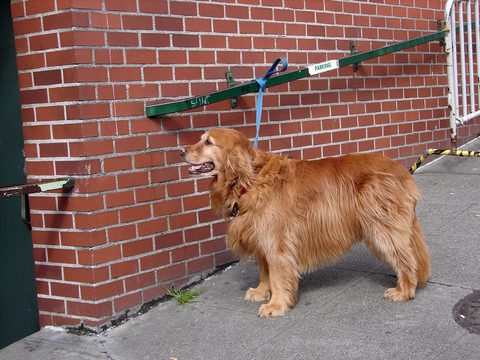
_____ in this restaurant, so please leave yours outside.
 My sister doesn't like to play with a partner, so she only plays
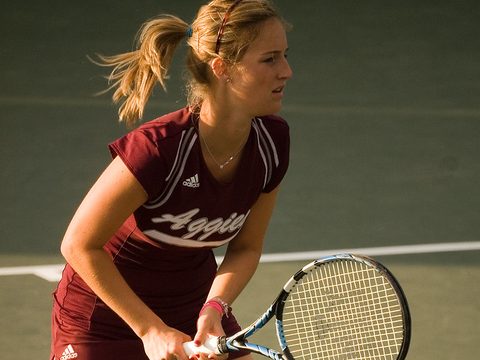
_____.
 "What's the
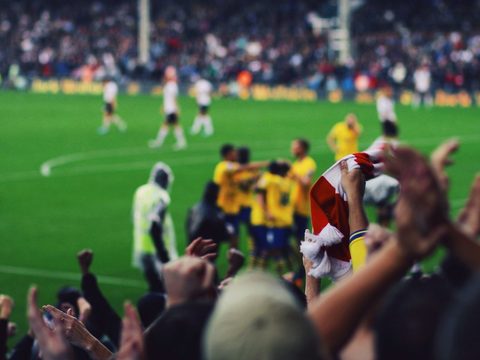
_____?" "It's 2–1. Our team is winning!"
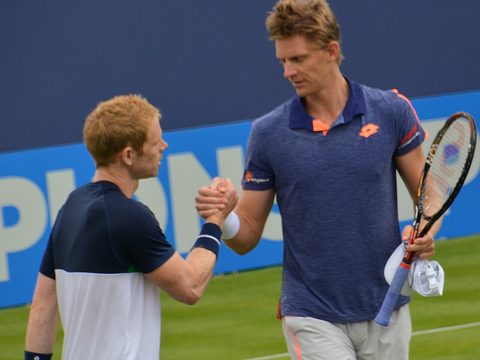 My
_____ in the final was much stronger than me, so I lost 6–0.
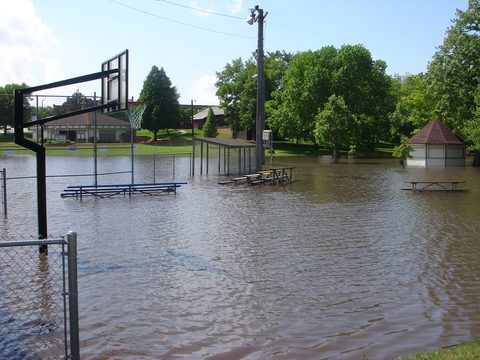 After the rain, the
_____ is full of water, so nobody can play basketball on it today.
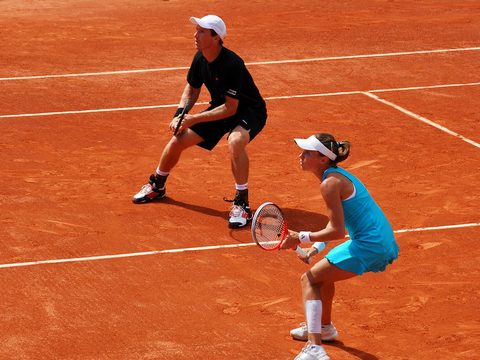 My brother and I are a great team. We always play
_____ together, against two friends from school.
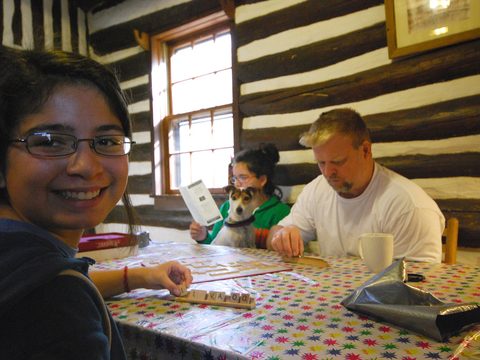 Before we play this new board game, let's read the
_____, so we know what we can and can't do.
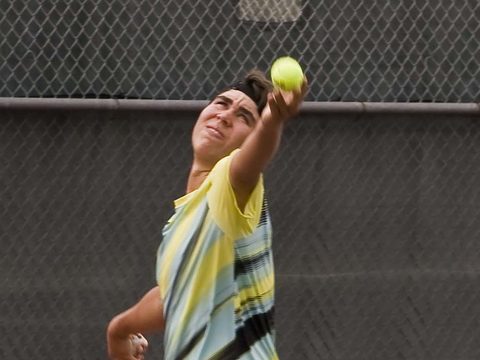 In tennis, the same player hits the first ball for a whole game. So you
_____ in this game, and in the next game it's my turn.
Your first game on the sand
Watch the video first: under two minutes, with captions. Then read the story. The words from Exercise 02 are in bold. Tap a dotted word to see what it means.
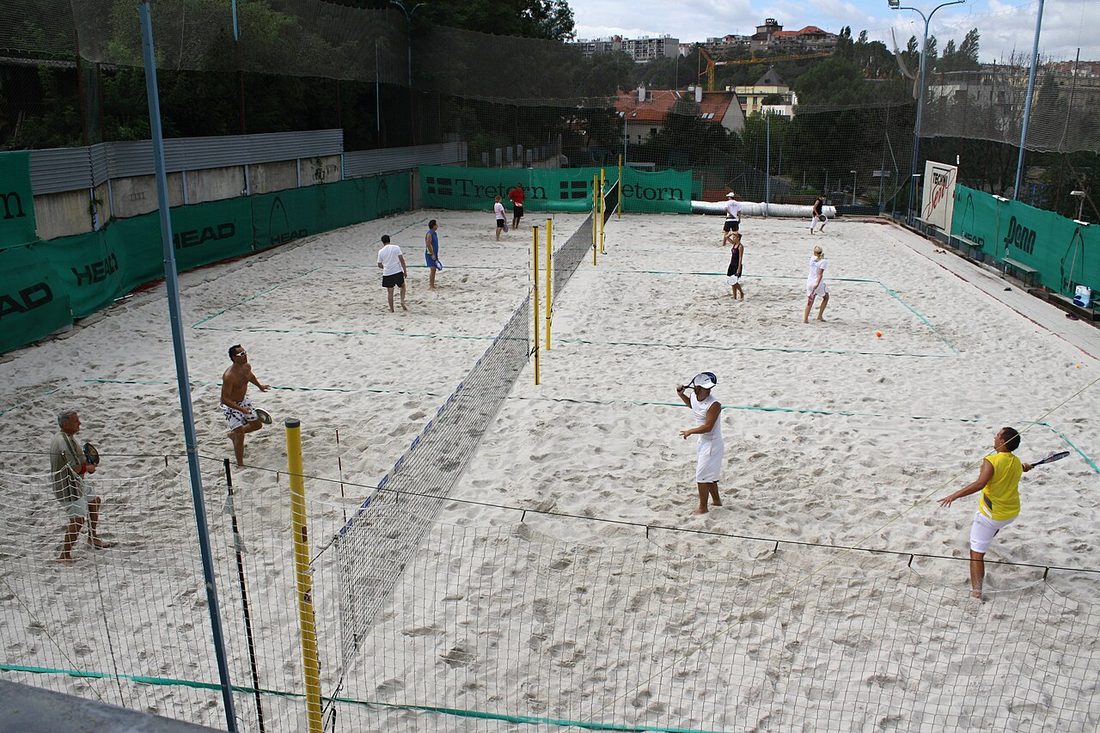
It's a hot Saturday, and you're walking on the beach. Near the water, three friends are hitting a yellow ball over a net.
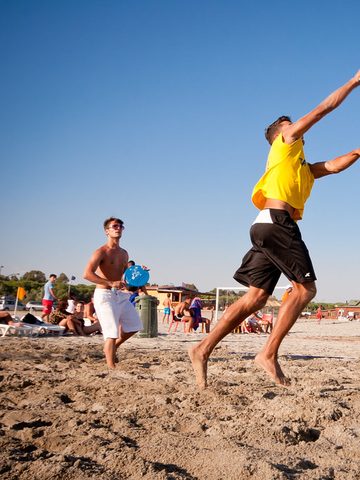
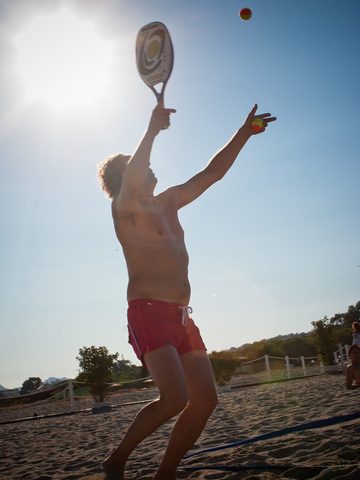
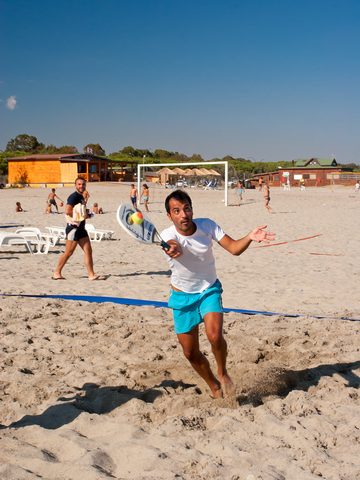
You stop to watch, and one of them gives you a racket. "It's beach tennis," she says. "The aim? Score more points than your opponents!"
She explains that most rules come from regular tennis. You can play singles, one against one, or doubles, two against two.
With you, there are four players, so you play doubles. Your partner tells you one important rule: your body can't touch the net. It's not allowed.
Then she gives you the ball, because you serve first. You walk to the back of the court and stay behind the baseline.
Your serve goes over the net, and the point begins. Now each team has to hit the ball back to the other side with the racket.
Then an opponent hits a very fast ball, and you miss it. It falls on the sand, so the other team gets the point.
You want that point back, so you hit the next ball very hard. But it hits the net, and again your opponents win the point.
After two lost points, you ask about the score. Like in regular tennis, it goes 15, 30, 40: one, two, three points. The fourth point wins.
Soon it's 40–40, or deuce. In beach tennis there's no advantage, so the next point decides the game. This time, you don't miss.
Multiple choice
The stamp shows the moment in the video. Click an answer and read why.

-
Where do people play beach tennis? 00:19
The video calls it a "modified" kind of regular tennis: the same game, a little changed, and played on a beach. In the story, you find a game on a walk near the water.
-
What do you need to play? 00:22
A tennis ball and a racket, the same as in regular tennis. That's why the player gives you a racket before the game.
-
What is the aim of the game? 00:28
The video says the "objective" is to score more points than the other team. Hitting very hard doesn't always help: look at what happens in paragraph 8.
-
Why do you play doubles, not singles? 00:36
You can play beach tennis in singles or in doubles. With you, there are four people, so two against two is perfect.
-
What does your partner say about the net? 00:40
Touching the net is not allowed. The video adds one more rule: you can't cross to the other side of the net.
-
Why do you walk to the back of the court? 00:45
The player who serves has to stay behind the baseline, the line at the back of the court.
-
When the point begins, what does each team have to do? 00:49
With the racket, over the net, to the opponents' side. And the ball can't touch the sand first: the next question shows why.
-
Why does the other team get the first point? 00:56
If a team doesn't hit the ball and it falls on the sand, the point goes to the opponents. (The automatic captions write "the same blow". Listen: the ball "hits the sand below".)
-
And why do they win the second point? 01:03
If the ball hits the net on its way to the other side, the other team gets the point. Hitting very hard didn't help!
-
How does the score go in beach tennis? 01:13
15 is one point, 30 is two points and 40 is three points, like in regular tennis. With the fourth point, you win the game.
-
What happens at 40–40 in beach tennis? 01:20
There's "no advantage" in beach tennis: at 40–40, or deuce, one point decides the game. And this time, you don't miss it.
-
Which sentence best summarizes the story?
The story follows your first game, step by step: doubles, the net, the serve, two lost points, the score and the last point at 40–40. You lose points too, so it isn't "every point".
The first thirty seconds
Try from memory first. Then watch 00:00–00:32 again and check. Write the word you hear in each gap: one word only.
-
aThe video is part of a series: the sports ___, a guide to every game on Earth. 00:05
-
bBeach tennis is a ___ kind of regular tennis: the same game, a little changed. 00:18
-
cPeople play it on a ___. 00:19
-
dTo play, you need a tennis ball and a ___. 00:24
-
eThe game uses the ___ rules as regular tennis. 00:24
-
fThe objective is to ___ more points than the other team. 00:28
The rules: true or false?
Watch 00:32–01:10 again. Is each sentence true or false? When it is false, say the correct sentence out loud first. Then click and read why.

-
You can only play beach tennis in doubles. 00:36
The correct sentence: You can play it in singles or in doubles. One against one, or two against two.
-
You can touch the net if you want. 00:40
The correct sentence: You can't touch the net. The video says it's not allowed for the player's body to touch it.
-
The player who is serving has to stay behind the baseline. 00:45
The server stays behind the line at the back of the court, and hits the ball from there.
-
The players have to hit the ball back to the opponents' side of the court with the racket. 00:49
That is the whole game: you hit the ball over the net, and they hit it back to you.
-
The opponents don't need to hit the ball back. 00:53
The correct sentence: The opponents need to hit the ball back too. The same rule is true for both teams.
-
You score a point if your opponent doesn't hit the ball. 00:56
If they miss the ball and it falls on the sand on their side, the point is yours.
-
If your ball hits the net on its way to the other side, you get the point. 01:03
The correct sentence: If your ball hits the net, your opponents get the point. That's what happens to you in paragraph 8 of the story.
The score in numbers
Watch from 01:10 to the end of the video. Complete each sentence with a number or a number word.
-
aAfter one point, the score is ___. 01:23
-
bAfter two points, the score is ___. 01:26
-
cAfter three points, the score is ___. 01:28
-
dBoth teams have three points. The score is ___, or deuce, and there's no advantage. 01:20
-
eThe ___ point is the winning point. 01:30
Comparatives and superlatives

Two players, or a whole group? For two, use the comparative: -er or more, and then than. For number one in a group, use the superlative: the and -est, or the most. The video ends with a superlative. Can you hear it at 01:34?
- Short adjectives, + -er / -est: cheap → cheaper than → the cheapest
- Ending in -e, + -r / -st: large → larger than → the largest
- One vowel + one consonant at the end: double the consonant: hot → hotter than → the hottest
- Ending in -y: y → i: heavy → heavier than → the heaviest
- Long adjectives (most with two syllables or more, but not the ones in -y): popular → more popular than → the most popular
- Adjectives in -ed take more and the most too: worried → more worried than → the most worried
- Irregular: three common adjectives change into new words. One is far → farther than → the farthest. You know the other two from "my best friend" and "the worst day of my life".
- After a superlative: in + a place or a group: the cheapest court in town · the youngest player on the team
-
Eight teams play in a tournament. At the end, the team with the ___ score wins the cup.
Eight teams is a group, and the winner is number one: superlative. The video ends like this too (01:34). The speaker says "the highest point"; in natural English, we say "the highest score" or "the most points".
-
The highest is…
The + -est: number one in a group. The comparative is higher than.
-
To make the superlative of a short adjective, like cold, we add…
cold → the coldest. With -er you get the comparative: colder than.
-
To make the superlative of a long adjective, like expensive, we put ___ before it.
The most expensive is the superlative. More expensive than is the comparative. The adjective stays the same: no -est.
-
Which option has two comparative adjectives?
Comparatives compare two things, so they come with than. The other two options are superlatives.
-
Which three adjectives are irregular?
They change into new words: better, worse, farther. Big, hot and sad only double the last letter (bigger), and easy only changes y to i (easier).
-
good → better → …
A completely new word. The goodest doesn't exist.
-
bad → … → the worst
Bad, worse, the worst. Don't mix up worse (two things) and the worst (number one in a group).
Comparative or superlative?
Use the adjective on the left. Write the comparative or the superlative, with than or the when the sentence needs them. Then say if you agree or disagree with each sentence.
-
goodI think Messi is a ___ player than Neymar.
-
goodThe Brazilian soccer team is ___ in the world.
-
easyBeach tennis is ___ regular tennis.
-
difficult___ sport to learn is swimming.
-
boring___ sport to watch is golf.
-
badI'm a ___ volleyball player than my friends.
-
fastTo win at beach tennis, you need to run ___ your opponents.
-
tallBasketball players are usually ___ other people.
-
tiredI feel ___ when I play beach tennis than when I play regular tennis.
-
exciting___ sport to watch on TV is volleyball.
Questions for a partner
Complete each question with the comparative or the superlative of the adjective on the left. Then ask and answer the six questions with a partner, or with me.

-
bigWhat is ___ sports event you have ever been to?
-
famousWho is ___, Messi or Neymar?
-
exhaustingWhich sport is ___, swimming or running?
-
goodWho is ___ beach tennis player that you know?
-
interestingWhich is ___: watching sports at the stadium, at home on TV, or in a bar on a giant screen?
-
talentedWhat sport has ___ athletes?
Do you play beach tennis?
Part A is about the video and the story. Part B is about you: answer with one more detail. Part C is for your opinions. Use a comparative or a superlative when you can. Tap a card when you have answered it.
Useful language
How to play my favorite sport
40–70 words. Explain a sport you know to a friend, like the video explains beach tennis: the players, what you need, two or three rules and how you win. Use at least two comparatives or superlatives. Example: It's more fun than…

My results
Check your score, then copy it and send it to your teacher on WhatsApp.

One job for this week. Every day, compare two things out loud, in English: two coffees, two streets, two players, two songs. Then choose the best one of the week. Two sentences a day, and by Friday than and the most come out without thinking.