What Is Your Earliest Childhood Memory?
Ducks bigger than a little boy, a monkey in a river, a first day full of tears and a grandmother who turned stories into plays. Four young people share their earliest memories, and you learn used to: the past that is not true anymore.
Warm-up
Ask and answer with a partner, or with me. Tap a card when you have answered it.

Close your eyes for five seconds. What is the first picture you see from when you were very small? Today four young people from Hong Kong share theirs, and you learn used to: the way English talks about a past that is not true anymore.
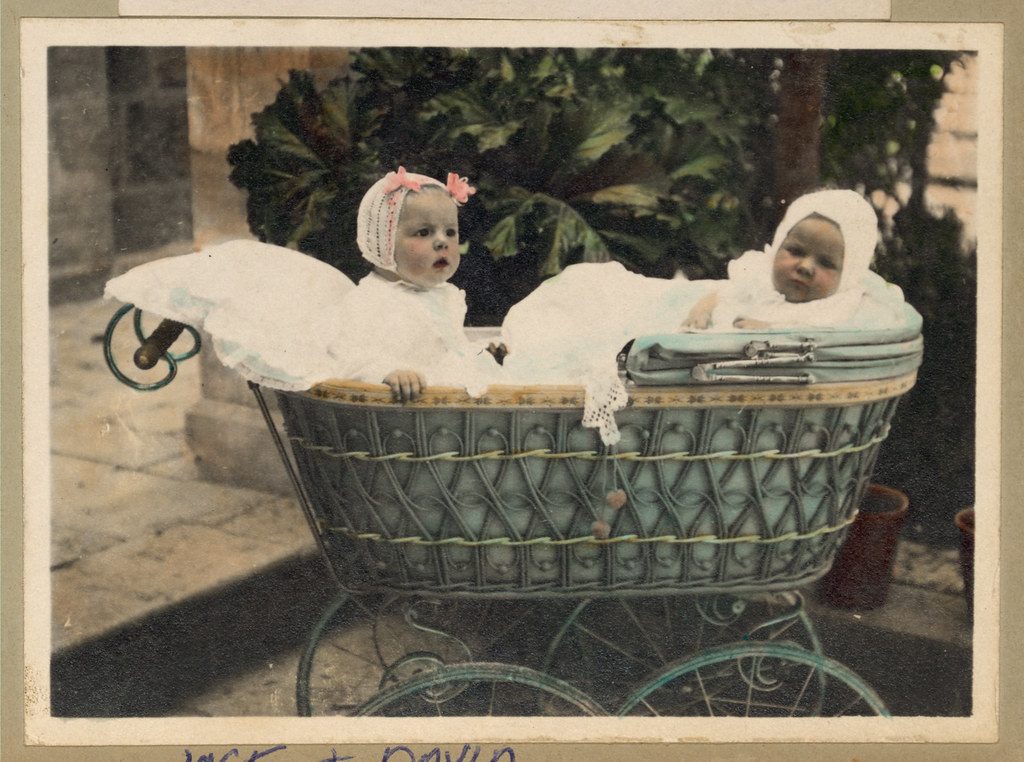
Useful language
Words from the memories
Click a word, then click its meaning. Correct pairs turn green. The audio button says the word.
Complete the sentences
Click a word in the bank, then click a gap. Click a filled gap to clear it.

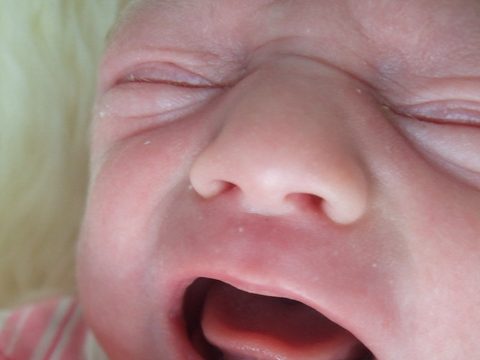 The baby is hungry and very tired, so she starts to
_____.
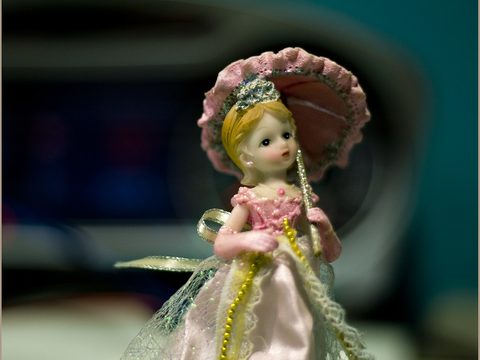 For her birthday, my niece got a
_____ with blond hair, a pink dress and a little pink umbrella.
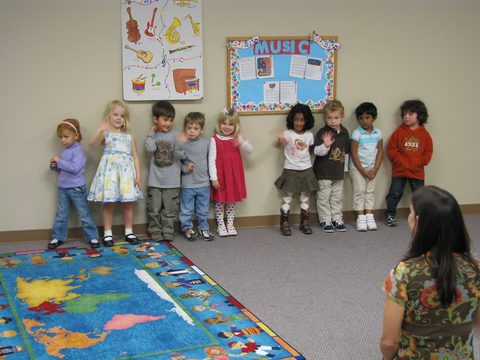 My little brother is five. Every morning he goes to
_____, where he sings, plays and learns his colors.
 The
_____ over the highway is closed, so we can't walk to the other side.
 There's a
_____ on your shirt. Did you have a sandwich for lunch?
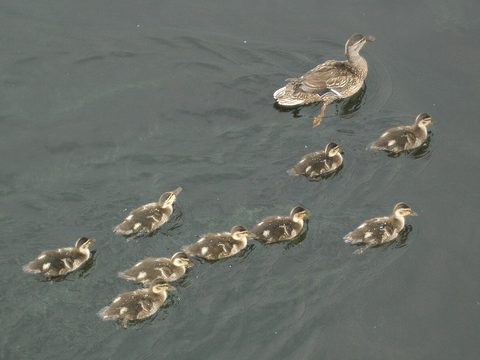 On the lake, a mother
_____ swims with all her babies behind her.
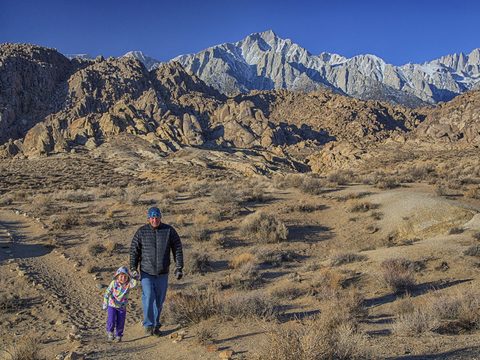 Put on your sneakers and take some water! We're going on a long
_____ in the mountains today.
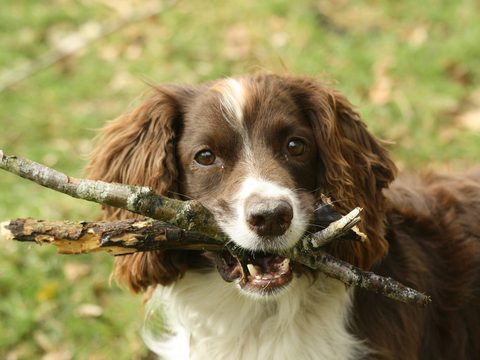 My dog loves the park. I throw a
_____ from a tree, and he runs and brings it back.
From a picture to a life
Four young people answer the same question, from a memory that is just one picture to one that changed a life. Used to is in bold. Tap a dotted word to see what it means.
In June 2018, a Hong Kong newspaper asked its young readers one question: "What is your earliest childhood memory?" Then it shared its favorite answers.
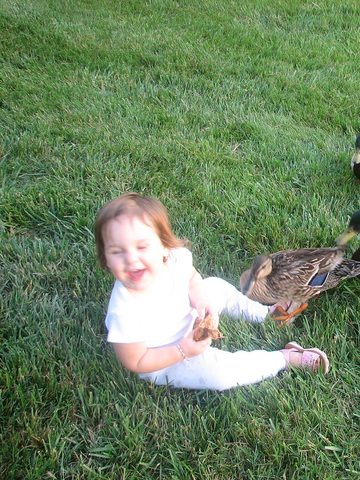
For Olivier, 15, the answer is just a picture: he is in a field, throwing breadcrumbs to ducks that are bigger than he is!
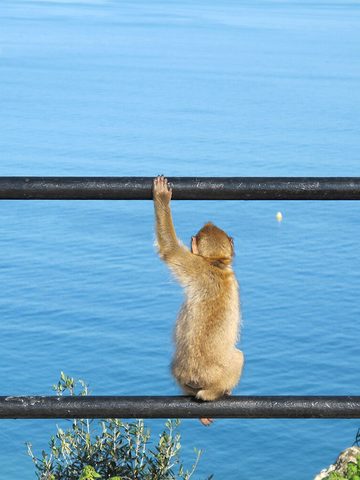
Johannes, 13, remembers a whole story: a hike with his dad in Kam Shan Country Park, a place people also call Monkey Hill.
There were lots of monkeys. Johannes saw one hanging by a bridge, poked it with a stick, and the monkey fell into the river!
Qiana, 12, has a memory that is still part of her life. It begins on her first day of kindergarten, when many classmates cried.
After a week, school wasn't new and strange anymore. The children played together and used to go on play dates to get to know each other.
Now those children are older and study at different schools. But they are still friends, and they chat on WhatsApp all the time.
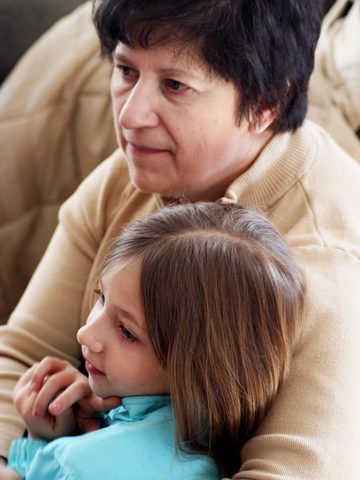
For Chloe, 12, a very talkative girl, the answer is her grandmother. When her parents were at work, her grandparents used to take care of her.
Her grandmother didn't read stories to her. Instead, they used to act out stories like Sleeping Beauty and Treasure Island, with Chloe's dolls.
Those hours made Chloe who she is. She had her grandmother's full attention, so today she's confident and fearless when she tries out for a play.
Multiple choice
Click an answer and read why.

-
What does Olivier remember?
He is standing in a field, and the breadcrumbs are for the ducks. It is only one picture in his head, not a whole story.
-
In Olivier's memory, how big are the ducks?
They were bigger than he was, so at the time they were a little scary for him. He also remembers running around a hotel room, looking for a snack, but that memory is very hazy: not clear at all.
-
Where did Johannes go with his dad?
Kam Shan Country Park, in Hong Kong. People also call it Monkey Hill, and you can see why.
-
What happened after Johannes poked the monkey with a stick?
The monkey was hanging by a bridge. One poke from little Johannes, and it fell into the river.
-
What happened on Qiana's first day of kindergarten?
A first day at kindergarten is hard for a lot of small children. Qiana says this is "probably" her earliest memory: she isn't one hundred percent sure.
-
What was different after a week?
The children knew the routine: what happens every day, in the same order. So they started to play together.
-
Why did the children use to go on play dates?
They went on play dates again and again, to become friends. A habit in the past, so the text says used to.
-
What do Qiana and her old classmates do now?
They study at different schools now, but they still talk on WhatsApp all the time. A memory from kindergarten is still part of Qiana's life.
-
Who used to take care of Chloe when her parents were at work?
Her grandparents took care of her, and her favorite memory is the time with her grandmother.
-
What did Chloe and her grandmother use to do together?
Not reading: acting! One day it was Sleeping Beauty, another day Treasure Island, and the two of them could play like this for hours.
-
Why is Chloe confident today?
In those hours, her grandmother's attention was all for her. Chloe says this made her the confident person she is now. Talkative is a different thing: she talked a lot even when she was little.
-
Which sentence best summarizes the story?
From a picture of big ducks to a grandmother who made a girl confident: some memories stay with us. Only one memory is about school, and it ends well.
Four headings
Each memory needs a heading. Choose the best heading for each student. Then answer one question about a heading with two meanings.
-
Olivier: a field, some breadcrumbs and some very big ducks
The ducks were bigger than little Olivier. The heading makes them as big as horses, the way a child's memory makes things bigger.
-
Johannes: a hike, a bridge and a stick
There are real monkeys in his memory, and there is a joke too. See the last question.
-
Qiana: the first day of kindergarten and the play dates
The play dates helped the children get to know each other, and they are still friends today.
-
Chloe: stories, dolls and long hours of acting
Her whole memory is about the hours with her grandmother, and the last words of her answer are "Thanks, Grandma!"
-
In English, monkey business also means…
A little boy poked a monkey with a stick, and the monkey fell into the river: real monkeys, and some real monkey business. Stop the monkey business! means "Stop being silly!"
Used to

Then, not now. Used to + verb is for habits and situations in the past that are not true anymore. It is the same for everybody: I, you, she, we, they used to. In negatives and questions, the d goes away: didn't use to, did you use to?
- Positive: I used to play soccer, but I don't play anymore.
- Negative, no d: didn't use to + verb: I didn't use to like broccoli when I was younger, but I love it now.
- Question, no d: Did + person + use to + verb? Did you use to have a pet? — Yes, I did. / No, I didn't.
- Only for the past: there is no present use to. For a habit now, use the present simple: Now I play tennis on Saturdays.
- Say it: used to sounds like "yoos-tuh" /ˈjuːstə/, with an s, not a z. Use to sounds the same.
- A different expression: get used to or be used to + a noun means that something isn't new or strange anymore: After a month, I got used to the cold.
-
We use used to + verb for…
It was true before, and it isn't true now. Then, not now.
-
"Chloe's grandparents used to take care of her." What does it mean?
A habit: it happened again and again, when Chloe was little. Now she is twelve.
-
Which sentence is correct?
Used to + the base form of the verb: walk, not walked. And in a positive sentence, used keeps its d.
-
Which negative sentence is correct?
After didn't, the d goes away: didn't use to. The two sound the same, so be careful when you write.
-
Which question is correct?
Did makes the question, and after did the d goes away: use to.
-
Which sentence is about a habit in the past?
Get used to and be used to + a noun mean that something isn't new or strange anymore. That's a different expression, not a past habit.
-
"Now I ___ walk to work. My office is near my house."
Now is the clue. There is no present use to: for a habit now, use the present simple, I usually walk.
Used to or didn't use to?
Use the verb on the left with used to or didn't use to. Read the whole sentence first: the other half tells you which one.
-
swimI ___ a lot as a kid. I only learned when I was twenty.
-
callMy friends ___ me "Professor" in high school, because I always knew the answers.
-
travelMy parents and I ___ to the beach every summer. Those trips were the best part of my year.
-
haveMy grandparents ___ a TV. In the evening, they listened to the radio.
-
liveWe ___ in a small apartment downtown, but now we have a house with a yard.
-
eatAs a kid, I ___ breakfast. I was never hungry in the morning.
-
you / play___ outside when you were a child?
-
beThis park ___ really quiet. Now it's full of food trucks and music on the weekend.
Personality words
Three of these words describe Chloe. Match each word with its meaning. Then say which word describes you, and which one described you as a child.

When I was little…
Part A is about the article. Part B is about you: use used to when you can, and add one more detail. Share only the memories you want to share. Part C is for your opinions. Tap a card when you have answered it.
Useful language
My earliest childhood memory
40–70 words. Write your answer to the newspaper's question, like the four young people in the article. Where were you? Who was with you? What happened? Then add two sentences about your life at that age, one with used to and one with didn't use to.

My results
Check your score, then copy it and send it to your teacher on WhatsApp.

One job for this week. Find an old photo of you as a child. Look at it and say three sentences out loud, in English: one with I used to…, one with I didn't use to…, and one that starts My earliest memory is…