Dog Who's Obsessed With Ice Skating
Six months away from the ice, one very bored dog and a special trip to the rink. Plus how to say what you love, like, don't like and can't stand doing.
Warm-up
Ask and answer with a partner, or with me. Tap a card when you have answered it.

Everybody has a favorite activity. Today you meet a dog with a very unusual one, and you learn how to say what you love, like, don't like and can't stand doing.
Useful language
Sports and activities
Click a word, then click its meaning. Correct pairs turn green. The audio button says the word.
Complete the sentences
Click a word in the bank, then click a gap. Click a filled gap to clear it. Read the whole sentence first: the clue is always inside it.

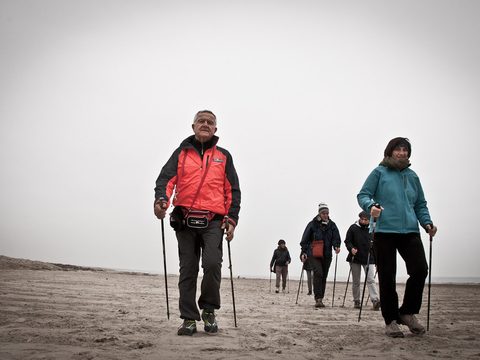 My doctor says I need to
_____, so now I walk every day and eat more fruit and vegetables.
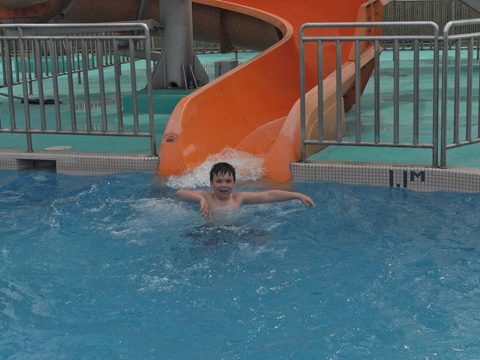 Bring a towel and your swimsuit! The kids want to go
_____ in the hotel pool.
 This train is very fast. It can travel at a
_____ of 300 kilometers an hour.
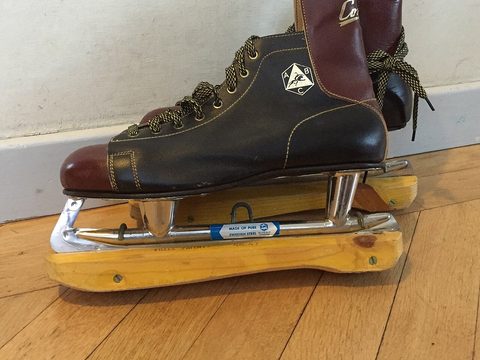 These
_____ are too small for me now. I need a bigger pair before my next skating class.
 I don't like winter. I can't stand the
_____, so I stay home under a blanket with a cup of hot chocolate.
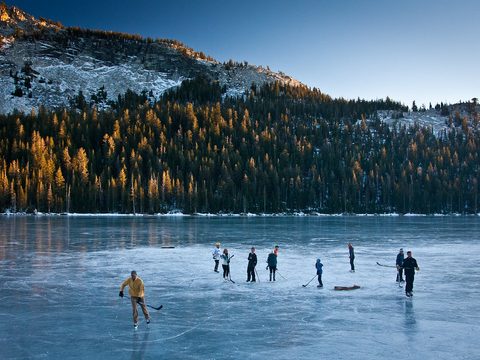 In January, the lake freezes, and the whole town goes
_____ on it.
 My grandmother doesn't want to fall again, so she does
_____ every morning: she stands on one leg and counts to thirty.
 The new mall has an indoor
_____, so people can skate there even in the summer.
Back on the ice
Watch the video first: about three and a half minutes, with captions. Then read the story and listen to it. The verbs with -ing after love and enjoy are in bold. Tap a dotted word to see what it means.
In Las Vegas, there is a dog called Benny, and he has a hobby you don't see every day: ice-skating. When he skates, people cheer and clap.
Benny loves skating because he is the center of attention. He likes the cold air of the rink, too, and he really enjoys gliding across the ice.
Then the lockdown comes. Benny's last day on the ice is March 6th, and after that, he can't skate for six months.
At home, Benny gets very bored. He only wants to go back to the ice, so his owner has to think of new activities for him.
His new activities are balance exercises and a lot of swimming, to keep him in shape. He is busy at home, but he still misses the ice rink.
Because he misses it so much, the words "Let's go skating!" make him really excited. Sometimes he even opens his bag and takes out his skates.
Finally, after six months, the special surprise comes: a trip to the ice rink! Benny gets in the car, and off they go.
About half a mile before the rink, Benny understands where they are going. He gets up, goes to the window and tries to get into the front seat.
At the rink, the big question is: can Benny still skate after so long? It is a big test, and everybody is excited to see.
He can, and he loves being back on the ice. Even when nobody is with him, he runs back out and skates around alone.
Multiple choice
The stamp shows the moment in the video. Click an answer and read why.

-
What is Benny's favorite activity? 00:03
"Benny loves skating so much…" are the first words of the video. He swims a lot too, but only at home, when he can't skate.
-
Why does Benny love skating so much? 00:05
On the ice, everybody looks at him, and people cheer and clap. Benny loves that! The video says nothing about prizes or summer sports.
-
What else does Benny like about skating? 00:17
He likes the cold, and he really enjoys the gliding: moving across the ice easily and smoothly, without stopping.
-
When was Benny's last day on the ice before the lockdown? 00:22
"Last time he skated was March 6th." After that, there is no ice for Benny, only the house.
-
How long does Benny stay away from the ice? 00:25
Six months is "quite a while", his owner says. Maybe Benny forgot how to skate? His owner doesn't think so.
-
How does Benny feel during the lockdown? 00:32
He's very bored at home. All he wants is to get back on the ice and skate (00:36).
-
What new activities does Benny do at home? 00:43
His owner thinks of a lot of new activities to keep him in shape. Benny is busy, but he really, really misses going to the ice rink (00:59).
-
What happens when somebody says, "Let's go skating"? 01:14
The same happens when somebody takes out his skating bag. Sometimes Benny even takes his skates out of the bag himself (01:24).
-
What does Benny do about half a mile from the ice rink? 01:53
He knows where they're going! And his tail goes round and round, like a helicopter (02:04).
-
Why is the day at the rink a big test for Benny? 02:13
"It's been so long." His owner is pretty sure Benny still remembers what to do (02:17), and everybody is excited to see how he does.
-
What does Benny do when his owner is not working with him? 03:01
He loves skating one-on-one with his owner (02:42), but he doesn't need a partner: he runs back on the ice all by himself. The movement? The speed? His owner doesn't know, but Benny really enjoys it (03:09).
-
Which sentence best summarizes the story?
One line from start to end: Benny loves the ice, the lockdown takes it away for six months, and the special surprise gives it back. He doesn't learn to skate at home: he knows how already.
Correct the mistakes
Each sentence comes from the video, but one word or expression is wrong. Watch that moment again and write the correct word or words.
-
aLadies and gentlemen, let us introduce you to Benny, the ice-skating cat! 00:07
-
bHe also likes the warmth, and he really enjoys the gliding. 00:17
-
cHe just really wants to get back on the sand and skate. 00:36
-
dHe really, really misses going to the soccer field. 00:59
-
eHe goes crazy. 01:18
-
fHe just wants to stay home, he just loves it. 01:27
Love, like, can't stand + -ing

Love it or hate it? When a verb comes after love, like, enjoy, don't like or can't stand, it usually takes -ing: I love swimming. With he and she, only the first verb changes.
- Verb + -ing: I love swimming. · My mom can't stand getting up early.
- He / she: only the first verb changes: Benny loves skating. · He doesn't like losing.
- enjoy: only -ing. Benny really enjoys gliding on the ice. Never
enjoys to glide. - love, like, can't stand: -ing or to + verb. I like reading = I like to read. Both are correct. In this lesson, practice the -ing form.
- A noun is fine too: He likes the cold. · I love music.
- Spelling: most verbs + -ing (read → reading) · verb ends in -e: drop the e (make → making) · short verb with one vowel + one consonant: double the consonant (shop → shopping, get → getting).
- Questions and short answers: Do you like cooking? — Yes, I do! / No, I don't. / Kind of… Then ask back: What about you? or And you?
-
"We enjoy ___ in the mountains on the weekend."
After enjoy, the verb always takes -ing. To hike is to take a long walk in nature.
-
Which word is spelled correctly?
Jog (to run slowly, for exercise) is a short verb with one vowel (o) and one consonant at the end (g). Double the g, once: jog → jogging.
-
What is the -ing form of ride?
Ride ends in -e: drop the e and add -ing. Only one d.
-
"My grandpa ___ cooking. He makes dinner for the whole family every Sunday."
With he and she, the first verb takes -s: he loves. The second verb is the one with -ing.
-
Which sentence is correct?
With she: doesn't + like. The -s is already in does, so like has no -s.
-
Your friend asks, "Do you like riding a horse?" You like it a little, but not a lot. What do you say?
Kind of means "a little" or "more or less". Then ask back: What about you?
-
Which sentence is the most negative?
Can't stand means "really hate". It is stronger than don't like.
-
Which sentence has a mistake?
After enjoy, use only -ing: I enjoy traveling. Like and love can take -ing or to + verb, so the other two sentences are fine.
Verb + -ing
Use the words on the left. The first verb shows how you feel; the second one takes -ing. Careful with he, she and the spelling.
-
love / rideMy sister ___ her bike. She uses it every day, even in the rain.
-
can't stand / waitI ___ in long lines. Ten minutes is too much for me!
-
not like / flyMy dad ___. He's afraid of planes, so we always go on vacation by car.
-
you / like / dance___? — Yes, I do! I take a salsa class every Saturday.
-
like / campWe ___, so every summer we sleep in a tent next to a lake.
-
enjoy / runShe ___ in the park early in the morning, when it's quiet and cool.
-
not like / doMy son ___ the housework. His room is always a mess!
-
love / playMy kids ___ in the snow. They stay outside all afternoon and make a snowman.
Do you like…?
Ask a partner (or me) about each activity. Answer with Yes, I do!, No, I don't. or Kind of…, then ask back. Tap a card when you have asked it.

- — Do you like playing soccer?
- — Yes, a lot! It's my favorite sport. What about you?
Useful language
Benny, you and your free time
Part A is about the video and the story. Part B is about you: use love, like, don't like and can't stand + -ing when you can. Part C is for your opinions. Tap a card when you have talked about it.
Useful language
My likes and dislikes
40–70 words. Write about the sports and activities in your life. Use I love, I like, I don't like and I can't stand + -ing, and give a reason for each one. Example: I love swimming because it's relaxing.

My results
Check your score, then copy it and send it to your teacher on WhatsApp.

One job for this week. Every day, say two sentences out loud: one thing you love doing and one thing you can't stand doing. Ten seconds, in English.