Enola Holmes: The Opening Scene
A girl with a secret word in her name, a very different kind of mother and a big house with only two people in it. Watch the scene, read the story, and tell your own memories in the past simple.
Warm-up
Ask and answer with a partner, or with me. Tap a card when you have answered it.

Everybody has a story. Today a girl tells hers, from her name to the most important person in her life. Then you make a map of your own memories and tell them in the past.
The movie in one minute
Useful language
Words from the scene
Click a word, then click its meaning. Correct pairs turn green. The audio button says the word.
Complete the sentences
Click a word in the bank, then click a gap. Click a filled gap to clear it.

 Most cars in my town are white or gray, so my uncle's bright pink car is very
_____.
 My grandfather started working on a farm at a
_____ age: he was only twelve years old.
 Please leave me
_____ for an hour. I'm tired, and I need some quiet time.
 "I'm sitting right here next to you, but I won't help with your homework this time. Sorry, you're
_____!" says Dad.
 I slept only two hours last night, so this morning I could
_____ open my eyes.
 It wasn't a special day at all, just an
_____ Tuesday: work, dinner and bed.
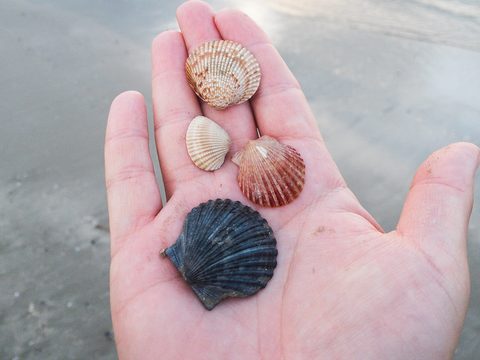 After a morning on the beach, my daughter came back with her pockets full of small
_____.
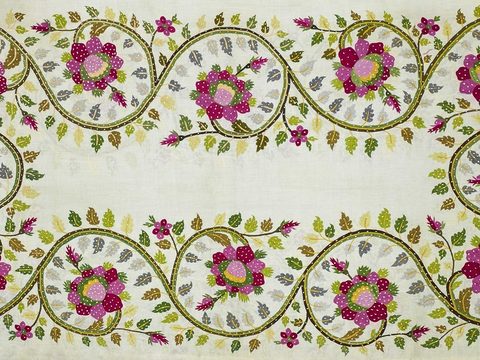 My aunt sews little flowers on pillows with a needle and colored thread. Her
_____ is so beautiful that people buy it.
A girl called Alone
Watch the scene first: about two minutes. Enola tells her own story. Just watch and listen; the questions in Exercise 05 come from the text. Then read the story. Four verbs from Exercise 07 are in bold. Tap a dotted word to see what it means.
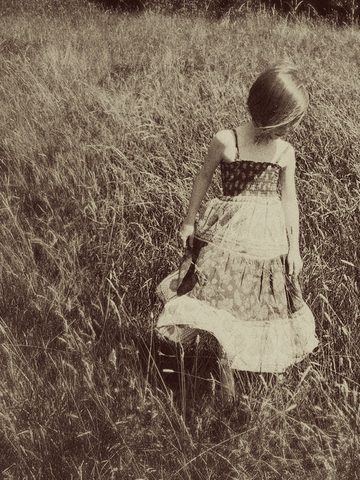
A teenage girl is out in a green field near her family's big old house. She talks to us, the people watching, and begins to tell her story.
Her story begins with her name, Enola. Her mother loved word games, so she chose a very unusual name for her daughter and wanted no other.
The name was a word game too. If you spell E-N-O-L-A backward, from the last letter to the first, you get A-L-O-N-E: alone.
The name came with a lesson, too. Her mother told Enola again and again that she would be just fine on her own.
But the girl called "alone" was almost never alone. Her mother was always with her, because the rest of the family was gone.
First, her father died when Enola was very young. She was only a small child then, so she has almost no memories of him.
Soon after that, her two older brothers moved out of the house. Enola was still so little that she can barely remember them.
So in the end, it was just Enola and her mother in their big house, Ferndell. For Enola, those were wonderful years.
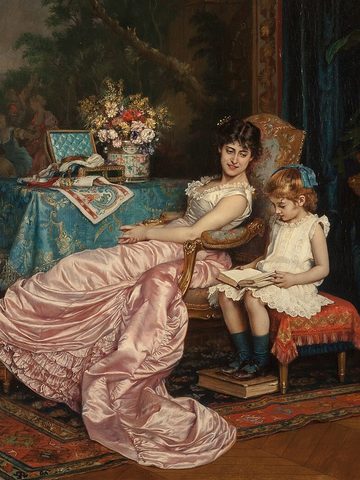
With no one else around, her mother was also Enola's teacher. But she never taught her embroidery or how to make things with seashells, like ordinary mothers did.
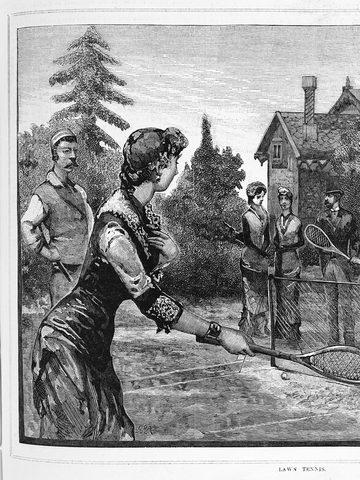
Instead, they read, did science, played tennis and exercised both body and mind. So Enola grew up free to be anyone, and her mother was everything to her.
Multiple choice
Answer from the story in Exercise 04. Click an answer and read why.

-
Where is the girl at the start of the scene?
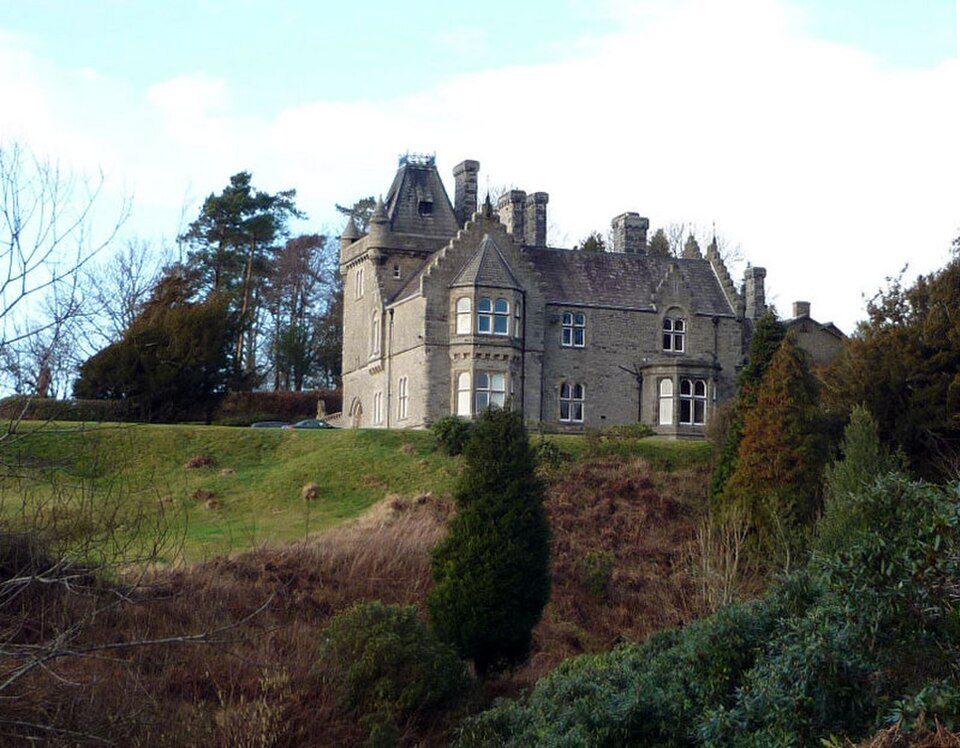
The first scenes happen in two places: a green field and the family home, a big old house called Ferndell.
-
Why did her mother choose such an unusual name?
Her mother chose the name and wanted no other. For a woman who loved word games, a name with a game inside it was perfect.
-
What word do you get when you spell Enola backward?
Read it from the last letter to the first: A-L-O-N-E. That is the secret in her name.
-
What did her mother tell Enola again and again?
The name means "alone", and the lesson matches it: one day, Enola can do very well without anybody's help.
-
"The girl called 'alone' was almost never alone." Why?
That is the surprise of the story: a girl named "alone", and a mother who is with her all the time.
-
What happened to Enola's father?
She was only a small child, so she has almost no memories of him. The famous detective is her brother, Sherlock (see the box in Exercise 01).
-
What did her two older brothers do soon after?
They left home to live in a different place. First the father, then the brothers: the family got smaller and smaller.
-
Why can Enola barely remember her brothers?
Barely means "almost not". The brothers left soon after the father died, and Enola was still a small child.
-
Life was just Enola and her mother. How did Enola feel about it?
For Enola, those were wonderful years. Two people in a big house, and she didn't feel alone at all.
-
What did her mother NOT teach her?
No embroidery and no seashells: those were the lessons of ordinary mothers, and her mother was a very different kind of mother.
-
What did Enola and her mother do instead?
They exercised the body and the mind: tennis for the body, books and science for the mind. In the scene they also play games, explore outside and even go camping.
-
The best title for this story would be:
The whole story follows Enola and her name: the father and the brothers leave, but her mother stays with her and teaches her to be free. The brothers and the embroidery are only small parts of it.
Phrases to tell a story
Enola uses phrases like these to tell her story. Match each phrase to its job. Then choose the right phrase for each sentence.
Now choose the phrase that fits. Read the whole sentence first.
-
I didn't like the movie, and my sister didn't like it ___.
The sentence is negative (didn't), so either. In a positive sentence you say too: I liked it, and she liked it too.
-
We finished dinner at eight. ___, everybody went to bed. It was a long day.
First dinner, then bed, a short time later: soon after.
-
My grandmother isn't old at all. ___, she runs three miles every morning!
In fact gives more, and stronger, information about the last idea: not old, and she runs every day.
-
My parents worked all day, and my brother was at college. ___ it was just me and the dog at home.
The first sentence gives the reason, and so then gives the result: nobody else was home.
-
Three kids stand at the start line. Their dad shouts, "On your mark, get set, ___!"
Three steps, and go! is the last one. In British English people say "On your marks"; in American English, "On your mark". You also hear Ready, set, go!
-
You want to begin a story about your family. Which sentence is the best start?
Soon after needs something before it, and either goes only in negative sentences. The long phrase opens the story.
The past simple
Read the box. Then write the past form of the eleven verbs Enola uses to tell her story.

A life story lives in the past. Some verbs just take -ed, some change completely, and didn't makes every negative. Learn the forms, and you can tell any memory.
- Regular verbs: verb + -ed: walk → walked · play → played. A verb that ends in -e takes only -d: love → loved. Consonant + y becomes -ied: study → studied. Some short verbs double the last letter: stop → stopped.
- Irregular verbs: the verb changes, and you learn them one by one: go → went · see → saw · have → had · take → took.
- Be: was (I, he, she, it) · were (you, we, they): The trip was great. · My friends were happy.
- Negative: didn't + base form, for regular and irregular verbs: He didn't call me. Never didn't called.
- Will in the past: will has no -ed form. Its past is would, and in a story would + verb often means "again and again": My dad would sing in the car. = He often sang in the car.
- American spelling: -ed is the normal ending in American English, even where British English sometimes uses -t: learned, dreamed.
-
aname
-
bwill
-
care
-
dsay
-
espell
-
fdie
-
gdo
-
hinsist
-
ileave
-
jis
-
knot teach
A photo journal
Somebody wrote these sentences under old photos. Write the past form of the verb on the left: one or two words. Then watch the scene in Exercise 04 again and listen: Enola uses the same eleven verbs to tell her own story.
-
nameMy parents ___ me after my grandmother, so she and I have the same name.
-
insistMy dad wanted a different name, but my mom ___ on this one.
-
spellOn my first day of school, I ___ my own name wrong! I wrote it with two L's.
-
willWhen I was little, my grandmother ___ tell me a story every night before bed.
-
areMy cousins and I ___ always together on summer vacation.
-
sayWhen I was six, my teacher looked at my drawings and ___, "These are beautiful!"
-
dieMy grandfather ___ when I was ten, and I still miss him.
-
leaveMy older sister ___ home at eighteen, and the house was very quiet without her.
-
not teachMy mom ___ me how to cook, so I learned it on my own from videos.
-
doLast summer, my family and I ___ something new: we went camping in the mountains.
-
isMy first day at work ___ difficult, but my boss was very kind to me.
Retell Enola's story
Five pictures from the scene, in words. Tell Enola's story in the past simple, one card at a time. Then tell the whole story again without looking at the text.

Four points to tell
Names, families and memories
Part A is about the scene and the story. In Part B, interview a partner (or me) and answer in the past simple, with one more detail: when, where or who. Part C is for your opinions.
Useful language
My photo journal
50–80 words. Use your mind map from Exercise 01. Choose four or five photos from your phone or your family album: your name, important moments and an important person. Under each photo, write one or two sentences in the past simple. Use one phrase from Exercise 06 and one sentence with didn't.

My results
Check your score, then copy it and send it to your teacher on WhatsApp.

One job for this week. Find one old photo at home and tell its story to somebody, in English: five sentences in the past simple, and one with didn't. Start with The first thing you need to know is…