Do You Work Well in a Team?
A job interview in the snow, a dinosaur who is a little too honest and a friend with no answers. And the two tools of every first conversation: the verb be and the present simple.
Warm-up
Ask and answer with a partner, or with me. Click a card when you have answered it.

Two tools, every conversation. Be tells people who you are. The present simple tells them what you do. Today you use both, and you meet a dinosaur who is a little too honest.

Useful language
Words from the lesson
Click a word, then click its meaning. Correct pairs turn green. The audio button says the word.
Complete the sentences
Click a word in the bank, then click a gap. Click a filled gap to clear it.

 My dad wears a dark blue jacket, a shirt and a
_____ to work every day.
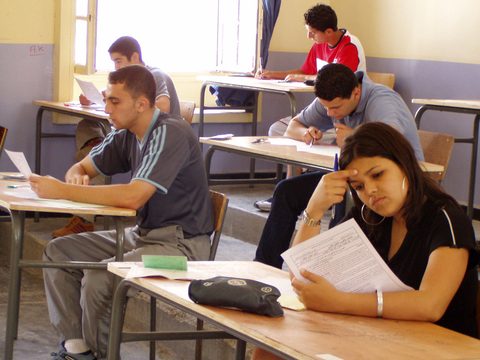 Before every exam, Lucas is so
_____ that his hands shake and he can't eat.
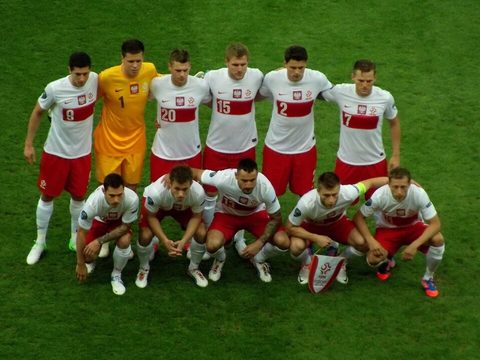 Our soccer
_____ has eleven players, and we play every Saturday morning.
 The
_____ says, "Good morning, everybody. This is your captain. We land in forty minutes."
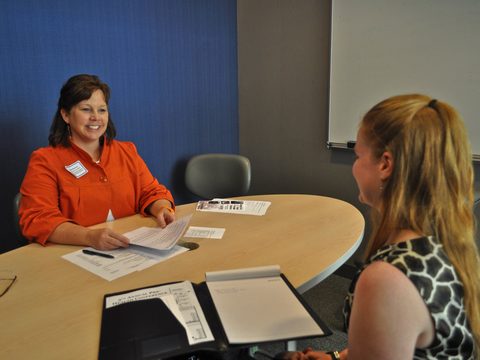 A big company wants to meet me tomorrow at ten, so tonight I'm practicing my answers for the
_____.
 At night, the
_____ calls to its family with a long "Owooo!" from the hill.
 Ana works in a big
_____ on the tenth floor, with forty computers and a coffee machine.
 My laptop, my lamp and my books are all on my
_____ next to the window.
The honest answer
No video today: this story comes from two short comics about dinosaurs. Read only the first sentence of each paragraph first: together, they tell the story. Then read everything. Do and doesn't are in bold. Click a dotted word to see what it means.
Today is a big day for Blue, a young dinosaur. He has a job interview this morning, and he is very nervous.


The interviewer is a pink dinosaur in a shirt and tie, and the office is strange: a blue desk outside in the snow, near the mountains.
The interviewer starts with a classic question: "Do you work well in a team?" Many companies ask it, because a lot of jobs need teamwork.
Blue doesn't stop to think. His answer is just one word: "No." Then he is quiet, and the interviewer waits for more.
Nothing more comes, so the interviewer tries to help. Maybe Blue is a lone wolf? Some people work very well alone, and some jobs are perfect for them.
But Blue is very honest. "No," he says again. He isn't a lone wolf: he doesn't work well alone, in a team or in any situation.
That is the end of the interview. Nobody wants a worker who doesn't work well, so Blue doesn't get the job, and he goes home sad.
Now he has one more problem in his life. So he calls his best friend, Green, and they sit together on the grass under the pink trees.
Blue tells Green the whole story. Green listens, but Green has no answer for him. "I'm sorry," Green says. "I can't fix this for you."
Blue smiles and says, "That's okay." For him, a good friend doesn't solve your problems. A good friend stays and faces them with you.
Multiple choice
Click an answer and read why.

-
Why is today a big day for Blue?
He has a job interview this morning. He doesn't have the job yet: the interview decides that.
-
How does Blue feel before the interview?
"He is very nervous." A job interview is a big moment for anybody, even for a dinosaur.
-
What is the interviewer's first question about?
"Do you work well in a team?" Many companies ask it, because a lot of jobs need teamwork.
-
How long is Blue's first answer?
Just "No." Then he is quiet. In an interview, a one-word answer is usually a bad idea.
-
Why does the interviewer ask about a lone wolf?
The interviewer tries to help. Some people work very well alone, and some jobs are perfect for them.
-
Does Blue work well at all?
He doesn't work well alone, in a team or in any situation. At all means "in any way".
-
Why is Blue's answer a problem?
A company needs people who work well. Blue is honest, but his answer says, "Don't give me this job."
-
What happens after the interview?
That is the end of the interview: no job, and one more problem in his life.
-
What does Blue do with his new problem?
He calls Green, and they sit together on the grass under the pink trees. He isn't alone.
-
What can't Green do?
Green listens to everything, but has no answer: "I'm sorry. I can't fix this for you."
-
Green can't solve the problem. What does Blue think about that?
"That's okay," he says. For Blue, a good friend doesn't solve your problems for you. A good friend stays.
-
Which sentence best summarizes the story?
The story has two parts: the interview, where Blue doesn't get the job, and the grass, where his friend stays. The second part is the answer to the first.
Short forms
In conversation and in informal messages, we use short forms. The apostrophe ( ' ) takes the place of a missing letter: I am Brazilian = I'm Brazilian. Write each sentence again with a short form.
-
aI am not ready for the test.
-
bHe is from a small city in the south.
-
cThey are not at home today.
-
dIt is not my phone.
-
eWe do not work on Sundays.
-
fMy dad does not like snow.
-
gWhat is your email address?
-
hYou are very funny!
The verb be

Am, is, are. Three small words for the first minute of every conversation: who you are, where you're from, how you are. For a question, the verb jumps to the front.
- Positive: I am (I'm) · he / she / it is (he's, she's, it's) · you / we / they are (you're, we're, they're) — I'm Brazilian. · She's smart, funny and beautiful.
- You is singular and plural: You are my friend. (one person) · You are English students. (a group)
- Negative: I 'm not · he / she / it isn't (= 's not) · you / we / they aren't (= 're not) — I'm not well. · He isn't in this room.
- Questions: be goes before the subject. It is good. → Is it good? · You are from Australia. → Are you from Australia?
- Short answers: Am I ready? Yes, you are. · Is he a student? No, he isn't. · Are they tourists? Yes, they are. No short form after Yes: Yes, I am, never
Yes, I'm.
Now complete each sentence with the positive form of be: am, is or are. A short form is fine too.
-
1I ___ your new teacher.
-
2She ___ a great friend.
-
3They ___ on TV, I'm sure!
-
4John ___ from California.
-
5My grandparents ___ on vacation.
-
6The capital of the UK ___ London.
A family picture
Two friends look at a family picture. Complete each line with the right form of be. Read the line to the end first: is it a question, a short answer or a normal sentence?
-
AThis ___ a beautiful picture.
-
BThanks. It ___ my family.
-
A___ you the one in the middle?
-
BYes, I ___.
-
B(A: And who is this?) The girl ___ my sister.
-
AWhat ___ her name?
-
BShe ___ Deborah.
-
AWhat ___ her job?
-
BShe ___ a commercial pilot. (A: Wow! She has a cool job!)
Questions with be
Put the words in order and write the question. Remember: be comes before the subject.

-
1he / is / friend / your / ?
-
2he / nervous / is / ?
-
3okay / are / you / ?
-
4your / name / Alex / is / ?
-
5they / married / are / ?
-
6teacher / our / she / is / ?
-
7Keiko / is / Japan / from / ?
Present your people
Find a picture of your family or your friends on your phone, show it to the class and present the people in it with be. Click a card when you have answered it.
Useful language
The present simple

One -s and two helpers. With he, she and it, the verb takes an -s. In negatives and questions, do and does do the work, and the verb goes back to its simple form: she works, she doesn't work, does she work?
- Positive: I / you / we / they love · he / she / it loves — I love fantasy books. · He loves Marvel movies.
- he / she / it, the spelling: most verbs + -s: loves · after -ch, -sh, -s, -x + -es: My dad watches TV all day long. · do and go + -es: goes · consonant + y → -ies: studies · have → has
- Negative: don't / doesn't + verb, with no -s on the verb — I don't drink coffee. · She doesn't listen to podcasts.
- Questions: Do / Does + subject + verb — Do you work here? · Does she come from Australia?
- Short answers: Yes, I do. / No, I don't. · Yes, she does. / No, she doesn't. · Yes, they do. / No, they don't.
Now write the he / she / it form of the verb on the left. In sentences 7–12, the verb is negative: use doesn't.
-
workMy old phone still ___ very well.
-
haveMy brother ___ two cats and a dog.
-
washEvery Saturday, she ___ her car.
-
doHe ___ his homework after dinner.
-
eatMy daughter ___ a lot of fruit.
-
takeThe bus ___ forty minutes to get downtown.
-
workThe elevator in our building ___, so we always take the stairs.
-
haveHe ___ a car, so he goes to work by bus.
-
washMy son never remembers: he ___ his hands before lunch.
-
doHe ___ any sports. He prefers video games.
-
eatMy sister ___ meat. She's a vegetarian.
-
takeThe trip ___ long: only ten minutes.
Six short dialogues
The verbs: eat · watch · have (2x) · work · prefer · do · live · think. The verb for each line is on the left. Write the whole question when the line is a question; for the other lines, write only the missing words.
-
doA: What ___ she ___?
-
workB: She ___ in an office.
-
haveA: ___ we ___ enough time?
-
thinkB: I ___ so. (negative)
-
haveA: What ___ you ___ for breakfast?
-
eatB: I usually ___ cereal.
-
liveA: Where ___ you ___? · B: In a small city.
-
watchA: ___ your son ___ a lot of TV? · B: Yes, he does.
-
preferA: ___ you ___ tea or coffee? · B: Neither. Water for me, please.
Questions with do and does
Put the words in order and write the question. You ask these questions to a partner in Exercise 14.

-
1you / do / musical / a / instrument / play / ?
-
2your / does / friend / work / ?
-
3Christmas / like / do / you / ?
-
4live / Brazil / you / in / do / ?
-
5other / speak / languages / you / do / ?
-
6do / do / what / you / ?
-
7work / to / how / go / do / you / ?
Do you…? Are you…?
Part A is about the story. In Part B, interview a partner (or me): answer with a short answer and one more detail. Then tell the class one thing about your partner, with he or she and an -s. Part C is for your opinions.
Useful language
My week
40–70 words. What does your week look like? Think about your mornings, afternoons and nights, from Monday to Sunday. Write about your routine in the present simple. Use one sentence about a friend or a family member (he or she + -s) and one negative. Example: On Monday mornings, I go to the gym.

My results
Check your score, then copy it and send it to your teacher on WhatsApp.

One job for this week. Ask three people three questions in English: one with are, one with do and one with does. Then listen for the short answers: Yes, I am. No, I don't. Yes, she does.