Punky Tries Cleaning Henry's Apartment
A scene from the TV series Punky Brewster. Punky wants to earn her keep, so she cleans Henry's apartment from top to bottom, and Henry is not happy at all. Learn the names of household chores and ask about the past with did.
Warm-up
Ask and answer with a partner, or with me. Tap a card when you have answered it.

Dishes, floors, windows. Today you learn the names of the chores you do at home, you watch a little girl clean a whole apartment, and you learn to ask about the past: Did you wash the dishes?
Useful language
Household chores
Click a chore, then click its meaning. Correct pairs turn green. The audio button says the words.
Complete the sentences
Click a chore in the bank, then click a gap. Click a filled gap to clear it.

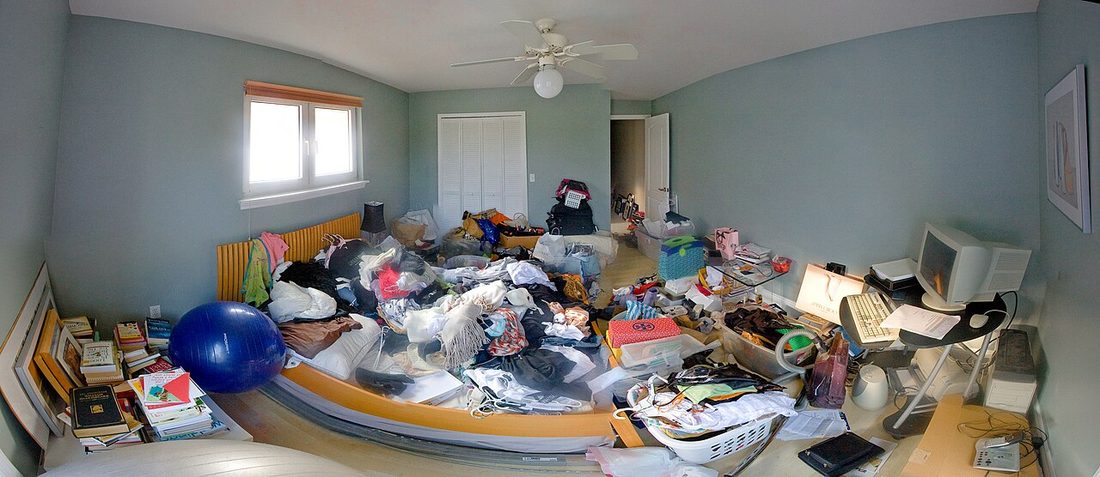
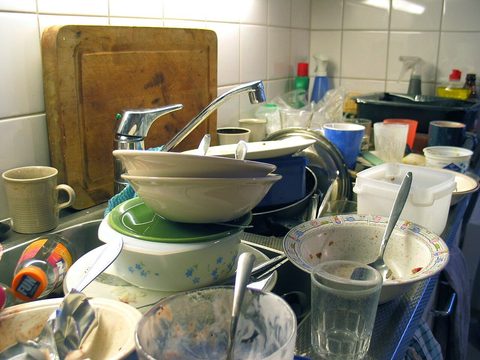 Dinner is over, and the sink is full of dirty plates, forks and glasses. Whose turn
is it to _____ tonight?
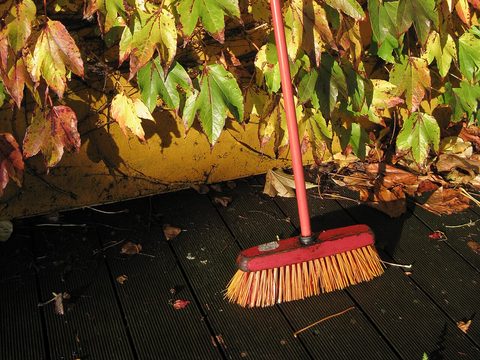 There's sand and dry leaves all over the kitchen. Please get the broom and
_____.
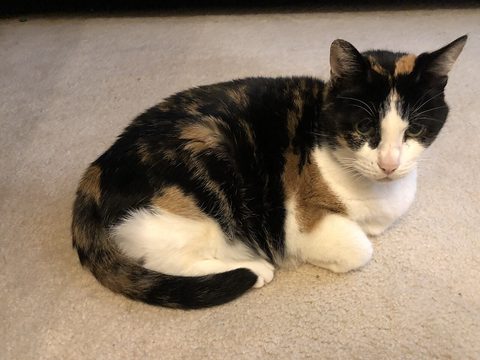 The living room carpet is full of cat hair, so I'm going to plug in the machine and
_____.
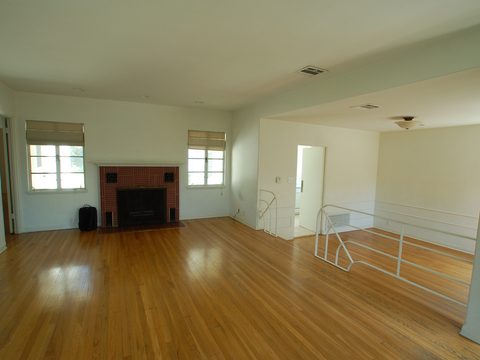 The old wooden floor in the hall looks dull and gray. Let's
_____ with wax until it shines like a mirror.
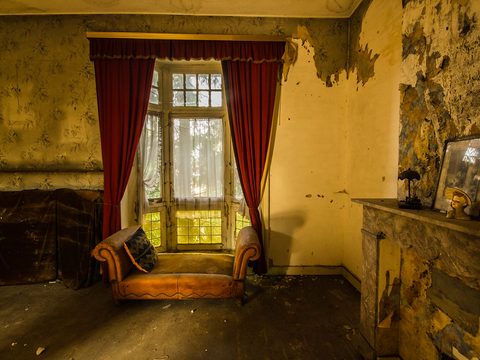 Nobody cleaned the living room for months, and there's a gray layer on the books and
the picture frames. Take this soft cloth and
_____.
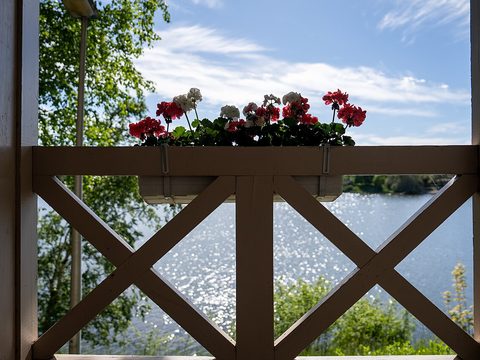 I'm going away for two weeks, and the flowers on my balcony can't live without a
drink. Can you _____ for me on Mondays and Thursdays?
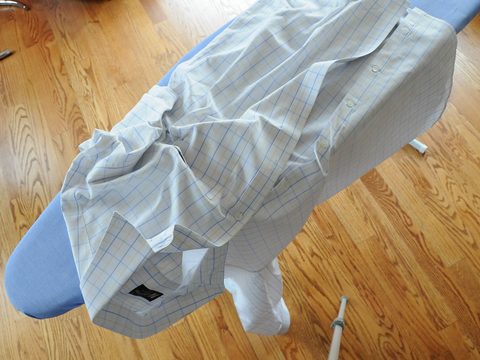 Every shirt in my suitcase is full of wrinkles. Before the wedding, I need to
_____ and make them smooth again.
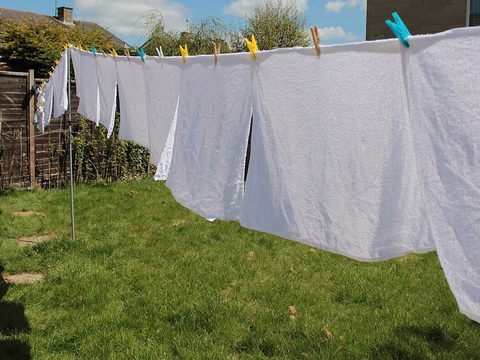 The washing machine is done, and it's a sunny day. Take everything outside and
_____ on the line to dry.
Earning their keep
Watch the scene first: about four minutes, from the American TV series Punky Brewster. Then read the story. The question with did is in bold. Tap a dotted word to see what it means.
Punky and her dog, Brandon, were staying with Henry until her mom came back. To earn their keep, Punky decided to clean his apartment.
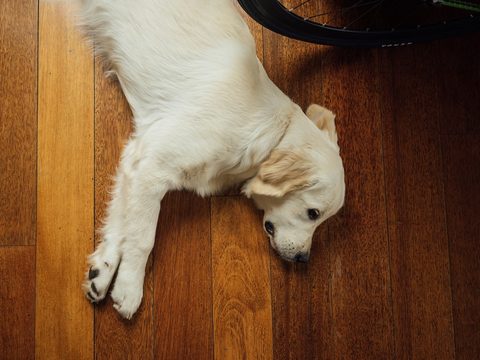

First, she washed the dishes, and Brandon "helped": he polished the floor. It had a few spots, but Punky said he did well for a dog.
Soon everything looked clean, but then Punky saw a dirty window. She forgot it! So she washed it too, and then she sang while she dusted.
Then Henry came home, and he wasn't happy. "Why did you clean my apartment?" he asked. Punky didn't understand the problem.
Henry explained the problem: now his apartment was neat, orderly and organized! For Punky, that was good news. For Henry, it was terrible.
But Punky had a good reason to clean: there was a moldy, half-eaten pizza under his couch! That wasn't clean at all.
Next, Henry found out that Punky washed his pipes. They were filthy inside, she said. But for Henry, pipes should be dirty inside, and now they were ruined!
Punky also found things lying around, so she put most of them away. Henry told her to sit down: it was time for a serious talk.
But then Henry saw a picture that Punky found at the back of the closet. He told her that nobody could look at it. Nobody!
It was a picture of Claudia, Henry's wife. She died a year after their wedding. Punky's mom used to say it's good to remember the people you love.
Multiple choice
The stamp shows the moment in the video. Click an answer and read why.

-
What chores did Punky do at the start of the video? 00:19
"Okay, the dishes are done," she says, and at 00:48 she remembers the window. The floor is Brandon's job.
-
Who "helped" Punky? 00:21
"Hey, Brandon, how's the floor polishing coming along?" Brandon is a dog, so "helped" is a little joke.
-
What did Punky think of Brandon's work on the floor? 00:27
There were a few spots, "but you did good, considering you're a dog." You did good is very informal. In a test, write you did well.
-
Why did Punky clean the apartment? 00:34
They were staying with Henry until her mom came back, so they had to "earn their keep": work to pay for a bed and food. Nobody asked her to clean.
-
What did Punky forget to wash? 00:48
"Oops, I forgot to wash that window." So she washed it right away. You use this sentence again in Exercise 07.
-
Was Henry happy with the housecleaning? 01:21
His first question is why in the world she cleaned his apartment. He didn't want a clean apartment at all.
-
Henry said his apartment was "neat, orderly, organized." What did he mean? 01:27
Usually these are good words. But Punky asks what's wrong with the apartment, and Henry answers with these three words. He liked it messy!
-
What was under Henry's couch? 01:32
Half-eaten means somebody ate half of it, and moldy means it was old, with green fuzzy stuff on it. For Punky, that's a good reason to clean.
-
Why was Henry angry about his pipes? 01:49
Punky washed them because they were filthy inside. But for Henry, a pipe should be dirty inside. "Now they're ruined."
-
Where did Punky find the picture? 03:22
She found it at the back of the closet while she cleaned, and now Henry can see it. "Nobody looks at this picture," he says.
-
Who was the woman in the picture? 03:33
"My wife, Claudia. She died a year after we were married." Punky is kind to him: "She's beautiful. You must miss her a lot."
-
Which sentence best summarizes the story?
Each step brings the next one: Punky cleans to earn her keep, Henry finds a neat apartment and clean pipes, and the cleaning brings his wife's picture out of the closet.
Complete the lines from the scene
Watch the scene again and complete nine lines with the words in the bank. Click a word, then click a gap.
- Punky: Okay, the _____ are done. 00:19
- Punky: Hey, Brandon, how's the _____ polishing coming along? 00:21
- Punky: Missed a few _____, but you did good, considering you're a dog. 00:27
- Punky: I think everything in here is _____. 00:45
- Punky: Oops, I forgot to wash that _____. 00:48
- Henry: It's neat, orderly, _____. 01:27
- Punky: Henry, there's a _____ half-eaten pizza under the couch. 01:32
- Punky: They were _____ inside. 01:52
- Punky: She's beautiful. You must _____ her a lot. 03:38
Now sort seven words and two scenes: clean or dirty? Neat, tidy, orderly and organized are about order (everything in its place), so here they go with clean.
-
neat
A neat room has everything in its place. Henry uses it about his apartment at 01:27, and he isn't happy about it!
-
filthy
Filthy means very, very dirty, like Henry's pipes before Punky washed them.
-
tidy
Tidy means the same as neat: no mess, and everything in the right place.
-
dusty
A dusty shelf has a thin gray layer of dust on it. The chore for it: dust the shelves.
-
orderly
An orderly room is in good order: the books on the shelf, the shoes in the closet. It ends in -ly, but it's an adjective.
-
moldy
Moldy food is old, with green or white fuzzy stuff on it, like the pizza under Henry's couch.
-
organized
An organized home has a place for everything. Henry's apartment was organized after Punky's work, and he hated it.
-
Scene 1: a kitchen sink full of plates, cups and pans, with old food on them
Old food on the plates: these dishes are dirty. Somebody has to wash the dishes!
-
Scene 2: a window with gray dust and old water spots all over the glass
Dust and spots: this window is dirty, like the window Punky forgot at 00:48.
Past simple questions
Read the box, then choose the right answer.

Oops! Punky forgot to wash the window. To ask about it, put did first, and the verb goes back to its base form. One past word in a question is enough, and that word is did.
- Statement: She cleaned the bathroom. → Question: Did she clean the bathroom?
- Irregular verbs too: He made the bed. → Did he make the bed? Never Did he made…?
- Short answers: Yes, I did. · No, I didn't. (didn't = did not)
- With a question word: question word + did + person + verb: What did you buy? · Why did you clean my apartment?
- The verb be is different: no did. Put was or were first: Were your parents at home? — Yes, they were.
Punky says, "I forgot to wash that window." Questions 1–4 ask about it. Is each question correct or wrong?
-
Did you wash that window?
Did + you + wash, the base form. Punky's honest answer: "No, I didn't. I forgot!"
-
Did you washed that window?
Did already says "past", so the verb goes back to the base form: wash, not washed.
-
Did you forget to wash that window?
Forgot is the past of forget. After did, use forget. Punky's answer: "Yes, I did. Oops!"
-
Did you forgot to wash that window?
Two past words in one question: did and forgot. Use did + forget.
-
In past simple questions, we use…
One past word is enough, and it's did: Did she sweep…?, Did they hang…?
-
Which question is correct?
Swept is past, so it can't come after did. And does is for the present.
-
A: Did you water the plants? B: Yes, ___.
Answer with the helping verb from the question: Did you…? — Yes, I did. / No, I didn't.
-
A: Did your parents clean the garage? B: No, ___.
Your parents = they, and the question has did, so the answer has didn't.
-
Which question is correct?
Be doesn't need did: put was or were first. Was Henry happy? — No, he wasn't.
-
Which question is correct?
Question word first, then did + person + base form: Where did you find…?
Ask the question
Write a question about each sentence. Use the word on the left. Change the person when you need to: I becomes you, and your becomes my. In 6 and 7, ask about the words in bold.
-
youI swept the kitchen floor.
-
heMy brother washed the clothes yesterday.
-
theyThe kids made their beds this morning.
-
youI forgot to take out the trash.
-
sheMom folded the clothes after dinner.
-
whatI cleaned the fridge.
-
whereI put your keys in the drawer.
-
beThe windows were dirty.
Put the words in order
Write the whole question. Every answer starts with did, a question word or was.

-
aplants / water / did / the / you / ?
-
bget / angry / Henry / why / did / ?
-
cthe / was / couch / under / pizza / the / ?
-
dyesterday / vacuum / the / they / did / living room / ?
-
eto / did / forget / you / hang / clothes / the / ?
-
fthe / what / did / in / closet / find / she / ?
Did you…? The cleaning checklist
Choose a card. Ask your partner (or me) about every chore on it with Did you…? Your partner answers with Yes, I did or No, I didn't and one more detail. Then change roles. Tap a card when you finish it.
- A: Did you wash the dishes? — B: Yes, I did! They're spotless!
- A: Did you clean the toilet? — B: No, I didn't. I forgot!
- New words: spotless = very, very clean · wipe down = clean with a wet cloth · clutter = a lot of things in a messy pile · declutter = take away the things you don't need · spot-clean = clean only the dirty spots.
Useful language
Chores, mess and teamwork
Part A is about the scene. In Part B, interview a partner (or me) and add one more detail: when, where or how. Part C is for your opinions.

Useful language
My cleaning week
40–70 words. Write about your chores last week: what did you do, and what didn't you do? Use at least four chores from this lesson. Then write three questions with Did you…? for a partner, and ask them in class.
My results
Check your score, then copy it and send it to your teacher on WhatsApp.

One job for this week. Every evening, ask yourself three questions out loud: Did I wash the dishes? Did I make the bed? Did I water the plants? Answer with Yes, I did or No, I didn't. Thirty seconds, in English.