My Daily Routine
Get up, take a shower, have breakfast, go to work. The things you do every day, the things you never do, and the questions that ask about them: one tense for all of it, and one small -s that everybody forgets.
Warm-up
Ask and answer with a partner, or with me. Click a card when you have answered it.

Tell me about a normal day. Not today, not yesterday: a normal day. The tense you need for that is the Present Simple, and by the end of this lesson you will use it for you, for your family and for the cat.

Useful language
Daily activities
Click an activity, then click its meaning. Correct pairs turn green. The audio button says the words.
Complete the sentences
Click an activity in the bank, then click a gap. Click a filled gap to clear it. Read the whole sentence: the other words tell you the answer.

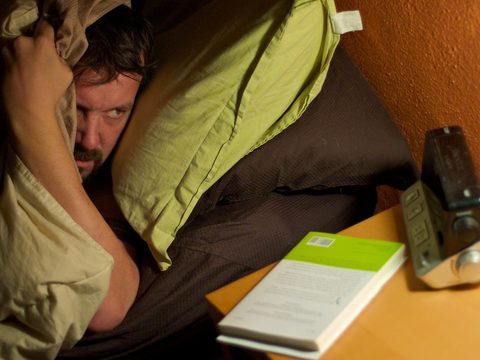 My alarm rings at 6:30, but I stay in bed and only
_____ at 7.
 I
_____ every morning: coffee, bread and a banana. Then I leave the house.
 After the gym, I always
_____ because I'm hot and I need to be clean.
 We
_____ by bus. The office is far from our house.
 The doctor says: walk, run or swim. You need to
_____ three times a week.
 I
_____ at 7 p.m., and my family eats at 8. Tonight I'm cooking rice, beans and chicken.
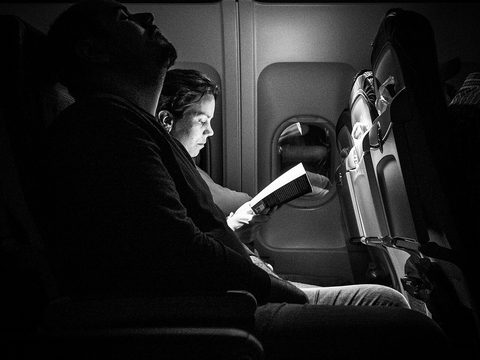 On the plane, I don't watch movies. I prefer to
_____: 300 pages in ten hours!
 I'm so tired! I put on my pajamas, turn off the light and
_____. Good night!
The Present Simple

One tense, three jobs. Habits, routines and things that are always true. The only trap is the third person: he, she and it take an -s, and in the negative and in the question that -s moves to does.
- Habits and routines: I study English. · You go to school. · We eat pizza. · They talk to the teacher.
- Things that are always true: My sister lives in a big house. · People in Brazil speak Portuguese.
- He, she, it: add -s. He plays soccer. · She speaks Spanish. · It rains in my city.
- -es after -ch, -s, -sh, -x, -z: watch → watches · pass → passes · rush → rushes · relax → relaxes. -ies after consonant + y: try → tries (but vowel + y only takes -s: play → plays). Three special ones: go → goes · do → does · have → has.
- Negative: don't / doesn't + verb. I don't study English. · He doesn't play soccer. Be careful: He doesn't play, never
He doesn't plays. The -s is already in does. - Question: Do / Does + person + verb. Do you play soccer? · Does she go to school? · Do they live here? A question word goes first: Where does he work? · How often do you see your friends?
- Short answers: Yes, I do. / No, I don't. · Yes, he does. / No, he doesn't. Only do or does: never repeat the verb.
- Frequency words (always, usually, sometimes, never) go before the verb: The teacher usually starts the class at 9. (With am, is and are they go after: I'm always late.) Time expressions (in the morning, every day, once a week) go at the end: I watch TV in the evening. · We see our friends on Saturdays.
-
"I get up and take a shower." We use the Present Simple here to talk about our…
Get up, take a shower: things you do every day. That is a habit, and habits take the Present Simple. An action right now needs the Present Continuous (Lesson 2).
-
"I go to work in the morning and study in the evening." This is my daily…
Work in the morning, study in the evening, the same every day: that is a daily routine.
-
"They do exercise every day." Every day is a…
Every day, once a week, in the morning: time expressions. They say when or how often, and they love the Present Simple.
-
Usually, always, sometimes and never are words of…
They answer the question How often? They are adverbs of frequency, and they go with the Present Simple.
-
"It rains in my country in July." Here the Present Simple talks about something that is…
July in my country, every year: not the habit of a person, a fact that is true. The Present Simple does that job too.
-
Which sentence is correct?
She is third person, so the verb takes -s. Play ends in vowel + y, so it is plays, not
playes. -
Which sentence is WRONG?
In the negative, the -s is in doesn't. The verb stays in the base form: doesn't work.
-
Which verb takes -es with he, she or it?
Fix ends in -x, so it takes -es: fixes. Plays and reads only take -s.
-
"What time ___ your dad get up?"
Your dad is he, so the question needs does. Is goes with the verb be, and there is no be here.
He, she, it: write the verb
Write the verb on the left in the correct form. Look at the person first: only he, she and it change. Four items come from a picture game: read what the picture shows, then complete the sentence about it. The last item is different: write a, b or c.
-
goGeorge ___ to the doctor on Mondays.
-
studyPicture: a boy at his desk, with a pile of books and a page of equations. He ___ math.
-
sayCarol ___ goodbye to everybody at 5.
-
haveBill ___ two notebooks, a red one and a blue one.
-
sleepPicture: a little white cat on a pink blanket, in my bed. The cat ___ with me every night.
-
doSue ___ her homework in the evening.
-
eatPicture: a small furry animal holding a big orange piece of fruit in its mouth. It ___ fruit.
-
washMy dad ___ the dishes after dinner.
-
drivePicture: two little cats in a pink toy car, next to a swimming pool. They ___ a pink car.
-
a / b / cWhich sentence is correct?
a) My sister go to school by bus.
b) My sister goes to school by bus.
c) My sister gos to school by bus.
Always, never, every day
Where does the word in parentheses go? Choose the sentence with the right order and the right verb. Click an answer and read why.

-
They study English. (always)
Always goes before the verb, and they takes no -s.
-
Nigel enjoys parties. (never)
Never goes before the verb. Nigel is he, so the verb keeps its -s: enjoys.
-
Simon goes to the gym. (every day)
Every day is a time expression: it goes at the end of the sentence.
-
I drive to work. (in the morning)
In the morning is a time expression: at the end. It never goes between the verb and to work.
-
The children eat chocolate. (usually)
Usually goes before the verb. The children are they: eat, without -s.
-
Ana meets friends. (once a week)
Once a week is a time expression, so it goes at the end, after friends. Never between the verb and the person or thing.
-
I make dinner. (in the evening)
In the evening goes at the end. Make dinner stays together: nothing goes between the verb and dinner.
-
We watch a movie on Fridays. (sometimes)
Sometimes before the verb, and we takes no -s: watch.
-
"How often do you do exercise?" — "___ a week: Monday, Wednesday and Friday."
Count the days: Monday, Wednesday, Friday = three times a week. Every and always don't work with a week.
-
Which sentence is WRONG?
She is third person: gets, with -s. The other two are correct: usually before the verb, every day at the end.
Say it in the negative
Write the whole sentence with don't or doesn't. Careful with the -s: it leaves the verb. The last item: write a, b or c.
-
aMy friends play video games.
-
bEnrique goes to work at 9.
-
cSandra and I study in the same class.
-
dThe school closes on Mondays.
-
eDavid studies economics in college.
-
fI like vegetables.
-
gThe stores open every day.
-
hThis bus goes downtown.
-
iMy brother has a car.
-
a / b / cWhich sentence is correct?
a) My sister doesn't likes coffee.
b) My sister don't like coffee.
c) My sister doesn't like coffee.
Make the question
Put the words in order and add do or does. A question word goes first. The last item: write a, b or c.

-
ayou / go to work / always / by bus / ?
-
bhow often / TV / you / watch / ?
-
cyou / want / what / for lunch / ?
-
dyour sister / like / sports / ?
-
eyour brother / work / where / ?
-
fit / here / rain / in the summer / ?
-
gsee / when / your friends / you / ?
-
hwhat / mean / this word / ?
-
ispeak / the teacher / Portuguese / ?
-
a / b / cWhich question is correct?
a) What time does she gets up?
b) What time does she get up?
c) What time she gets up?
Yes, I do. No, she doesn't.
Click an answer in the bank, then click a gap. Read the question first: the answer uses the same person, and only do or does. Then choose the right answer in the two questions below.
- "Does your mom work on Saturdays?" — "Yes, _____. She works at a hospital."
- "Do your neighbors live here all year?" — "No, _____. They only come in the summer."
- "Do you play tennis, Ana?" — "Yes, _____. Every Sunday morning."
- "Does it snow in your city?" — "No, _____. It's hot all year."
- "Do I need a pen for the test?" — "Yes, _____. A blue or a black one."
- "Does your brother work on Sundays?" — "No, _____. The store is closed."
- "Do you and Ana study in the same class?" — "Yes, _____. We sit together."
- "Do I work with you?" — "No, _____. You work with Sandra."
-
"Does she like tea?" Which short answer is correct?
A short answer uses only does: never repeat the verb. And she needs does, not do.
-
"Do your parents live near you?" Which short answer is WRONG?
Your parents are they, so the negative is don't. Doesn't is only for he, she and it.
Your routine, my routine
Part A: ask a partner, and change a question when it doesn't make sense for them (no brother? ask about a best friend). Part B is about your life: answer with a frequency word or a time expression. Part C is for your opinions.

Useful language
My day, every day
40–70 words. Write about a normal day: use at least six activities from Exercise 02 and three frequency words or time expressions (always, usually, never, in the morning, every day, once a week). Then write one sentence about a person in your family with he or she: don't forget the -s.
My results
Check your score, then copy it and send it to your teacher on WhatsApp.

One job for this week. Every morning, say three sentences out loud: one about you (I get up at…), one about somebody in your family (My mom works…, with the -s), and one negative (I don't…). Thirty seconds, in English.