How To Succeed In Life
A three-minute speech by Michelle Obama, one question — who are you going to be? — and the difference between the skills a test can measure and the ones it can't. Eight words from the speech, a word-family workout and a lot to talk about.
Warm-up
Ask and answer with a partner, or with me. Tap a card when you have answered it.

Two kinds of skills. Hard skills can be taught and measured: writing, math, a computer program. Soft skills are the traits that make you good to work with: communication, listening, getting along with people. Keep that difference in mind; the whole speech today is about it.

Useful language
Words from the speech
Click a word, then click its meaning. Correct pairs turn green. The audio button says the word.
Complete the sentences
Click a word in the bank, then click a gap. Click a filled gap to clear it. Read the whole sentence: it tells you what kind of word is missing.

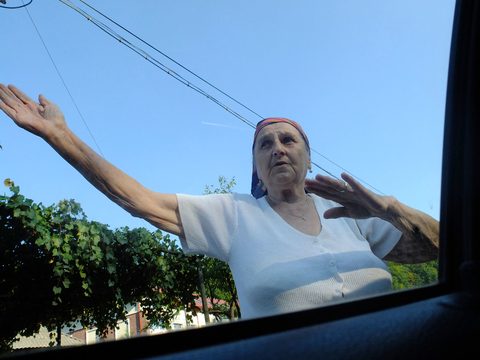 Her directions were too _____ to help us: "somewhere downtown, maybe near a big gray building".
 "Everything happens for a reason" is a _____ people repeat when they don't know what else to say.
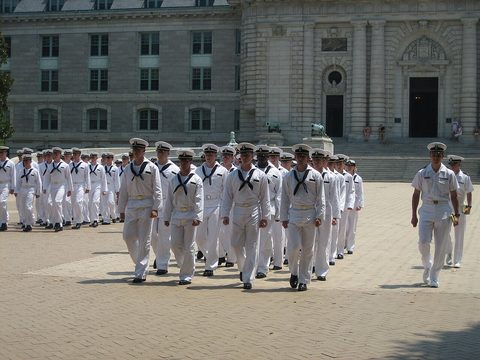 As a first-year _____ at the naval academy, she learned to march before she learned to sail.
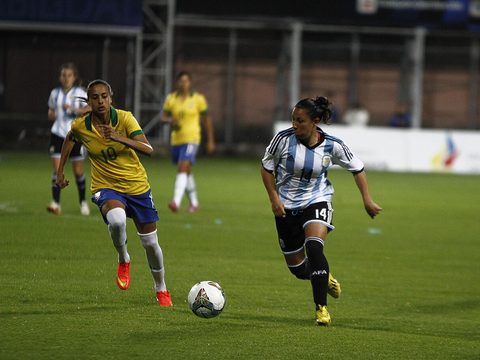 Brazil and Argentina always _____ among the top teams in the world in the months before a World Cup.
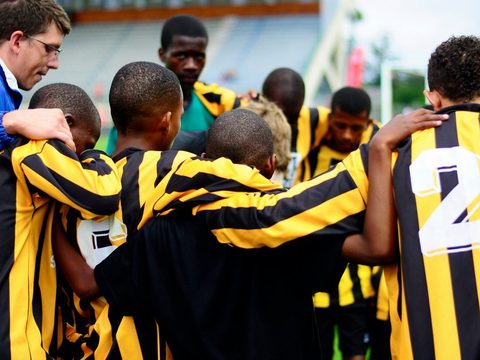 A good coach can _____ a group of nervous beginners into a confident team in a single season.
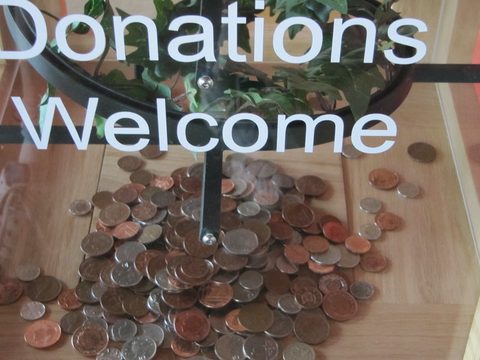 Most of the money the _____ collects goes to the children's hospital it supports, not to any owner or investor.
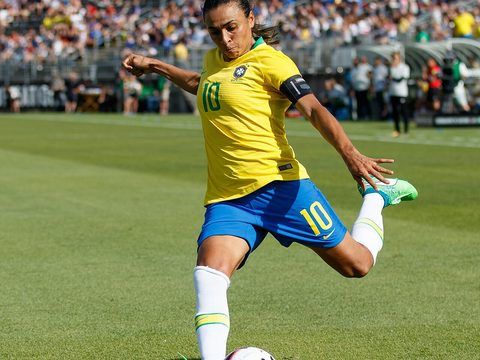 For many fans, Pelé and Marta _____ everything that is beautiful about Brazilian soccer.
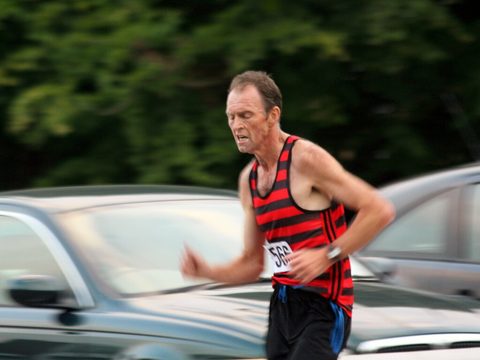 Talent got him to the start of the marathon, but it was _____ that carried him through the last ten kilometers on a bleeding foot.
Who are you going to be?
Watch the speech first: three minutes, captions on. Then read the story of what she says. Dotted words have a definition — hover or tap them. The audio button reads each paragraph aloud.
Michelle Obama stands in front of a hall full of students about to start their careers. She does not ask what they are going to do. She asks who they are going to be.
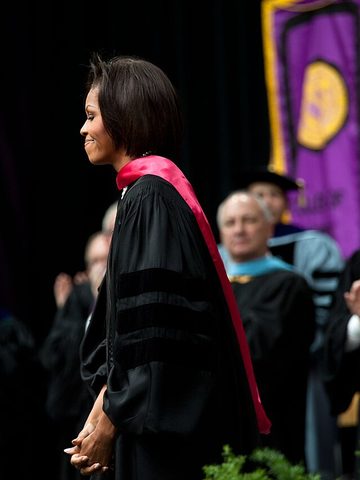
The difference matters, she explains, because life will test them soon. One day they will not get the job they had their heart set on, or a whole class will ignore their lessons.
Those hard days, not the promotions or the prizes, are the moments that define a person. On some days, all you can do is claw and scratch and fight until the evening comes.
Sooner or later you get knocked down and start to wonder whether getting back up is worth it. That is the moment to ask the big question again: "Who am I going to be?"
She knows this can sound like a vague platitude about building character, so she brings evidence. Recent research shows that resilience and conscientiousness matter as much as test scores or even IQ.
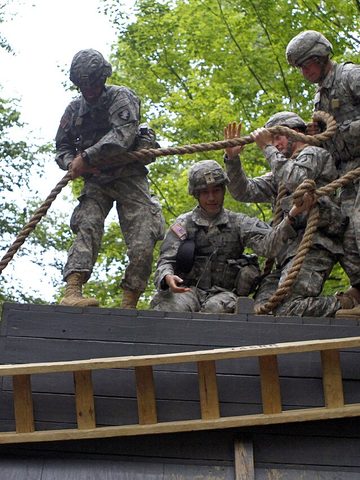
Her example comes from West Point, the United States Military Academy. Cadets with more grit and determination finished basic training more often than those with the best class rank, SAT scores and fitness.
Her advice is simple: dig deep, pick yourself up after every fall, and work on your weak points until they become strengths. Skills built that way can be molded to fit any job or crisis.
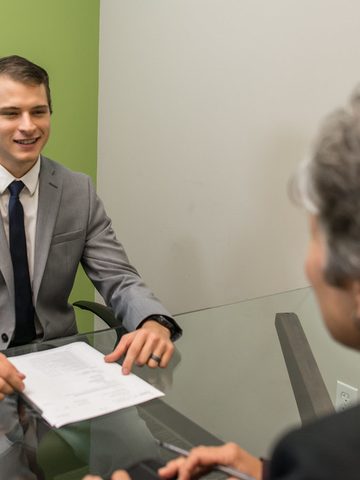
Then she shares a secret from her own career as a lawyer, a university administrator, a nonprofit manager and, now, first lady. She has hired and managed hundreds of young people.
Not once did she ask a candidate to explain a test score or a grade, and she never hired anyone just because of a famous school.
Instead, she looked at the person: hardworking, reliable, open to other points of view, ready to serve others. Those qualities, she says, move businesses, schools and the country forward, and her listeners already embody them.
Multiple choice
The stamp shows the moment in the video. Click an answer and read why.

-
At the start, what does she ask the students? 00:03
She says it twice: not what are you going to do, but who are you going to be. The whole speech is an answer to that second question.
-
Which hard moment does she give as an example? 00:11
Her examples are about the first years of a career: a job you don't get, a class that ignores your lessons, a boss with a goal that feels too high. None of them is about exams.
-
According to her, which moments define us? 00:30
Not the promotion, not the prize. The moments that define us are the ones that force you to claw and scratch and fight.
-
When you get knocked down, what does she say you have to ask yourself? 00:45
Wondering whether it is worth getting back up is the feeling; the question to ask is who am I going to be. It is the question from the start, now in the hardest moment.
-
Why does she say this "isn't just some vague platitude"? 00:55
A platitude is an empty phrase everybody repeats. She knows advice about character can sound like that, so her next sentence starts with research.
-
What does recent research show, according to her? 01:05
Just as important, she says: not more important, and not instead. Soft skills join the list; test scores don't leave it.
-
In the West Point example, which cadets completed basic training more often? 01:13
Class rank, SAT scores and fitness are all measurable, and they all lost to grit and determination. This is the evidence for her whole argument.
-
What happens if you work until your weaknesses become your strengths? 01:36
A set of skills you can mold and apply to any situation, any job, any crisis. She never promises a promotion, and she expects you to fall again; that is what pick yourself up is for.
-
What is the "little secret" she shares about hiring? 01:53
As a lawyer, a university administrator, a nonprofit manager and first lady, she has hired and managed hundreds of people, and never once asked one of them to explain a test score or a grade.
-
What does she say about Ivy League schools? 02:18
Never once, she says, did she hire someone just because they went to an Ivy League school instead of a state school. She doesn't say the schools are bad, or that state schools are better: the name of the school simply isn't the reason.
-
What did she look for in a candidate? 02:25
What kind of person are you? Her questions follow: hard worker, reliable, open to other viewpoints, ready to serve others and the country. Every one of them is a soft skill.
-
Which sentence best summarizes the speech?
From the first question to the last hiring story, the speech says the same thing: who you become in the hard moments is what counts, and it shows in grit, not in grades.
Six missing words
Six words from the speech are missing. First, read each line and decide: is the missing word a verb or a noun? Then guess it from its first letter. Finally, watch the moment on the stamp and check.
-
f…00:41 Her three verbs for surviving a terrible day: claw, scratch and ___.
-
c…00:56 She says this isn't a vague platitude about building ___.
-
s…01:09 Resilience can be just as important to your ___ as your test scores.
-
d…01:17 The cadets who scored high on grit and ___ did better in basic training.
-
m…01:56 Over her career, she has hired and ___ hundreds of young people.
-
e…02:11 She has never asked a candidate to ___ a test score or a grade.
Word families

One root, three jobs. English builds families from one word: a verb, a noun, an adjective. The ending usually tells you which is which. Learn the family, not the word: one root gives you three ways to say the same idea.
- Verb → noun: -tion, -ment, -er: create → creation · employ → employment · teach → teacher
- Noun or adjective → verb: -ize, -ify: memory → memorize · simple → simplify
- Adjectives: -ful, -able, -ed, -ic: hope → hopeful · comfort → comfortable · organize → organized · athlete → athletic
- Same form, two jobs: some words are a verb and a noun with no change: to work / the work. The person often takes -er.
- Shape-changers: a few families change more than the ending: choose → choice, believe → belief. Check the dictionary when in doubt.
- Then check the form: a verb may need -s or -ed; a noun may be plural. The ending gives you the family; the sentence gives you the form.
Complete each sentence with a member of the family of the word in capitals: the six families from the speech. First decide verb, noun or adjective; then the form.
-
CHARACTERPatience and calm ___ the best nurses I have worked with.
-
CHARACTERThat dry sense of humor is ___ of people from her city.
-
DETERMINATIONShe is ___ to finish the marathon, even if she has to walk the last part.
-
DETERMINATIONThe doctors still can't ___ what caused the fever.
-
EXPLAINNobody understood the new rule, so the manager sent a written ___ the next day.
-
EXPLAINThe drop in sales is perfectly ___: the store was closed for a month.
-
FIGHTAfter the third round, the older ___ could barely lift his arms.
-
MANAGEThe hotel's new ___ used to be a receptionist there twenty years ago.
-
MANAGETen reports a day is too much; five would be ___ for one person.
-
MANAGEGood ___ of your time is a soft skill every employer values.
-
SUCCESSYou won't ___ in this business if you can't take criticism.
-
SUCCESSHer first restaurant was so ___ that she opened two more within a year.
Hard skill or soft skill?
Hard skills can be taught and measured. Soft skills are the traits that make you good to work with. Sort the list from the speech, plus one from the definition. Then add two examples of your own to each side.
-
grit
Nobody can measure how long you keep going when it hurts. It is a trait, not a technique.
-
test scores
A number on a page. It measures something you were taught: the definition of a hard skill.
-
resilience
The ability to recover after a bad day is a personal quality. No course gives you a certificate in it.
-
reliable
Being the person who always shows up is a trait. Employers see it over months, not on a test.
-
IQ
Whatever we think of the test, an IQ is a measured number. Measurable puts it on the hard side, next to test scores, and that is where she puts it too.
-
conscientiousness
Doing your work carefully and completely is a habit of character. It shows in how you work, not in what you know.
-
determination
A decision to keep going. It cannot be taught in a classroom or scored on a test.
-
SAT scores
The SAT is a standardized test used for university admission in the United States. A score is the definition of measurable.
-
physical fitness
You can train it and measure it: minutes, kilos, repetitions. That is the speech's own point: the fittest cadets were not the ones most likely to finish.
-
a hard worker
Working hard is about attitude, not about a technique you learned. It is the first quality she looks for in a candidate.
-
open to other viewpoints
Listening to ideas you disagree with is a trait of character, and one of the questions she asks about every candidate.
-
using a spreadsheet program
A program can be taught in a course and tested in an hour: the classic hard skill, straight from the definition in the warm-up.
Knocked down, back up
The speech is built on a few phrases about falling and recovering. Read the situation and choose the phrase that fits it.

- get knocked down: be hit or pushed and fall to the ground; in life, suffer a defeat
- get back up: return to a standing position after a fall
- pick yourself up: recover from a difficult situation
- dig deep: make an effort with everything you have left
- claw and scratch: fight hard for every small thing, like an animal with its nails
- whether: if; it introduces a doubt or a choice between two possibilities
- a growing body of research: more and more studies on the same topic
-
In the tenth round, the champion hit him so hard that he ___.
A hard punch, and he is on the floor: knocked down. Getting back up comes later, if he chooses.
-
He stayed on the floor for eight seconds. Then, slowly, he ___.
He returns to a standing position after the fall. The speech's question is exactly this one: is it worth it?
-
Two kilometers from the finish line, her legs were gone. She had to ___ to keep running.
Nothing has knocked her down; she is still running. Dig deep means find the last of your energy and use it.
-
After the company closed, he spent a month on the sofa. Then he decided to ___ and look for a new job.
A month on the sofa is the fall. Pick yourself up means recover from a difficult situation and start again.
-
Nobody helped the small shop during the crisis; the owners had to ___ for every single customer.
Claw and scratch means fight hard for every small thing, like an animal with its nails. Perfect for a shop with no help.
-
She still hasn't decided ___ she will accept the job in another city.
Whether introduces a choice between two possibilities: accept the job or not. Unless and although don't fit the meaning.
Talking points
Part A is about the speech. Part B is about you. Part C is for your opinions. Answer with a reason and an example, and tap a card when you have discussed it.

Useful language
Two soft skills, one interviewer
80–120 words. An interviewer asks: "What are your two strongest soft skills, and how do you know?" Answer in one paragraph: name each skill, then give one real moment that showed it. Use at least three words from this lesson, and one member of a word family from Exercise 07.
My results
Check your score, then copy it and send it to your teacher on WhatsApp.

One job for this week. Pick one soft skill from her list — hard worker, reliable, open to other viewpoints — and catch yourself using it once a day. Then say the sentence out loud, in English: "Today I was reliable because …" Ten seconds, every day.