Bet You Didn't Know: Valentine's Day
A wild Roman festival, a cleric who married couples in secret, a rumor about birds, and a machine that printed cards by the thousand. How February 14 became a twenty-billion-dollar day, and one small word, though, that turns a contrast around.
Warm-up
Ask and answer with a partner, or with me. Tap a card when you have answered it.

Bet you didn't know where Valentine's Day comes from. Neither did most Americans, and they spend twenty billion dollars on it. Today we follow the date from ancient Rome to the jewelry store, and we learn a small word that says "however" in six letters.
Useful language
Match the words
All eight appear in the reading. Click a word, then click its definition. Correct pairs turn green. The audio button says the word.
Complete the sentences
Click a word in the bank, then click a gap. Click a filled gap to clear it. Every sentence explains itself: read the whole thing before you choose.

 Many birds
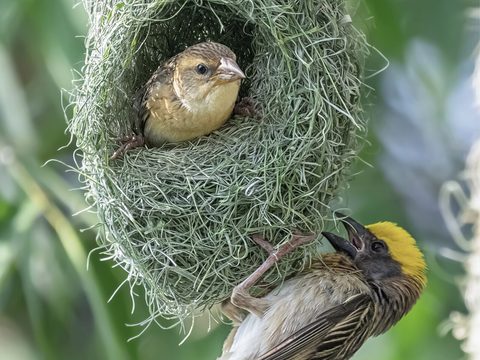
_____ in early spring: the males sing, the females choose, and each new couple builds a nest together.
 My grandfather and I have exactly the same name, so at family dinners everyone calls me his
_____.
 Our neighbor is so
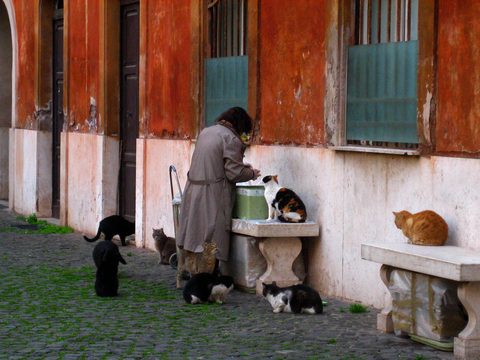
_____ that she feeds every stray cat on the street and cries at sad commercials.
 Nobody likes to
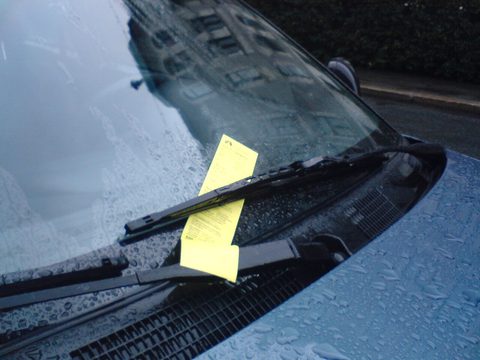
_____ two hundred dollars for a parking ticket, but a fine has to be paid.
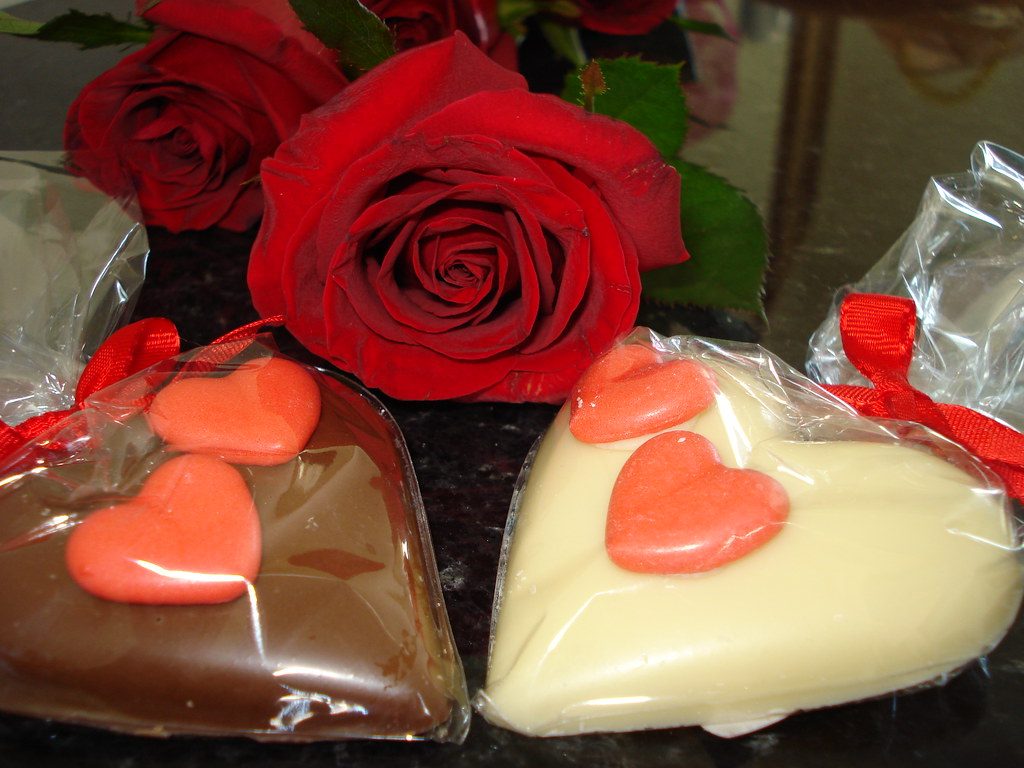
 It was her fortieth birthday, so she let herself
_____ on a weekend at a five-star hotel.
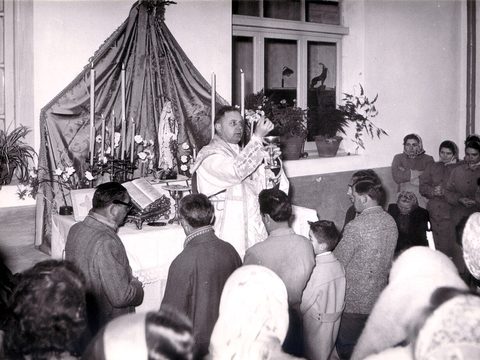 The village had only one
_____, who led the Sunday service and visited every sick person in the valley.
 These plastic chairs are
_____: one factory makes ten thousand of them a day, and each one costs two dollars.
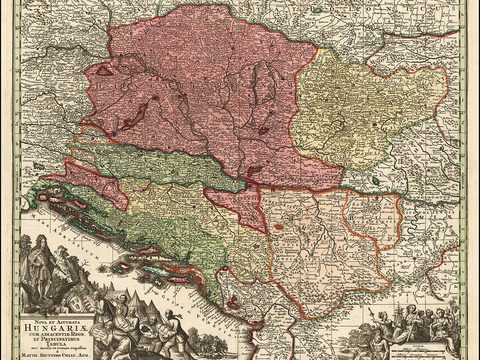 The
_____ of the conflict go back two centuries, to a war about the border between the two kingdoms.
From Rome to the jewelry store
Watch the video first, with the captions on: two and a half minutes. Then read the story, which retells the video in new words. Though is in bold. Tap a dotted word to see what it means; the audio button reads each paragraph aloud.
Our story begins in ancient Rome. Every year, in the middle of February, the Romans held Lupercalia, a raucous festival to celebrate fertility. That wild party is where Valentine's Day has its roots.
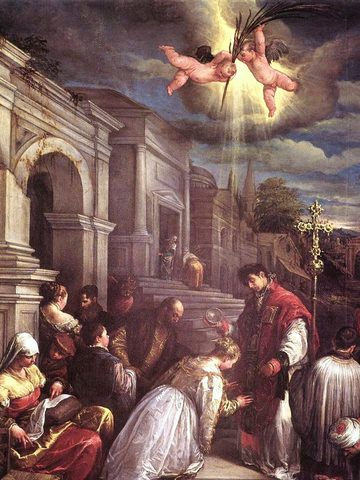
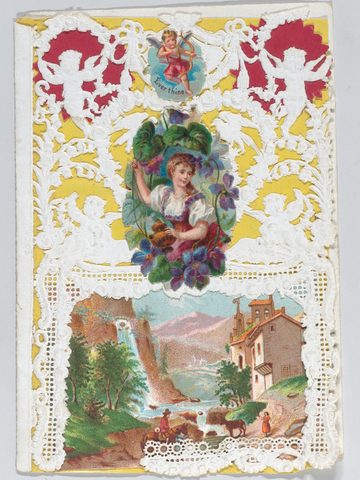
Centuries later, the Christian Church wanted that popular date for itself. It placed St. Valentine's Day in the middle of February, a clever way to Christianize the old celebration.
The plan had one weak point: very little is recorded about the holiday's namesake. The early Church had several clerics called Valentine, not just one, and it is hard to tell them apart.
One of them broke the law. Emperor Claudius II had forbidden young Roman men to marry, sure that men without wives made stronger soldiers, so this Valentine married couples in secret.
Those secret weddings were a crime, and for them Valentine was sentenced to death. Late in the fifth century, Pope Gelasius set February 14 aside to honor this soft-hearted cleric.
For hundreds of years, though, February 14 belonged to a saint, not to lovers. Romance only arrived in the 1300s, when people believed the birds' mating season started on that date.
Once the day meant love, people wanted to say it on paper. The earliest written Valentine messages come from the 15th century, and by the 17th, the British were exchanging cards and letters every February.
The custom crossed the ocean and soon caught on in America. There, in the 1840s, the first mass-produced Valentine cards reached the stores, cheap enough for almost anyone to buy.
Cheap cards turned February 14 into a major shopping holiday. Today, people send about a billion Valentine cards a year, and Americans spend nearly 20 billion dollars on the day, about 130 each.
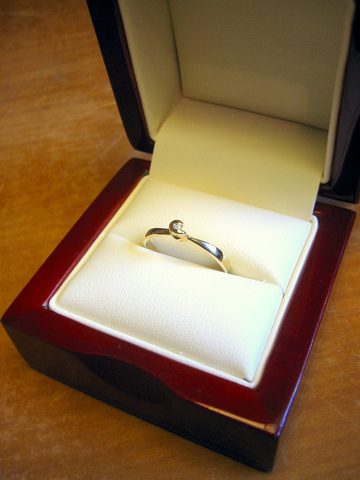
Candy and flowers are the favorite gifts, though nearly one American in five splurges on jewelry, and together they shell out four billion dollars. Up to six million couples may get engaged that day.
Multiple choice
The stamp shows the moment in the video. Click an answer and read why.

-
What was Lupercalia? 00:20
The video calls it "a raucous ancient Roman fertility festival held in mid-February". Raucous means noisy and wild: not exactly a saint's day, which is why the Church later wanted to change it.
-
Why did the Christian Church choose mid-February for St. Valentine's Day? 00:30
The Church chose the date "in order to Christianize the celebration": same date, new meaning. Nothing in the video says when Valentine was born.
-
Why is so little known about the holiday's namesake? 00:39
Not much is known about the saint, the video says, and the first reason is simple: there was more than one Christian cleric called Valentine. With several Valentines, nobody is sure which one the day is for. Nobody says he did not exist, and nobody mentions destroyed documents.
-
Why was one of the Valentines sentenced to death? 00:46
Emperor Claudius II had banned marriage for young Roman men. Valentine kept performing the ceremonies in secret, and paid for it with his life.
-
Why did Emperor Claudius II ban marriage for young Roman men? 00:50
"Thinking single men made better soldiers": a man with no wife and children at home, the emperor believed, would fight harder and worry less.
-
What did Pope Gelasius do at the end of the fifth century? 00:55
Pope Gelasius "declared February 14 as a day for honoring the soft-hearted Valentine". The date was already there; the Pope gave it the saint.
-
When did the holiday become linked to love and romance, and why? 01:02
"It wasn't until the 1300s, though…": the link with love and romance only came then, because back then people believed February 14 was the beginning of the birds' mating season. Eight hundred years after the Pope, the saint's day became a lovers' day. The cards came later still.
-
When did the first written Valentine greetings appear? 01:16
The first written greetings came in the 15th century. The British tradition of exchanging cards came two hundred years later, and the American mass-produced cards later still.
-
What tradition had begun in Great Britain by the 17th century? 01:18
By the 17th century, the British were already exchanging Valentine's Day cards or letters every February: a tradition, the video says, not a fashion. The chocolate boxes and the engagements are today's numbers, not the 1600s.
-
What happened in the United States in the 1840s? 01:30
The first mass-produced cards "emerged in the 1840s", and right after that the video says the holiday "exploded" into a major consumer holiday. No government decision is mentioned: the machine, not the law, made the day big.
-
Which gift do nearly 20% of Americans splurge on? 02:06
Nearly one American in five splurges on jewelry, and together they shell out as much as four billion dollars a year. Candy and flowers are the most popular gifts, but nobody needs to splurge on a box of chocolates.
-
Which sentence best summarizes the story?
The whole video is that chain: Lupercalia, a Christian saint's day, the 1300s and the birds, then cards, mass production and twenty billion dollars. The other two sentences take one detail and make it the whole story.
Watch again: the timeline and the numbers
Part 1: watch the video again and complete the timeline with the video's own words. Part 2: listen once more without looking at the screen, and type the dates and numbers you hear. Digits or words, both are fine.
Part 1 · Complete the timeline
-
Ancient RomeA raucous fertility festival called ___ was held in mid-February. 00:20
-
Claudius IIA cleric named Valentine was sentenced to death for performing ___ in secret. 00:46
-
5th centuryPope Gelasius declared February 14 a day to ___ him. 00:55
-
1300sThe holiday became definitively associated with love and ___. 01:02
-
1300sPeople believed February 14 was the beginning of the birds' ___ season. 01:09
-
15th centuryThe first written Valentine ___ appeared. 01:16
-
17th centuryPeople in Great Britain had begun a tradition of exchanging Valentine's Day cards or ___. 01:18
-
1840sThe first ___ holiday cards emerged in the US. 01:30
-
1840sValentine's Day soon exploded into a major ___ holiday. 01:32
-
NowadaysValentine's Day is one of America's most ___ holidays. 00:00
Part 2 · Listen for the dates and the numbers
-
aMore than ___% of Americans celebrate Valentine's Day. 00:05
-
bIt wasn't until the ___ that the holiday became associated with love and romance. 01:02
-
cThe first written Valentine greetings appeared in the ___ century. 01:16
-
dBy the ___ century, people in Great Britain had begun exchanging cards or letters. 01:18
-
eThe first mass-produced holiday cards emerged in the ___. 01:32
-
fAn estimated ___ Valentine cards are sent each year. 01:37
-
gMore than ___ heart-shaped boxes of chocolate are sold. 01:46
-
hMore than ___ roses are produced for the holiday. 01:48
-
iIn a typical year, Americans spend almost ___ dollars on Valentine's Day. 01:55
-
jThat is an average of ___ dollars per person per year. 02:00
-
kNearly ___% of Americans splurge on jewelry. 02:06
-
lThey shell out as much as ___ dollars on jewelry every year. 02:09
-
mAs many as ___ couples are likely to get engaged on February 14. 02:19
Though: one small word, two jobs

Listen to the video at 01:02: "It wasn't until the 1300s, though, that the holiday became definitively associated with love and romance." That though means however. Native speakers drop it into the middle or at the end of a sentence all the time, with a tiny pause. And at the front of a sentence it works like although: it joins two ideas that don't fit together.
- Job 1, conjunction (= although). It joins two clauses that pull in different directions. At the front, with a comma after the first clause: Though I don't usually drink coffee, I've had two cups today. Or in the middle: I've had two cups today, though I don't usually drink coffee.
- Job 2, adverb (= however, nevertheless), especially in speaking. At the end of the sentence, after a comma, like an afterthought: Candy is the favorite gift. Jewelry costs more, though. Or right after the first words, between commas: It wasn't until the 1300s, though, that the holiday became linked to love.
- Even though is a stronger though: Even though the emperor had banned marriage, Valentine kept marrying couples.
- One contrast word is enough. Never though … but in the same sentence: Though it was cold,
butwe went out. - Not the same as moreover or furthermore. Those add a second idea in the same direction; though turns the direction around. The cards were cheap. Moreover, they were pretty (one more good thing) · The cards were cheap. They were ugly, though (a bad thing after a good one).
-
"The restaurant was full of couples. The food, though, was terrible." Here, though means…
A full restaurant makes you expect good food, and the second sentence says the opposite. That is a contrast, so however. Moreover would add one more good thing, and because would give a reason.
-
Which sentence is correct?
One contrast word per sentence. Though already does the job of but, so but has to go.
-
"I never buy roses. I bought some today, though." What does the second sentence mean?
End-position though = however. "I never buy roses. However, I bought some today." The second sentence contradicts the habit in the first.
-
Which sentence is NOT correct?
Two thoughs in one sentence, and the contrast is upside down: being tired is the obstacle, finishing the letter is the surprise. The other two put the obstacle in the though clause, at the front or in the middle.
-
Which sentence means the same as "Roses are beautiful, but they are expensive"?
Two sentences, and though at the end of the second one: that is the spoken way to say but. So shows a result, not a contrast, and the second option changes the meaning.
-
"___ the ring cost more than his car, he bought it without a second thought."
A price that high is a reason not to buy, and he bought it anyway: the two ideas pull in opposite directions, and the contrast is strong. Even though is though with more force. Because would make the price his reason for buying, and moreover cannot join two clauses.
-
In speaking, where does though often go?
"It's expensive. I love it, though." You say the sentence, pause, and add the contrast. In writing, however does the same job; in conversation, end position though sounds more natural.
Say it again with though
Rewrite each sentence with though instead of but, and keep every other word. The cue tells you where it goes. START: begin with Though, keep both halves in order, comma between them. MIDDLE: keep the first half, then a comma and though before the second half. END: make two sentences and finish the second one with ", though."
-
STARTHe tried hard, but nothing changed.
-
STARTMalta is a very small island, but its history is long and rich.
-
ENDTom and Mary are twins, but they don't look very similar.
-
MIDDLEAnne was fond of Tim, but he often annoyed her.
-
ENDEveryone played well, but they lost the game again.
-
MIDDLEThe cards were mass-produced, but each one felt personal.
Talking points
Part A is about the video and the text. Part B is about you. Part C is for opinions. Try to answer one card with though at the end of a sentence. Tap a card when you have discussed it.

Useful language
A Valentine's card
60–100 words. Cards became famous when they were mass-produced in the 1840s; yours is handmade. Write a Valentine's card to someone you like: a partner, a friend or a family member. Say what you appreciate about the person and one memory you share. Use at least three words from Exercise 02 and one sentence with though.
My results
Check your score, then copy it and send it to your teacher on WhatsApp.

One job for this week. Every day, catch one but in something you say and turn it into though, with the pause: "It's expensive. I love it, though." Say it out loud. Seven days, seven thoughs.