Is Gaming Bad for You?
For years, video games were blamed for violence and addiction. Then a psychology channel looked at the research and found six benefits, from steadier emotions to sharper eyes. Eight game genres, six studies, and the verbs that say what causes what.
Warm-up
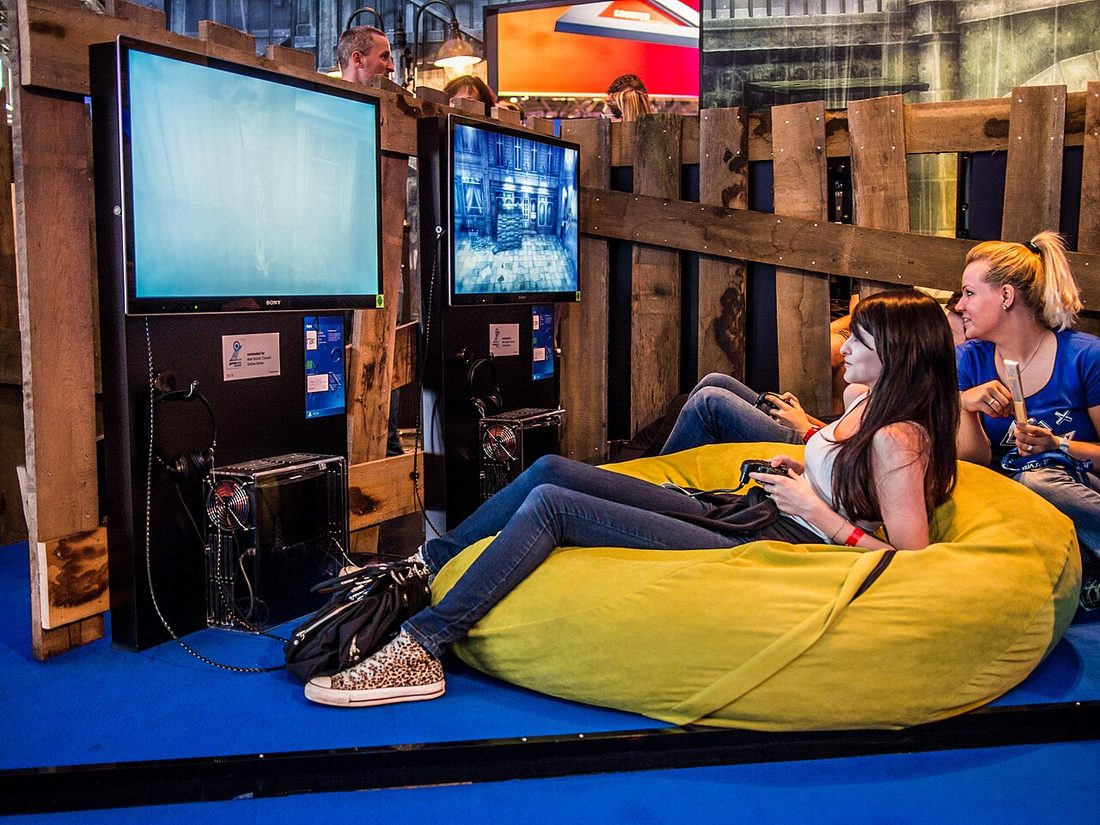
Gamers take the first three cards, non-gamers take the last three. Then ask a partner, or me, the other set. Tap a card when you have answered it.

Everybody has an opinion about video games. Today you hear what six studies say about them, learn the names of the game genres, and practice the verbs that describe an effect: boost, improve, help, be linked with.
Useful language
Game genres
Click a genre, then click its definition. Correct pairs turn green. The audio button says the word. When you finish, cover the definitions and try to remember them with a partner.
Complete the sentences
Click a genre in the bank, then click a gap. Click a filled gap to clear it. Each sentence has its own clues.

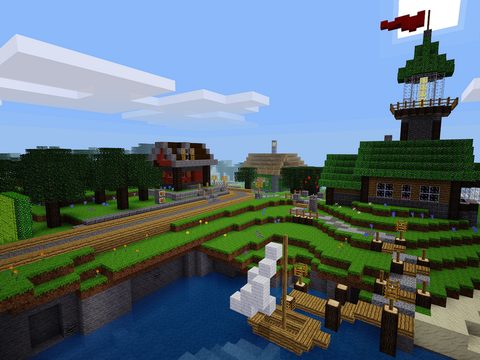 My nephew spent the whole afternoon building a castle out of blocks: no missions, no ending, just a
_____ game where you do whatever you like.
 Turn the lights on, please! Every time a door creaks in this
_____ game, I jump off the couch.
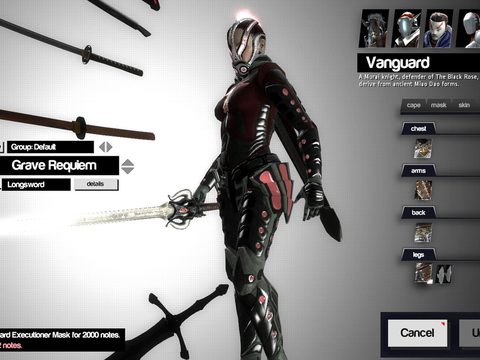 In this
_____ game you choose a name, a face and a personality for your character, and every decision changes how the story ends.
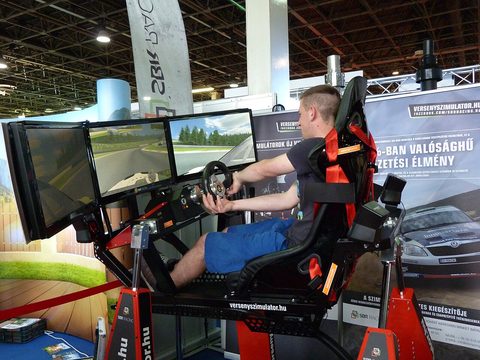 He never plays sports games because ball games bore him. He plays a
_____ game instead, where the first car to cross the finish line wins.
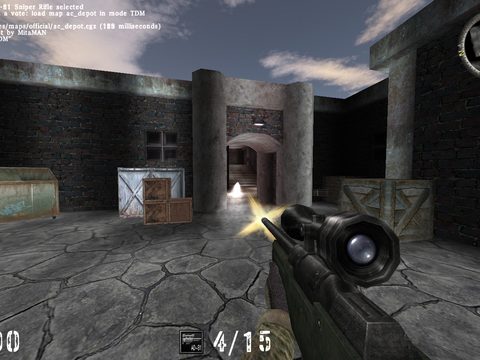 Aim, fire, reload: in a
_____ your weapon is on the screen the whole time, and the goal is to take out the other team.
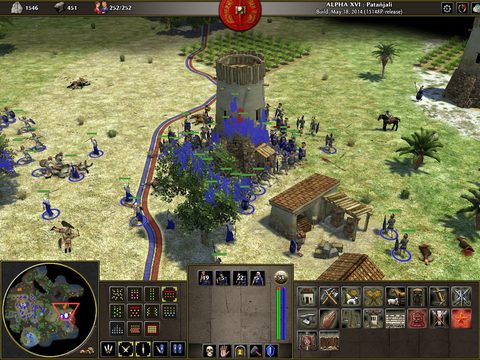 He commands an entire army at once, collecting gold and building towers while the enemy attacks: a good
_____ game never lets you pause and think.
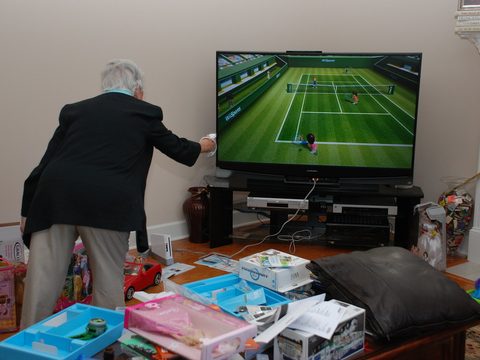 You don't need to be athletic to enjoy a
_____ game: the family tennis champion is eighty years old and plays in the living room.
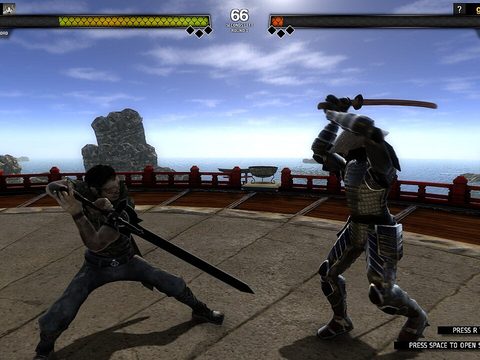 There is a story, but mostly you run, jump, punch and fight your way from one enemy to the next: it's a classic
_____ game.
Six reasons to keep playing
Watch the video first: four minutes, captions on. Then read the story, which retells it. The highlighted verbs say what causes what. Tap a dotted word to see what it means.
For a long time, people looked down on video games. They were accused of causing violent habits and addictive behavior, and a teenager with a controller looked like a problem waiting to happen.
Then games like Fortnite became mainstream, and gaming stopped being a hobby for a few: today nearly everyone calls themselves a gamer. So the channel Psych2Go asked a different question: what about the benefits?
The first answer came from a 2012 study on emotional stability. Immersive games appeared to bring the biggest benefit, because they allowed players to test out new sides of themselves.
Red Dead Redemption 2 is a good example: its world has no limits, so players explore who they are and who they would like to be. Research says that helps a lot.
The body benefits too. Games are known to improve hand-eye coordination, and a recent study found they improve all visuomotor coordination: your eyes and your body working as a team.
A shooter trains you to aim fast at small targets; a driving game makes you steer at high speed. That practice transfers to walking, driving, playing sports and even getting dressed.
Playing online with friends helps as well. A 2014 study proposed that social games develop prosocial skills: players learn who to rely on, how to make friends and how to be a leader.
Even our eyes gain something. Games boost visual contrast sensitivity, the skill of telling apart two almost identical shades of gray, and one study even used games to cure a lazy eye.
Older players are not left out. Many people fear dementia, and a 2016 study showed that gaming can help older patients restore lost mental skills: they walked better, felt happier and socialized more.
The last study answers the oldest accusation. In 2007, researchers found that playing relieved a lot of teenage stress: games may help teens vent their anger in the game world, not the real one.
Multiple choice
The stamp shows the moment in the video. Click an answer and read why.

-
What did people use to think about video games? 00:09
"Looked down on" and "accused of" are the two expressions the narrator uses: games had a bad reputation, and the accusation was violence and addiction. That is the question the whole video answers.
-
What changed when games like Fortnite went mainstream? 00:03
"Now almost everybody considers themselves a gamer." Mainstream means normal, for everybody, not only for a small group.
-
Why did the 2012 study call immersive games the most beneficial? 00:36
The study is about emotional stability: in an immersive world you can be somebody else for a while, and that exploration is the benefit. Talking to other players belongs to a different study, the one from 2014.
-
In a game like Red Dead Redemption 2, what do players explore? 00:45
"We're allowed to explore our own personalities and see what fits best with our ideal selves." The game is the place; the personality is what you explore.
-
What is visuomotor coordination? 01:09
Visual (vision) + motor (movement). Hand-eye coordination is one part of it; the study found that games improve all of it.
-
How does a driving game train the body? 01:24
Small, fast corrections with the hands while the eyes follow the road: that is visuomotor coordination in practice. The shooter example is the same idea, aiming quickly at small targets.
-
Where does that coordination practice transfer to? 01:28
"All kinds of tasks", says the narrator, and the list goes from sports to the most basic task of the day. Nothing about tests: that is a trap in Exercise 07.
-
What did the 2014 study say social games develop? 01:53
Prosocial = good for living with other people: who to trust, who to make friends with, how to lead a group. And those skills, the video says, transfer to the real world.
-
What did studies find about the eyes? 02:26
Contrast sensitivity is the ability to distinguish between shades of gray. One study even used games as a treatment to cure a lazy eye, the opposite of causing it. The narrator adds a warning: that is no excuse to stare at a screen all day.
-
What happened to the older patients in the 2016 study? 02:57
Restoring cognitive functions showed in three ways: walking abilities, moods and social interaction. Computers and languages are not in the video; they are another trap in Exercise 07.
-
What did the 2007 study find about teens? 03:24
Teens have a lot of pent-up emotion, and the study found that playing relieved stress. So games may help them vent in the game world instead of the real one: the opposite of the old accusation.
-
Which sentence best summarizes the story?
The text opens with the accusation and closes with the study that turns it around. Six benefits, from emotional stability to stress relief, and often with careful verbs: "might help", "are linked with", "appear to be".
The six benefits
Complete each benefit with the words the narrator uses. The stamp shows where each one is announced. Click a word in the bank, then click a gap.
- Video games are linked with _____. 00:23
- Video games _____ visuomotor coordination. 01:00
- Certain video games _____ social _____. 01:38
- Video games are linked with _____. 02:13
- Video games might help with _____. 02:45
- Video games can help teens _____. 03:10
What do they mean?
Correct the information
Each sentence has a mistake, underlined. Watch or listen again at the stamp and choose what the video actually says.

-
A 2012 study suggested that immersive games can be the most beneficial because gamers can interact with other people while playing them. 00:36
Interaction with other people is the 2014 study, about social games. The 2012 study is about exploring your own personality.
-
When we boost our visuomotor coordination, we get better at all kinds of tasks, like taking tests at school or college. 01:28
Coordination is about the body, not about tests: vision and movement working together. The narrator's list ends with the most basic task of all, getting dressed.
-
Immersive social video games help gamers develop prosocial skills. It means you have to compete and not interact with your opponents. 02:02
Pro-social is the opposite of "not interact": the skills are trust, friendship and leadership, and they transfer from the game world to the real world.
-
Games can boost visual contrast sensitivity, which is basically the ability to distinguish objects and shapes at a certain distance. 02:26
Contrast, not distance: the ability to tell one shade of gray from another. Distance is a different measure of vision.
-
A 2016 study found that playing video games helped older patients restore their cognitive functions. This included benefits like doing more exercise, speaking other languages and using computers. 03:03
Three benefits, all about daily life: walking, mood and social interaction with friends and family. Languages and computers are not in the video.
-
The 2007 study found that teens were doing better at school when they played video games. 03:29
The study is about stress, not grades: teens were blowing off steam. That is why the narrator says games may help teens vent aggression in the game world instead of the real one.
Name the genre
Seven real games, one short description each. Decide the genre. Then tell a partner which of the seven you would play, and which you would never touch.
-
Fortnite. A hundred players parachute onto an island, collect weapons and fight until only one is left standing.
Weapons and the goal of taking out the other players: a shooter. It has a building mode, but the match is decided with a weapon in your hands.
-
Minecraft. A world made of blocks: no story, no missions, no ending. You mine, build and explore whatever you like.
No main sequence or progression: the player decides. That is the definition of a sandbox, and the name comes from the box of sand children play in.
-
Age of Empires IV. You lead a medieval empire: gather resources, build a city and command your army while the enemy does the same, with no pauses.
Strategy and tactics against a challenge, and "real time" because the clock never stops while you think.
-
Star Wars Jedi: Fallen Order. A young Jedi with a lightsaber fights his way through a story set in the Star Wars universe.
Combat plus a plot you fight your way through: action. A lightsaber is a weapon, but the genre name "shooter" is for guns aimed at targets.
-
Dungeons & Dragons: Castle Ravenloft. A board game adventure: each player becomes a hero with special powers, and together the group explores a vampire's castle, one story at a time.
You play a character inside a story, and your choices shape the adventure: a role-playing game. Dungeons & Dragons was the first RPG, and it started on a table, not on a screen.
-
Madden NFL 20. Choose your team, call the plays and throw the ball down the field in a season of American football.
A simulation of a real sport, with real teams: sports. The NFL is the American football league.
-
Resident Evil 2. Zombies in a dark police station, very few bullets and a lot of tension.
Tension and fear to immerse the player: horror. You do shoot, but with so few bullets the point is the fear, not the aim.
Saying what causes what

Say how sure you are. Boost and improve claim a real effect; is linked with only says that two things go together; might and appear to keep the door open. The video chooses the verb by the evidence, and so should you.
- be linked with / to = connected, without saying it is the cause: Sleep is linked with memory.
- might / may + verb, appear to + verb, suggest that: careful claims. Reading might help. The plan appears to work. The data suggests that it works.
- help + person + verb (no to needed) and help with + noun: Music helps me concentrate. A list helps with organization.
- allow + person + to + verb, let + person + verb: The pass allows you to enter. It lets you enter.
- improve = make better · boost = increase, give a push: Practice improves pronunciation. Praise boosts motivation.
- restore = bring back · relieve = make less · cure = end completely: Rest restores energy. Tea relieves a sore throat. Nothing cures a cold.
- transfer from A to B: a skill learned in one place is used in another. Discipline transfers from sport to study.
-
Regular exercise ___ better sleep, but scientists are not sure it is the cause.
"Not sure it is the cause" asks for the careful verb: the two things go together, nothing more.
-
A short walk after lunch ___ my concentration for the whole afternoon.
Concentration goes up: boost. You cure a disease, and allow needs a person and to.
-
Talking to a friend ___ stress better than any app.
Relieve = make less. You would not want to improve stress (make it better!) or restore it (bring it back).
-
The new glasses ___ her read small print again.
Let + person + verb, no to. Allow needs it: allow her to read. Improve takes a thing, not a person and a verb.
-
This medicine won't ___ the disease, but it reduces the pain.
Reducing the pain is what relieve means, and the medicine does that. What it does not do is end the disease completely: cure.
-
A weekend in the mountains ___ the energy you lost during the week.
Energy you lost comes back: restore. Relieve makes something less; cure ends a disease.
-
The researchers are careful: they say the game ___ help with memory, not that it does.
"Not that it does" is the clue: a possibility, not a certainty. Must and will both sound sure.
-
The patience you learn in fishing can ___ to your work.
A skill moving from one area to another: transfer to. Boost and improve need a direct object, not to.
-
Learning an instrument ___ with concentration, teachers say.
Help with + noun. Improve and boost take the object directly: improves concentration, no with.
-
Immersive games ___ to be the most beneficial, according to the study.
Appear to + verb: a careful claim, the same job as might, but might takes the verb without to.
Say it again with the word given
Write a new sentence with the same meaning. Use the word on the left without changing it, and start as the gray text suggests.
-
LINKEDScientists see a connection between screen time and bad sleep.
-
HELPEDThanks to the map, I found the hotel.
-
BOOSTSMy confidence grows when I speak English every day.
-
ALLOWSWith this app, users can play offline.
-
RELIEVESA hot bath reduces my back pain.
-
MIGHTIt is possible that this game improves your memory, but nobody is sure.
-
TRANSFERThe teamwork you learn in soccer is useful at work too.
-
RESTOREDAfter the vacation, I had all my energy back.
Game over?
Part A is about the video and the text. Part B is about your life. Part C is for opinions: give a reason and an example, and use at least one verb of effect in each answer.

Useful language
The video in a mind map
80–120 words. First, plan a mind map: "video games" in the center, the six benefits around it. Then write the summary from the map, and add two personal ideas about gaming. Use at least four verbs of effect: boost, improve, help, be linked with, relieve, restore. Be ready to present it to the class.
My results
Check your score, then copy it and send it to your teacher on WhatsApp.

One job for this week. Pick one thing you do every day: coffee, a walk, a game, a song. Say three sentences about its effects, one with boosts, one with helps me and one with is linked with. Thirty seconds, in English.