7 Years by Lukas Graham
A boy in Copenhagen, a father who died too early, and a song that jumps from seven to sixty in four minutes. We follow the story behind the song and pick up the verbs that take -ing, the verbs that take to, and the ones that take both.
Warm-up
Start with the first card: it is a guessing game. Then the ages. Tap a card when you have talked about it.

Today's song is a timeline. Every verse is an age, from seven to sixty. Before we listen, let's build your own timeline: the years that changed your life, and the ages that are still to come.
Useful language
Match the words
Click a word, then click its definition. Correct pairs turn green. The audio button says the word.
Complete the sentences
Click a word in the bank, then click a gap. Click a filled gap to clear it. None of these sentences is about the song.

 After her best friend moved to another city, she felt
_____ every evening in the empty apartment.
 That professor
_____ everyone: he reads the same slides in the same voice, and half the class falls asleep.
 A freelancer's income goes up and down all year, so many freelancers would prefer to earn a
_____: the same amount every month.
 When we travel, we never book hotels in advance. We just
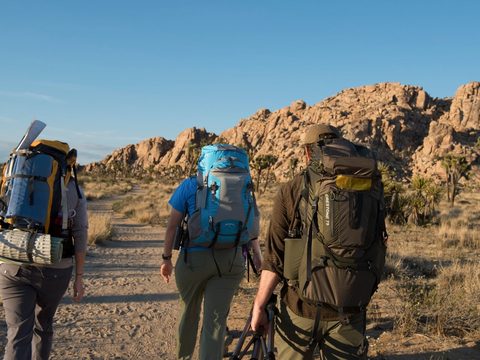
_____ from town to town and stop wherever we like.
 Write down your
_____ for the year and put the list on the fridge, so you see what you want to achieve every morning.
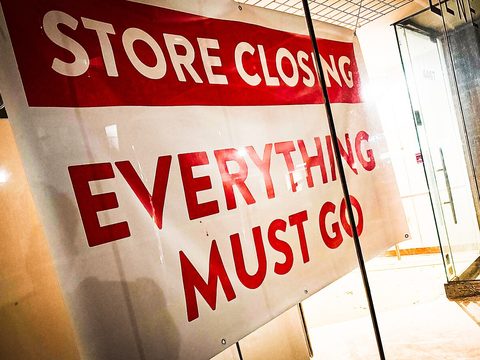 The new product sold only two hundred units in a year, and the company finally admitted it was a
_____.
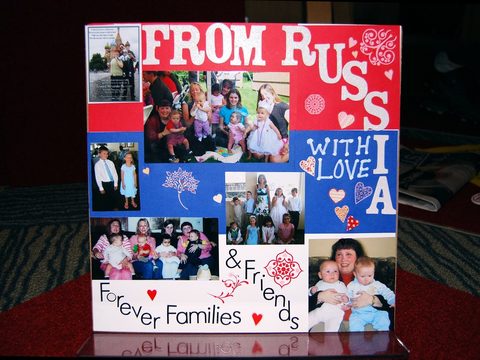 For her coworker's goodbye party, she cut out photos, words from old magazines and little paper hearts, and glued them all onto one big board to make a
_____.
 The guitarist and the drummer stay in the back; the
_____ stands at the front with the microphone and talks to the crowd.
The song that grows old
Watch the official lyric video first, with the captions on. While you watch, notice which ages come up and what the pictures show. Then read the story behind the song. Verbs followed by -ing or to are in bold. Dotted words have a definition: hover or tap them.
Lyrics
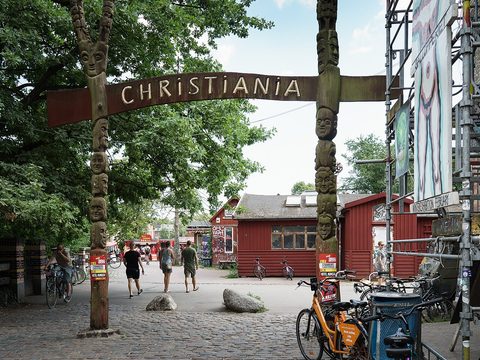
Lukas Forchhammer grew up in Christiania, a self-governing community in Copenhagen where the residents make their own rules. His father, Eugene, was Irish, and Lukas has said he had a perfect father.
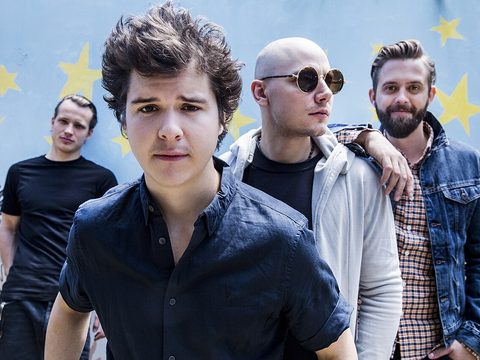
Eugene, a music booker, was his biggest fan. At eight, Lukas joined the Copenhagen Boys' Choir; at twenty, on a trip to South America, he began writing songs, hundreds in six months.
In 2011, he and three friends formed Lukas Graham and decided to make their own videos for YouTube. Hundreds of thousands of people watched, and a Danish label signed the band that same year.
Then, in 2012, his father died. He was sixty-one. Lukas has said that without that loss he would never have written the songs that made the band famous.
One of them came in a single studio session of about three and a half hours. Lukas and his co-writers dreamed up the second half of his life: everything that had not happened yet.
The result was "7 Years": no fixed structure, the band said, just a mood that grows older, verse by verse, from a boy of seven to an old man hoping to see his children.
It came out on September 18, 2015, Lukas's twenty-seventh birthday. Two months later came the lyric video: a collage of family photos that age with the song, from small boy to band on stage.
The photos and the story traveled far: number one in Denmark, the United Kingdom and Australia, and number two in the United States, the best position for a Danish act there since 1961.
Not everyone loved it: Time magazine listed it among the worst songs of 2016, while a Danish critic compared it to the Beatles. In 2017 it got three Grammy nominations, including Song of the Year.
For Lukas, the song is about growing older and one dream: he wants to be such a good father that, when he is old, his kids' friends say, "Visiting your dad? Say hi, he's awesome."
Multiple choice
Click an answer and read why. One question is about the pictures in the video; the stamp shows the moment.

-
Where did Lukas grow up?
Christiania is a self-governing community inside the Danish capital, where the residents make their own rules. Lukas also spent part of his childhood in Ireland, his father's country, and Los Angeles is where part of the official music video was filmed later.
-
When did Lukas write his first songs?
His first song came on that trip, and three or four hundred more followed in six months. The choir came first, at eight, but that was singing, not writing; the band came later, in 2011.
-
How did the band first find an audience?
The videos came before any official record. A Danish label signed the band in late 2011, and it had sold seventeen thousand concert tickets before releasing any music. Lukas's father booked the band's shows in its first six months.
-
What happened in 2012?
The story turns here. Eugene, his Irish father, was sixty-one, and Lukas was on tour when the news came. The American record deal came later, and Lukas says it was "7 Years" that got the band signed.
-
What does Lukas say about that loss?
He has said that his father's death is behind "7 Years" and behind "Happy Home", the song that, in his words, made the band a success all over Scandinavia. Sadness did not stop him writing; it made him write.
-
How long did it take to write "7 Years"?
One studio session. Lukas has described it as fast and spontaneous: he and his co-writers dreamed up the second half of his life, the part that had not happened yet.
-
What is unusual about the structure of the song?
Seven, eleven, twenty, thirty, sixty. The band has said the song has no hook and no fixed structure: it is a mood that moves through the ages, so the listener grows with it.
-
What does Lukas want, when he is old?
In his words, his biggest dream is not to be a negative old man but a father his children want to visit. The song was released on his own twenty-seventh birthday, September 18, 2015.
-
What do we see in the lyric video? 00:20
Real photos, cut out and glued together, with the words written by hand on top. They age with the song: a small boy and his father at the start, teenagers in the middle, the band and its crowds near the end.
-
How did the song do in the United States?
Number two on the Billboard Hot 100, the best position for a Danish act there since 1961. The five weeks at number one were in the United Kingdom, and in 2016 it was the fourth best-selling song in the US.
-
Why does the text mention Time magazine?
Time put it on a list of the worst songs of 2016; a Danish critic compared it to the Beatles' "When I'm Sixty-Four". Both reactions in one paragraph: the song divided people, and the Grammys still nominated it three times.
-
Which sentence best summarizes the story?
From Christiania to the Grammys, every step happens because of the one before: the father, the first songs, the band, the loss, the song, the photos, the charts. The YouTube videos and the nominations are chapters, not the story.
Which age?
Watch again with the captions on. At which age does each of these happen in the song? The stamp shows where to listen.
-
His mother tells him to make some friends. 00:25
The very first verse, at 00:25, is his mother's advice at seven: friends, or loneliness. The same lines come back at the end of the song, at 03:36, so the story ends where it began.
-
He and his friends are already smoking and drinking. 00:49
At 00:49 the song is already at eleven. The boys felt bigger than the world around them and, with no money, were already dreaming of a steady figure.
-
His father tells him to find a wife. 00:59
Mother at seven, father at eleven, and the reason is the same both times: so that he will not be lonely. Listen at 00:59.
-
He starts writing lyrics and stories, because he has the same dream his father had. 01:13
This part, from 01:13, still belongs to the eleven-year-old: it comes after his father's advice and before the song moves to twenty, at 01:30. His father's dream became his own.
-
He keeps writing, about everything he sees around him. 02:03
At twenty his story is being told, and at 02:03 he says what he was writing about: the world around him. This is the verse where he focuses on his goals and refuses to think about failure.
-
He has traveled the world selling his songs, and he is still on the road. 02:16
At 02:16 the song moves from what happened to what is coming: thirty is the near future. Lukas was twenty-seven when the song came out.
-
He has a partner and children now. 02:33
At 02:33, still in the verse about thirty, he is learning about life and has a family. The song never says he is married: it mentions his partner and their children.
-
Most of his old friends are still with him, but some have gone off to chase success. 02:41
At 02:41 he counts his "boys", the word he uses for his friends and bandmates, as at 01:54 in the verse about twenty. Most are with him; some are out looking for success; some, he says, he had to leave behind.
-
He thinks about the importance of remembering his life. 02:52
At 02:48 the song jumps to sixty and remembers that his father only got to sixty-one. The advice at 02:52 is for himself: keep your memories, and life gets better.
-
He wants his kids to visit him regularly. 03:02
The old man's wish, at 03:02. Right after it, at 03:08, come the two questions of the verse: will old age feel cold, or will he have children around him? Part A of the discussion is about them.
Verb + -ing or verb + to
Read the note, then choose the form that fits each sentence.

Two verbs in a row, and the first one decides. Started accepts both writing and to write. Hope only accepts to; keep only accepts -ing. There is no rule that tells you which group a verb belongs to: you meet the verb, you memorize its partner. Today you meet a few of the most common ones.
- Verb + -ing only: enjoy, keep, finish, avoid, mind, suggest, practice, give up, end up, can't stand, imagine, consider. She keeps calling me. · We ended up walking home.
- Verb + to only: want, hope, decide, plan, promise, expect, need, agree, learn, manage, refuse, seem, would like. He hopes to see them again.
- Verb + person + to: motivate, encourage, ask, tell, want, allow, remind someone to do something. The loss motivated him to write.
- Two that change meaning: stop doing = you finish the activity; stop to do = you pause in order to do it. try doing = experiment with it; try to do = make an effort.
- After a preposition, always -ing: dream of becoming, good at writing, interested in learning.
-
At twenty, Lukas ___ songs: hundreds of them in six months. Which is correct?
Start is in the first group: -ing or to, same meaning. The song itself uses the -ing form; the other one would be just as correct.
-
She hopes ___ a steady figure by the time she is forty.
Hope takes to, and never the bare verb: hope to earn. Hope earning does not exist.
-
He enjoys ___ around new cities without a map.
Enjoy is -ing only. It is one of the most common mistakes at this level: enjoy to do sounds natural in Portuguese and wrong in English.
-
My parents encouraged me ___ some friends at the new school.
Encourage + person + to: the person comes first, then to + verb. Same pattern as motivate, ask, tell and remind.
-
We ended up ___ all night about our childhood.
End up + -ing: the thing you finally do, often without planning it. Lukas uses the same verb about the studio session in Exercise 08.
-
They finished ___ the album in one summer, and it went to number one.
Finish is -ing only, like keep and give up. Careful with its opposite: start and begin take both forms, but finish never takes to.
-
I don't mind ___ alone, but I hate feeling lonely.
Mind is -ing only: I don't mind living alone. The second half, hate feeling, could also be hate to feel: hate is in the either group.
-
He stopped ___ a coffee on the way to the studio, so he arrived late.
He paused in order to buy a coffee: stop to do. He stopped buying coffee would mean he does not buy coffee anymore, and that would not make him late.
-
Which sentence is WRONG?
Want is to only, so wants visiting is impossible. Keep is -ing only, so the first sentence is fine.
Facts about the song and the songwriter
Write the verb in the cue in the -ing form or with to. The verb before the gap decides. Rows 2 and 3 are one sentence in two parts.
-
achieveAccording to lead singer Lukas Forchhammer, the song is about events in his life and the things he hopes ___ in the coming years.
-
becomeHe hopes ___ such a wonderful father that, even when he is old and boring, …
-
visit… his children will want ___ him often.
-
writeHis father's death was what motivated him ___ this track and a number of the band's biggest songs.
-
dreamLukas, about the studio session: "We ended up ___ up the second half of my life, everything that hasn't happened so far."
-
goLukas, in an interview: "I feel I owe it to them to keep ___ and just beat this."
-
makeIn 2011 the band decided ___ its first videos at home and put them on YouTube.
-
playSome radio stations avoid ___ one line of the song, because of what it mentions.
-
worryStop ___ about failure; nobody gets everything right the first time.
-
getMy grandmother refuses ___ old: at eighty, she still swims every morning.
Complete the questions
Write the word in the cue in the form that fits the question: singular or plural, base form or third person. Then keep the questions in mind: you will ask and answer them in the discussion.

-
lonelyWhat do you do when you are feeling ___?
-
failureHave you ever experienced ___? What did you do to overcome the situation?
-
boreWhat is something that ___ you?
-
goalWhat are some of your life ___?
-
roamWhen you travel, do you have a specific destination, or do you ___ around?
-
steady figureWhat ___ would you like to earn every month when you retire?
Conversation time
Part A is about the song and the video. Part B is about you: the questions you completed in Exercise 09 are here, plus five things to tell the class. Part C is for opinions. Try to use one verb + -ing and one verb + to in every answer.
Useful language
Future me
120–160 words. Write a letter to your future self, with the title "Future me". Plan it first: how do you see yourself in the future? What do you imagine yourself doing? What are your hopes and plans? What advice would you give to your future self? Use at least three of these: hope to, plan to, want to, keep …ing, stop …ing, give up …ing. If you like, send the letter to yourself with a "letter to the future" website and choose the date you want to receive it.

My results
Check your score, then copy it and send it to your teacher on WhatsApp.

One job for this week. Every day, say three sentences about your future out loud: one with hope to, one with plan to, one with keep …ing. Thirty seconds, in English, and the verb pairs start to stick.