INTERMEDIATE COURSE · CLASS 47

What Is Bonfire Night?

A man in a basement, a barrel of gunpowder and a fuse ready to be lit. Four hundred years later, the British still light fires on the fifth of November. The story of Bonfire Night, and the three small words that put every event in time: in, on and at.

B1+ 60 min Focus: in, on and at · Bonfire Night words Home
EXERCISE 01Speaking

Warm-up

Watch the fifteen-second video and listen to the rhyme. Say it out loud, copying the pronunciation. Then answer the cards with a partner, or with me. Tap a card when you have answered it.

Teacher Alvaro

Every British child knows this rhyme, and most of them have no idea what it is about. Before we watch the full story, you play detective: four lines, a crime, and a date that a whole country refuses to forget.

A traditional English rhyme, more than a hundred years old:
  • Remember, remember the fifth of November,
  • The gunpowder, treason and plot.
  • I know of no reason why the gunpowder treason
  • Should ever be forgot.
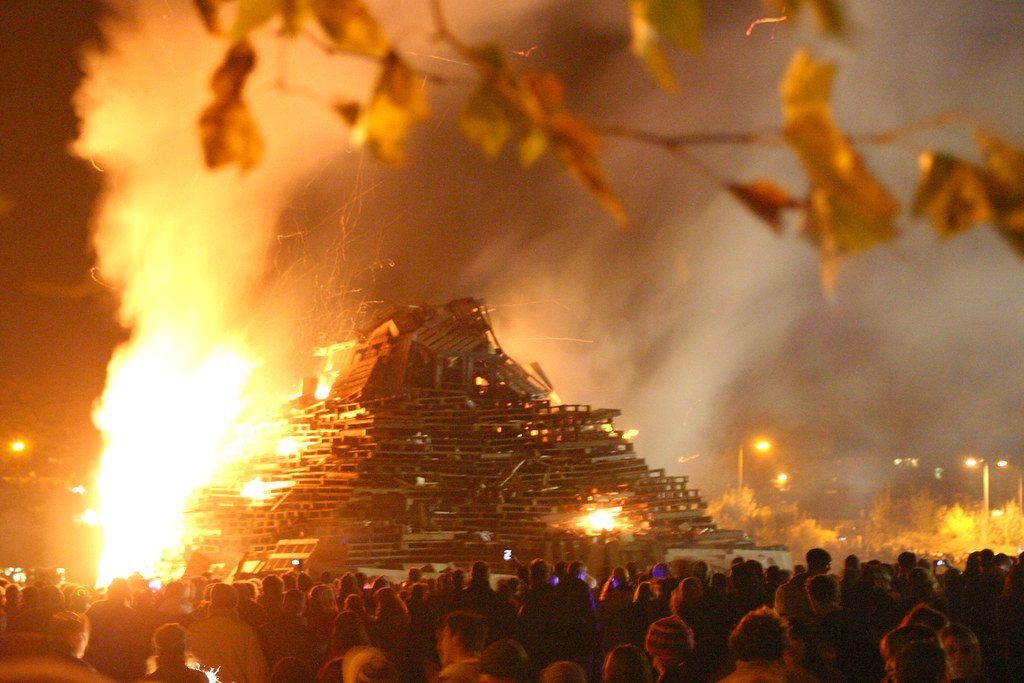
A huge pyramid-shaped bonfire burning at night in Lewes, England, with a big crowd watching in front of it
Useful language
I think somebody tried to…Maybe the plot was against… Treason means…, so the traitor was probably…I've seen the mask in… The hardest line is…, because of the sound…In my country, we remember … on…
0 / 0
EXERCISE 02Vocabulary

Bonfire Night words

All eight words are in the video. Click a word, then click its definition. Correct pairs turn green. The audio button says the word.

Word
Definition
EXERCISE 03Vocabulary in context

Complete the sentences

Click a word in the bank, then click a gap. Click a filled gap to clear it. Each sentence has its own clues: only one word fits.

Teacher Alvaro
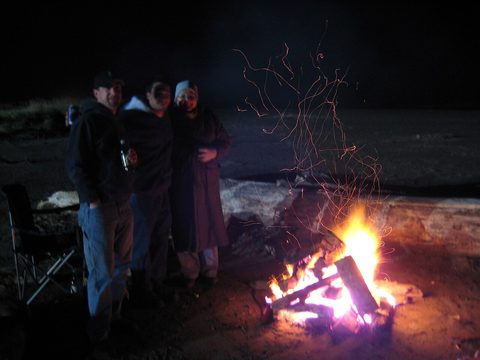
  • The campers collected dry wood all afternoon and lit a huge _____ on the beach after dark, to keep warm and sing songs.
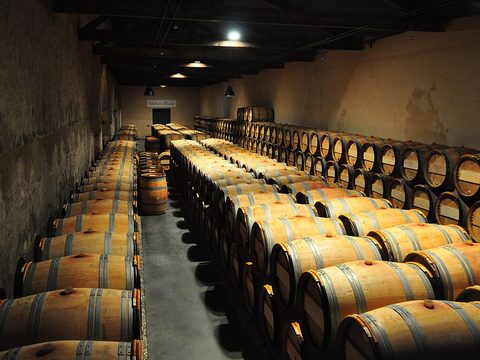
  • The winemaker keeps the wine in a big wooden _____ for two years before he puts it in bottles.
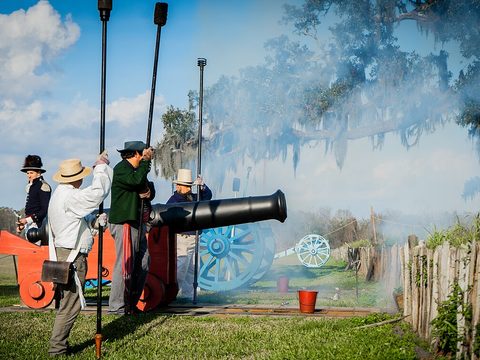
  • Old cannons did not use electricity or gas: a small amount of _____ exploded inside the cannon and pushed the iron ball out.
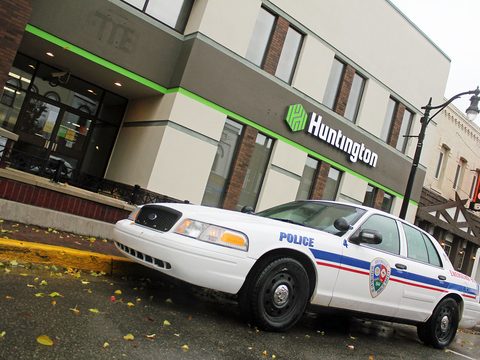
  • The police discovered the gang's _____ to rob the bank before the robbers had even entered the building.
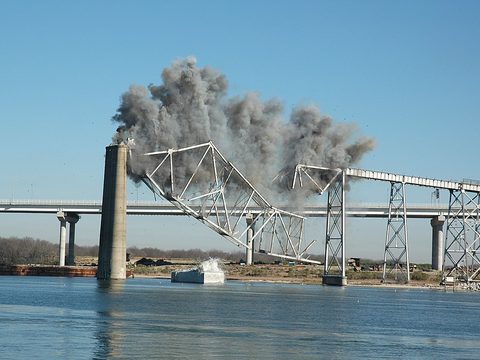
  • The engineers had to _____ the old bridge with explosives, because it was too dangerous to leave standing.
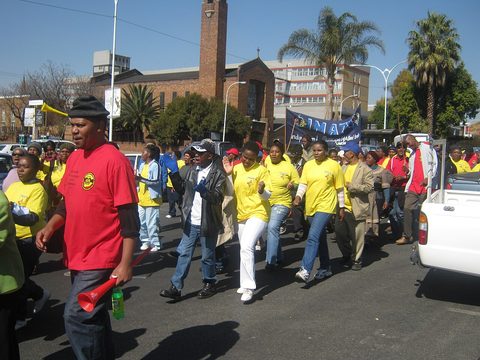
  • After the government raised the price of bread, there was _____ in the streets for weeks: protests, strikes and fights with the police.
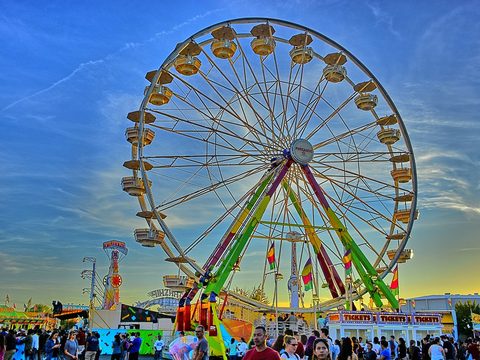
  • The kids spent all their money at the _____: three rides on the Ferris wheel, two games and a bag of popcorn.
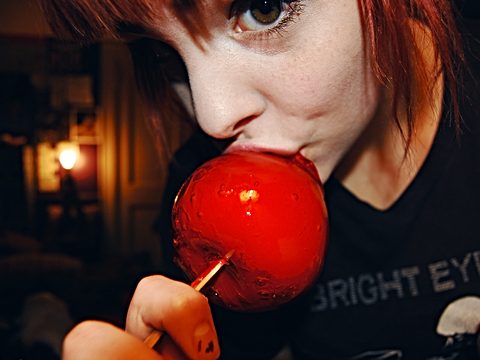
  • She bit into the _____ and the hard sugar shell cracked; underneath, the fruit was fresh and sour.
EXERCISE 04Video & reading

The plot that became a party

Watch the video first: three minutes, with captions. Then read the story. The prepositions of time are in bold. Tap a dotted word to see what it means.

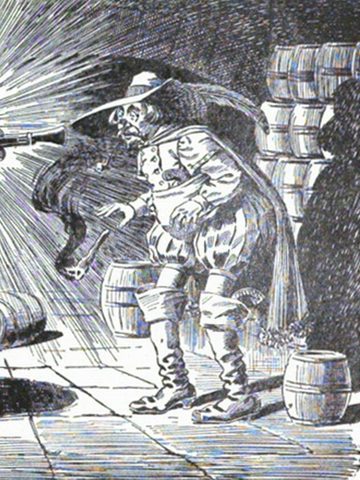
On the fifth of November, 1605, a guard went down to the basement below the Houses of Parliament in London. Inside, he found a man who should not have been there.

An old black-and-white drawing of a man in a hat and a long cloak in a dark cellar full of wooden barrels, caught in the light of a lantern
Found in the basement
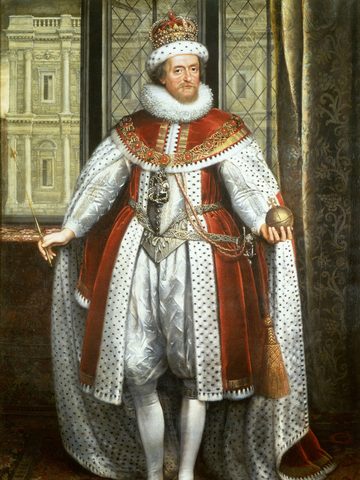
A painting of King James I standing in a crown and a long red and white royal robe
The king who survived
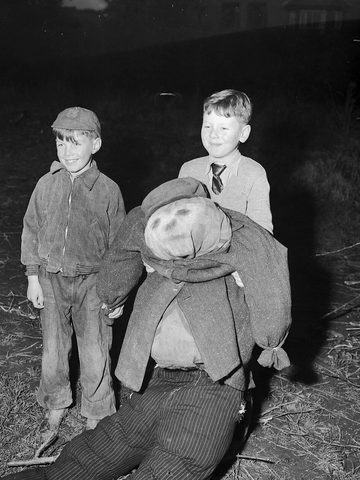
An old black-and-white photo of two smiling boys next to a life-size guy made of old clothes
Building the guy

The man was Guy Fawkes. Beside him was a giant barrel of gunpowder, and its fuse only needed a match. His group hoped to kill the King by blowing up Parliament while he was inside.

Thanks to the guard, the plot failed. Fawkes was arrested, taken to court and found guilty of treason, a crime against the King. The punishment was terrible: he was hanged, drawn and quartered.

The King had survived, and he wanted the whole country to celebrate with him. So he gave an order: on the evening of November fifth, bonfires had to burn all over England.

And so Bonfire Night was born. In the 1600s, the celebration had a serious side. It was tied to politics and religion, and for a long time it led to unrest between groups.

Today, the old politics and fights are forgotten. The British now see Bonfire Night as a time to have fun and meet people, and the celebration is built around three things.

The first is the bonfire itself, usually at one large public event, where the fire is huge but carefully controlled. The second is fireworks: Bonfire Night without them is impossible to imagine.

The fireworks, however, frighten pets and other animals, which find all that noise nerve-wracking. Children and their parents feel differently: they love a good show in the sky.

The third is the guy. Children stuff tights and old clothes with newspaper to make a life-size Fawkes, then throw him onto the fire. Strangely, the real Fawkes was never burned.

Many events turn into a funfair, with music, rides and stands selling toffee apples and candyfloss. Above all, families get a good reason to go out together at night.

EXERCISE 05Comprehension

Multiple choice

The stamp shows the moment in the video. Click an answer and read why.

Teacher Alvaro
  • Where was Guy Fawkes discovered on the fifth of November? 00:33

    The guard found him under the building itself, in the basement, which is exactly where a barrel of gunpowder would do the most damage: one explosion there, and Parliament would be destroyed with King James inside. Fawkes was not near the King's rooms, and not on the river.

  • When was the plot foiled? 00:18

    The speaker says the plot was foiled, stopped before it could succeed, back in 1605. That is why she later says "back in the 1600s": 1605 is in the 1600s, the seventeenth century.

  • What did the plotters want to do? 00:24

    A group of people had been plotting to blow up Parliament with King James inside: one explosion, and the King and his government would be gone. Fawkes was only one of the plotters, but he was the one who got caught.

  • What was found next to Fawkes in the basement? 00:39

    A huge barrel full of gunpowder and a fuse ready to be lit: the explosive and the way to set it off. There was nothing left to prepare, which is why the discovery came so close to disaster.

  • What happened to Fawkes after the guard arrested him? 00:47

    He was tried, found guilty and then hanged, drawn and quartered, which the speaker calls "a nasty punishment". Remember that: it explains the joke about fire later in the video.

  • Why did King James order a huge bonfire? 00:56

    The King was alive, and he wanted everybody to celebrate it, so the people of England were ordered to light a huge bonfire on the evening of the fifth of November. That first bonfire is the origin of the whole tradition.

  • In the 1600s, what was Bonfire Night about, and what did it cause? 01:09

    The plot was political and religious, and so was the celebration at first. The speaker says it caused some unrest, disagreement and fighting between groups, for many, many years. Fun and social interaction is what the night is about today, not then.

  • What is Bonfire Night about these days? 01:16

    "These days we've forgotten all of that," the speaker says: the politics and the religion are gone, and what is left is a night out with other people. The guy on the fire is a game for children now, not a political message.

  • Who does not enjoy the fireworks? 01:43

    The animals find the fireworks nerve-wracking: the noise makes them very nervous. The kids and the families, on the other hand, all enjoy a good fireworks display, according to the speaker.

  • What do children make the guy out of? 02:04

    The guy is a life-size figure of Guy Fawkes made of tights, newspapers and old clothes: the tights and the clothes make the body, and the newspapers fill it. Then he goes onto the bonfire.

  • Why does the speaker find the burning of the guy interesting? 02:19

    Every year the guy burns, but the original Guy Fawkes was hanged, drawn and quartered, not burned. The tradition punishes him in a way that history never did, and that is the irony the speaker points out.

  • The best title for this story would be:

    The story goes from the barrel in the basement to the bonfires, the fireworks and the funfair of today: a failed plot that turned into a party. The King appears only at the start, and the animals are one sentence, not the whole story.

EXERCISE 06Listening

The story in seven sentences

Part 1: complete the seven sentences with the words from the video. Click a word in the bank, then click a gap. Part 2: the sentences are out of order. Type the number of each one, 1 to 7, in the order of the story. Watch the video again if you need to.

  • a · To celebrate the King's survival, he ordered people to build a huge _____ on the evening of the fifth of November.
  • b · His secret plan didn't work, as he was caught in the basement of the Houses of Parliament with a huge _____ full of _____ and a fuse ready to be lit.
  • c · The King did not die, and Fawkes was sentenced to death. He was _____.
  • d · In the past, Bonfire Night was about politics and religion, and so it caused some _____.
  • e · It is important to mention that animals find the fireworks _____, but kids and families like to go, especially when there are events organized as _____, with rides, games and food like _____ and pink clouds of _____.
  • f · A guy named Guy Fawkes made a _____ to blow up _____ with King James inside it.
  • g · Nowadays, Bonfire Night is celebrated with three main things: lighting _____, fireworks, and burning a life-size Guy Fawkes made with newspapers and old clothes.
  • aThe King orders a huge bonfire to celebrate.

  • bFawkes is caught in the basement with the barrel and the fuse.

  • cFawkes is sentenced to death and hanged.

  • dThe celebration is about politics and religion, and causes unrest.

  • eAnimals hate the fireworks, but families enjoy the funfairs and the food.

  • fGuy Fawkes makes a plot to blow up Parliament with the King inside.

  • gToday the night has three main things: bonfires, fireworks and the guy.

EXERCISE 07Language point

Prepositions of time: in, on and at

Teacher Alvaro

Three small words, one job. In the video she says "on the 5th of November" and "back in the 1600s". In is for the big boxes of time: months, years, centuries. On is for one day or one date. At is for the exact time on the clock. Get the size right, and the word follows.

From big to small: in a period, on a day, at a time.
  • IN + months, years, centuries, seasons and other long periods: in March · in 1605 · in the 1600s · in the twenty-first century · in the summer · in the 90s. Also parts of the day: in the morning, in the afternoon. And a moment in the future: in ten minutes (= ten minutes from now), in two days.
  • ON + days and dates: on Monday · on Mondays (= every Monday) · on March 3rd · on the third of March · on Independence Day · on my birthday. A part of a specific day also takes on: on the morning of the wedding · on Sunday afternoon. In American English, on the weekend; the British say at the weekend.
  • AT + a precise time and a few fixed points: at 6 pm · at 8:45 · at midnight · at noon · at lunchtime · at Easter (the whole holiday; the day itself is on Easter Sunday).
  • No preposition with this, next, last, every, tomorrow and yesterday: next week · every summer · last night · this evening.
  • Saying the date: November fifth or the fifth of November. Writing it: November 5th or November 5.
  • "On the 5th of November he was discovered…" Why on? 00:33

    The fifth of November is one day of the year, a date, and dates take on. The month alone would take in: in November. A clock time would take at.

  • "Back in the 1600s, Bonfire Night was about politics and religion." Why in? 01:09

    The 1600s are a hundred years, from 1600 to 1699: a long period, so in. The same word works for a year (in 1605) and a decade (in the 80s).

  • "…to light a huge bonfire ___ the evening of the 5th of November." 01:02

    Alone, the evening takes in: in the evening. But this is the evening of one specific day, and a part of a specific day takes on, like the date itself: on the evening of November 5th, on Monday morning.

  • "The fireworks display starts ___ 7:30, so don't be late."

    7:30 is a precise time on the clock, and clock times always take at: at 7:30, at noon, at midnight.

  • "My grandmother was born ___ the 1940s, during the war."

    A decade is a long period, so in the 1940s, exactly like in the 1600s in the video. The same rule gives in 1943 for the year.

  • "In the United States, most offices are closed ___ weekends."

    Americans say on weekends, like on Saturdays and on Sundays, the days that make them; on the weekend works the same way. The British say at weekends; both are correct, but this course uses American English. In weekends is not English.

  • "Nobody could sleep ___ night: the fireworks went on until two in the morning."

    At night is a fixed expression, one of the few points of the day that take at, with at noon and at midnight. The other parts of the day take in: in the morning, in the evening.

  • "We're having a bonfire in the backyard ___ next Saturday."

    After next, last, this and every, there is no preposition: next Saturday, last night, every November. On next Saturday is a very common mistake, and the fix is simply to delete on.

  • Which sentence is WRONG?

    Friday night is a part of a specific day, so it takes on, not in. At nine on Friday is correct too: at for the clock time, on for the day.

  • "Many British families get together ___ Christmas, and again ___ New Year's Day."

    Christmas here is the whole period of a few days, and that takes at: at Christmas. New Year's Day is one day, January 1st, so it takes on, like on Christmas Day.

EXERCISE 08Writing practice

In, on or at?

Type the preposition that completes each sentence. Ask yourself how big the time is: a period, a day or a clock time. After checking, make sentences a to f true for you; they come back in the speaking cards.

  • aI normally eat lunch ___ 1 pm.

  • bMy birthday is ___ July 21st.

  • cI normally don't work ___ Saturdays.

  • dI will be on vacation ___ a few weeks.

  • eI was born ___ the 80s.

  • f___ December, I will visit my family.

  • gThe plot was discovered ___ the fifth of November, 1605.

  • hThe bonfire is lit ___ the evening, after the sun goes down.

  • iFireworks look best ___ night, against a dark sky.

  • jThe tradition began ___ the seventeenth century and is still alive today.

EXERCISE 09Speaking

Talking points

Talk for about a minute about each card and ask your partner follow-up questions. Part A is about the video, Part B about your life, Part C about opinions. Every time you mention a day, a date or a time, listen for your in, on and at.

Teacher Alvaro
Useful language
I'd love to go, because…In my country, we remember … on… The strangest festival is …, when people…On the weekend, I usually… I was born in the … and my birthday is on…In my opinion, festivals… I think traditions should…That's a good point, but…
EXERCISE 10Writing

Breaking news, 1605

60–100 words. Imagine you are a reporter for a news website like BBC News, and the Gunpowder Plot has just been discovered. Write the headline and the lead: the short first paragraph that answers who, what, where, when and why. Use at least three time expressions with in, on or at. A headline is short and has no articles: Man arrested under Parliament, not A man was arrested.

0 words
ENDEnd of lesson

My results

Check your score, then copy it and send it to your teacher on WhatsApp.

Teacher Alvaro

One job for this week. Every day, tell somebody one thing you did and when: "I had lunch at one", "I went out on Saturday", "I started this course in March". Three prepositions, three sentences, out loud, in English.