SPEAKING CLUB · TOPIC 70

I'm Brazilian!

Rice and beans, samba, Festa Junina, stereotypes and accents: fifty-four questions about Brazil in three levels, and eight words that every level needs.

A1-C2 60 min Focus: speaking · 3 levels Home
EXERCISE 01Speaking

Warm-up

Ask and answer with a partner, or with me. Tap a card when you have answered it.

Teacher Alvaro

Brazil is the topic today, and everybody has something to say about it. The food, the music, the parties and some big questions. There are three levels of questions: answer the ones at your level, and listen to the other levels too, because you can take good words from them.
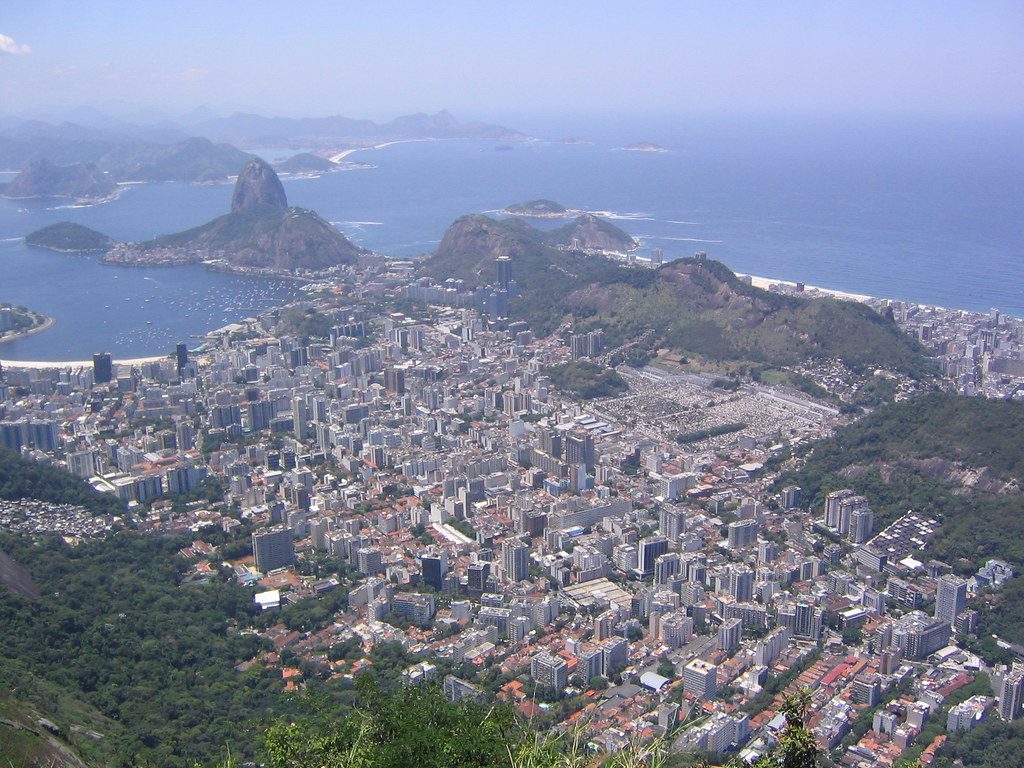
Rio de Janeiro seen from above: Sugarloaf Mountain, the blue bay, the beaches and thousands of buildings between green hills
Useful language
I give my friends a hug / a handshake / a kiss on the cheek. On Sunday we usually eat … My … cooks it. I take my friend to … because … In July it's cold / cool / warm / hot.In January it rains a lot. I prefer the beach / the mountains because …
0 / 0
EXERCISE 02Vocabulary

Words for every level

Click a word, then click its meaning. Correct pairs turn green. The audio button says the word.

Word
Meaning
EXERCISE 03Vocabulary in context

Complete the sentences

Click a word in the bank, then click a gap. Click a filled gap to clear it. Read the whole sentence first: the small words around the gap help too.

Teacher Alvaro
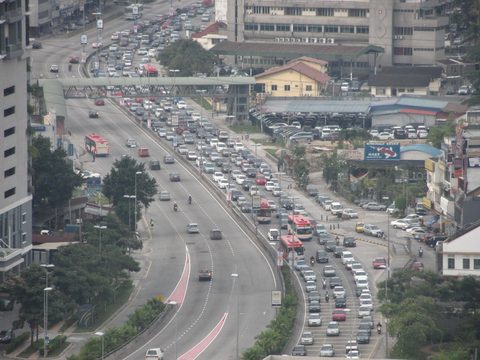
  • I left home at seven thirty, but there were so many cars and buses on the road that I got to work at nine. The _____ was terrible: we didn't move for twenty minutes.
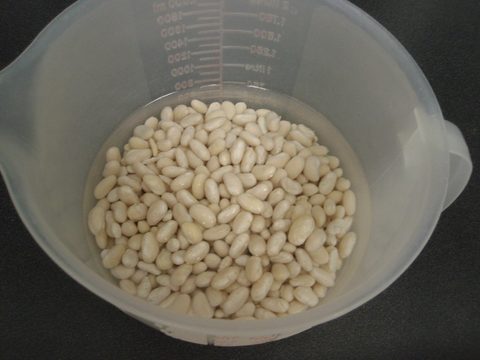
  • Before you cook the _____, leave them in a bowl of water all night, so they get soft.

  • My daughter finished college last week, the first person in our family to do it. I was so _____ of her that I cried.
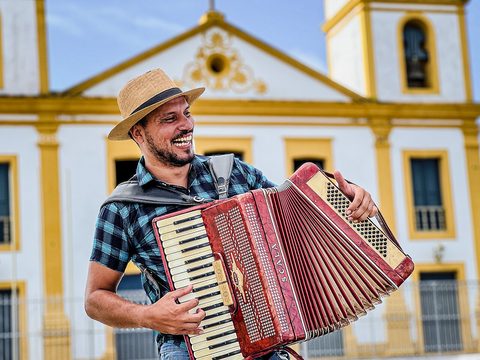
  • For the costume party, I wore jeans, a straw hat and an old _____ shirt with blue and black squares.
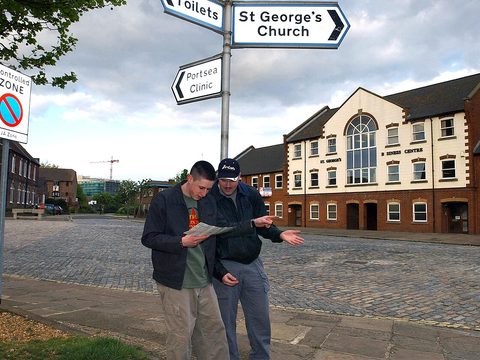
  • A _____ with a big map and a camera stopped me on the street and asked me, in Spanish, where the museum was.
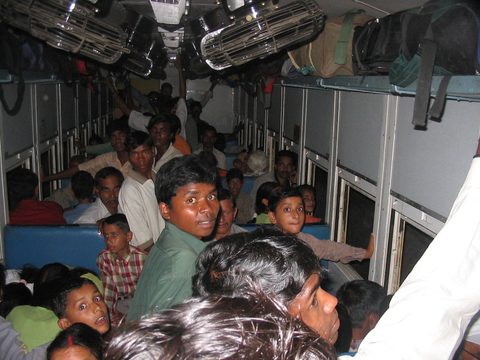
  • The bus was so _____ that I stood next to the door for the whole trip, with no space to move my arms.
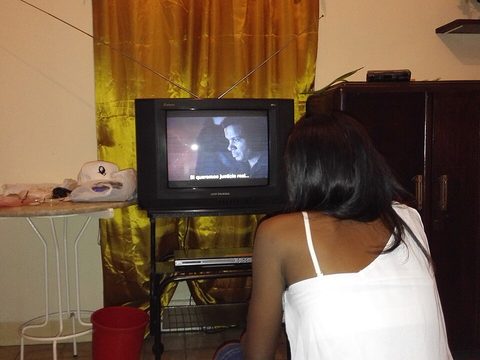
  • My mom never misses her _____: every night at nine, she sits in front of the TV to see what happens to the family in the story.
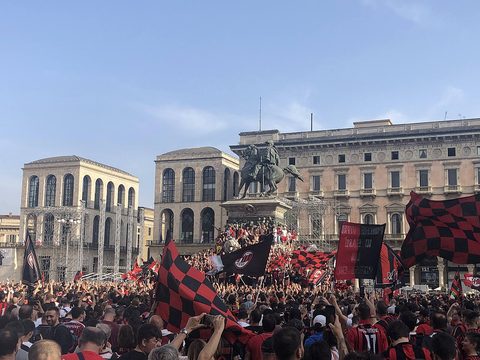
  • After we won the final, there was a big _____ in the street, with music, fireworks and dancing until three in the morning.
EXERCISE 04Speaking · A1-A2

Beginner (A1-A2)

Answer in full sentences, with a partner or with me. Tap a card when you have answered it. Stuck? Open the answer prompts below the cards: same number, same question.

Answer prompts
1 · Yes, I am. I'm from Brazil. / No, I'm not from Brazil. I'm from ___ (your country). 2 · I'm from ___ (your city). / I live in ___ (your city). 3 · Yes, I do. I like living in Brazil because it is ___ (beautiful / warm / fun / friendly / exciting). / No, I don't. I think it is ___ (expensive / dangerous / stressful). 4 · I like ___ (the food / the people / the weather / the beaches / the music) the most. 5 · I don't like ___ (the traffic / the violence / the prices / the weather / the noise). 6 · My favorite Brazilian food is ___ (feijoada / pão de queijo / brigadeiro / churrasco / açaí). 7 · Yes, I do. I eat it ___ (every day / often / sometimes). / No, I don't. I prefer ___ (pasta / salad / meat / vegetables). 8 · I like ___ (samba / funk / forró / sertanejo / bossa nova). 9 · Yes, I dance ___ (samba / forró / both). / No, I don't. I can't dance very well. 10 · Yes, I do. It is ___ (fun / exciting / colorful). / No, I don't. It is ___ (too noisy / too crowded / too busy). 11 · Yes, I watch soccer ___ (on TV / with friends / on the weekend). / No, I don't. I prefer ___ (basketball / volleyball / staying at home). 12 · My favorite player is ___ (Neymar / Pelé / Marta / Vinícius Jr.). / I don't have a favorite player. 13 · Yes, I celebrate it ___ (with my family / at school / at church). / No, I don't celebrate it. 14 · I wear ___ (a hat / boots / a plaid shirt / a dress / jeans). 15 · Yes, I think Brazilians are ___ (friendly / happy / welcoming). / Sometimes. It depends on ___ (the person / the situation). 16 · Yes, I love Brazilian coffee. It is ___ (strong / delicious / famous). / No, I don't drink coffee. 17 · Yes, I want to go to ___ (Rio de Janeiro / Salvador / São Paulo / the beach / the Amazon). / No, I don't. I want to travel to another country: ___ (the country). 18 · Yes, I have. I visited ___ (a state / a city) ___ (last year / two years ago). / No, I haven't visited another state. 19 · I like the word ___ (saudade / alegria / carinho / jeitinho). It means ___ (missing someone / happiness / affection / a creative way to solve a problem).
0 / 0
EXERCISE 05Speaking · B1-B2

Intermediate (B1-B2)

Give a reason and an example in every answer. Tap a card when you have answered it. The answer prompts below the cards have the same numbers.

Teacher Alvaro
Answer prompts
1 · Being Brazilian means ___ (being friendly / being creative / loving soccer / enjoying life). / For me, it means ___ (a value), because ___ (a short explanation). 2 · I like ___ (the music / the food / the diversity / the people) the most because ___ (your reason). / I think it is important because ___ (your explanation). 3 · The stereotype that bothers me the most is that ___ (Brazilians only care about soccer / Brazil is always dangerous). / I don't like it because ___ (your reason). 4 · Yes, I think it represents Brazil because ___ (your reason). / No, I don't think it represents the whole country because ___ (your reason). / It shows ___ (energy / diversity / music), but it doesn't show ___ (another part of Brazil). 5 · Yes, it is still important because ___ (your reason). / I think it is less important than before because ___ (your reason). / It is important for ___ (some people / certain regions). 6 · Yes, I have. I visited ___ (a region / a city). / What felt different was ___ (the accent / the food / the weather / the lifestyle). / No, I haven't, but I would like to visit ___ (a place). 7 · Yes, I think they are friendly because ___ (your reason). / For example, ___ (people help tourists / people talk easily to strangers). / Sometimes it depends on ___ (the situation / the city). 8 · I think Brazilians are more ___ (direct / indirect) because ___ (your reason). / In my experience, people usually ___ (avoid confrontation / speak honestly). 9 · I would introduce ___ (feijoada / churrasco / pão de queijo / açaí). / I would choose it because ___ (it is traditional / it is delicious / it represents our culture). 10 · Yes, I think it is popular because ___ (samba / bossa nova / funk) is famous. / No, I think only some styles are known abroad. / It became popular because of ___ (artists / social media / global events). 11 · Yes, it has changed our culture because ___ (people follow trends / culture spreads faster / new influencers appear). / It has influenced ___ (music / fashion / language / behavior). 12 · Religion is still important for ___ (many people / older generations). / It influences ___ (family values / politics / daily life). / For some people, it is less important than before. 13 · Yes, I think people complain because of ___ (politics / the economy / safety). / People complain, but they also ___ (love the country / feel proud). / Complaining can be a way to ___ (express frustration / ask for change). 14 · I enjoy ___ (Carnival / Festa Junina / New Year's Eve) the most. / I like it because ___ (your reason). 15 · I would miss ___ (my family / the food / the weather / the culture). / I think I would especially miss ___ (a specific example). 16 · Brazil is a country that is ___ (diverse / vibrant / complex / full of contrasts).
0 / 0
EXERCISE 06Speaking · C1-C2

Advanced (C1-C2)

Give your opinion and support it with an example. Then say what someone who disagrees would answer. Tap a card when you have answered it. The answer prompts below the cards have the same numbers.

Answer prompts
1 · Funk carioca has been marginalized because it is often associated with ___ (poverty / crime / favelas / social prejudice). At the same time, it has become mainstream through ___ (media exposure / major artists / international collaborations). This contrast shows that ___ (an idea about class / power / cultural appropriation). 2 · Soccer unites people because of ___ (a shared passion / national pride / collective celebrations). However, it also reflects inequality in terms of ___ (access to resources / corruption / commercialization). It can both inspire social mobility and reinforce structural problems. 3 · Telenovelas influence society by addressing topics such as ___ (racism / gender roles / social class / politics). They often bring private issues into public debate. 4 · I feel proud of ___ (an aspect) because ___ (your reason). At the same time, I feel critical of ___ (an issue). 5 · I struggle to identify with ___ (an aspect), particularly because ___ (your reason). While many people value it, I personally feel more connected to ___ (an alternative). 6 · People usually ask about ___ (Carnival / soccer / the Amazon / safety). These questions often reflect ___ (curiosity / stereotypes / limited knowledge). 7 · Yes, I think Brazil is often reduced to ___ (a simplified image). Many people overlook ___ (its complexity / its diversity / its social challenges). The reality is much more nuanced than the global image. 8 · I would remove the idea that ___ (a stereotype). This stereotype is harmful because it ignores ___ (diversity / seriousness / intellectual production). 9 · Outsiders often romanticize ___ (beach culture / happiness / spontaneity). While these elements exist, they can hide ___ (inequality / daily struggles / structural issues). 10 · Yes, certain symbols are amplified because they are marketable. However, this selective representation can overshadow ___ (other regions / other identities). 11 · I don't believe there is a single way to be Brazilian. Brazilian identity is shaped by ___ (region / class / ethnicity / personal experience). Any attempt to define a “correct” version excludes many voices. 12 · Yes, accents can affect how people are judged in terms of ___ (education / status / credibility). Unfortunately, some accents are stigmatized while others are seen as prestigious. 13 · Yes, I experienced culture shock in ___ (a region / a city). What surprised me was ___ (the difference in behavior / language / lifestyle). It made me realize how diverse the country truly is. 14 · Humor allows people to cope with ___ (political instability / economic crises / daily stress). It creates solidarity and helps people process difficult realities. 15 · Yes, complaining is common because people feel frustrated with ___ (systemic problems). However, criticism often comes from a place of attachment rather than rejection. 16 · Inequality is visible in ___ (housing / education / transportation / access to services). It is present in daily interactions and opportunities. 17 · I would export ___ (creativity / adaptability / warmth / resilience). This trait could contribute positively to ___ (global society / intercultural dialogue). 18 · Some people avoid political discussions to maintain harmony. Others engage passionately, sometimes leading to polarization. It often depends on the social context. 19 · Being Brazilian feels like living in constant contrast: ___ (joy and struggle / diversity and inequality). It is a mix of ___ and ___ (resilience / creativity / emotional intensity).
0 / 0
EXERCISE 07Writing

One question, in writing

80–120 words. Choose one question from your level (Exercise 04, 05 or 06) and copy it at the top. Start with its answer prompt, then add a reason, an example and one more detail of your own.

Teacher Alvaro
0 words
ENDEnd of lesson

My results

Check your score, then copy it and send it to your teacher on WhatsApp.

Teacher Alvaro

One job for this week. A friend from another country is coming to Brazil. Record a one-minute audio in English for this friend: one dish to try, one party to see and one place to visit, with two words from Exercise 02.