Headphones on, volume up. Fifty-four questions in three levels about
the songs you love, the concerts you remember and what music does to people, and eight
words that every level needs.
Ask and answer with a partner, or with me. Tap a card when you have
answered it.
Everybody has a soundtrack. Today you talk about yours: the
songs you love, when you listen to them and what music does to people. There are three
levels of questions. Answer the ones at your level, and listen to the other levels too:
you can take good words from them.
Useful language
The last song I listened to was …I was at home / in the car / at the gym.I usually listen with headphones.I sing in the shower, but only when I'm alone.Is it …? I think it's …Music helps me concentrate. / Music doesn't help me.
0 / 0
EXERCISE 02Vocabulary
Words about music
Click a word, then click its meaning. Correct pairs turn green. The audio
button says the word.
Word
Meaning
EXERCISE 03Vocabulary in context
Complete the sentences
Click a word in the bank, then click a gap. Click a filled gap to clear it.
Read the whole sentence first: the words around the gap tell you which one fits.
Can you turn the music down, please? It's too
_____, and the baby is sleeping in the next room.
Our band needs a new
_____. We have two guitar players and a drummer, but nobody in the group can sing.
The
_____ lasts three days: forty bands play on four different stages in a big park, and a lot of people sleep in tents.
After a long, stressful day, I listen to slow, quiet songs in bed. They help me
_____ and fall asleep.
The
_____ of this song are in Spanish, so I read a translation of the words on my phone while I listen.
Nobody in my family buys CDs anymore. We pay a little every month and listen to millions of songs on a
_____ app.
When this song starts at a party, nobody can stay in their chair: everybody gets up to
_____.
My mom's favorite band is giving a
_____ in our city next month: one night only, two hours of their songs. I'm buying two tickets for her birthday.
EXERCISE 04Speaking · A1-A2
Beginner (A1-A2)
Answer in full sentences, with a partner or with me. Tap a card when you
have answered it. Stuck? Open the answer prompts below the cards: same number, same
question. Change the words in brackets for your own.
Answer prompts
1 · I [like / don't like] music.2 · My favorite song is [song name].3 · My favorite singer is [name].4 · I [like / don't like] English songs.5 · I listen to music [every day / sometimes / on weekends].6 · I listen to music [in the morning / at night / in the car / at home].7 · I listen to music [at home / outside / at home and outside].8 · I listen to music [alone / with friends / with my family].9 · I [like / don't like] pop music.10 · I [like / don't like] rock music.11 · I like [slow / fast] songs because they [are relaxing / are exciting / make me happy].12 · I like [happy / sad] songs because they [make me smile / make me feel calm / help me relax].13 · The song [song name] makes me [happy / excited / calm].14 · I don't like [song name / type of music] because it is [boring / too loud / not interesting].15 · Music is [important / not important] to me because it [makes me happy / helps me relax / is fun].16a · I like this song because it [is fun / is beautiful / makes me dance / makes me feel good].16b · I [understand / don't understand] the lyrics. It is about [love / friendship / family / …].16c · I [can / can't] sing this song.
0 / 0
EXERCISE 05Speaking · B1-B2
Intermediate (B1-B2)
Give a reason and an example in every answer. Tap a card when you have
answered it. The answer prompts below the cards have the same numbers.
Answer prompts
1 · I usually listen to [pop / rock / indie / electronic / gospel / a mix of genres] because it [helps me relax / gives me energy / matches my mood].2 · Yes, it has. I used to like [genre], but now I prefer [genre] because it [feels more meaningful / fits my lifestyle].3 · I prefer listening [alone / with friends] because I [can focus more / enjoy sharing the experience / feel more relaxed].4 · I've been listening to [song name] a lot because it [is catchy / has great lyrics / makes me feel good].5 · Yes, it was [song name] by [artist]. I liked it because it [was fun / was emotional / was popular at the time].6 · Yes, I have. It was [amazing / exciting / loud / unforgettable] because the atmosphere was [energetic / emotional / fun]. No, I haven't, but I'd like to because it seems [fun / exciting / different].7 · Yes, [song name] reminds me of [a trip / school / a relationship] because I used to listen to it when [situation].8 · I prefer [discovering new music / familiar songs] because I [like variety / feel comfortable with songs I know].9 · I think music today is [better / worse / different] because it is [more diverse / more commercial / easier to access].10 · A good song has [strong lyrics / a catchy rhythm / a powerful voice] and it [connects with people / is easy to remember].11 · I think the lyrics are more important because they [tell a story / create emotion]. I think the melody is more important because it [creates emotion / is easier to enjoy].12 · Yes, it can. For example, when I listen to [happy / slow / energetic] music, I feel [excited / calm / motivated].13 · Music is important because it is part of [celebrations / traditions / daily life], especially [events like parties / festivals / holidays].14 · Yes, I think so because it [creates shared experiences / connects people emotionally / is universal].15 · Yes, songs like [song name] became popular because of [TikTok / Instagram / viral trends].16 · People connect to music because it [expresses feelings / tells stories / reminds them of personal experiences].17 · Yes, it can because it [raises awareness / influences emotions / shares powerful messages].18 · Yes, they should because it helps students [be creative / express themselves / develop new skills].
0 / 0
EXERCISE 06Speaking · C1-C2
Advanced (C1-C2)
Take a position, support it with an example, and answer the other side
before you finish. Tap a card when you have discussed it. The answer prompts below the
cards have the same numbers and show one way in.
Answer prompts
1 · Yes, it has. Music has shaped my [identity / worldview] by [influencing my values / exposing me to new ideas / helping me understand different cultures].2 · Yes, people often judge others because music is seen as a reflection of [personality / lifestyle / social identity].3 · Music is effective because it is strongly connected to [memory / emotions / personal experiences], which makes people feel [nostalgic / emotional / connected].4 · I think they are [universal / culturally influenced / a mix of both] because [basic emotions are shared / cultural context shapes interpretation].5 · Yes, it can. It can have a [positive / negative] effect by [reducing stress / increasing motivation / reinforcing negative emotions].6 · Streaming has made music more [accessible / convenient], but it has also made it feel [more disposable / less meaningful].7 · Algorithms can [expand / limit] our taste by [introducing new artists / keeping us in a “bubble” of similar content].8 · One advantage is that music becomes more [accessible / profitable], but a disadvantage is that it may become [more predictable / less creative].9 · It is [easier / harder] because [there are more platforms / there is more competition].10 · Music should [have a message / focus on entertainment / do both] because it can [inspire people / simply provide enjoyment].11 · I believe [the lyrics are / the production is] more important because [they convey meaning / it creates atmosphere], although both play a role.12 · Music reflects movements by [addressing social issues / expressing collective feelings / giving a voice to communities].13 · Yes, music can be a form of activism because it can [raise awareness / influence public opinion / inspire change].14 · I think we [should / shouldn't] separate them because an artist's work is [independent from / connected to] their personal actions.15 · Modern music is [becoming repetitive / still diverse] because many songs follow [similar structures / popular trends].16 · Viral trends are [helping / harming] music because they [promote creativity / prioritize short-term popularity].17 · The purpose of music is to [express emotions / connect people / provide meaning / entertain].18 · Yes, it would be different because people would have fewer ways to [express emotions / connect socially / celebrate culture].
0 / 0
EXERCISE 07Writing
One question, in writing
80–120 words. Choose one question from your level (Exercise 04, 05 or 06)
and copy it at the top. Start with its answer prompt, then add a reason, an example and
one more detail of your own.
0 words
ENDEnd of lesson
My results
Check your score, then copy it and send it to your teacher on WhatsApp.
One job for this week. Every time you hear a song you like,
say one sentence about it out loud, in English: when you listen to it, or how it makes
you feel. "This one always makes me want to dance."



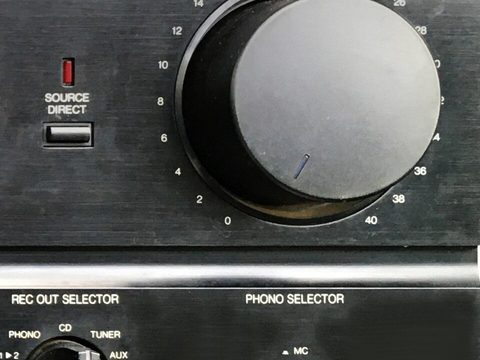 Can you turn the music down, please? It's too
_____, and the baby is sleeping in the next room.
 Our band needs a new
_____. We have two guitar players and a drummer, but nobody in the group can sing.
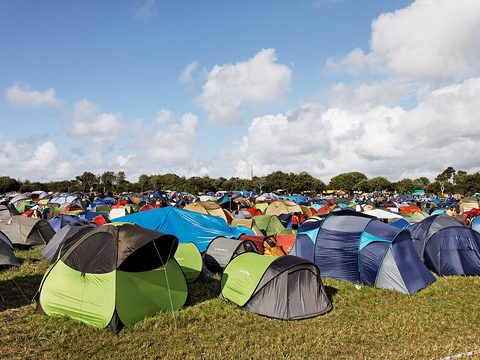 The
_____ lasts three days: forty bands play on four different stages in a big park, and a lot of people sleep in tents.
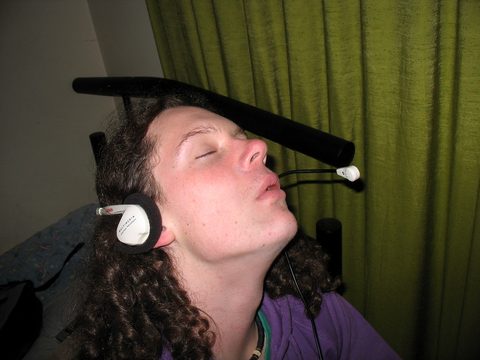 After a long, stressful day, I listen to slow, quiet songs in bed. They help me
_____ and fall asleep.
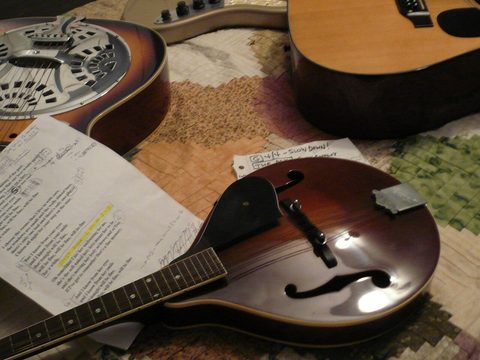 The
_____ of this song are in Spanish, so I read a translation of the words on my phone while I listen.
 Nobody in my family buys CDs anymore. We pay a little every month and listen to millions of songs on a
_____ app.
 When this song starts at a party, nobody can stay in their chair: everybody gets up to
_____.
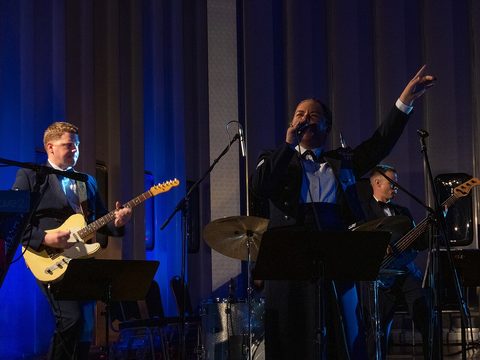 My mom's favorite band is giving a
_____ in our city next month: one night only, two hours of their songs. I'm buying two tickets for her birthday.


