SPEAKING CLUB · TOPIC 83

Thanksgiving and Gratitude

Turkey, parades, a full table, and the small things we forget to be thankful for. Fifty questions in three levels: find yours, answer, and give a reason every time.

A1-C2 60 min Focus: speaking · 3 levels Home
EXERCISE 01Speaking

Warm-up

Ask and answer with a partner, or with me. Tap a card when you have answered it.

Teacher Alvaro

Thank you for coming! Today's club is about a holiday and a feeling: Thanksgiving, a holiday in the United States and Canada with a big family meal, and gratitude, the feeling behind every “thank you”. You don't need to celebrate Thanksgiving to talk about it: everybody has something to be thankful for.
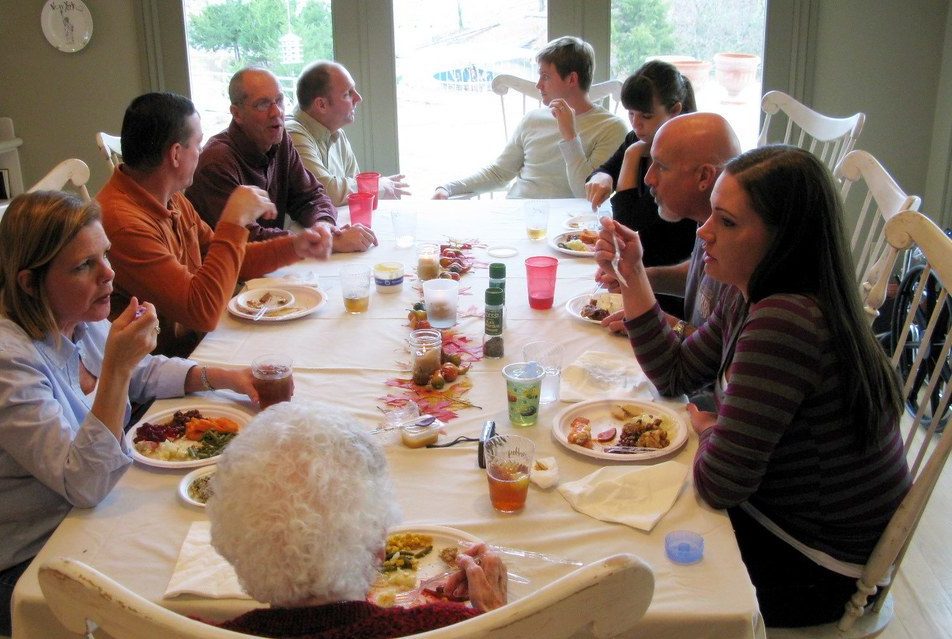
A family eating Thanksgiving dinner together around a long table with a white tablecloth, autumn leaves in the middle and full plates of food
Useful language
When I think of Thanksgiving, I think of …I said “thank you” to … He helped me with …My favorite holiday is … On that day, we eat …In my language, we say … Thanks a lot! / Thank you so much!I sometimes send a message to say thanks.
0 / 0
EXERCISE 02Vocabulary

Thanksgiving words

Click a word, then click its meaning. Correct pairs turn green. The audio button says the word.

Word
Meaning
EXERCISE 03Vocabulary in context

Complete the sentences

Click a word in the bank, then click a gap. Click a filled gap to clear it.

Teacher Alvaro
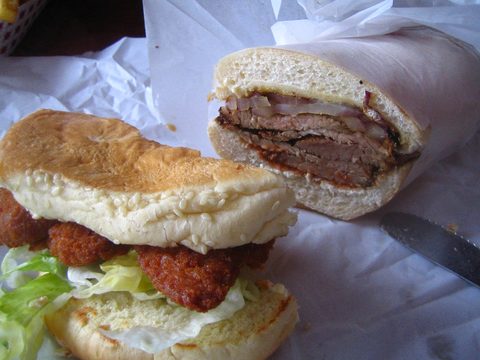
  • There was only one sandwich left, so my brother and I decided to _____ it: half for him and half for me.
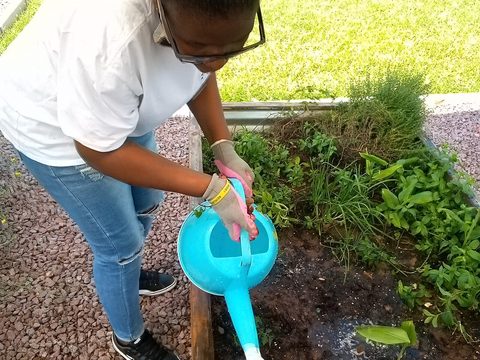
  • Our neighbor watered our plants all summer while we were on vacation, so we wrote him a short _____ on a pretty card and put it under his door.
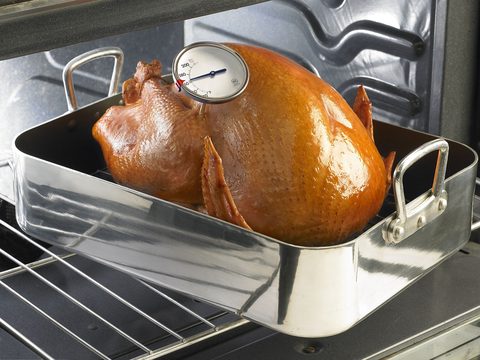
  • The _____ was so big that it needed five hours in the oven, and twelve people ate it for dinner.
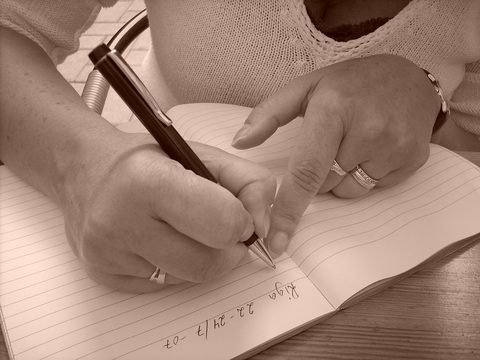
  • Every night before bed, my brother writes three lines in his _____ about the best part of his day.
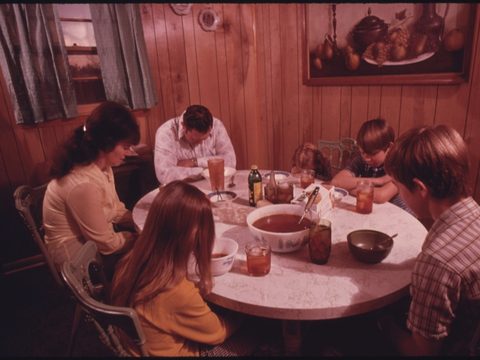
  • It wasn't a big party, just a small family _____: my parents, my grandmother and two cousins around the kitchen table.
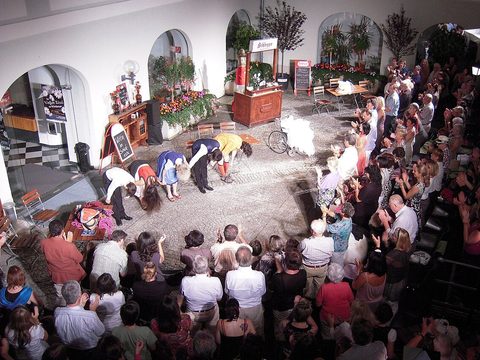
  • At the end of the show, the actors walk to the front of the stage and _____ to the audience, and everybody claps.
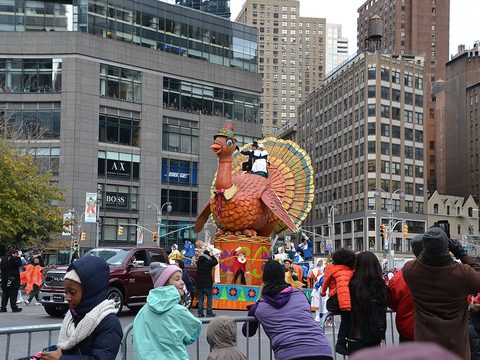
  • We stood on the sidewalk for an hour to watch the _____: marching bands, dancers and giant balloons moved slowly down the street.
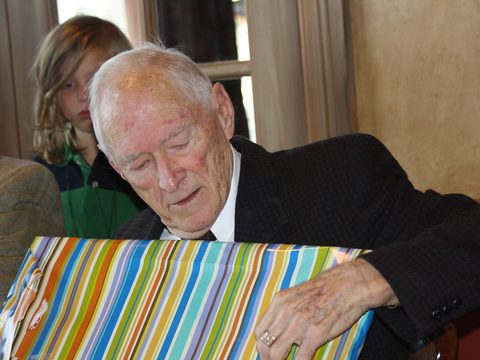
  • On his birthday, Grandpa opened his _____ slowly, and inside the box he found a warm pair of gloves.
EXERCISE 04Speaking · A1-A2

Beginner (A1-A2)

Ask and answer with a partner, or with me. Give a reason for every answer: because … Some questions are about family: share only what you want to share. Stuck? Open the answer prompts below the cards and change the words in [brackets] so they are true for you. Tap a card when you have answered it.

Answer prompts
1 · Yes, I do. In my country, we celebrate it [with a big dinner / differently]. Or: No, I don't. In my country, we don't celebrate it. 2 · I think Thanksgiving is a time for [family / friends] because [we gather together and eat a big meal / it's a time to be with loved ones]. 3 · Yes, I do. I share [turkey, potatoes, cake] with my family because [it's a tradition / I love spending time with them]. 4 · I am grateful for [my health, my family, my friends, the food I have] because [they make me happy / they take care of me]. 5 · It's important to be grateful because [it makes us happy / it helps us appreciate what we have]. 6 · I am thankful for [my parents, my friends, my teacher] because [they support me / they help me]. 7 · I'm grateful for [a cup of coffee, a nice walk, a smile from someone] because [it makes my day better / it makes me feel good]. 8 · I prefer [big meals / small meals] because [they fill me up / they are easier to eat]. 9 · I want to give thanks for [my job, my family, my health] because [they make my life better]. 10 · I feel [happy, good, appreciated] because [it makes me feel like I helped them]. 11 · Something that makes me happy is [spending time with family, listening to music, reading] because [it relaxes me / it makes me smile]. 12 · I help others by [listening to them, sharing food, helping with homework] because [I want to make them feel better]. 13 · Being thankful means [appreciating what I have / saying “thank you” for the good things in my life]. 14 · The most important thing in my life is [my family, my health, my friends] because [they make me feel loved and safe]. 15 · I show gratitude to [my parents / my grandparents] by [helping them, saying thank you, spending time with them] because [they do a lot for me]. 16 · Some things that make me smile are [funny videos, my friends, good food] because [they make me feel happy]. 17 · I would thank [my parents, my teacher, my friend] because [they always help me / they are kind and caring].
0 / 0
EXERCISE 05Speaking · B1-B2

Intermediate (B1-B2)

Answer, give a reason and an example, then keep the conversation going: your partner asks one follow-up question (“Really? What happened?”). Share only what you want to share. The answer prompts are there if you need a start. Tap a card when you have answered it.

Teacher Alvaro
Answer prompts
1 · Thanksgiving means [family time, showing gratitude, a time for reflection] because [it helps us appreciate what we have]. 2 · I usually celebrate by [eating dinner with family, watching parades, having a meal together] because [it's a tradition in my family]. 3 · Yes, I think it's important because [holidays are a time to reconnect with people you love]. However, I also think [spending time with friends is great, as they are important too]. 4 · I show gratitude by [saying thank you to my family, giving small gifts, and helping others]. It's important to [express thanks for the good things in life]. 5 · I am grateful for [my health, my family, my job, my friends] because [they make my life better and support me]. 6 · Yes, I felt especially thankful when [my friend helped me during a tough time, I received good news, my family was there for me]. 7 · I express gratitude by [saying thank you, helping others, smiling at people] because [it makes the world a better place]. 8 · It's important because [it helps us appreciate what we have and focus on the good things]. Reflecting also [makes us happier and more content]. 9 · I feel [happy, appreciated, good] because [it shows that my efforts are valued]. It also makes me want to [help more people]. 10 · I think the most meaningful way is by [spending time with them, listening to them, giving something they need]. Actions like [helping them without being asked] are also very meaningful. 11 · I would give [a thoughtful gift, my time, a heartfelt note] because [it shows I truly care about them]. 12 · Yes, I believe gratitude should be expressed every day because [it helps us stay positive, builds stronger relationships, and improves our well-being]. 13 · I am grateful for [having a roof over my head, good health, clean water], but sometimes [I forget how lucky I am to have these things]. 14 · It teaches us to [appreciate the present, be mindful of the people around us, and value the small things]. 15 · The most important thing I'm thankful for is [my family, my health, my education, or my job] because [it provides stability and support]. 16 · I prefer [small gatherings] because [they are more personal and meaningful]. However, I enjoy [big celebrations for the fun and excitement]. 17 · Yes, I believe it can because [it changes your perspective, makes you more positive, and strengthens relationships]. 18 · People often forget to be grateful for [good health, their daily comforts, the people around them] because [we take these things for granted]. 19 · I would advise them to [keep a gratitude journal, say thank you more often, focus on the positive]. It's important to [recognize the small things that make life good].
0 / 0
EXERCISE 06Speaking · C1-C2

Advanced (C1-C2)

Discuss with a partner, or with me. Take a position, support it with an example, and answer one objection. Question 14 is about privilege and inequality: talk about society, respect every view, and share only what you want to share. Tap a card when you have discussed it. Need a way in? Open the answer prompts below the cards.

Answer prompts
1 · Thanksgiving can be seen as a time for reflection because [it encourages people to think about what they're grateful for, appreciate their blessings, and connect with loved ones]. It's also a time for celebration because [families and friends come together to share a meal, celebrate good times, and create memories]. 2 · Expressing gratitude can improve mental health by [helping people focus on positive aspects of life, reducing stress, and increasing feelings of happiness]. It can also improve overall well-being because [it fosters a positive outlook, strengthens relationships, and promotes emotional resilience]. 3 · The concept of “giving thanks” teaches us that [humans are inherently social and seek connection]. It also reflects society's need to [acknowledge and appreciate the support we receive from others], highlighting [the importance of gratitude in building harmonious relationships]. 4 · People may wait for special occasions like Thanksgiving because [it serves as a reminder to pause and reflect on the good things in life]. Additionally, [daily life can be busy and stressful, and we often forget to express gratitude in the moment]. 5 · Traditions like Thanksgiving are important because [they provide a sense of belonging, help people reconnect, and create shared experiences]. They also encourage [reflection and gratitude, which can strengthen community bonds and promote social cohesion]. 6 · I don't think gratitude always needs to be reciprocated, because [sometimes gratitude can be expressed freely without the expectation of something in return]. However, [reciprocity can be a natural way to maintain balance in relationships, as long as it is done with sincerity]. 7 · The most meaningful way to express gratitude is by [acknowledging their help directly, offering your support in return, or simply spending quality time together]. 8 · I think gratitude journaling can be an effective practice because [it encourages regular reflection, helps people focus on the positive, and promotes mindfulness]. However, [it might not be for everyone, especially if people struggle with consistency or find it difficult to put their thoughts into writing]. 9 · People can incorporate gratitude by [starting each day with a moment of thanks, writing down three things they are grateful for, or expressing appreciation to someone]. 10 · One misconception about gratitude is that [it must be tied to material things or big gestures]. This can affect the practice because [it makes people believe that they have to do something grand to express gratitude, rather than appreciating the small, everyday moments]. 11 · Different cultures express gratitude through [unique traditions, rituals, and even language]. For example, in [Japan], [bowing and giving gifts] are common ways to show thanks, while in [Western cultures], [verbal expressions and written thank-you notes] are more common. 12 · Self-gratitude is essential for personal growth because [it helps people recognize their own strengths, builds confidence, and promotes self-acceptance]. It also allows individuals to [acknowledge their progress and achievements, fostering a positive mindset and motivation for future growth]. 13 · It is very important because [it keeps us grounded and reminds us that life's value lies in the simple moments]. Expressing gratitude for small things also [helps prevent taking things for granted and enhances overall happiness]. 14 · Yes, I think Thanksgiving encourages reflection on privilege because [it's a time to think about what we have, and for some, that might involve recognizing how others are less fortunate]. It also provides an opportunity to [discuss social issues, give back to the community, and make a difference in people's lives].
0 / 0
EXERCISE 07Writing

One question, one paragraph

80–120 words. Choose one question from your level (Exercise 04, 05 or 06) and copy it at the top. Then answer it in one paragraph, with at least two reasons and one example from your own life. Use your answer prompt only to start. Beginners: choose a question with a lot to say, like 4, 6, 12 or 17. Intermediate and Advanced: end with a question for your classmates.

Teacher Alvaro
0 words
ENDEnd of lesson

My results

Check your score, then copy it and send it to your teacher on WhatsApp.

Teacher Alvaro

One job for this week. Write a short thank-you note in English to someone who helped you this year: a friend, a coworker, a teacher, a neighbor. Three sentences: what they did, how it helped you, and your thanks. Then send it, or read it to them.