I Accidentally Became a Meme
An engineer with a strange smile said yes to a photo shoot. Months later, his face was all over the internet. His story, told with the two past tenses: what was happening, and what happened next.
Warm-up
Ask and answer with a partner, or with me. Tap a card when you have answered it.

Everybody knows his face. A man with gray hair, a laptop, a cup of coffee and a smile that hides some pain. Today you meet the real person behind the meme, and you review the two past tenses that tell his story.

Useful language
People and things in the story
Click a word, then click its meaning. Correct pairs turn green. The audio button says the word.
Complete the sentences
Click a word in the bank, then click a gap. Click a filled gap to clear it.

 My cousin is an
_____: she designs bridges and roads for the city.
 He works as a
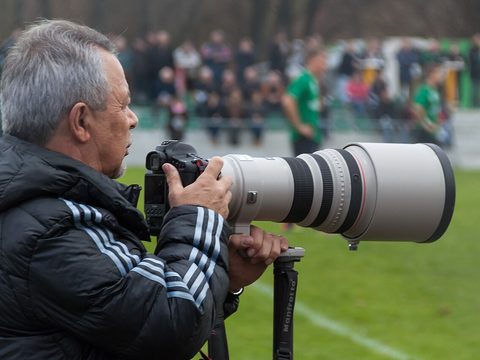
_____ for a sports newspaper, so he takes pictures at every big game.
 The
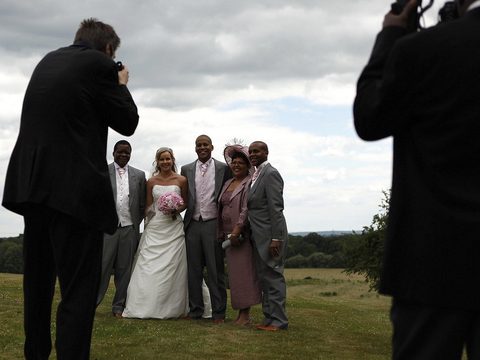
_____ for our wedding album lasted three hours, and now we have five hundred pictures.
 Everybody calls him "Tiny", but that is only a
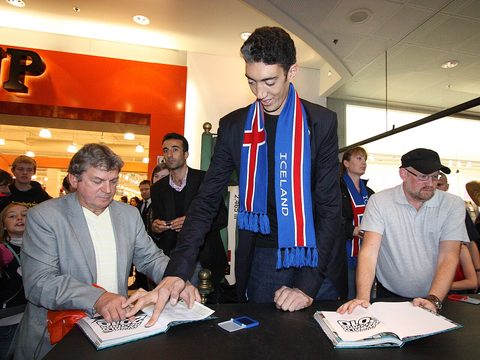
_____. His real name is Roberto.
 I saw an
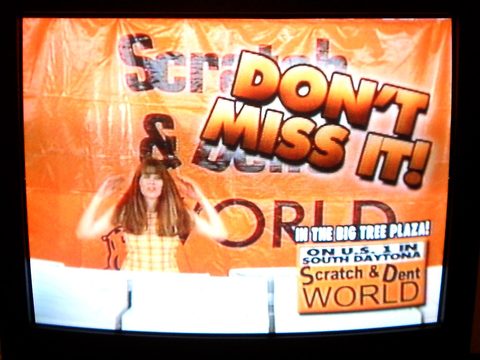
_____ for the new phone on TV. It is half price this month.
 My sister sends me a new
_____ every morning: a picture of a cat with a short text about Mondays.
 In the
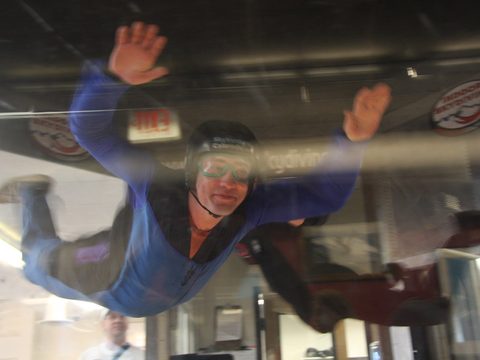
_____, the air moves so fast that you can fly like a bird without leaving the building.
 She is a big
_____ of that singer: she has all his albums and goes to every concert.
Hide the Pain Harold
Watch the video first: four minutes, with captions, and András tells the story himself. Then read it. The past continuous is in bold. Tap a dotted word to see what it means.
András Arató was working as an electrical engineer. He had gray hair, a white beard and a few photos on social media.
One day, a photographer saw his sour face on social media. He was looking for a character like that, so he invited András to a photo shoot.
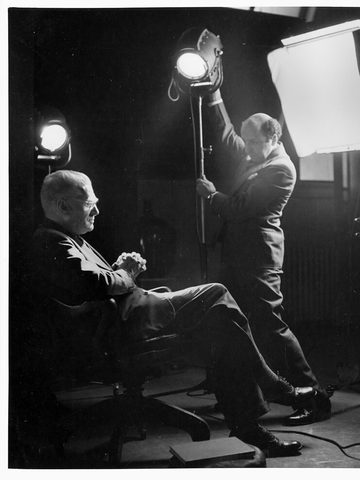

The photographer really liked the pictures, so he invited András back many times. In the photos, he was a doctor, a professor, a husband and a painter.
Months later, András wanted to know where his pictures were. He did a reverse image search and found himself in advertisements.
Later, he repeated the search and discovered the first meme. People were using his smile for jokes, and the internet gave him a nickname: Hide the Pain Harold.
At first, it was horrible, because some jokes were really rude. He wanted to close all the websites with his pictures, but that was no solution.
With no solution, he slowly accepted the situation, but it took several years. Many people didn't believe he was real: they thought he was a Photoshop creation.
So András stopped hiding and revealed his identity on a social media site. After that, the rude and disgusting memes disappeared.
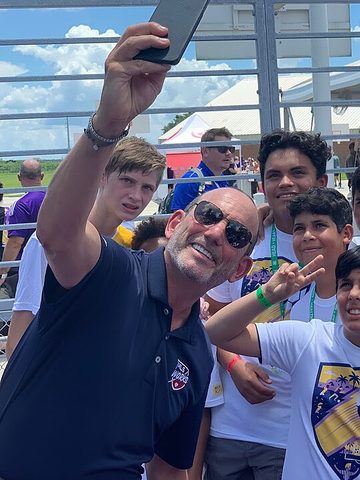
Now people knew the real man, and more and more fans stopped him on the street to ask for his sour face. He always said yes.
His famous face brought him new jobs, too: for Coca-Cola, he even flew in a wind tunnel. But he says he is still the same old guy.
Multiple choice
The stamp shows the moment in the video. Click an answer and read why.

-
The man's real name is András Arató. What is "Hide the Pain Harold"? 00:07
People on the internet gave him this name, and many of them still don't know his real one. Harold is not his name at all: he is András.
-
What was his job before the photo shoots? 00:10
His specialty was lighting technologies. The professor and the doctor came later, and only in the photos.
-
How did the photographer find András? 00:19
The photographer was looking for a character with that kind of face, and he found it on social media. Then he invited András to a photo shoot, almost ten years before this video.
-
Why did the photographer invite him back several times? 00:35
The photographer "really liked" the first pictures. In the new photo shoots, András was a doctor, a professor, a husband, a painter and many other people.
-
How did he discover that his photos were in advertisements? 01:01
Several months after the first photo shoot, he was curious. In a reverse image search you give the computer a picture, and it shows where that picture appears on the internet. He was a professor or a doctor in the ads.
-
What did he find when he repeated the search some months later? 01:09
That was the moment he understood: now he was a meme. The ads were in the first search; the memes came later.
-
How did he feel when he saw the first memes? 01:21
"Horrifying" is his word. Some jokes were really rude or disgusting, and he wanted to close all the websites with his pictures. It took him several years to accept the situation.
-
Why did he reveal his identity? 01:49
Many people thought the memes were a Photoshop creation. So he showed who he really was, on a Russian social media site.
-
What happened after he revealed his identity? 02:04
He says that the bad, rude and disgusting memes all went away. Only the bad ones: his face is still a famous meme today.
-
What do people ask him to do on the street? 02:15
More and more people stop him on the street. He always says yes, because he sees the joy in their eyes, and making other people happy feels good.
-
What did he do for Coca-Cola? 02:43
Coca-Cola invited him to a photo shoot, and he had to fly in a wind tunnel. He says it was really exciting. After that comes the plan for a comedy movie about his story.
-
The best title for this story would be:
The story is about the real person: his job, the photos, the memes, the hard years and the happy ending. Stock photos and advertisements are only one part of it. And in the end, he says, he is still the same old guy.
Put the story in order
Eleven moments of András's story, mixed up. Watch the video again and write the number of each one, from 1 (first) to 11 (last), in the order he tells them.
-
aNow he receives messages every day on his social media pages.
-
bAndrás discovered the first meme with his face.
-
cHe was in a Coca-Cola advertisement.
-
dThe photos were really good, and the photographer invited him many times after that.
-
eThe disgusting memes disappeared.
-
fSo he decided to show people his real identity.
-
gA photographer contacted him to take some photos.
-
hHe tries to show his fans that they can be happy, even in difficult times.
-
iMaybe there will be a comedy movie about his story.
-
jLittle by little, people stopped him on the street to ask for his sour face.
-
kIt was horrible, because some memes were very rude.
Past simple and past continuous

Two past tenses, one story. The past continuous is the background: what was happening. The past simple is the action: what happened. András was working as an engineer (background) when a photographer contacted him (action).
- Past simple: finished events in the past. Regular verbs take -ed: called, played, liked. Irregular verbs change: saw, took, went.
- Past continuous: an action in progress at a moment in the past. was / were + verb -ing: At eight last night, I was cooking dinner. · They were playing soccer.
- Negative: past simple didn't + base verb: She didn't call me. · past continuous wasn't / weren't + -ing: We weren't talking.
- Questions: past simple Did + person + base verb: Did you call her? · past continuous Was / Were + person + -ing: Were you driving?
- Together: the past continuous is the longer action in the background; the past simple is the short action that happens in the middle of it. When usually goes with the short action, while with the long one: I was taking a shower when the doorbell rang. · While we were eating, it started to rain.
- With before: before + the later action; the past continuous says what was in progress until then: Before the class started, we were drinking coffee.
-
"Before taking stock photos, I was working as an electrical engineer." Why the past continuous?
A job lasts a long time. The past continuous paints the situation; then the photos arrive and change it.
-
"The stock photos began when a photographer contacted me." Both verbs are in the past simple because…
First the photographer contacted him, then the photos began. Two complete actions, so both take the past simple.
-
"Before taking stock photos, I was working as an electrical engineer." What does before tell you?
Before is the time expression: the engineering job was in progress in the time before the photos.
-
"The stock photos began when a photographer contacted me." Which verb is irregular?
Contact is regular: it only takes -ed. Begin changes its vowel: began.
-
Make it negative: "The stock photos began."
Irregular or regular, the negative is the same: didn't + the base form. Began goes back to begin.
-
Make it negative: "A photographer contacted him."
Didn't carries the past, so the main verb goes back to its base form: contact, not contacted.
-
Make it negative: "He was working as an engineer."
In the past continuous, the negative goes on was / were, and the -ing stays.
-
Make it a question: "He accepted the situation."
Past simple questions use Did + person + base verb. Like didn't, did takes the past, so accept loses its -ed.
-
Make it a question: "They were living in the same city."
No did in the past continuous: you invert was / were and the person. They goes with were.
-
The lights went out in the middle of your sleep. Which sentence says this correctly?
Sleeping is the long background action; the lights going out is the short action that interrupts it. And was always needs the -ing.
Past simple or past continuous?
Two gaps in each sentence, two verbs on the left. Write the first verb in the first box and the second verb in the second box. In every sentence, one verb goes in the past continuous and the other in the past simple. Read the whole sentence first: when, while and before tell you which is which.
-
arrive · workThey ___ when I ___ in the yard.
-
look for · findShe ___ some memes before she ___ an interesting website.
-
not meet · studyThey ___ when they ___ at the same university.
-
start · workBefore he ___ at that company, he ___ as an IT technician.
-
not rain · getIt ___ at the beach before they ___ there.
-
send · dieI ___ a meme to my brother when my phone ___.
-
wait · askWhile we ___ for the bus, an old man ___ us for a photo.
-
get · watchWhen I ___ home last night, my roommate ___ a video on the couch, so I sat down and watched it with him.
Put the words in order
Write the whole question. Then ask and answer them with a partner: they come back in Part B of the speaking.

-
astudying / you / another / Were / language / decided / when / you / English / to learn / ?
-
byou / have / traveling / Did / were / on your last vacation / any problems / when / you / ?
-
cbefore / you / were / What / doing / work / you / yesterday / finished / ?
-
dyesterday / raining / when / work / you / left / for / Was / it / ?
-
edoing / you / were / What / at / o'clock / eight / last night / ?
-
fmeme / you / Did / a / send / anybody / this week / to / ?
What were you doing when…?
Part A is about the video. In Part B, interview a partner (or me) with the questions from Exercise 09 and a few more: answer with the past continuous and the past simple. Part C is for your opinions.
Useful language
Two memes and a nickname
40–70 words. Two famous memes first: in one, he opens his laptop to see what's for dinner and finds a salad; in the other, he checks his bank account, with the same smile in four pictures. Why do you think people gave him the nickname "Hide the Pain Harold"? Then write two new memes, with a top line and a bottom line: one for a photo of him at his laptop with a cup of coffee, and one for a photo of him on the phone. Show your partner.

My results
Check your score, then copy it and send it to your teacher on WhatsApp.

One job for this week. Every night, say two sentences about your day: one with the past continuous and one with the past simple. I was having lunch when my boss called. Two sentences, thirty seconds, in English.