Train with Joan
At 69, she ate peanuts at her computer and took medicine for her blood pressure. At 77, she lifts more than her own weight. Read her story in the past simple, and learn the three sounds of -ed.
Warm-up
Read about the two photos. Then ask and answer with a partner, or with me. Tap a card when you have answered it.

Is it ever too late to start? Today you meet a woman who changed her life at 69. First, look at her two photos and tell me what you see.
- Photo 1: an older woman with white hair stands in a room with a carpet and long curtains. She is wearing a blue swimsuit.
- Photo 2: the same woman, some years later, stands on a big black tire on a sunny beach. She is lifting her arms and showing her muscles.
Useful language
Health and fitness
Click a word, then click its meaning. Correct pairs turn green. The audio button says the word.
Complete the sentences
Click a word in the bank, then click a gap. Click a filled gap to clear it. Read the whole sentence first: the other words tell you the answer.

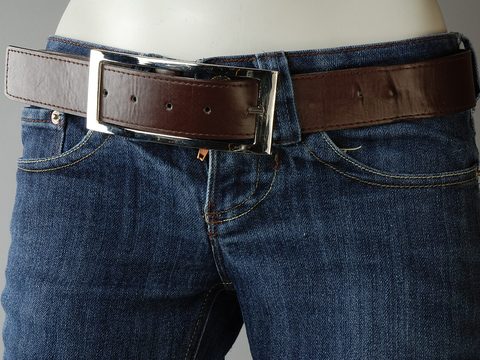 These pants are too big for me now. I need a belt around my
_____.
 My grandfather stopped working last year. Now he is a happy
_____, and he goes fishing every morning.
 My son is only five, but he can
_____ now. He doesn't need the two small extra wheels anymore.
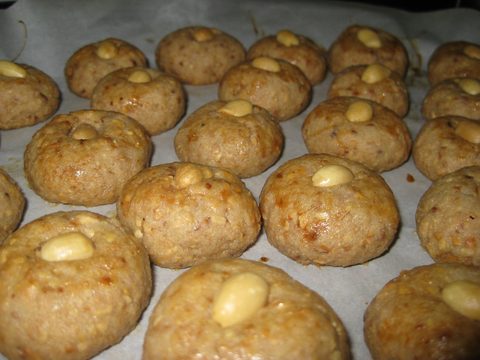 Tom can't eat any kind of nut, so please don't put
_____ in his cookies.
 My aunt needs a new
_____, because hers doesn't clean her blood very well anymore.
 Too much salt is bad for your
_____, so the nurse checks it on your arm at every visit.
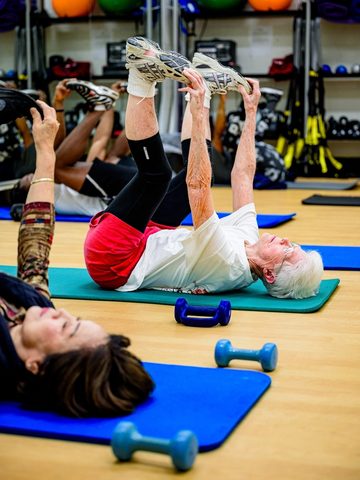
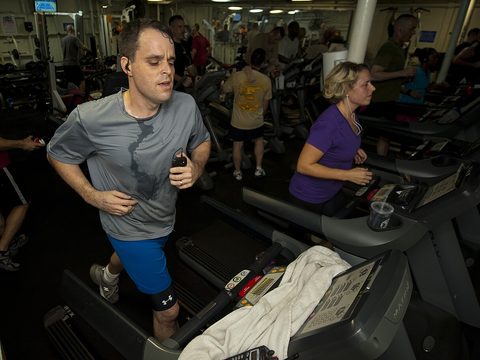 At the
_____, I run on a machine for twenty minutes, and then I lift weights.
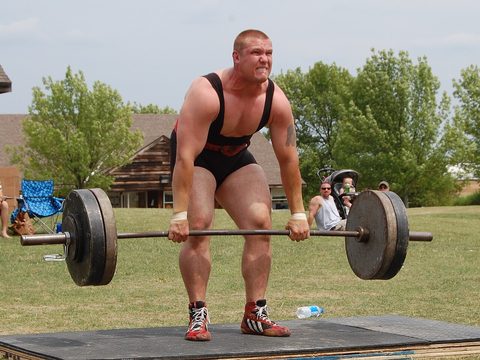 Keep your back straight when you
_____ the heavy bar from the floor, or you can hurt yourself.
Joan's journey
This story retells a post from Joan's Instagram page, @trainwithjoan. Read it, or listen to it. The first part is in the past simple: look for the verbs. Tap a dotted word to see what it means.
Some nights, Joan MacDonald would sit at her computer with a big bowl of peanuts and eat them all. She was 69, and she wasn't healthy.

Her body showed it. She was 5 feet 3 inches tall, but she weighed 198.8 pounds. Her waist was 39 inches, and she had arthritis and kidney disease.
The worst news came from her doctor. Joan already took medicine for her blood pressure, and the doctor wanted to give her more.
Joan didn't want more medicine, so she decided to change her life. But the most important step, she says, was to believe that she could do it.
Believing can be hard. In her adult life, Joan lost and gained back hundreds of pounds. Her advice: stay close to people who believe in you.
With that belief, Joan started her journey at 69. She worked out often, not only once in a while, and changed her habits step by step.
Slowly, her body changed. Today Joan is 77. She weighs about 130 pounds, her waist is 28 inches, and she is in great shape.
Her new body is strong, too. She can deadlift 175 pounds, and she can ride a bike for an hour with no problem.
Her change didn't stop at the gym. At 69, she didn't have a smartphone. Today she has one, and an iPad, and she uses lots of apps.
With those apps, she shares her story on Instagram. Her message is simple: if an ordinary retiree like her can change her life, you can too.
Multiple choice
Every answer is in the story you read. Click an answer and read why.

-
What did Joan sometimes do at night, at her computer?
A big bowl, and she ate them all. In her post, Joan also says that she ate only about 1,100 calories a day, but not at regular times.
-
What health problems did Joan have at 69?
Arthritis makes your joints hurt, and her kidneys didn't work well. Her weight and her blood pressure were problems too.
-
What bad news did the doctor give her?
She already took medicine for her blood pressure, and the doctor wanted to give her more of it.
-
Why did Joan decide to change her life?
The story says it with so: she didn't want more medicine, so she decided to change. Instagram came later.
-
For Joan, what is the most important step when you want to change your health?
Before the gym and before the food, there is your head. In her post, Joan writes the word believing all in capital letters.
-
What is Joan's advice for people who find it hard to believe?
If believing is hard for you, other people can help: friends who believe in you and who also work on their own way of thinking.
-
After she started her journey, how often did Joan work out?
"Not only once in a while": that was the old Joan. Before her journey, she went to the gym only sometimes.
-
What changed in Joan's body?
From 198.8 pounds to about 130, and from a 39-inch waist to 28 inches. In her post, she says she has been in great shape for six years.
-
What can Joan do today?
175 pounds is more than her own weight, about 130 pounds. The hour is for her bike, not for running.
-
What did Joan learn outside the gym?
At 69, she didn't have a smartphone and didn't know what apps were. Now she has a smartphone and an iPad.
-
Joan calls herself "an ordinary retiree". Why?
She isn't a sports star: she is a normal older woman who doesn't work anymore. So if she can change, you can too. In the same post, she asks her followers about a special trip for women: a few days away, all about health.
-
The best title for this story would be:
The story goes from belief to a big change (a transformation). The peanuts were part of the problem, not the answer, and her poor eating was in the past, not today.
Joan's numbers
A friend read the story and wrote these notes, but some numbers are wrong. Read the story again and write the right number. If a note is right, write the same number.
-
SHE WAS 70.When she started, Joan was ___ years old.
-
NOW SHE IS 77.Today she is ___.
-
SHE WAS 198.8 LBS.When she started, she weighed ___ pounds.
-
NOW SHE IS 170 LBS.Today she weighs about ___ pounds.
-
HER WAIST WAS 28 IN.When she started, her waist was ___ inches.
-
NOW HER WAIST IS 39 IN.Today her waist is ___ inches.
-
SHE CAN'T USE A SMARTPHONE.Today she ___ use a smartphone, and she uses lots of apps.
- 5′3″ = 5 feet and 3 inches · 1 foot = 12 inches
- 1 inch = 2.54 cm · 1 foot = about 30.5 cm
- 1 pound = about 0.45 kg · 1 kg = about 2.2 pounds
-
Joan is 5′3″ tall. That is about…
5 feet is 60 inches, plus 3 is 63 inches. 63 × 2.54 = 160 cm, or 1.60 m.
-
When she started, Joan weighed 198.8 pounds. That is about…
198.8 × 0.45 = about 90. Or the easy way: 200 pounds ÷ 2.2 = about 90 kilos.
-
Today she weighs about 130 pounds. That is about…
130 × 0.45 = about 59. That's about 31 kilos less than before.
-
Her waist went from 39 inches to 28 inches. In centimeters, that is…
39 × 2.54 = about 99, and 28 × 2.54 = about 71. An inch is much bigger than a centimeter.
-
She can deadlift 175 pounds. That is about…
175 × 0.45 = about 79 kilos: twenty kilos more than her own weight today.
-
A friend says: "I'm 1.70 m, so I'm 5′5″." Is that right?
170 ÷ 2.54 = about 67 inches, and 67 inches is 5 feet 7 inches. 5′5″ is about 1.65 m.
-
Another friend says: "I'm 65 kg, so I'm 143 pounds." Is that right?
65 × 2.2 = 143. To go from kilos to pounds, multiply by 2.2.
The past simple

Joan's old life is in the past simple. Regular verbs end in -ed, but the spelling has some small rules. Irregular verbs have their own form, and you learn them one by one. The negative needs only one small word for every person.
- Most verbs: add -ed: open → opened, help → helped
- Verb ends in -e: add only -d: dance → danced, smile → smiled
- Consonant + y: y becomes -ied: study → studied, carry → carried
- Vowel + y: just add -ed: play → played, enjoy → enjoyed
- Short verb, one vowel + one consonant: double the consonant: stop → stopped, plan → planned
- American English: one l: travel → traveled, cancel → canceled
- Irregular verbs have their own past form: eat → ate, see → saw, buy → bought, make → made
-
To make the past simple with regular verbs, we add…
Regular verbs take -ed (or only -d): Joan started, worked, changed, decided. -s is for the present (she works), and -ing is for the continuous (she is working).
-
Joan wrote: "I didn't have a smartphone and didn't know what apps were!" To make the negative of the past simple, we use…
Didn't (did not) + the base verb, the same for I, you, she, we and they. The past is in didn't, so the verb doesn't change: didn't have, not didn't had.
-
What is the past of try?
Try ends in a consonant (r) + y, so the y becomes -ied.
-
What is the past of shop?
A short verb with one vowel (o) + one consonant (p): double the p.
-
What is the past of stay?
Here the letter before y is a vowel (a), so the y stays: just add -ed.
-
Which sentence is correct?
After didn't, use the base verb: go, not went. And the negative needs didn't, not only not.
-
Which sentence is correct?
Yesterday asks for the past, and get is irregular: get → got. There is no getted.
Past forms
First, find the past form of each verb in Joan's story. Careful with will: in the story, would + verb says what Joan did many times in the past.
-
start · regularWith that belief, Joan ___ her journey at 69.
-
work · regularShe ___ out often, not only once in a while.
-
am (be) · irregularShe ___ 69, and she wasn't healthy.
-
will · irregularSome nights, Joan ___ sit at her computer with a big bowl of peanuts.
-
have · irregularHer waist was 39 inches, and she ___ arthritis and kidney disease.
Now complete the sentences with the past form of the verb on the left. Look at the spelling rules in Exercise 07.
-
liveWhen I was a kid, I ___ in a small town near the ocean.
-
moveThen, when I was twenty, I ___ to a big city for a new job.
-
cookI ___ dinner for my friends last night: chicken and rice.
-
likeIt was my first time with that recipe, but everybody ___ it.
-
walkI usually drive, but yesterday I ___ to work. It was a beautiful morning.
-
watchLast night I ___ a sad movie on TV.
-
cryAt the end of the movie, I ___ a lot.
Three ways to say -ed
Watch the one-minute video from BBC Learning English, with captions. The stamp shows the moment in the video. Then read the box and sort the verbs.

-
In how many different ways can you say ed? 00:02
Two letters, three sounds: /d/, /t/ and /ɪd/.
-
What does the video ask you to feel? 00:09
Put your hand on your neck and say /d/: you feel a small vibration. Say /t/: nothing. /d/ is voiced, and /t/ is voiceless.
-
Which two examples does the video give for /d/? 00:27
Play ends in a vowel sound, and use ends in a /z/ sound. Both are voiced, so -ed is a voiced /d/.
-
Which two examples does the video give for /t/? 00:34
Look ends in /k/ and help ends in /p/: no vibration, so -ed sounds like /t/: "lookt", "helpt".
-
After a /t/ or a /d/ sound, -ed becomes /ɪd/. What reason does the video give? 00:41
Try to say "want" + /t/ with no vowel: it's very hard. With the extra /ɪ/, you hear it: want-id, need-id.
- /ɪd/: after a /t/ or a /d/ sound. One extra syllable: want-id.
- /d/: after a voiced sound. Voiced sounds make your neck vibrate: all the vowels, and /b/ /d/ /g/ /dʒ/ /l/ /m/ /n/ /r/ /v/ /z/.
- /t/: after a voiceless sound. Voiceless sounds don't vibrate: /p/ /t/ /k/ /f/ /s/ /ʃ/ (the sh sound) /tʃ/ (the ch sound).
- Careful: the letter is not the sound. Like ends in the letter e but in the sound /k/.
-
worked
Work ends in /k/, a voiceless sound: "workt".
-
started
Start ends in /t/, so you add a syllable: start-id.
-
visited
Visit ends in /t/: visit-id, three syllables.
-
washed
Wash ends in the sh sound, /ʃ/, which is voiceless: "washt", one syllable.
-
used
Use ends in the letter e, but the sound is /z/, and /z/ is voiced. It's in the video too.
-
traveled
Travel ends in /l/, a voiced sound. In American English, it has one l: traveled.
-
stayed
Stay ends in a vowel sound, and all vowels are voiced.
-
helped
Help ends in /p/, a voiceless sound. You hear it in the video at 00:34.
-
watched
Watch ends in the ch sound, /tʃ/, which is voiceless: "watcht", one syllable.
-
moved
Move ends in /v/, a voiced sound. The letter e is silent.
-
liked
The last sound of like is /k/, voiceless: "likt". The silent e changes nothing.
-
opened
Open ends in /n/, a voiced sound: "open-d", still two syllables.
-
hated
Hate ends in the sound /t/, so you add a syllable: hate-id.
Yesterday was different
Write the sentence again in the past simple. Start with the time words on the left. A negative stays negative.
-
YESTERDAYI play soccer with my friends.
-
LAST NIGHTMy brother replies to all my messages.
-
LAST WEEKENDWe don't watch TV.
-
LAST YEARMy grandmother goes to the gym three times a week.
-
TWO DAYS AGOHe doesn't have time for lunch.
-
LAST SUNDAYWe chat online for hours.
-
LAST SUMMERI visit my cousins in Canada.
-
WHEN I WAS A KIDI don't like vegetables.
Talking point
Part A is about Joan's story. In Part B, answer about you and give one more detail: when, where or with whom. Use the past simple when you talk about the past. Part C is for your opinions: give a reason every time.

Useful language
True sentences about my past
40–70 words. Write five true sentences about you in the past. In every sentence, use one verb, one "who" and one "when" from the useful language. Example: I watched TV alone yesterday. Then read your sentences out loud: /t/, /d/ or /ɪd/?
Useful language
My results
Check your score, then copy it and send it to your teacher on WhatsApp.

One job for this week. Every evening, say three sentences about your day in the past simple, out loud. Listen to every -ed: is it /t/, /d/ or /ɪd/? And remember Joan: it's never too late to start.