Making S'mores
A campfire, a microwave and a marshmallow that grows like a balloon. One food blogger's thirty-second dessert, eight cooking verbs, and the difference between quick and quickly.
Warm-up
Ask and answer with a partner, or with me. Tap a card when you have answered it.

Sweet, sticky and ready in thirty seconds. Today you read how one food blogger makes s'mores in the microwave, you learn the verbs of his recipe, and you learn when to say quick and when to say quickly.

Useful language
Words for s'mores
Click a word, then click its meaning. Correct pairs turn green. The audio button says the word.
Complete the sentences
Click a word in the bank, then click a gap. Click a filled gap to clear it. Read the whole sentence first: the clue is always inside it.

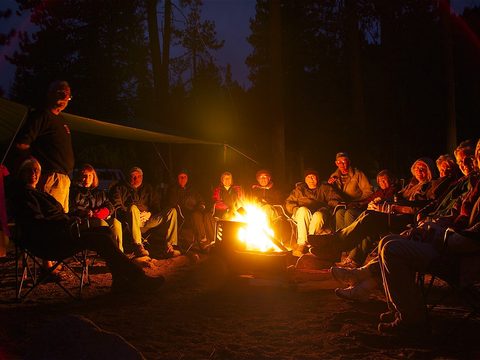 We sat around the
_____ all night, telling stories and keeping warm under the stars.
 Don't leave the ice cream in the sun, or it will
_____ in ten minutes.
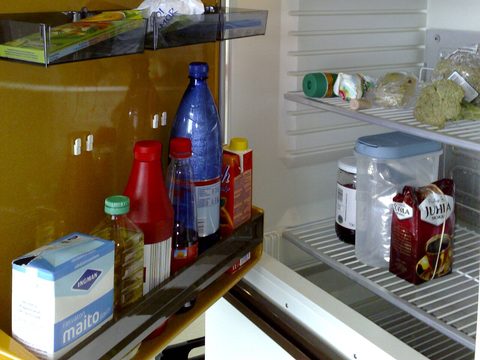 Put the milk back in the
_____, please. It goes bad fast when it's warm.
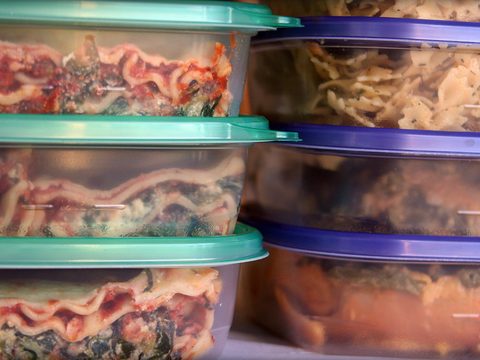 We cooked too much pasta last night, so today we're having the
_____ for lunch.
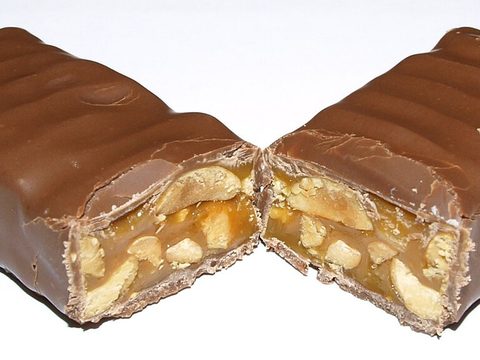 At the gas station, he bought a
_____: chocolate, nuts and caramel in one long piece.
 The dog ran into the yard and came back with a long
_____ from the tree in his mouth.
 She dropped a soft, white
_____ into her hot chocolate, and it floated on top like a little cloud.
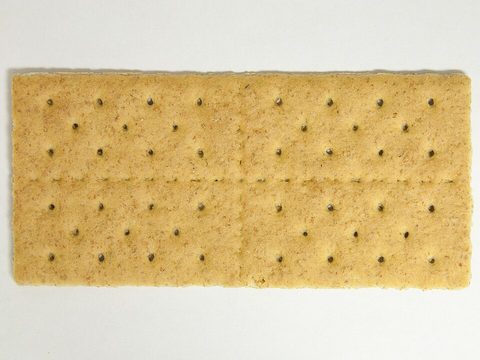 The
_____ had no chocolate on it, and it was so dry and crunchy that I needed a glass of milk to finish it.
From the campfire to the microwave
Read the story and listen to it. It comes from a real cooking blog, In the Kitchen with Matt. The adverbs are in bold. Tap a dotted word to see what it means.
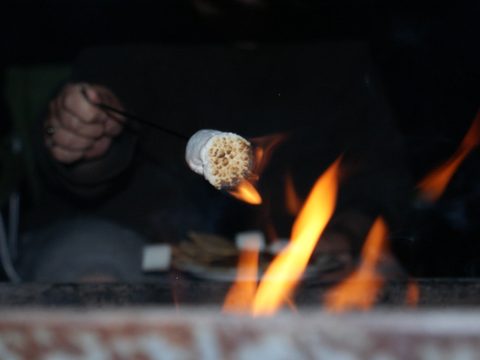
When Matt Taylor was a little boy, he made s'mores around the campfire on camping trips. He roasted marshmallows on a long stick, and sometimes they caught fire!
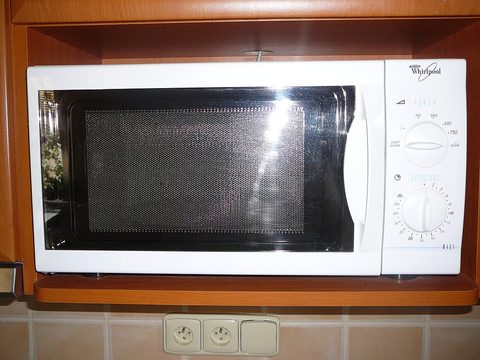
But camping trips don't happen every weekend, so at home, Matt made his s'mores in the microwave. No campfire, and no waiting!
Inside the microwave, the marshmallow grew like a balloon. Little Matt loved it, so he stood too close to the window, and adults told him to move back.
Those happy memories stayed with him, so in 2020, on his cooking blog, In the Kitchen with Matt, he shared his microwave recipe.
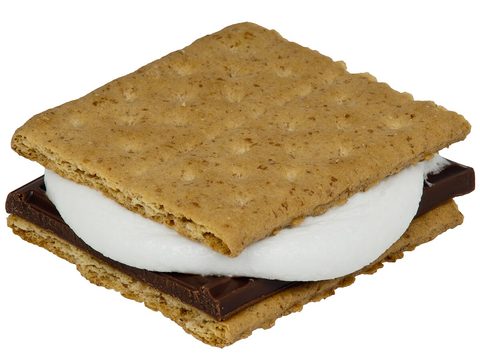
The recipe is easy, with only three ingredients: graham crackers, chocolate and marshmallows. Matt usually uses large marshmallows, and any chocolate candy bar works: milk, dark or white.
With the ingredients ready, he places graham cracker halves on a microwave-safe plate. Then he adds chocolate and a marshmallow on each one.
Next, the plate goes into the microwave at full power for 20 to 30 seconds. If the microwave has no turntable, he turns the plate after 20 seconds.
In that time, the marshmallows puff up to about twice their size. As a kid, this was Matt's favorite part.
When the marshmallows are big and soft, Matt takes the plate out carefully, because it can be hot. Then he adds another cracker half on top.
He presses down gently, and the s'mores are ready. They are best freshly made, but leftovers can stay in the fridge for a day or two.
Multiple choice
Twelve questions about Matt's story. Click an answer and read why.

-
On camping trips, how did little Matt cook the marshmallows?
The marshmallow goes on a long stick, over the fire. In the blog, Matt says he even used wooden sticks from the campsite. If you go camping a lot, he says, buy a special stick in a store: you can use it for hot dogs, too.
-
Why did Matt also make s'mores at home?
With a microwave, there is no waiting for the next camping trip. That is the first idea of Matt's recipe: you don't have to go camping to eat s'mores.
-
Why did adults tell little Matt to move back?
He loved watching the marshmallow grow, so he got too close. In the blog, he jokes that people told him "once or twice": a funny way to say it happened more than one time.
-
The marshmallow "grew like a balloon". What does that mean?
Like a balloon is a comparison: the marshmallow gets bigger and rounder, the way a balloon does with air. There were no real balloons in Matt's kitchen.
-
Which s'mores does Matt have happy memories of?
In the blog, his microwave memories are just as good as his campfire memories. He never says that one is better than the other.
-
What did Matt do in 2020?
The post is called "Microwave S'mores", and it's from July 6, 2020, in the Desserts part of his blog, In the Kitchen with Matt.
-
Why is the recipe easy?
Graham crackers, chocolate and marshmallows. Matt says it himself: if he can do it, you can do it. S'mores are not hard to make, and they're quick, too.
-
Which chocolate can you use?
The classic one is Hershey's milk chocolate, but dark or white chocolate is fine, too. For the marshmallows, Matt uses the normal large size, but some companies make square marshmallows just for s'mores.
-
How long does the plate stay in the microwave?
That's why the recipe is so quick. The chocolate melts in that time, too. Don't want melted chocolate? Matt says to leave it off and add it at the end, with the top cracker.
-
When does Matt turn the plate after 20 seconds?
Without a turntable, the plate doesn't turn by itself, so some marshmallows may not puff up. Matt turns it and cooks them for 10 to 20 more seconds.
-
What can you do with leftover s'mores?
Then you reheat them in the microwave for a few seconds. But Matt's best idea is to make them only when you want them: then there are no leftovers at all!
-
Which sentence best summarizes the story?
The story starts with little Matt at the campfire and in front of the microwave, and it ends with his recipe. One person, from his childhood to his blog.
The recipe, step by step
Matt's recipe has five parts, and each part has a heading. Click a part, then click its heading.
One word from the story
Read the story one more time. Write ONE word from the story for each sentence.

-
aThe size of the marshmallows Matt usually uses: ___
-
bYou can use any kind of this ingredient: ___
-
cYou make the "sandwich" with these: ___
-
dTo roast marshmallows over a campfire, you use a long ___.
-
eYou put halves of these on a microwave-safe plate: ___
-
fIn the microwave, these get about twice as big: ___
-
gBe careful when you take it out: it can be hot. ___
-
hLeftover s'mores can stay here for a day or two: ___
Cooking verbs
Matt's recipe is full of verbs for making food. Read each new sentence and choose what the verb means.
-
"We roasted corn over the campfire." To roast means…
On camping trips, little Matt roasted marshmallows. You can roast meat, vegetables and coffee, too.
-
"Place the glasses on the table, please." To place means…
Place is like put, but a little more careful. In Step 2, Matt places cracker halves on a plate.
-
"Rotate the cake after ten minutes, so every side gets the same heat." To rotate means…
In a microwave with no turntable, Matt rotates the plate by hand after 20 seconds.
-
"Remove the bread from the oven and let it cool." To remove means…
Matt removes the plate from the microwave carefully, because it can be hot.
-
"Press the green button to start the machine." To press means…
At the end of the recipe, Matt presses down gently on the top cracker.
-
"I reheated last night's soup for lunch." To reheat means…
Re- means "again": reheat, redo, rewrite. Leftover s'mores can go back in the microwave for a few seconds.
-
"The bread puffed up in the oven." To puff up means…
In the microwave, marshmallows puff up to about twice their size. That was Matt's favorite part as a kid.
-
"No onions for me, please. Can you leave them off?" To leave something off means…
Matt says the same about chocolate: if you don't want it melted, leave it off, and add it at the end.
Adjectives or adverbs?
Read the box, then choose the correct word and read why.

Ask one question: what does the word describe? A person or a thing takes an adjective: a quick dessert. How somebody does something takes an adverb, usually with -ly: eat quickly.
Adverbs describe a verb: Matt presses down gently. They can also describe an adjective (very sweet), another adverb (really slowly) or a whole sentence (Traditionally, people make s'mores at a campfire.).
- Most adverbs: adjective + -ly: sweet → sweetly, fresh → freshly.
- Spelling: -y becomes -ily (easy → easily); -le becomes -ly (gentle → gently).
- The same word: fast → fast, hard → hard, late → late. Never fastly.
- Irregular: good → well. He is a good swimmer. He swims well.
-
"They are best freshly made." What does freshly describe?
Freshly tells you how they are made, and made is a form of the verb make. A noun takes the adjective: fresh s'mores.
-
Sarah held the plate ___.
How did she hold it? Held is a verb, so it takes the adverb.
-
John is a ___ person.
Person is a noun, so the adjective goes before it.
-
I mixed the ingredients ___.
How did I mix them? Mixed is a verb: the adverb says how.
-
The trip was ___.
After be, use an adjective. It describes the trip, a thing, not an action.
-
You look ___. Didn't you sleep well?
Here, look means seem, and it works like be: it takes an adjective. It describes you, not how you use your eyes.
-
The woman answered the phone ___.
How did she answer? With a tired voice: answered is the verb, so the adverb.
-
She sang ___.
Sang is a verb. Happy ends in -y, so the adverb is happily.
-
She is ___ with her new job.
After be, an adjective: it describes her, not an action.
-
I speak English ___.
How do I speak? Speak is a verb, and the adverb of good is well.
-
Her English is ___.
After is, an adjective. It describes her English, a thing.
-
She cooks ___.
How does she cook? Cooks is a verb here. Terrible ends in -le, so the adverb is terribly.
-
He is a ___ cook.
Here, cook is a noun: a person who cooks. A noun takes the adjective.
Say it with an adverb
Write a new sentence with the same meaning. Change the noun into a verb, and the adjective into an adverb.
-
1Maria is a beautiful singer.
-
2My dad is a slow driver.
-
3Leo is a fast runner.
-
4Ana is a hard worker.
-
5My grandma is a good cook.
-
6They are quiet speakers.
-
7Paul is a bad dancer.
-
8Our teacher is a patient listener.
S'mores 4 ways
The video has no words: only music, pictures and four new ideas for s'mores. So there are no right or wrong answers here. Read the four recipes, watch, and talk about them. The times show when each recipe starts.

- Peanut butter cup (00:15): graham crackers, a peanut butter cup and a roasted marshmallow.
- Hazelnut chocolate chip (00:35): chocolate chip cookies, chocolate hazelnut spread, chocolate and a roasted marshmallow.
- Berries and cream (01:09): waffle cookies, white chocolate, a roasted marshmallow, and strawberries, blueberries and raspberries, wrapped in foil and roasted over the campfire for ten minutes.
- Cookies and cream (01:21): a sandwich cookie, opened up, with chocolate and a roasted marshmallow inside.
Useful language
You in the kitchen
Part A is about the story and the video. Part B is about you and cooking: answer with an adverb when you can (well, easily, quickly). Part C is for your opinions. Tap a card when you have talked about it.
Useful language
My new s'mores recipe
40–70 words. Invent a new s'mores recipe. Choose your ingredients, then write the steps. Use at least three cooking verbs from Exercise 08 and two adverbs. Then show it to the class. Example: Place two cookies carefully on a plate.

My results
Check your score, then copy it and send it to your teacher on WhatsApp.

One job for this week. Say three sentences out loud about people in your life, each one with an adverb: My mom cooks well. My brother drives slowly. I eat too quickly! Thirty seconds, in English.