London vs Paris
Two old rivals and one poster full of numbers. You read who wins each round, learn to say big numbers the right way, and choose your own city.
Warm-up
Ask and answer with a partner, or with me. Tap a card when you have answered it.

London or Paris? The two cities are old rivals, and in 2014 a poster tried to find the winner with numbers. Today you read it round by round, and you learn to say big numbers right: thirteen is not thirty!
Useful language
City words
Click a word, then click its meaning. Correct pairs turn green. The audio button says the word.
Complete the sentences
Click a word in the bank, then click a gap. Click a filled gap to clear it.

 A
_____ stops in front of the old church, takes a photo, opens a map and asks me the way to her hotel.
 The church has a tall
_____ with a bell at the top. You can hear the bell from every street in town.
 At the
_____, we see old paintings and a real dinosaur, but we can't touch anything.
 There's a lot of traffic on the
_____ every morning, so I walk to the other side of the river.
 It's late and it's raining, so we call a
_____. The driver takes us home in ten minutes.
 Our plane waits at the end of the
_____ for twenty minutes before it can take off.
 The
_____ is fast, but it's very hot down there, and at six in the evening the trains are full.
 Don't step on the
_____! It's on the sidewalk, and it's very slow, with its little house on its back.
Six rounds
The story of an infographic, a poster full of numbers about London and Paris. Tap a dotted word to see what it means.
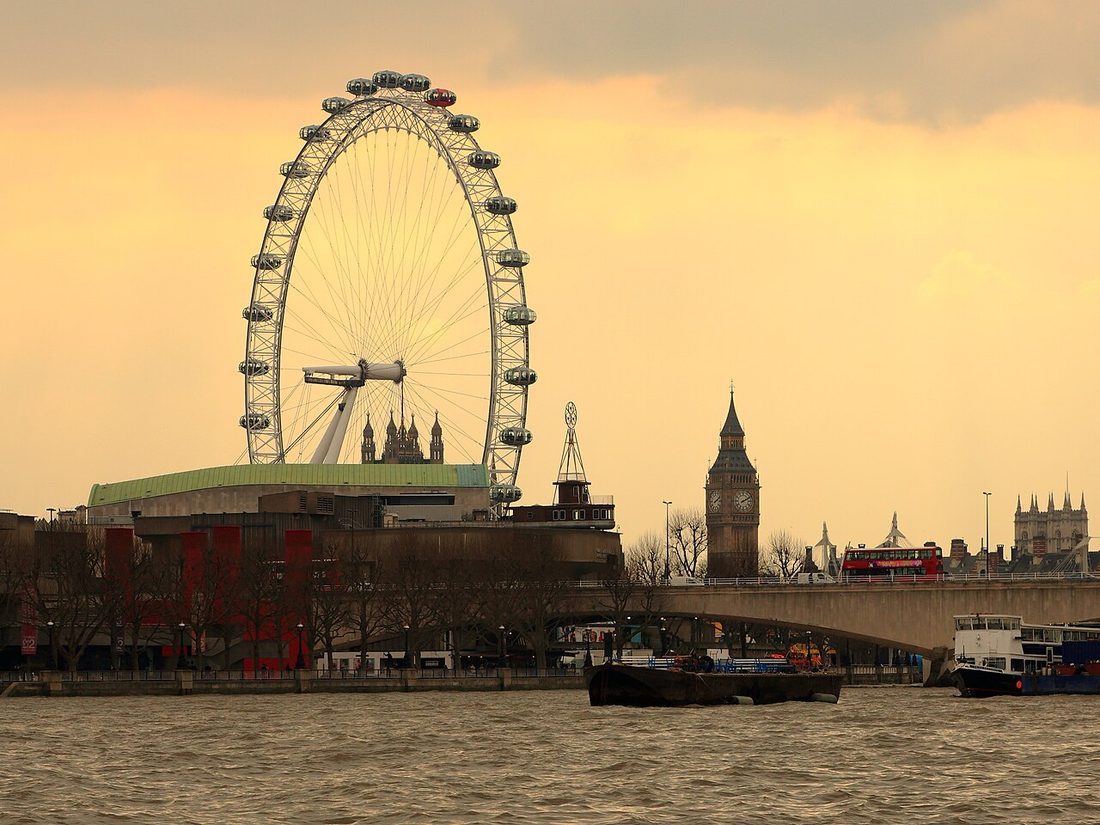
London had more tourists than ever, and in January 2014, a British newspaper called it the most popular city in the world.
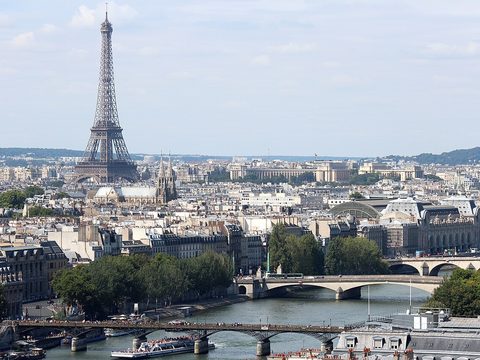
But London kept the title for only two months. In March, a British news website named London's old rival, Paris, the world's top tourist city.
So which city is really better? A British website for vacation homes wanted an answer, so it made an infographic, a poster full of numbers.
The infographic starts with visitors. About 16 million tourists visit London every year, and 14 million visit Paris. So London wins round one.
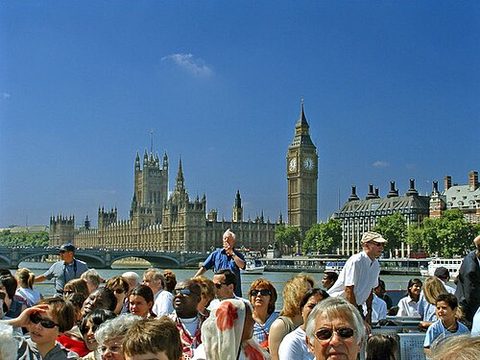
Round two compares the top attractions, and Paris wins it easily. Big Ben, London's number one, is 96 meters tall. The Eiffel Tower is 324!
Now it's one to one. Round three, the weather, is a tie: Paris is colder in January (5°C, London 7°C) but warmer in July (20°C, London 16°C).
Food has to break the tie, and Paris wins this round too: it has 81 restaurants with a Michelin star, and London has only 61.
Paris leads two to one, but London wins round five, sports: it has 131 soccer clubs, and Paris has only 15.
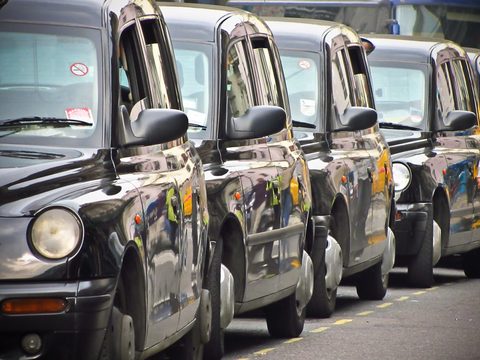
At two to two, the last round has to decide. It can't: Paris has 300 subway stations to London's 270, but London has 22,600 taxis to Paris's 16,600.
So who wins? The infographic never says. It only shows the best of both cities and leaves the final choice to each visitor.
Multiple choice
Click an answer and read why.

-
Why did a British newspaper call London the most popular city in the world?
More tourists than ever before: a record. The newspaper gave London the title in January 2014.
-
How long did London keep the title?
From January to March 2014. Then a British news website named Paris the world's top tourist city.
-
Why did the British website make the infographic?
Two titles in two months, so the question was still open. The website rents vacation homes in many countries, in England and in France too.
-
Which city wins the first round, and why?
About 16 million tourists a year in London and 14 million in Paris: two million more for London, and 30 million together.
-
Why does Paris win round two so easily?
324 meters against 96. And a small surprise: Big Ben is really the name of the big bell inside the clock tower. The tower is the Elizabeth Tower.
-
Why is the weather round a tie?
January: Paris 5°C, London 7°C. July: Paris 20°C, London 16°C. One month for each city.
-
How does Paris win the food round?
81 in Paris and 61 in London. The infographic has more food numbers: London has 190 McDonald's and Paris 66, and France eats 40,000 tons of snails a year!
-
What is the score after the food round?
London won the visitors, Paris won the attractions and the food, and the weather was a tie.
-
How does London win round five?
131 soccer clubs to Paris's 15, so now it's two to two. But Paris has more bridges: 37 to London's 15.
-
In the last round, what does London have more of?
22,600 taxis to Paris's 16,600. But Paris has 300 subway stations to 270, and four runways at Charles de Gaulle Airport to two at Heathrow.
-
Why can't the last round decide the winner?
Subway stations for Paris, taxis for London. So it ends at two to two, with two ties.
-
The best title for this story would be:
Each city wins some rounds, and the infographic never gives a winner. The choice is the visitor's.
Scan the infographic
Time yourself: start the timer and find the information in the box as fast as you can. Write numbers with digits. Then say every answer out loud.
- Airport runways: London Heathrow 2 · Paris Charles de Gaulle 4
- Visitors every year: London 16 million · Paris 14 million
- Top 3 attractions: London — Big Ben, the London Eye, the British Museum · Paris — the Eiffel Tower, the Louvre Museum, the Arc de Triomphe
- January: Paris 5°C · London 7°C July: London 16°C · Paris 20°C
- Taxis: London 22,600 · Paris 16,600
- How tall: Big Ben 96 meters · the Eiffel Tower 324 meters
- Fish and chips in the UK: 300 million portions every year
- Restaurants with a Michelin star: Paris 81 · London 61
- McDonald's restaurants: Paris 66 · London 190
- Snails in France: 40,000 tons every year
- Subway stations: London (the Tube) 270 · Paris (the Métro) 300
- Soccer clubs: London 131 · Paris 15
- Bridges: Paris 37 · London 15
- Red buses in London: 75,000
-
aIn July, the temperature in London is ___ °C.
-
bIn January, the temperature in Paris is ___ °C.
-
cThe Eiffel Tower is ___ meters tall.
-
dThe infographic says London has ___ red buses.
-
eThe airport with more runways is ___.
-
fIn Paris, there are ___ subway stations.
-
gIn London, there are ___ soccer clubs.
-
hThere are ___ more bridges in Paris than in London.
- One number on this infographic is very strange: 75,000 red buses. London's own transportation reports count about 9,000 buses. Posters and websites can be wrong, so check the big numbers!
Big numbers

Numbers come in families. Learn five groups and you can say any number up to 9,999. Two traps: hundred and thousand never take -s after a number, and the stress tells a -teen from a -ty.
- 1–12: each number has its own word — one, two, three … ten, eleven.
- -teen (13–19): thirteen, fourteen, fifteen … nineteen. Careful: fifteen, not "fiveteen".
- -ty (20–90): twenty, thirty, fifty … ninety. Between two tens, use a hyphen: twenty-five, sixty-seven.
- hundred (100–900): one hundred … nine hundred, with no -s: five hundred, not "five hundreds". 450 = four hundred fifty (American) or four hundred and fifty (British).
- thousand (1,000–9,000): one thousand … nine thousand, no -s again. 36,000 = thirty-six thousand. English uses a comma in big numbers, and Portuguese uses a period: 36,000, not 36.000.
- Listen for the stress: nineTEEN, NINEty. The -teen numbers are strong at the end, the -ty numbers at the start.
-
two hundred goes in the group…
Two hundred = 200. All the numbers from 100 to 900 end in hundred.
-
sixteen goes in the group…
Sixteen = 16. The numbers from 13 to 19 end in -teen.
-
twelve goes in the group…
Twelve = 12. It has its own word, like eleven. There is no "twoteen"!
-
eight thousand goes in the group…
Eight thousand = 8,000, with a comma. Eight hundred is 800.
-
ninety goes in the group…
Ninety = 90. Nineteen is 19: listen for the stress.
-
thirty-one goes in the group…
31 is thirty + one, so it goes with the -ty numbers, like 81 and 82.
-
How do you write 80?
Eight + -ty, but with only one t: eighty. Eighteen is 18.
-
Which is correct for 131?
No -s on hundred, and 31 is thirty-one. In British English, people also say one hundred and thirty-one.
-
Which is correct for 22,600?
No -s on thousand or hundred. It's the number of taxis in London on the infographic.
-
Where is the stress in thirteen?
All the -teen numbers are strong at the end. Thirty is strong at the start: THIR-ty.
Numbers in words
Write each number in words. The first seven complete the table of five groups; the last three come from the infographic.
-
15There are ___ people in the line.
-
40My dad is ___ today.
-
11My son is ___ years old.
-
82Our room number is ___.
-
50The ticket costs ___ dollars.
-
700The hotel has ___ rooms.
-
3,000About ___ people live in my town.
-
96Big Ben is ___ meters tall.
-
270London has ___ subway stations.
-
16,600Paris has ___ taxis.
Teen or ty?
Tap the audio button and choose the number you hear. Then play it with a partner: say one number from a line, and your partner points to it. Change places.

-
Line a: which number do you hear?
TWEN-ty: the stress is at the start. Twelve is a different word, and 200 ends in hundred.
-
Line b: which number do you hear?
thir-TEEN: the stress is at the end, with a long "ee" and a clear n.
-
Line c: which number do you hear?
FOR-ty: strong at the start, and in American English the t is soft, almost like a d. Spelling: four, fourteen, but forty, with no u.
-
Line d: which number do you hear?
fif-TEEN: strong at the end. Fifty is FIF-ty.
-
Line e: which number do you hear?
Six thousand: listen for the "th" at the start of the second word. Six hundred starts with an h.
-
Line f: which number do you hear?
SEV-en-ty: strong at the start. In seven-TEEN, the strong part is at the end.
-
Line g: which number do you hear?
eigh-TEEN: strong at the end, and only one t in the spelling. Eighty is EIGH-ty.
-
Line h: which number do you hear?
Nine hundred, with no -s. Nine thousand would be 9,000.
Five ways to say 0
In English, 0 has more than one name. Choose the best word for each situation and read why.
-
A phone number: 555-0189. Most people say the 0 as…
Five-five-five, oh-one-eight-nine. Zero is fine too, but in phone numbers most people say oh, like the letter O.
-
The temperature is 0°C. It's…
For temperatures, math and science, say zero. Zero degrees is very cold: water turns to ice.
-
A tennis score: 30–0. The players hear "thirty–…"
In tennis, 0 is love: fifteen–love, thirty–love, forty–love.
-
A soccer score on British radio: London 2, Paris 0. They say "two–…"
Nil is the British word for 0 in soccer. In the United States, people usually say two to nothing or two–nothing.
-
The year 1907. You say…
In years, 0 is oh: nineteen oh seven. But 2007 is two thousand seven.
Six famous places
Part A: click a place, then click what its photo shows. Tap the audio button and say each name out loud; the symbols show how to say it. Part B: London or Paris?

-
Where is the Louvre Museum?
It's the home of the Mona Lisa, and number two in Paris on the infographic.
-
Where is Big Ben?
Number one in London on the infographic. Remember: Big Ben is the bell, and the tower is the Elizabeth Tower.
-
Where is the Arc de Triomphe?
Number three in Paris, at the top of the Champs-Élysées. Arc de Triomphe is French: de, not the.
-
Where is the British Museum?
British means from the United Kingdom. It's number three in London on the infographic.
-
Where is the Eiffel Tower?
Paris's number one: 324 meters on the infographic, more than three times the height of Big Ben's tower.
-
Where is the London Eye?
The name helps! It's the giant wheel next to the River Thames, number two in London.
London or Paris?
Part A is about the infographic. Part B is about you: answer with one more detail. Part C is for your opinions. Say your numbers out loud. Tap a card when you have answered it.
Useful language
My city for a long weekend
40–70 words. You have four days for a trip: London or Paris? Choose one city and say why. Use at least three numbers from the infographic, and write one of them in words. Example: Paris has three hundred subway stations, so…

My results
Check your score, then copy it and send it to your teacher on WhatsApp.

One job for this week. Every time you see a big number — a price, a score, a phone number, a street number — say it out loud in English. Ten numbers a day, and by Friday thirteen and thirty never get mixed up.