The History of the First Thanksgiving
A ship, a terrible winter, a lesson in growing corn and a feast that went on for three days. The story behind the biggest dinner of the American year, and a small ending that makes words full of meaning: -ful.
Warm-up
Work with a partner, or with me. Tap a card when you have answered it.

Three holidays, one minute each. Halloween, Thanksgiving, Christmas: how many words can you say for each one? Then you learn how Thanksgiving began, and a small ending that makes new adjectives: -ful.
Useful language
Holiday words
Click a word, then click its meaning. Correct pairs turn green. The audio button says the word.
Complete the sentences
Click a word in the bank, then click a gap. Click a filled gap to clear it. Read the whole sentence first: the clue is always inside it.

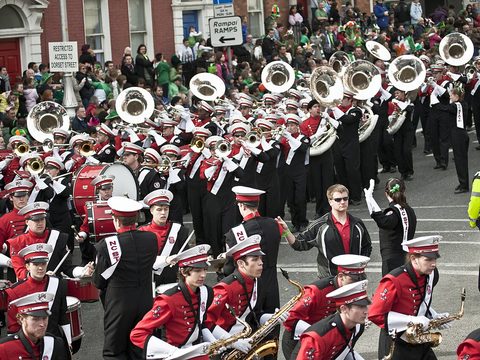 The street is closed all morning because of the
_____: marching bands, dancers and clowns are going past, and thousands of people are watching from the sidewalks.
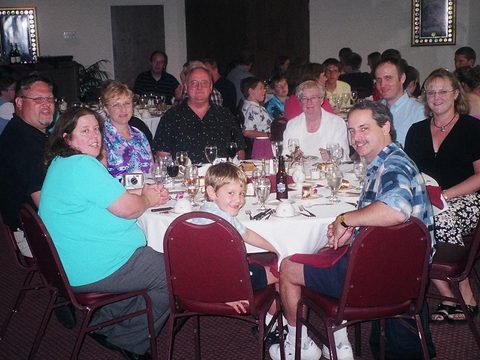 For my grandmother's ninetieth birthday, we cooked for two days. There were twenty dishes on the table and forty guests. What a
_____!
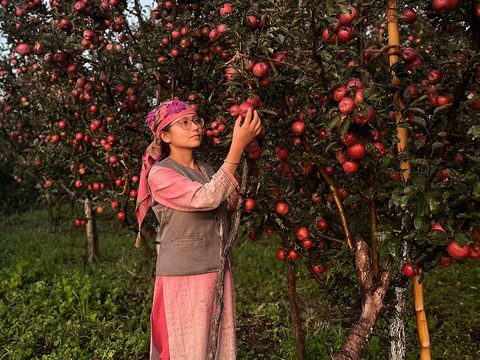 It didn't rain all summer, so the farmers had a very small
_____ this year: only half of the usual apples.
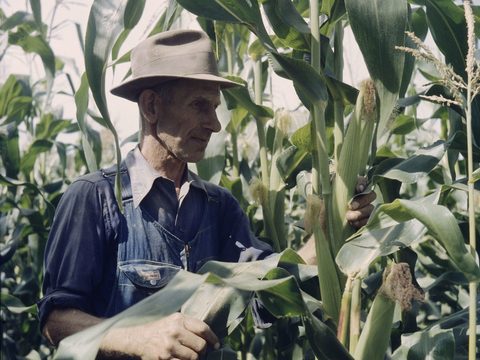 On the farm, the
_____ is taller than me now, and its yellow seeds are ready to cook with butter and salt.
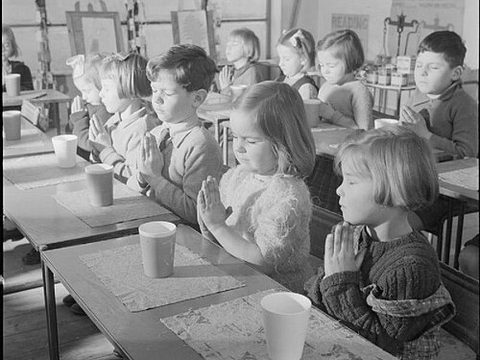 Before a big exam, Lucas closes his eyes and puts his hands together to
_____ for help.
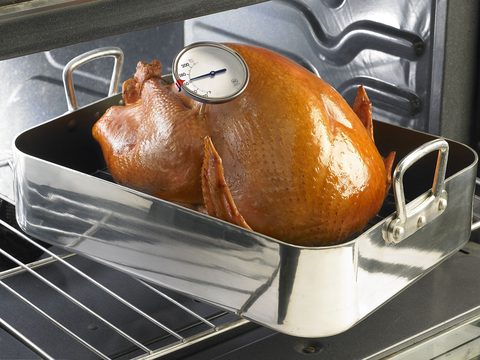 This bird is too big for our oven! The
_____ is three times bigger than a chicken.
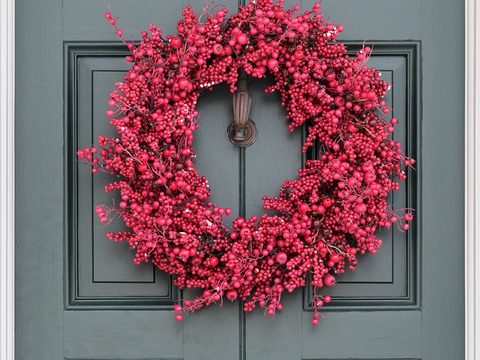 There's a round
_____ of little red berries on our front door.
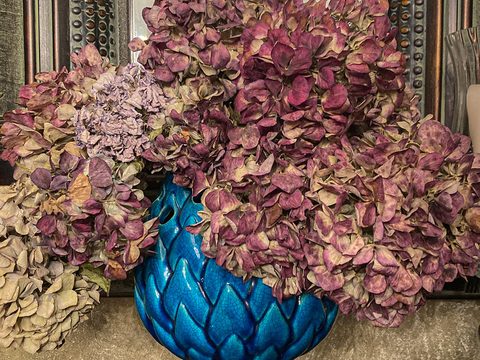 Fresh roses die in a week, so my mom keeps
_____ in a vase: they have no water inside, and they look nice for months.
From hunger to harvest
Watch the video first: two and a half minutes, with captions. Then read the story and listen to it. Tap a dotted word to see what it means.
In 1620, a ship called the Mayflower arrived in the New World. On board was a Protestant religious group. Today, people call them the Pilgrims.
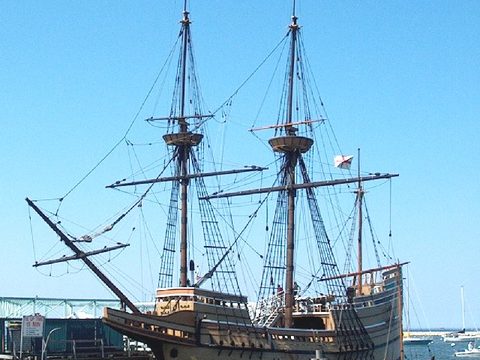
The Pilgrims settled in Massachusetts, but it was too late in the year to grow anything. So there was almost no food for their first winter.
That first winter was terrible. The Pilgrims starved, and many got sick. Half of them died from disease before spring came.
The next spring, help came from a local tribe of Native Americans. They taught the Pilgrims how to grow corn, how to hunt and how to fish.
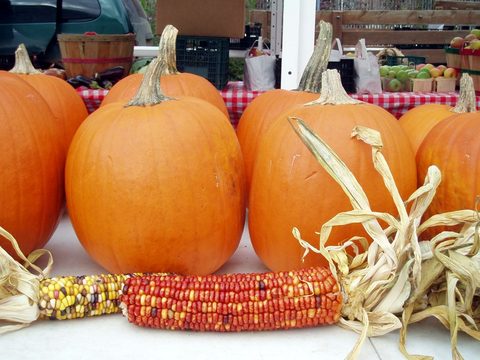
Thanks to their lessons, the Pilgrims had a rich harvest in the fall of 1621: corn, beans, pumpkins and other vegetables.
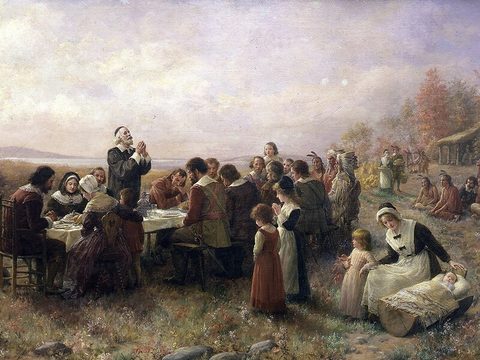
With so much food, the Pilgrims wanted to celebrate. So they had a big feast, and the party went on for three whole days.
Before they ate, they all prayed and thanked God for the food and for everything they had. That was the first Thanksgiving.
That feast started a tradition. Many years later, President Lincoln made Thanksgiving an official day for the whole country, and the holiday grew.
Today, on the fourth Thursday of November, families sit together at a big table. There's usually a turkey, but historians have no evidence of one in 1621.
But the day is more than a meal: there are parades in the streets, wreaths and dried flowers at home, and loving messages to friends and relatives.
Multiple choice
The stamp shows the moment in the video. Click an answer and read why.

-
What do people do on Thanksgiving Day? 00:16
The video calls it a day of feasting (00:16): eating a big, special meal, with family, friends and relatives. Presents are for Christmas, and costumes are for Halloween.
-
Who were the Pilgrims? 00:26
A Protestant religious group, known today as the Pilgrims (00:26). They traveled on the Mayflower, but they didn't work on it. The Native Americans already lived there.
-
What was the Pilgrims' first winter in America like? 00:39
The video says that winter was full of hardship (00:39): a lot of problems and a lot of pain. The next two questions tell you why.
-
Why didn't the Pilgrims have food for that winter? 00:43
They arrived too late to farm the land (00:43): there was no time to grow food before the cold came. So they starved.
-
What happened to half of the colony that winter? 00:47
First they starved (00:46), and then half of the colony died from disease (00:47). A colony is a group of people who go to live in a new land.
-
What did the local Native Americans teach the Pilgrims? 00:51
The next spring, the local tribe taught them three things (00:51): to grow corn, to hunt and to fish. Now the Pilgrims could find their own food.
-
When did the Pilgrims have a rich harvest? 00:57
In the spring they learned to grow corn. The harvest came months later, in the fall of 1621 (00:57): corn, barley, beans, pumpkins and other vegetables.
-
What did they do before they ate the feast? 01:11
The first Thanksgiving was a three-day feast (01:09), and before they ate, they thanked God for the food and for everything they had (01:11). Giving thanks: that is the name of the day.
-
Did the Pilgrims eat turkey at the first Thanksgiving? 01:38
Historians have no evidence (01:38): nothing shows that the Pilgrims ate turkey, and nothing shows that they didn't. Nobody knows.
-
What does the video say about turkey on Thanksgiving today? 01:47
The celebration is incomplete without it (01:47): for most families today, there is no Thanksgiving dinner without a turkey on the table.
-
In the video, which president made Thanksgiving an official day? 01:53
The video says the traditional parades started when President Lincoln made Thanksgiving an official day (01:53). Abraham Lincoln, not Roosevelt.
-
Which sentence best summarizes the story?
From hunger to harvest: a terrible winter, help from the Native Americans, a rich harvest and a feast to say thank you. The parades came much later, and the turkey is still a mystery.
A comic strip: two men on a bench
Read what happens in the comic, then answer. Click an answer and read why.
- Picture 1: The small man says that Thanksgiving is this Thursday, and that they have a lot to be thankful for.
- Picture 2: The tall man doesn't look very sure. He asks him: like what?
- Picture 3: The small man's answer is short: Black Friday, of course! The tall man agrees, and he jokes that the Pilgrims really "knew when to leave the stage".
-
What is the tone of the comic strip?
The man says they have a lot to be thankful for, but his example is a day for shopping, not for saying thank you. The joke says the opposite of what the holiday means.
-
What other popular date is in the comic strip?
Black Friday is the day after Thanksgiving, when stores have big sales. For the man with the cell phone, that is the best part of the week.
-
Do the two men think Thanksgiving is an important date?
They say they are thankful, but only for Black Friday. For them, Thanksgiving is just the day before the sales.
-
The tall man says the Pilgrims "knew when to leave the stage" (the stage: the place where actors do their show). What does he mean?
Actors leave the stage when their part of the show ends. For him, the Pilgrims' holiday is Thursday's show, and then it's time for the next one: Black Friday.
Adjectives with -ful
Look at the first picture of the comic again: the men have a lot to be thankful for. Read the box, then answer.

One small ending, a lot of new words. Put -ful after a noun and you have an adjective: use → useful, thanks → thankful (no s). It means full of something, or causing it. And it has only one l.
- Full of / with a lot of: thanks → thankful (no s: glad, and you want to say thank you) · use → useful (it helps you a lot) · wonder → wonderful
- Causing something: stress → stressful: a stressful day gives you stress.
- Spelling: always one l: -ful, never -full. After a consonant, y changes to i: plenty → plentiful (more than enough).
- Where it goes: before a noun or after be: a useful book · This book is useful.
-
In thankful, what does the ending -ful mean?
Thankful people have a lot of thanks to give. Able to do something is the job of a different ending, -able: washable, drinkable.
-
A peaceful morning is…
peace + -ful: full of peace. A peaceful morning has no noise and no stress. (Peace and piece sound the same, but they are different words.)
-
Which word is spelled correctly?
The ending -ful has one l, always. The double l is only in the word full. And care keeps its e.
Make adjectives with -ful
Read the meaning and write one adjective with -ful. Watch the spelling: one l, and y changes to i after a consonant.
-
afull of power
-
bfull of beauty
-
cfull of gratitude (thanks). Careful: this word changes, and it starts with gr-.
-
dfull of truth
-
efull of pain
-
ffull of color
-
gfull of hope
-
hgiving a lot of help
Complete with an adjective with -ful
Six words from Exercise 08. Click a word in the bank, then click a gap. Read the whole sentence: only one word fits each gap.

- The Thanksgiving table looked _____: white flowers, gold candles and the best plates in the house.
- The Pilgrims were so _____ for the harvest that they had a feast to say thank you.
- Some old Thanksgiving stories are not _____ about the Native Americans: they don't tell what really happened.
- Black Friday is a _____ way to sell before Christmas: it brings huge crowds to the stores.
- It's really _____ to learn what happened to some tribes. Their story makes many people sad.
- My grandma's Thanksgiving sweater isn't pretty, but it's very _____: it has every color of the rainbow!
Watch again: listen for detail
Close the text. Watch the video one more time and write the missing word or words. The stamp shows the moment.
-
aThanksgiving Day is celebrated in ___. 00:10
-
bIt is on the ___ Thursday of November. 00:14
-
cThis holiday has a long history which started in ___. 00:22
-
dA Protestant religious group, known today as ___, arrived in the New World. 00:26
-
eThey arrived on board a ship called ___ and settled in Massachusetts. 00:34
-
fThe local tribe of ___ taught them how to grow corn, hunt and fish. 00:51
-
gThe first Thanksgiving was a ___ feast. 01:07
-
hThanksgiving is a day when people send ___ and warm wishes to their relatives and friends. 02:14
Feasts, thanks and shopping
Part A is about the video, the story and the comic. In Part B, talk about your life and your country. Part C is for your opinions. Tap a card when you have talked about it.

Useful language
My Thanksgiving note
30–60 words. On Thanksgiving, many people write a small note about what they are thankful for. Now write yours: three things, each one with because. Use at least two adjectives with -ful. Example: I am thankful for my neighbor because she is very helpful.
My results
Check your score, then copy it and send it to your teacher on WhatsApp.

One job for this week. Every night, say one thing you are thankful for, out loud, with because. Add a -ful word when you can: I'm thankful for my bed, because today was stressful. Ten seconds, in English.