Black Friday
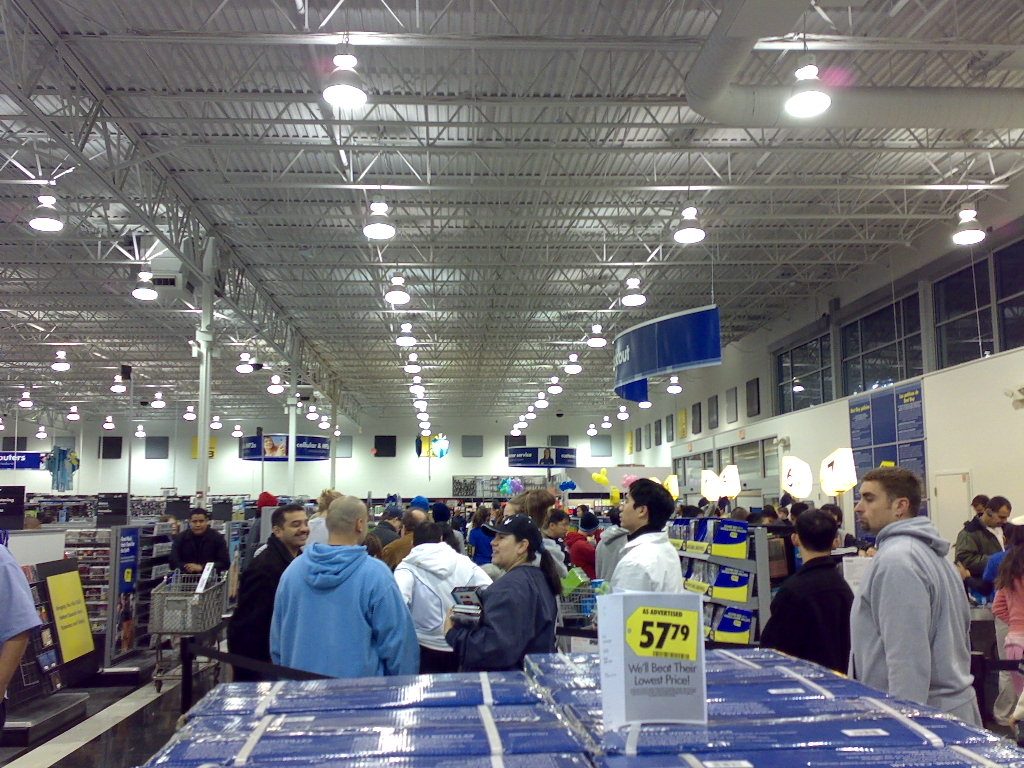
A long line, a sign that says 50% off, and a guide that looks like a board game. Five steps to the best deals, and the words that go together when you shop: find a bargain, get a good deal, give somebody a refund.
Warm-up
Ask and answer with a partner, or with me. Tap a card when you have answered it.

Up to 50% off! Is it a great day for shoppers, or a great day for stores? Today you follow a guide with five steps to the best deals, and you learn the words that go together when you shop.
Useful language
Black Friday words
Eight words from the guide in Exercise 04. Click a word, then click its meaning. Correct pairs turn green. The audio button says the word.
Complete the sentences
Click a word in the bank, then click a gap. Click a filled gap to clear it. Read the whole sentence first: it tells you which word fits.

 Our family has a monthly
_____: $400 for food, $100 for gas and $60 for fun. We never spend more than that.
 The sign says "Only 2 left!", but there are a hundred more in the back room. It's just a
_____, so people hurry and buy.
 My uncle is a
_____: he doesn't make shoes. He buys them from a factory and sells them to the public in his store.
 Don't buy your winter coat in October. Wait for the end-of-season
_____ in February, when stores sell their old coats at lower prices.
 This car is only two years old, and it costs half the normal price. What a great
_____!
 The shoes cost only $40 online, but the
_____ to my house is $15 more, so I'm going to buy them at the mall.
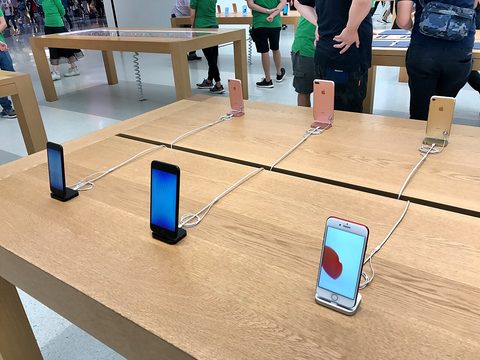 The ad says "FREE PHONE!" in big letters, but the
_____ at the bottom says you must pay $45 a month for two years.
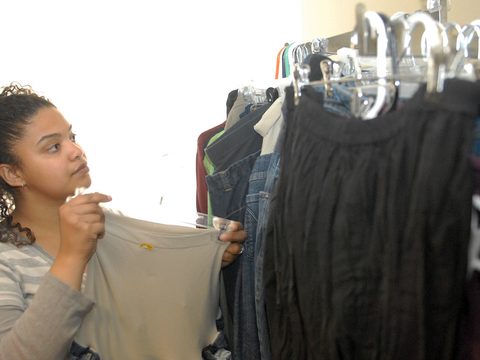 My aunt has a
_____ from her favorite clothing store, but it only works there, not at other stores.
From START to FINISH
The five steps of a MarketWatch guide, told as the story of one Black Friday morning. Read only the first sentence of each paragraph first: they tell the whole story. Then read everything. The words from Exercise 02 are in bold. Tap a dotted word to see what it means.
It's the Friday after Thanksgiving, and you are in a long line outside a store. A sign says, "Black Friday: up to 50% off!"
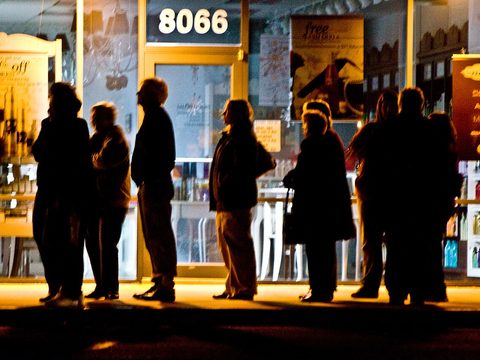
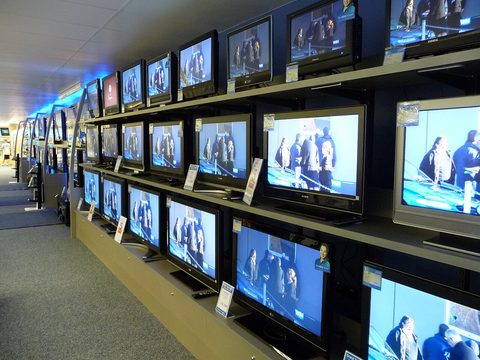

While you wait, you open "Beat Black Friday," a guide from MarketWatch. It wants to ensure you get the best deals and don't break the bank.
The guide looks like a board game, and step one, at START, says: create a budget before you go shopping. So you decide how much you can spend.
That number is important, because step two tells you: retailers know tricks to make you spend more. With a budget, you can say no.
One of those tricks is with prices: before a sale, some stores make a price higher, so the discount looks bigger than it is.
So you follow step three: find out which sales are good, and which are too good to be true.
Is your line for a good sale? It's for doorbusters: very cheap TVs, only in the store. Step four says: ignore them.
There are only a few doorbusters, so only the first people in line get one. You go home: step four also says, pay attention to shipping offers.
Many websites offer free, fast shipping, and you find a TV in your budget. But at checkout, the store offers you its retail card, with an extra discount.
So you follow step five: read the fine print. These cards can have very high interest. You say no, and you reach FINISH with money in the bank.
Multiple choice
Click an answer and read why.

-
Where are you at the start of the story?
A sign says "Black Friday: up to 50% off!" Black Friday is the Friday after Thanksgiving, and for many stores it is the start of the Christmas shopping season.
-
What is "Beat Black Friday"?
It's an infographic: a guide with pictures and only a few words. This one has a path from START to FINISH, like a board game. MarketWatch, a news website about money, made it in November 2019.
-
What does the guide want to do?
It wants to ensure you get the best deals. It never names a store, and it tells you to be careful with retail cards, not to get one.
-
The guide says, "Don't break the bank." What does it mean?
When something breaks the bank, it costs too much. It happens a lot: in 2019, about 35 million Americans were still paying for the gifts of the year before on their credit cards.
-
What does step one make you do?
Step one: create a budget before you go shopping. The MarketWatch article says most people skip this step. A good idea: write a list of people and a dollar amount for each gift.
-
Why is your budget so important?
Step two: know the tricks. So the sentence "Retailers don't use strategies to make you spend more money" is false. With a budget, you can say no to the tricks.
-
How does the price trick in the story work?
A "50% off" sign can lie a little. In 2014, MarketWatch found a store that showed a higher "original" price for a blender and then "discounted" it to the same price as other stores.
-
What does step three tell you to do?
Not every sale is a good sale, so "You should buy every time you think the sales are good" is false. The article says TVs and game consoles are often cheap on Black Friday, but sheets and towels are cheaper in January.
-
Your line is for doorbusters. Why does step four say to ignore them?
Stores use doorbusters to bring people into the store. But there are only a few, so if you are not one of the first people in line, you probably won't get one.
-
What do you do when you leave the line?
Step four has two parts: ignore the doorbusters, and pay attention to shipping offers. Many stores now offer free, fast shipping. But read the small text: sometimes you must spend a minimum amount to get it.
-
At checkout, why do you read the fine print on the retail card?
With very high interest, a card can cost you more than its discount saves. So "It is not important to read the small text" is false. "0% interest" offers can be tricky too: if you don't pay everything in time, often 90 days, you pay interest on the whole price.
-
Which sentence best summarizes the story?
You don't stop shopping: you find a TV in your budget. But you follow the five steps from START to FINISH, so you get a good deal and don't break the bank.
Which step helps?
Five real Black Friday situations. Read each one and choose the step from the guide that helps you most.
-
a · A big department store's ad says, "Incredible doorbusters, while supplies last! In store only!"
"While supplies last" means there are only a few. "In store only" means you have to go there and wait in line. That's a doorbuster.
-
b · A sheet of paper with the word "Budget" at the top. Under it: the money from a paycheck, then rent, electricity, phone and groceries, each with a number. A calculator is next to it.
Money in, money out: the sheet shows how much you have and what you need to pay. After that, you know how much you can spend on Black Friday.
-
c · An online ad with a new cell phone and a drone: "Black Friday. Pay $1, get bottom price."
A phone and a drone for one dollar? That's too good to be true. Before you pay anything, find out what the real price is.
-
d · A price tag: "Limit 2. Save $100. $148 each. Was $248." Next to the price there is a very small symbol (§), and it sends you to tiny text at the bottom of the ad.
The little symbol means there is more information in the small text. Read it before you get excited about the $100.
-
e · Near the door of a store, there is a table full of things for one dollar. You put one in your cart, and soon you are buying more and more.
This trick is in the MarketWatch article: cheap things near the door. When one thing is in your cart, it's easier to spend more.
Words that go together

Some words are best friends. We go shopping, but nobody says "make shopping". There is no rule for it: you learn these words in pairs, like the names of two friends.
- A collocation is two or three words that people use together all the time. Another word with the same meaning sounds strange to a native speaker: go shopping, not make shopping.
- Everyday examples: make a list · take a photo · do your homework · have breakfast
- Five shopping verbs: find · receive · get · give somebody · reduce Five nouns: prices · a good deal · a gift card · a refund · a bargain
- New words: a bargain is something you buy for much less than its real price · a refund is the money a store gives back to you · a gift card is a card with money on it that you can spend at a store
- The verb changes, the noun stays: find → found · get → got · give → gave → given · receive → received · reduce → reduced
-
I paid $20 for a jacket that usually costs $90. I ___ a real bargain!
Find a bargain: you look, and you find something very cheap. A jacket for $20, not $90, is a bargain.
-
On Black Friday, many stores ___ their prices by half.
Reduce prices = make prices lower. "By half" tells you how much lower: 50%.
-
The shirt was too small, so I took it back, and the store ___ me a refund.
Give somebody a refund: the store gives your money back. From your side, you get a refund.
-
For my birthday, I ___ a gift card from my coworkers.
Receive a gift card: somebody gives it to you as a present. In British English, it's often a gift voucher.
-
If you compare prices on different websites, you can ___ a good deal.
Get a good deal: you pay a good price for something. That's the goal of the whole guide.
-
Before you sign up for a retail card, always ___ the fine print.
Read the fine print: the important rules are in the small text.
-
Dinner at that small restaurant won't ___ the bank. It's only $12.
Break the bank = cost too much. At $12, the dinner is cheap, so it won't break the bank.
-
When you shop online, ___ attention to the shipping costs.
Pay attention to something = look at it carefully. We never say "do attention" or "make attention".
Complete the questions
Write the collocation with the words on the left. Change the verb when you need to: past, present perfect or negative. Questions a–e come back in Exercise 09, for you to answer.
-
find / bargaina · When was the last time you ___? What did you buy?
-
reduce / pricesb · Do you believe stores will really ___ next Black Friday? Why or why not?
-
get / good dealc · Is there a store where you always ___ on Black Friday? What do you buy?
-
give / you / refundd · Has a store ever ___? What for?
-
receive / gift carde · Do customers usually ___ from local stores on Black Friday?
-
reduce / pricesf · Last Friday, the bookstore ___ by 30%, so the line was very long.
-
not / find / bargaing · We looked for hours at the mall, but we ___. Everything was expensive.
-
not / give / me / refundh · My headphones broke after a week, but the store ___. I was so angry!
You and Black Friday
Part A is about the story. In Part B, interview a partner (or me) and use the collocations in your answers. Then tell the class one thing about your partner. Part C is for your opinions.

Useful language
My Black Friday plan
40–70 words. Black Friday is next week. Write your plan: your budget, what you want to buy, in a store or online, and two steps from the guide that you are going to follow. Use at least two collocations from Exercise 07.
My results
Check your score, then copy it and send it to your teacher on WhatsApp.

One job for this week. Before you buy anything, stop for ten seconds and say the five steps out loud, in English: budget, tricks, good sales, doorbusters and shipping, fine print. Then decide.