British Backpacker Becomes Accidental Australian Cook
A backpacker needs more time in Australia, takes a job on a huge cattle station and becomes its cook. Plus how to tell the time and how to talk about your day, hour by hour.
Warm-up
Ask and answer with a partner, or with me. Tap a card when you have answered it.

Some people travel with everything in one bag. Today you meet one of them: a backpacker who became a cook by accident. And you learn to talk about your day, hour by hour.
Useful language
Life on a cattle station
Click a word, then click its meaning. Correct pairs turn green. The audio button says the word.
Complete the sentences
Click a word in the bank, then click a gap. Click a filled gap to clear it. Read the whole sentence first: the clue is always inside it.

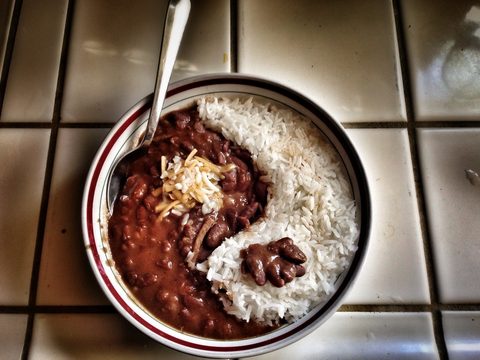 We cooked too much rice and beans last night, so today I'm having the
_____ for lunch.
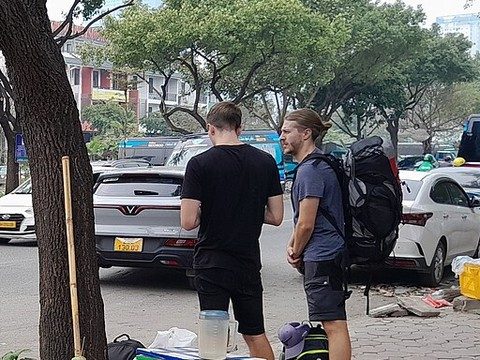 My cousin traveled around Asia for a year. He slept in cheap hostels and carried everything in a big bag on his back, like a real
_____.
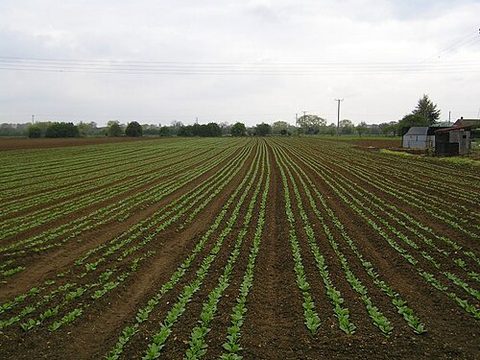 Our farm isn't very big: it has only twenty
_____ of land, but that is enough for our vegetables.
 The restaurant needs a new
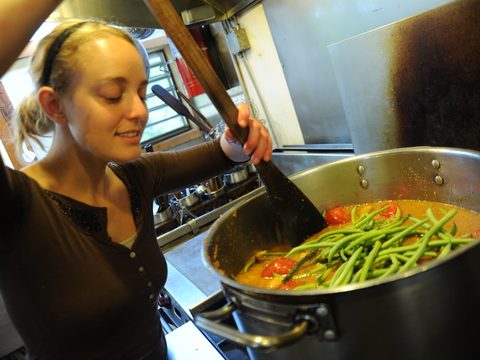
_____ who can make soup, rice and meat for fifty people every day.
 Our office makes too much
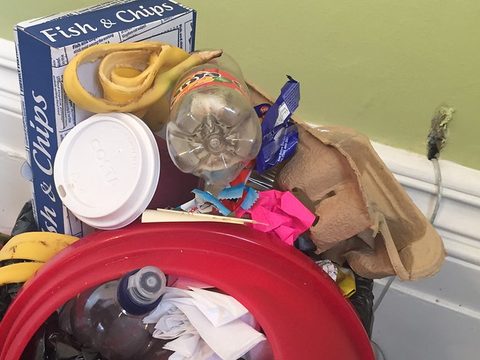
_____: every day, big bags of paper, plastic and old food go into the trash.
 My uncle sold his apartment in the city and bought a
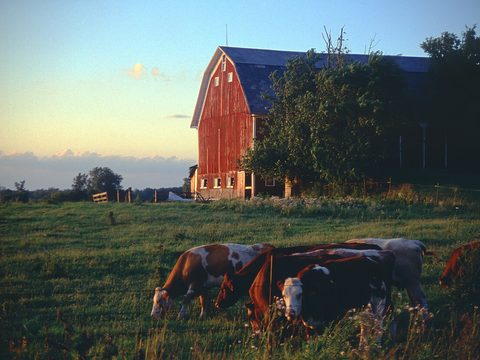
_____ in the country, with a big barn, two hundred cows and lots of land.
 My grandma bakes apple
_____ for every birthday, and we eat them hot, with ice cream.
 The
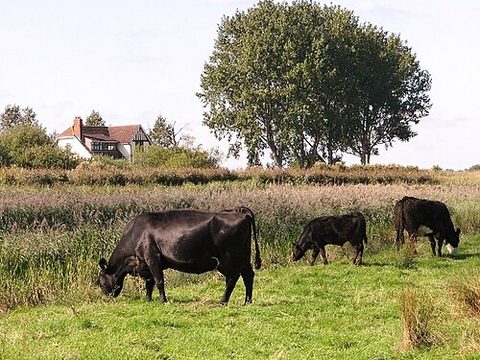
_____ eat grass in the field all day, and the farmer sells their milk and meat.
Four in the morning
Watch the video first: two and a half minutes, from BBC News, with captions. Then read the story and listen to it. The daily routine phrases are in bold. Tap a dotted word to see what it means.
Ellie Daborn is a backpacker from the UK. A few years ago, she was traveling around Australia, and she wanted to stay longer.
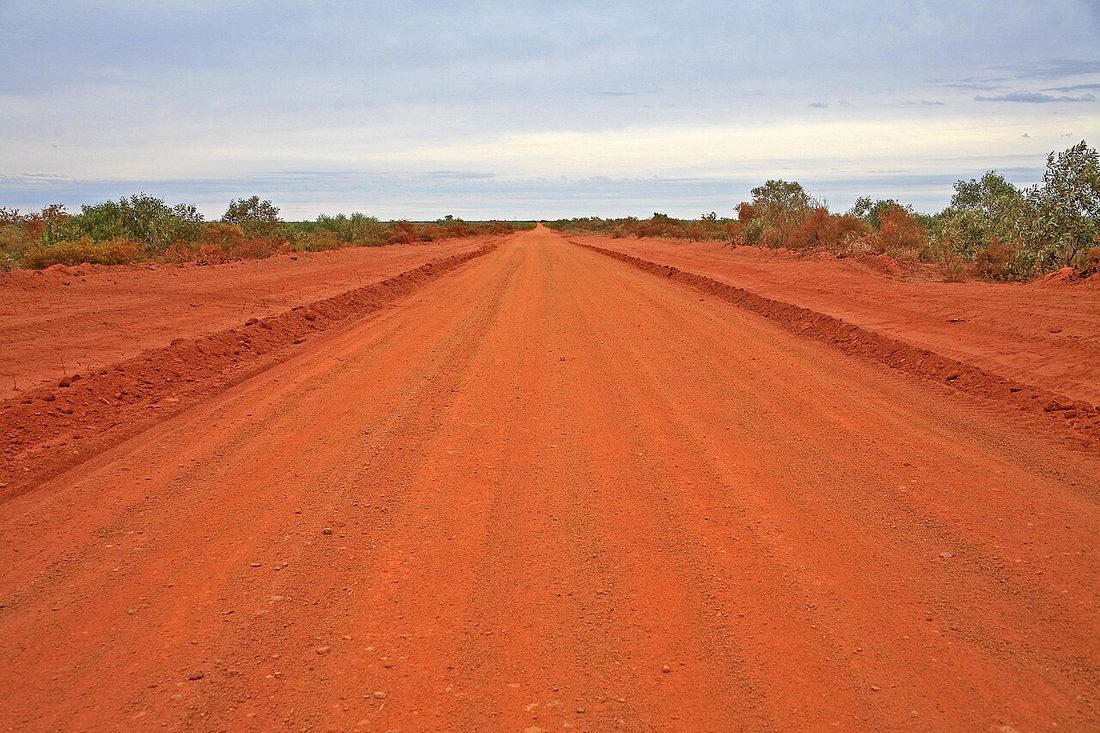
To get more time on her visa, she took a job on a remote cattle station in the Northern Territory.
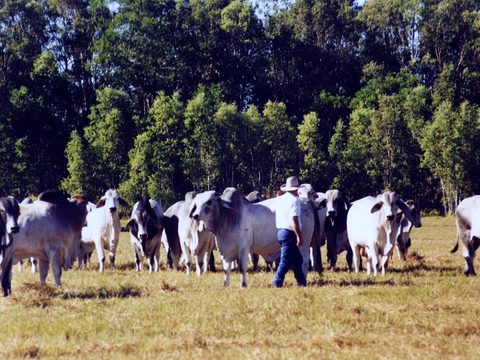
But before Australia, Ellie didn't even know what a cattle station was. It's like a big American ranch, with cowboys, horses and cattle.
And her station is huge: 1.3 million hectares, 60,000 cattle and 41 workers. As the station cook, Ellie feeds the people who look after the cattle.
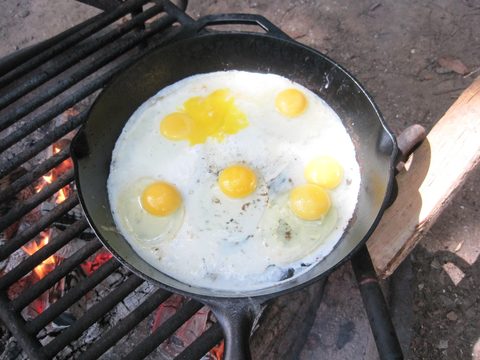
Cooking for so many people means an early start. Her alarm goes off at about four, and breakfast, with little pies, is served at five.
The food doesn't stop there. At half past nine, the workers have smoko, a meal with savory and sweet things. At lunch, they have sandwiches.
Then Ellie cooks the evening meal for seven o'clock. After such a long day, she feels quite tired by eight, so she goes to bed.
Feeding so many people takes planning. Ellie plans ten days of meals, orders food once a week and uses her leftovers, so there is little waste.
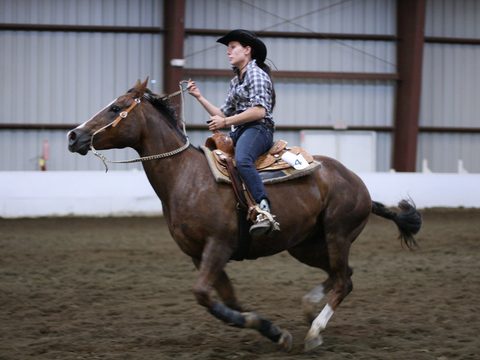
The station taught her more than cooking. She had no experience in agriculture, but she learned to ride a horse and a motorcycle.
In the end, Ellie fell in love with the culture there. She came for a visa, but three years later, she is still on the station.
Multiple choice
The stamp shows the moment in the video. Click an answer and read why.

-
Where does Ellie live and work? 00:02
She lives and works on a remote cattle station in the Northern Territory of Australia. Remote means far away from towns and cities.
-
Why did Ellie take a job on the station?
The description of the video on YouTube says it: the job was a way to make her visa longer, so she could stay in Australia.
-
Before Australia, what did Ellie know about cattle stations? 00:11
She never heard of one before she came to Australia. So she explains it with something people know: an American ranch with cowboys, horses and cattle (00:14).
-
Who does Ellie cook for? 00:35
She is in charge of cooking for the people who go out and look after the cattle. The whole station has 41 workers (00:29).
-
What time does Ellie's alarm go off? 00:47
Four in the morning! Breakfast is served one hour later, at 5 a.m. (00:50).
-
What happens at half past nine? 00:53
Smoko is a kind of meal between breakfast and lunch, with savory and sweet things (00:58). It's an Australian word.
-
What do the workers have for lunch? 01:00
Lunch is "help yourself": the workers get their own food. They can have sandwiches, and Ellie keeps the fridge full for them (01:04).
-
Why does Ellie go to bed at about eight? 01:09
The evening meal is at seven, and by about eight she is quite tired. Remember: her alarm goes off at four!
-
How often does Ellie order food? 01:24
She plans about ten days of meals at a time (01:20), and she does one food order every week.
-
What is very important in Ellie's kitchen? 01:27
For her, it's all about learning what she can make from her leftovers, with as little waste as possible.
-
What else did Ellie learn on the station? 01:55
She had no experience in agriculture (01:50), but now she can ride a horse and a motorcycle. She says motorbike; in the US, people usually say motorcycle.
-
Which sentence best summarizes the story?
One line from start to end: Ellie needs more time on her visa, so she takes the cook's job. The days are long, but she learns a lot and falls in love with the culture. She isn't a chef with a restaurant, and the cowboys are only in her comparison.
Match the halves
Watch Ellie again. Click the beginning of a sentence, then click its end. Use each end once, and check that the whole sentence is true about Ellie.
Telling the time

Past or to? Look at the minutes. Up to thirty, the minutes are past the hour. After thirty, count the minutes to the next hour: 9:50 is ten to ten.
- o'clock: 6:00 → It's six o'clock.
- past (1 to 30 minutes after the hour): 4:10 → ten past four · 6:15 → a quarter past six · 2:30 → half past two
- to (31 to 59 minutes): count the minutes to the next hour: 9:50 → ten to ten · 4:45 → a quarter to five
- Only the numbers, very common in the US: 6:30 → six thirty · 8:15 → eight fifteen · 4:05 → four oh five. You also hear after for past: ten after four.
- a.m. and p.m.: a.m. is from midnight to noon, p.m. from noon to midnight. Use them with 1 to 12: 6 p.m. = six in the evening. Never
18 p.m. - at + time: I start work at eight o'clock. Not sure? around 7:20 · at about eleven
1. How do you say these times?
Click a time, then click the words that say it.
2. Now write the times in numbers
Write each time in numbers, like 6:40.
-
aIt's five to eleven.
-
bIt's half past five.
-
cIt's twenty past one.
-
dIt's a quarter to three.
-
eIt's twenty-five past eight.
-
fIt's a quarter past seven.
-
gIt's ten to four.
-
hIt's nine o'clock.
Ellie's day
Watch the part about a regular day again. Write the time of each activity, in numbers (5:00) or in words (five o'clock).
-
aHer alarm goes off at about ___ a.m. 00:47
-
bBreakfast is served at ___ a.m. 00:50
-
cThey have smoko at ___ a.m. 00:53
-
dThey have the evening meal at ___ p.m. 01:07
-
eBy about ___ p.m., Ellie feels quite tired and goes to bed. 01:09
Verbs for your daily routine

Four small verbs run your whole day: get, have, go and do, plus take for a shower in the US. Learn each verb together with its word, as one phrase.
- get: get up (= leave your bed) · get dressed (= put on your clothes)
- have + a meal: have breakfast · have lunch · have dinner. Americans also say eat breakfast.
- take a shower in the US · have a shower in the UK
- go: go to work · go to school · go to bed · go home (no to before home!)
- do: do exercise · do homework · do housework (cleaning and washing at home)
- Present simple for routines: I go to the gym on Mondays. · with he, she, it: My brother gets up late. He goes to bed at midnight.
- Ask about times: What time do you get up? — At six thirty.
-
"It's late, and the party is boring. I want to ___."
No to before home: go home, get home. But: go to work, go to school, go to bed.
-
"My kids never ___ their homework before dinner."
Homework, housework and exercise go with do, not make.
-
"It's 7 a.m., and Ana starts work at eight. She is out of bed, but she is still in her pajamas." What does she need to do now?
She is already out of bed, so she is up. It's morning, so it's not time for bed. Pajamas off, clothes on: she needs to get dressed.
-
"After soccer practice, my son always ___ a shower."
Take a shower is the American way. In the UK, people often say have a shower. Do and make don't go with a shower.
-
"I wake up at six, but I stay in bed for ten minutes. I ___ at ten past six."
Wake up = open your eyes. Get up = leave your bed. Ten minutes in bed, and then up!
-
Which sentence is correct?
With she, the verb takes -es: goes. And go to bed has no the.
-
"We ___ lunch at half past twelve, in the office kitchen."
Meals go with have (or eat): have breakfast, have lunch, have dinner.
-
Ellie says her alarm goes off at about 4 a.m. What does goes off mean here? 00:47
When an alarm goes off, it starts to ring. Then you wake up, and then you get up!
The right verb
The word on the left is the second part of a routine phrase. Write the whole phrase in the right form. Careful with he and she!
-
upOn school days, my son ___ at seven. On Saturdays, he stays in bed until ten.
-
dressedMy daughter is only five, but she ___ by herself: shirt, pants, socks and shoes!
-
a showerAfter the gym, Paula always ___. Then she goes home with clean, wet hair.
-
to workMy dad ___ by bus, so he leaves home very early.
-
homeAfter work, I ___ and cook dinner for my family.
-
to bedThe kids ___ at nine on school nights, but later on the weekend.
-
exerciseMy grandma ___ every morning: she walks in the park for thirty minutes.
-
houseworkMy husband ___ after work: he washes the dishes and cleans the bathroom.
-
breakfastI'm never hungry early in the morning, so I ___ at ten, at my desk.
-
dinnerWe ___ at seven, when everybody is home from work.
My typical day
First, put the phrases in the box in the order you do them on a typical day. Then answer the cards with a partner (or me): say the action and the time. Tap a card when you have answered it.

- I get up at seven o'clock. I have breakfast around 7:20.
Useful language
Ellie, food and you
Part A is about the video and the story. Part B is about you. Part C is for your opinions. Tap a card when you have talked about it.
Useful language
A TikTok script about my day
40–70 words. Use your answers from Exercise 11 and write a script for a short TikTok video about your day. Say the actions and the times, in order. Example: Hi! Come with me on a normal day. I get up at 6:30…

My results
Check your score, then copy it and send it to your teacher on WhatsApp.

One job for this week. Every morning, look at the clock and say the time in English: It's ten past seven. Then say one thing you do at that time: I have breakfast. Ten seconds a day.