Before They Go Blind
A family from Montreal takes four kids around the world, so three of them can fill their memories with beautiful things while they can still see. You follow the journey and learn the small word that says why: to.
Warm-up
First, meet the family from the video and guess who is who: click a name, then a person. The ages help! You check your guesses in the first 15 seconds of the video, in Exercise 04. Then ask and answer with a partner, or with me. Tap a card when you have answered it.

Some people travel to rest. This family travels to remember. Today you follow their journey from Africa to Turkey, and you learn the small word that says why we do things: to.
Useful language
Words for the journey
Click a word, then click its meaning. Correct pairs turn green. The audio button says the word.
Complete the sentences
Click a word in the bank, then click a gap. Click a filled gap to clear it.

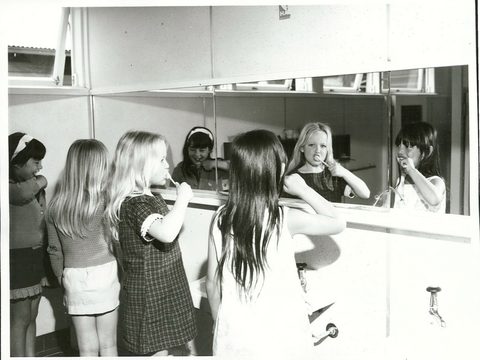 Ana has two brothers and one sister. She loves her three
_____, but she can never use the bathroom in the morning!
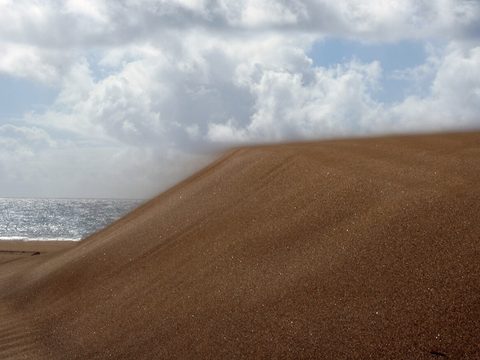 The wind moves the sand all night, so the
_____ look different every morning.
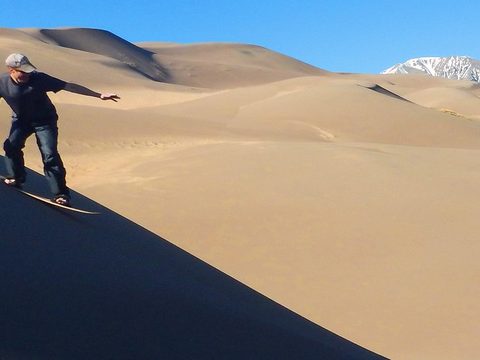 There's no snow in the desert, so he left his snowboard at home and took his
_____ instead.
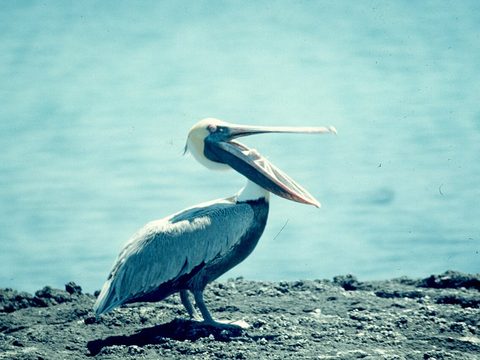 Look at that
_____ on the beach! It's catching fish with its huge beak.
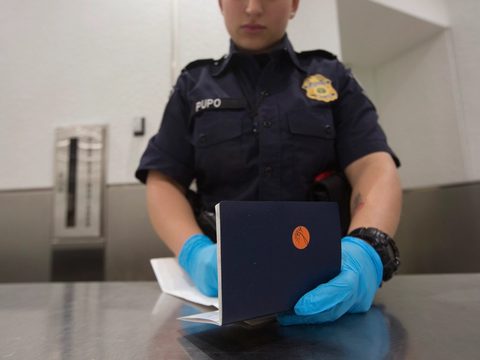 At the
_____, a police officer checked our passports, and then we drove into the next country.
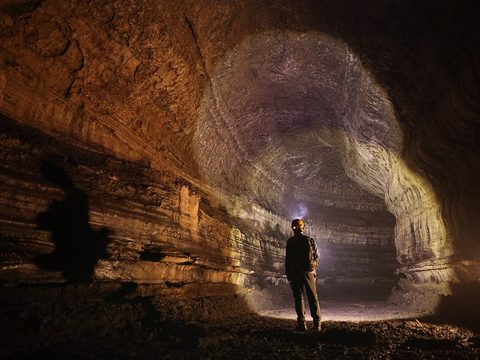 It was dark and cold inside the
_____, and we needed flashlights to find the way out.
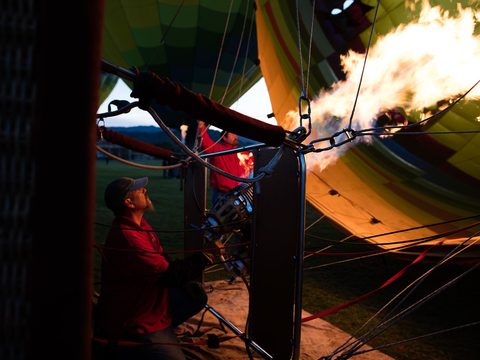 We flew over the hills in a
_____. There was no engine: just a big basket under us and a fire over our heads.
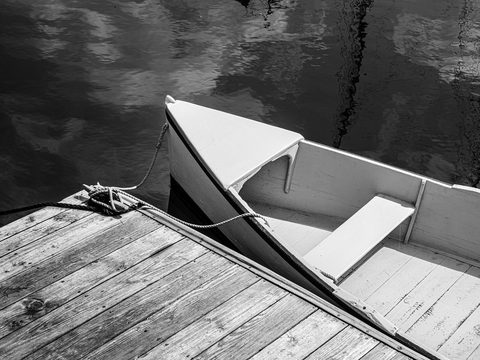 We tied our little boat to the
_____ and stepped out without getting our feet wet.
A trip to remember
Watch the video first: under three minutes, with music, text on the screen and a few words from Edith, the mom. The first 15 seconds show the family, so check your guesses from Exercise 01. Then read the story. The reasons with to are in bold. Tap a dotted word to see what it means.
Mia Pelletier is eleven, and she has a rare eye disease. Two of her three little brothers, Leo and Laurent, have it too. They live in Montreal, Canada.
Because of the disease, their vision gets worse over the years. The majority of people with it lose most of their vision by adulthood.
So the doctors gave their mother, Edith, some advice: fill the children's memories with beautiful things now, while they can still see.
Edith thought of the elephants in the children's books. Then an idea came to her: no more elephants in books. They were going to see real ones!
So Edith and her husband, Sebastien, took all four kids on a journey around the world to see its greatest sights. Their first stop was Namibia, in Africa.
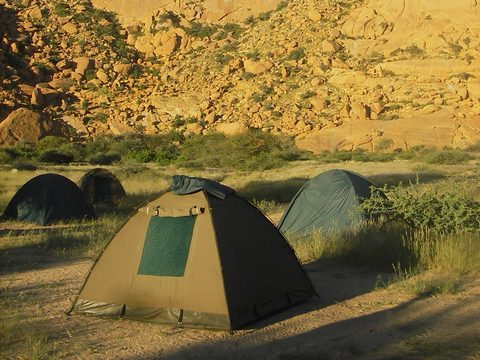
In Namibia, they went camping at Spitzkoppe, rode sandboards down giant dunes and met a pelican at Walvis Bay. But there were no elephants yet.
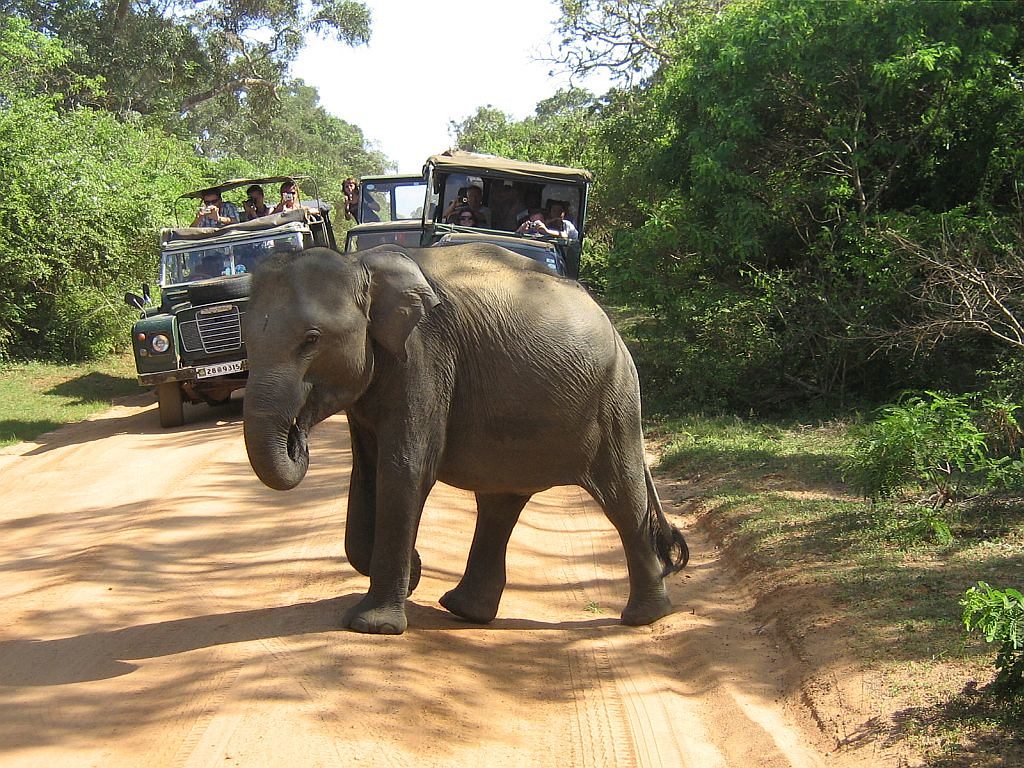
Next, they drove through Botswana to get to Zambia. About thirty seconds after they crossed a border, a big elephant walked right up to their car.
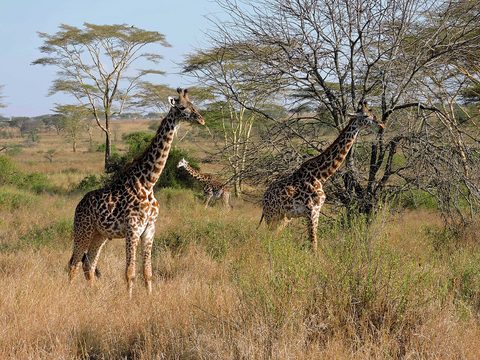
It was their first elephant, and the kids were so excited. Then they jumped from the docks in Stone Town and went to the Serengeti to spot giraffes.
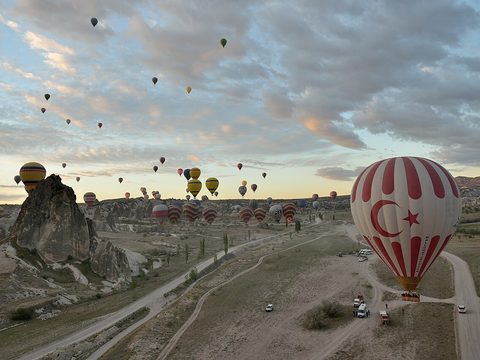
In Zanzibar, they swam in a cave, but the best part for the kids came later, in Turkey: a hot air balloon ride over Cappadocia.
Edith is grateful for all of it: even if the kids go blind tomorrow, they can keep these memories forever.
Multiple choice
The stamp shows the moment in the video. Click an answer and read why.

-
Where does the Pelletier family live?
They are from Montreal, in the province of Quebec, in Canada. Namibia is where their journey started.
-
Which of the four children does NOT have the eye disease?
Mia, Leo and Laurent have it. Colin, who is seven, doesn't, but he goes on the trip with the whole family.
-
What happens to the majority of people with this disease?
It doesn't happen in one day: their vision gets worse little by little, over many years. The disease is called retinitis pigmentosa.
-
What advice did the doctors give Edith?
The children can still see now. So the idea is simple: show them as many beautiful things as possible, while they can.
-
What gave Edith the idea for the trip? 00:45
In the video, she says that's when the idea came to her: why look at elephants in books? They could go and see real elephants.
-
Where did the journey start?
Namibia, in Africa, was their first stop. Zambia, Tanzania and Turkey came later.
-
How did the kids go down the giant dunes?
A sandboard is like a snowboard for sand. In Namibia, they also went camping at Spitzkoppe, a group of tall rocks in the desert.
-
Why did the family drive through Botswana? 01:28
Edith says it in the video: they went through Botswana to go to Zambia. A why question, and an answer with to + verb: you study it in Exercise 07.
-
What happened about thirty seconds after they crossed a border? 01:32
It came along the road, right up to the car. It was the kids' first elephant, and Edith remembers they were really excited (01:42).
-
What did they do in Cappadocia, Turkey?
It was the best part of the trip for the kids: they said it was like a dream. Many balloons go up together there in the early morning. The cave was in Zanzibar, in Africa.
-
Why is Edith grateful? 02:24
Even if the kids go blind tomorrow, she says, they can keep what they saw. And the journey isn't over: next on their list are Mongolia, Indonesia and South Asia.
-
The best title for this story would be:
The whole story is one idea: three of the kids are slowly losing their vision, so the family shows them the world now, while they can still see it.
Watch and remember
Part A: match four words from the video to their meanings. Part B: complete the sentences from memory. The first letter is there to help. Then watch the video again and check.
-
sThe video starts: "These ___ are on a trip around the world before they go blind."
-
lMost people with their disease ___ their vision when they are adults.
-
mThe doctors told the mother to fill the children's ___.
-
bEdith decided that they were not going to look at elephants in ___. They were going to see real ones.
-
jThey started their ___ in Namibia, in Africa.
-
eThe kids were ___ when they first saw an elephant.
-
gEdith says she is really ___ for what the children saw.
-
pNow the family is ___ to go to Mongolia, Indonesia and South Asia.
To + verb: saying why

Why? To + verb. When you say why you do something, English uses to and the base form of the verb. In Portuguese you say para, but in English there is no for before the verb: never "for to go", never "for going". Just to go.
- It says why: I'm saving money to buy a bike. · She called the hotel to ask about the price.
- It answers a why question: Why did you go to the bakery? — To buy bread. No because before it: "Because to buy bread" is wrong.
- The verb never changes: to see, to learn, to have. Not "to seeing", not "to saw".
- No for before a verb: I came to help. — not "I came for to help", not "I came for helping".
- But for + a thing is fine: I went out for a coffee. = I went out to have a coffee.
- Careful: in want to, need to and would like to, the to is part of the verb, not a reason: I want to sleep.
-
We use the infinitive (to + verb) to explain ___ we do things.
It gives the reason. Why did the family drive through Botswana? To get to Zambia.
-
She's going to the pharmacy ___ some medicine.
Portuguese says para comprar, but English says only to buy. No for before a verb.
-
"Why are you wearing a coat?" — Which answer is correct?
A short answer to a why question can start with to. You can also say Because I want to stay warm, but never because to.
-
I'm learning Spanish ___ with my new neighbors.
After to, the base form of the verb: to talk, with no -ing. And no for before a verb.
-
Which sentence is WRONG?
For + a thing is fine: for the sunset. For + a verb is not: for watch has to be to watch.
-
Which sentence uses to + verb to say WHY?
Only this one answers a why question: Why did you go to Peru? To visit my cousins. In would like to and want to, the to is part of the verb.
-
He got up at five ___ the sunrise from the top of the hill.
Why did he get up so early? To see the sunrise. The verb after to is always the base form, even in a story in the past.
Why did they go there?
How much do you remember from the video and the story? Click a reason in the bank, then click a gap. Then read each sentence out loud.
- They went to Spitzkoppe _____.
- They went to the dunes of Namibia _____.
- They went to Walvis Bay _____.
- They went to Stone Town _____.
- They went to the Serengeti _____.
- They went to a cave in Zanzibar _____.
- They went to Cappadocia, in Turkey, _____.
Match the sentence halves
Click the start of a sentence, then the reason that goes with it. Read the whole sentence: does the reason make sense for that place?

Correct the mistakes
Each sentence has one mistake in the reason. Write the whole sentence again, correctly. Change only what is wrong.
-
aI'm calling my friends for to invite them to watch a movie.
-
bShe went to the party having fun with her friends.
-
cI watch travel TV programs for to learning about places.
-
dI study English to communicating better.
-
eI cleaned the kitchen for helping my mom.
-
fWe're going to Egypt for to see the pyramids.
My memory trip
A game for two. Imagine you are going on a journey to fill your memory with good moments. Follow the steps, then change roles.

- 1. On a piece of paper, make two columns: Country or city and Reason.
- 2. Write five places you would like to go to. Next to each place, write the reason with to + verb. Example: Zambia — to see the elephants.
- 3. Fold the paper, so your partner can see only the places.
- 4. Your partner chooses a place and asks: Why would you like to go to …? You answer: I'd like to go to … to …
- 5. Your partner asks one more question: Who would you go with? or When would you go? Then change roles.
Useful language
Memories to keep
Part A is about the video and the story. Part B is about you: answer with one more detail. Part C is for your opinions. Tap a card when you have answered it.
Useful language
A postcard to the Pelletiers
40–70 words. Imagine the Pelletier family is coming to your country. Write them a postcard: suggest two or three beautiful natural places and say what to see or do there. Use to + verb at least three times. Example: Go to the coast to see the turtles.

My results
Check your score, then copy it and send it to your teacher on WhatsApp.

One job for this week. Every time you go somewhere, say why in English, out loud: I'm going to the supermarket to buy coffee. Five places a day, five reasons with to, and no for to!