Lego
A carpenter, a box of plastic bricks and 400 billion pieces later. You read how a small toy filled the world, choose between be and do, and learn the names of the pieces.
Warm-up
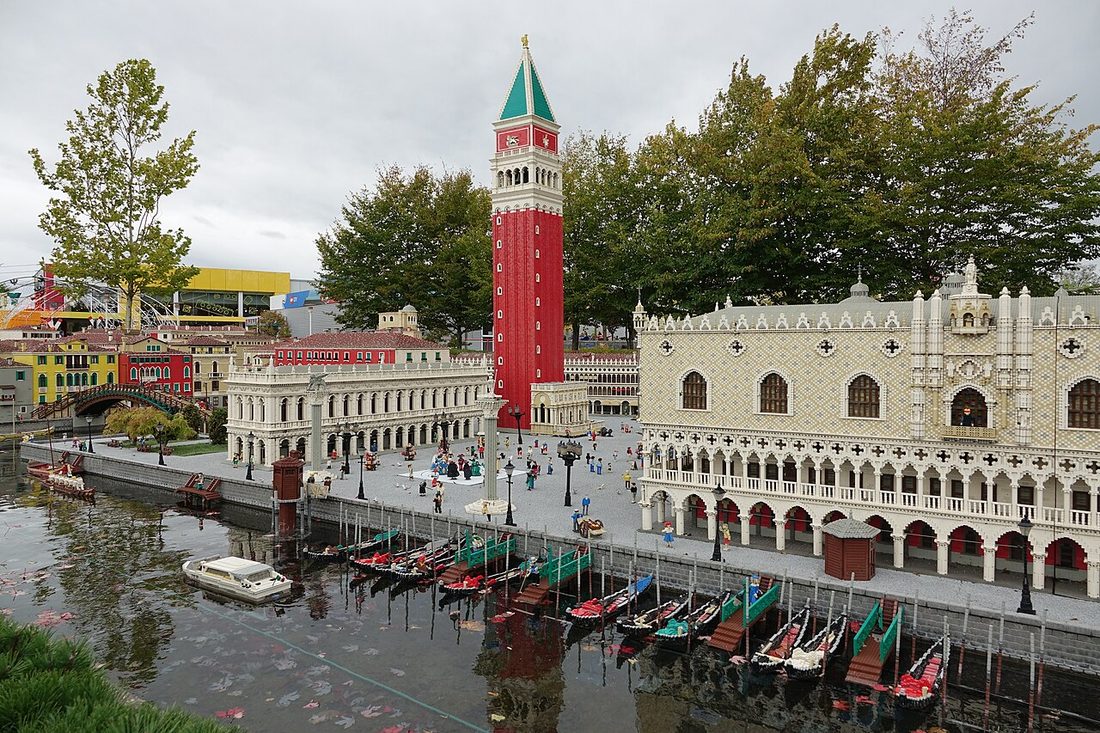
Ask and answer with a partner, or with me. Tap a card when you have answered it. Then match four giant sculptures with their information.

A car, a bridge, a robot and Super Mario. All four are made of the same small plastic bricks that children play with at home. Today you read how a carpenter's idea grew this big, and you learn when English uses be and when it uses do.
Useful language
Building words
Click a word, then click its meaning. Correct pairs turn green. The audio button says the word.
Complete the sentences
Click a word in the bank, then click a gap. Click a filled gap to clear it.

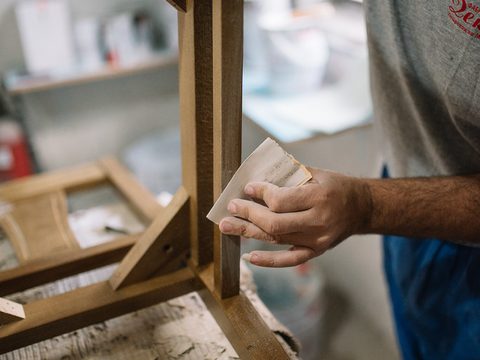 My uncle is a
_____. In his small workshop, he makes tables, chairs and doors from wood.
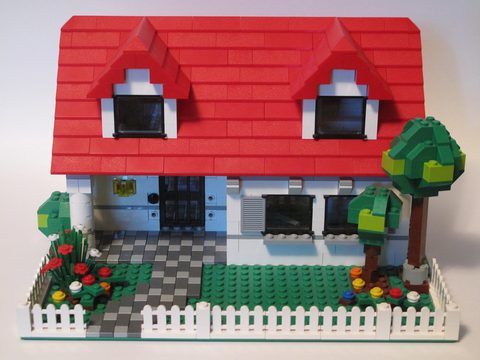 There's a hole in the wall of our toy house: one small red
_____ is missing.
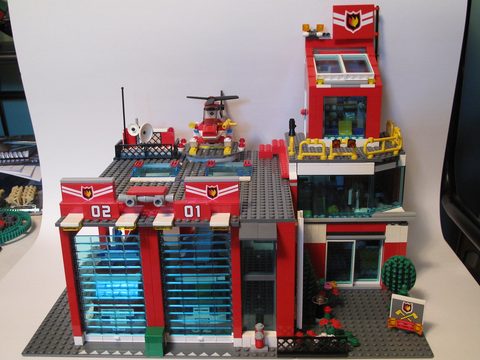 For his birthday, he got a big
_____ with 500 pieces and a book of instructions for a fire station.
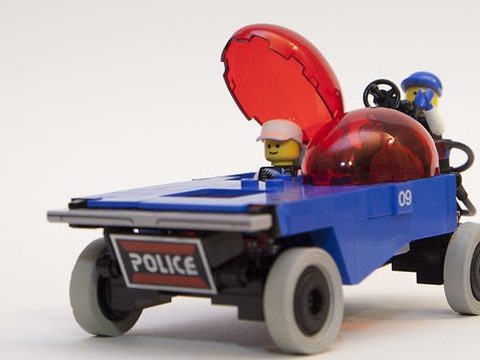 The tiny
_____ sits in the driver's seat of the toy police car. Its arms and legs can move.
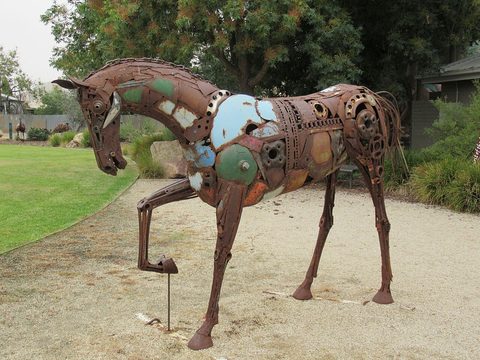 In the middle of the park, there's a giant metal
_____ of a horse. Artists and tourists stop to take photos of it.
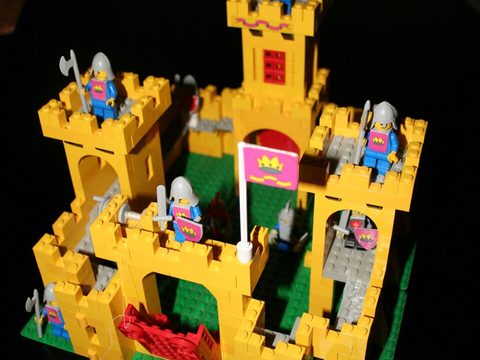 It took my kids three hours to
_____ this castle, but now it's finished, with four towers and a big door.
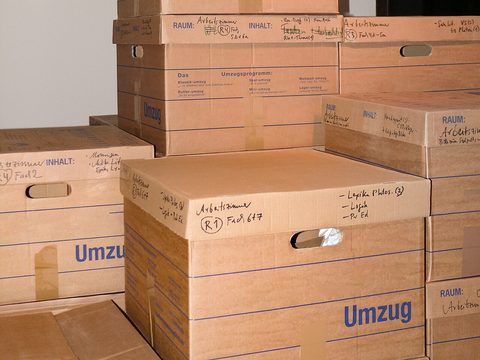 These boxes are full of books, and there's no space left on the floor, so please
_____ them: put the big ones at the bottom and the small ones on top.
 The door of our new apartment is small, so we need to
_____ the big desk before we move it.
From wood to bricks
The story of Lego, from a carpenter's workshop to 400 billion bricks. The numbers come from an infographic made in 2010. Tap a dotted word to see what it means.
In 1932, times were hard in a small town in Denmark, so a carpenter named Ole Kirk Christiansen tried something new: he started making wooden toys.
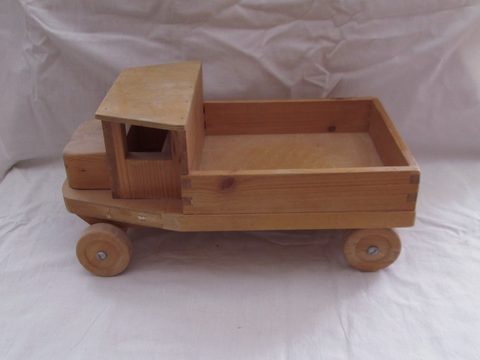
His little cars, airplanes and yo-yos needed a name. He took two Danish words, leg godt, which mean "play well," and made one short word: Lego.
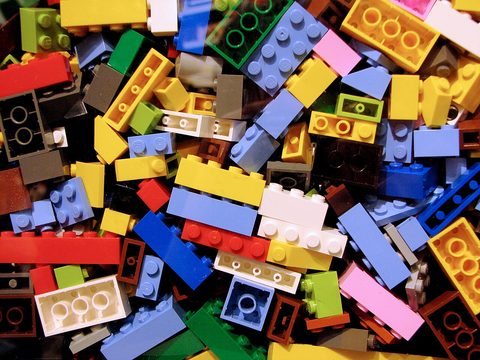
Children loved the toys, and the company grew. Then, in 1949, it started making something different: small plastic bricks in bright colors.
The bricks were special because they connected. Children could put them together, take them apart and build something completely new the next day.
So the game never really ends. Every year, children play with Lego for five billion hours, and stores sell seven Lego sets every second.
To fill all those boxes, the company never stops making bricks. Since 1949, it has made more than 400 billion of them.
That is a huge number. If you stack all those bricks in one tall tower, it can connect the Earth and the Moon ten times!
With so many bricks in so many homes, more than 400 million people have played with Lego, and the Lego Club has 2.4 million members.
Many fans love movies and video games too, so Lego has Star Wars, Harry Potter, Indiana Jones and Batman sets, and 37 video games.
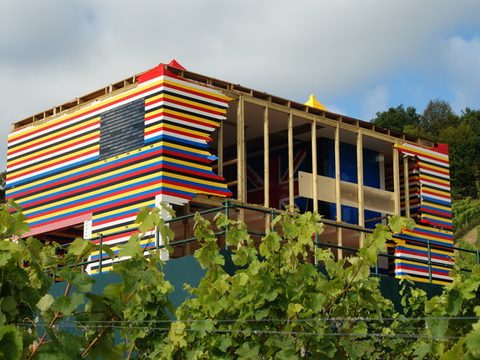
Adults love building too: in 2009, for a TV show, James May and about 1,000 helpers used 3.3 million bricks to build a full-size house.
Multiple choice
Click an answer and read why.

-
Why did Ole Kirk Christiansen start making toys?
In 1932, money and work were hard to find in many countries. So the carpenter, a man who worked with wood, tried a new kind of work: toys.
-
What did he make his first toys from?
He was a carpenter, so he made little wooden cars, airplanes and yo-yos. The plastic came seventeen years later, in 1949.
-
Where does the name Lego come from?
Leg godt means "play well" in Danish. Take the first two letters of each word, LEg + GOdt, and you have LEGO.
-
What did the company start making in 1949?
The wooden toys came first, in 1932. The plastic bricks came in 1949, and they are the Lego that people know today.
-
Why were the bricks special?
Put them together, take them apart, build again. A wooden car is always a car, but the same bricks can be a car today and a house tomorrow.
-
The text says the game "never really ends." Why?
The same bricks become a car, then a house, then a boat. Every day there is a new idea, so children never really finish.
-
Why does the company never stop making bricks?
Seven sets every second is more than 600,000 sets a day, and every box is full of bricks.
-
Why does the text mention the Earth and the Moon?
Nobody can see 400 billion bricks in their head. A tower from the Earth to the Moon, ten times, makes the number easy to imagine.
-
Why are there Lego sets of Star Wars, Harry Potter and Batman?
Movie fans can build their favorite stories at home. Fans who love screens have 37 Lego video games, too, and in 2010 an online game, Lego Universe.
-
Why does Lego have so many fans, according to the text?
With bricks in so many homes, more than 400 million people have played with Lego, and the Lego Club has 2.4 million members.
-
What did James May and his helpers build in 2009?
It was for a TV show, and they used 3.3 million bricks. James May even slept one night in the house. Later, they took it apart and gave the bricks away to help other people.
-
The best title for this story would be:
The story starts with a carpenter's wooden toys in 1932 and ends with billions of bricks around the world: in homes, in movies, in games and even in a full-size house.
Scan the infographic
The box has the facts of the 2010 infographic, in a different order. Start the timer and find each piece of information as fast as you can.
- The Lego Club: 2.4 million members.
- Video games: 37 Lego video games, and an online community game, Lego Universe, coming later in 2010.
- Building: in 2009, James May built a full-size Lego house with 3.3 million bricks.
- Around the world: more than 400 million people have played with Lego bricks.
- Themes: Star Wars, Harry Potter, Indiana Jones and Batman.
- Production: more than 400 billion bricks since 1949. Stacked, they could connect the Earth and the Moon ten times.
- The name: from the Danish words leg godt, "play well."
- Stores: 7 Lego sets are sold every second around the world.
- A birthday: for the 50th birthday of the Lego brick, Google made its logo with Lego bricks.
- The creator: Ole Kirk Christiansen, a Danish carpenter.
- Play time: children play with Lego bricks for 5 billion hours a year.
-
aThe number of people who have played with Lego: ___
-
bThe name of the person who created Lego: ___
-
cThe year Lego bricks started being produced: ___
-
dSome Lego themes: Star Wars, Harry Potter, Indiana Jones and ___
-
eIt has 2.4 million members: ___
-
fThe person who built a Lego house: ___
Be or do?
Read the box. Then click an example and click its rule. The bold words show what to look at.

One quick test. Is there another verb in the sentence, like play, want or like? Then do helps it in questions and negatives. No other verb, or a verb with -ing? Then you need be.
- Be as a main verb (am, is, are), before a noun, an adjective, an age or a place: My cousin is a nurse. · The keys are on the table.
- Be + -ing, the present continuous. Here be is a helper (an auxiliary verb): We are watching TV right now.
- Questions with be: put be before the subject. Are you tired? · Where is the bathroom?
- Do as a main verb, for an action: I do my homework after dinner. · She does yoga.
- Questions in the present simple: do / does + person +
verb. Do you like pizza? · Where does your sister work?
With does, the verb loses its -s: does she work, not
does she works. - Negatives in the present simple: don't / doesn't + verb. He doesn't eat meat. · We don't watch the news.
- A common mistake:
Are you like pizza?→ Do you like pizza? Like is the verb, so do makes the question.
Questions about Lego
Complete each question with do, does, is or are. Look for the other verb first. You answer the questions in the next exercise.
-
aHow old ___ Lego?
-
bHow many Lego sets ___ people sell around the world?
-
cWhere ___ the name Lego come from?
-
dWhat ___ the name Lego mean?
-
eHow many times ___ it possible to connect the Earth and the Moon with Lego bricks?
-
fWhat ___ the name of the Lego online community game?
-
gHow many hours ___ children play with Lego a year?
-
hHow many Lego video games ___ there?
Find the answers
Now answer the questions from Exercise 08. Use the reading and the box in Exercise 06. Click an answer and read why.

-
How many Lego sets do people sell around the world?
Seven every second: that's more than 25,000 sets every hour.
-
Where does the name Lego come from?
The carpenter lived in Denmark, and people there speak Danish. The two words are leg godt.
-
What does the name Lego mean?
Leg means "play," and godt means "well." The question uses does, so the answer uses the verb mean: it means "play well."
-
How many times is it possible to connect the Earth and the Moon with Lego bricks?
Ten times, with all the bricks made from 1949 to 2010, one on top of the other.
-
What is the name of the Lego online community game?
The Lego Club is a club with 2.4 million members, not a game. Lego Universe was the online game, coming in 2010.
-
How many hours do children play with Lego a year?
Five billion hours: 5,000,000,000. A billion is a thousand millions.
-
How many Lego video games are there?
Thirty-seven, in 2010, when the infographic was made. Seven is the number of sets sold every second.
Be or do in sentences
Use do, does, doesn't, don't, is, are, isn't or aren't. All the questions are positive. Read the whole sentence: the second part tells you if it's positive or negative. Two gaps? Write both words, in order.
-
a___ your Lego set new or old?
-
b___ Amanda play a lot?
-
cThe children ___ playing in the bedroom. I can hear them laughing in there.
-
d___ you want a cookie?
-
eShe ___ have anything to do, so she ___ playing video games.
-
fMy Lego set ___ older than yours. I got mine in 2015, and you got yours last year.
-
g___ your little brother 9?
-
hThe children ___ at school today because it ___ a holiday. They're at home, playing with Lego.
-
iThese Lego sets ___ expensive because they ___ on sale. Look: 50% off!
-
jMy son ___ like playing with Lego. He thinks it's boring.
-
k___ my toy car nice?
-
l___ you have a new toy?
-
mMy friends ___ have this Lego set, so they want to play with mine.
-
nToday is Tuesday. Laura ___ dancing at the moment, because she ___ dance on Tuesdays: she has English class then.
-
o___ the class finish at 12:00?
Lego pieces
Part A: each line describes one Lego piece. Studs are the small round bumps on top of a piece. Give each piece its name from the bank. Part B: match each action to a photo, described in words. The audio button says the action.

- a) A thin green square with a smooth top and no studs: _____
- b) A thin, round orange piece with studs on top: _____
- c) A thin, round orange piece with a smooth top: _____
- d) A tall, round yellow piece with studs on top: _____
- e) A light brown piece with one stud; its front goes down in a curve: _____
- f) A tall blue block with eight studs on top, the classic piece: _____
- g) A red and green parrot: _____
- h) A cream piece with one stud; its front goes down in a straight line, like a roof: _____
- i) A pink block with studs on top and on one side too: _____
- j) A green piece like a small branch, with round leaves: _____
- k) A small green body with two arms and yellow hands: _____
- l) A thin, dark blue rectangle with two studs on top: _____
Talking point
Part A is about the story and the sculptures. Part B is about you: answer with one more detail. Part C is for your opinions. Tap a card when you have answered it.
Useful language
My Lego project
40–70 words. Choose one option. Option 1: choose your favorite Lego sculpture, from the warm-up or one you find online, and write about it: its size, the artist, the country and the number of bricks. Option 2: build a small Lego sculpture, or draw one, and write how you made it. Use words from this lesson: bricks, plates, slopes, stack, put together…

My results
Check your score, then copy it and send it to your teacher on WhatsApp.

One job for this week. Ask three people two questions in English, one with do and one with be: Do you like Lego? Is it a good toy for adults? Bring their answers to our next class.