A Day at the Beach
One hot Saturday, one little leaflet and one very careful dad. Learn the words that keep you safe in the sun, the sand and the water, how to give a safety tip, and why the ee in beach must be long.
Warm-up
Ask and answer with a partner, or with me. Tap a card when you have answered it. Then do the summer quiz below.

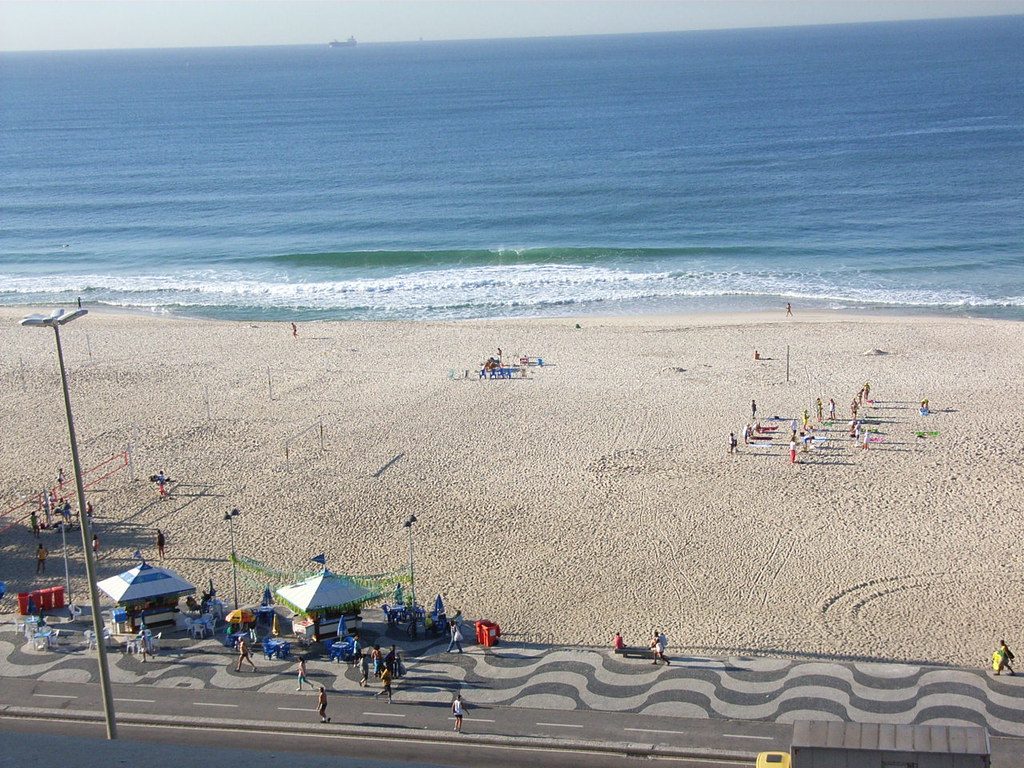
Sun, sand and water. A beach day is fun, but the sun, the hot sand and the ocean can hurt you. Today you read the story of one day at the beach, you learn to give a safety tip, and you say beach the right way: with a long ee.
Useful language
A summer quiz. Do it with a partner. Click an answer and read why.
-
What can't you do at the beach?
Ice hockey needs ice, and there is no ice on a hot beach! People build castles with sand and collect shells by the water.
-
Which animal is the most intelligent?
Dolphins have big brains: they live in groups, "talk" with sounds and learn new things fast. A starfish doesn't even have a brain.
-
Which month is the end of summer in England?
In England and the other countries in the north, summer starts in June and ends in September, around September 22. In Brazil, it's the opposite: summer ends in March.
At the beach
Click a word, then click its meaning. Correct pairs turn green. The audio button says the word.
Complete the sentences
Click a word in the bank, then click a gap. Click a filled gap to clear it.

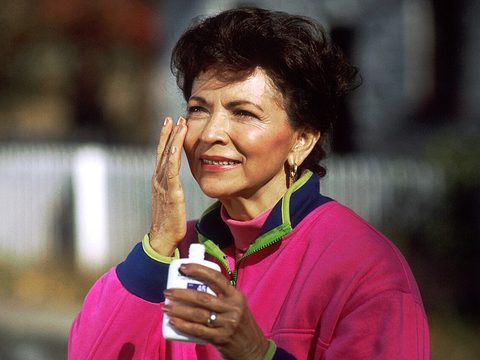 My skin is very light and turns red fast, so in the summer I always carry a bottle of
_____ in my bag.
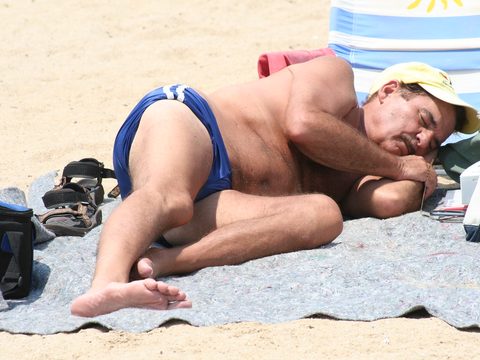 Don't fall asleep in the sun at noon, or you will
_____, and your back will be red and painful for days.
 The office is very cold because of the air conditioning, so I always wear a
_____ to keep my arms warm.
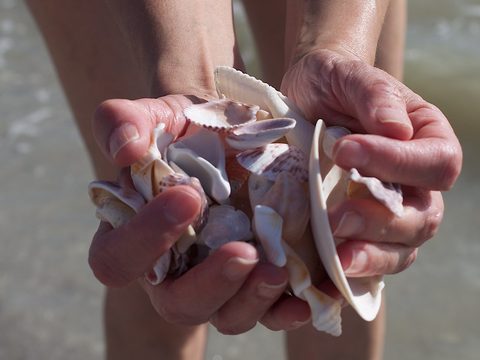 On her walks by the ocean, Grandma picks up pretty
_____. She keeps them in a glass jar in the kitchen.
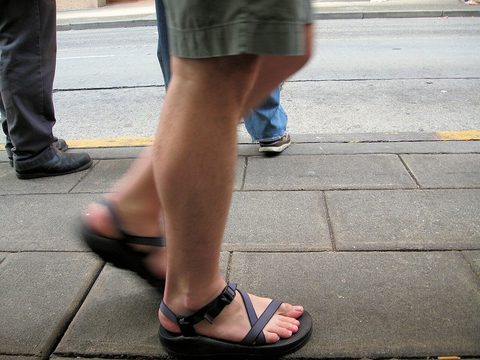 It's too hot for boots and socks today, so I'm wearing my
_____.
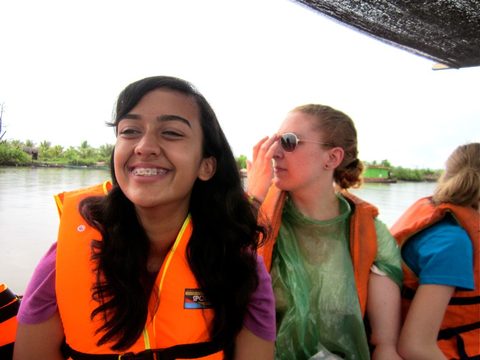 Everybody on the boat has to wear a
_____, even the people who swim very well.
 Every morning, a teacher puts the
_____ up on the tall pole in front of the school.
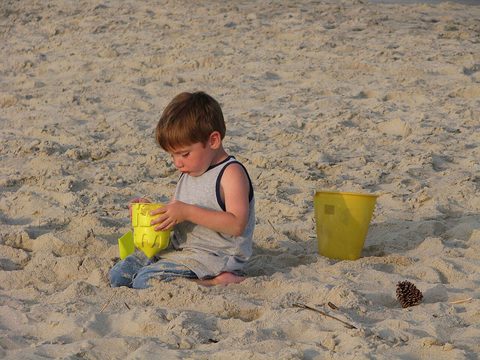 The children fill their buckets with wet
_____, turn them over and make a castle.
The leaflet was right
Read the story of one day at the beach. The tips in the imperative are in bold. Tap a dotted word to see what it means.
It's the first hot Saturday of summer, and nine-year-old Mia wants a beach day. Her dad says yes, but first he prints a safety leaflet.
The leaflet starts with sunscreen. The SPF number on the bottle shows how much it protects you, so Dad buys a high one: SPF 50.
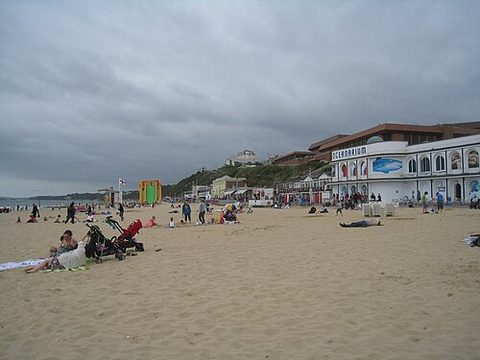
At the beach, the sky is gray, so Mia doesn't want any sunscreen. But the leaflet says you can get burned on cloudy days too.
So Dad puts sunscreen on her and explains: water and sand reflect the sun like a mirror and make it stronger. Every two hours, they put on more.
At noon, the clouds go away and the sun gets hot. Mia puts on a hat and a long-sleeved shirt and drinks plenty of water.
Mia is still hot, so she runs to the water without shoes. But the sand absorbs heat and burns her feet! She runs back for her water shoes.
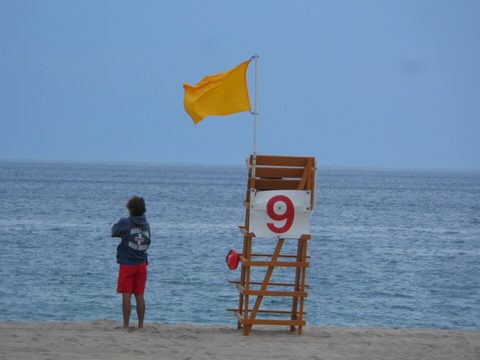
At the water, a yellow flag is up, and the lifeguard explains: yellow means "Swim, but be careful." Red means "Don't go in," and green means "Go!"
To be careful, Mia doesn't swim alone. Dad goes in with her and watches her all the time, and she wears a life jacket without complaining.
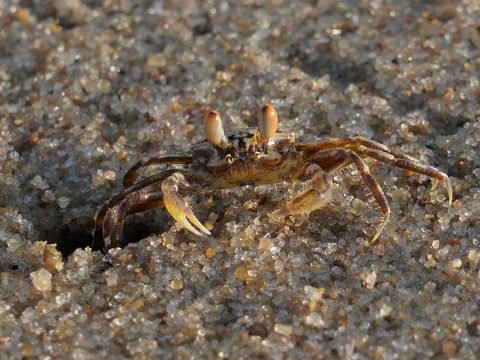
In the shallow water over a sandbar, Mia finds a crab and a starfish. She looks but doesn't touch: even tiny crabs have sharp claws.
She follows the crab, and in one step the water is deep: the sandbar ends. Her life jacket keeps her up. The leaflet was right!
Multiple choice
Click an answer and read why.

-
Before they go to the beach, what does Dad print?
A leaflet is one sheet of paper with short tips and pictures. An article is longer, like a story in a newspaper.
-
What is the leaflet for?
Every tip in it is about safety: sunscreen, water, hot sand, flags, animals and deep water. Its title says it too: keeping safe in the sun, the sand and the water.
-
Why does Dad buy SPF 50?
The SPF number shows how much the sunscreen protects you. For the leaflet, the higher, the better.
-
The sky is gray. Why does Mia still need sunscreen?
Clouds don't stop the sun. And water and sand reflect it, so the sun is even stronger at the beach.
-
At noon, the sun gets hot. What does Mia do?
The hat and the shirt cover her skin, and the water stops the heat from drying her out. The leaflet has one more idea: sit under an umbrella.
-
Why does Mia run back from the water?
On sunny days, the sand gets so hot that your feet feel like they're on fire. Sandals or water shoes help, and they also protect you from sharp rocks, shells or glass in the sand.
-
What does the yellow flag mean?
Red: don't go in, the water can be too rough. Yellow: go in, but be very careful. Green: you're good to go. Purple: dangerous sea animals in the area. And always listen to the lifeguard.
-
Which two things make Mia's swim safer?
The leaflet's rules: never go in the water alone, an adult watches you all the time, and you don't argue about the life jacket.
-
Why doesn't Mia touch the crab?
Look, but don't touch. Leave jellyfish alone too, because they can sting you. And watch where you walk: a starfish isn't happy when you step on it.
-
What happens when the sandbar ends?
Over a sandbar, the water isn't deep. But sand moves, and in just one step, shallow water can become deep.
-
The story ends with "The leaflet was right!" Why was it right?
She didn't complain about the life jacket, and one step later it kept her up. Dad is right there too: she never swims alone.
-
Which sentence best summarizes the story?
Sunscreen, a hat, water, water shoes, the flag, a life jacket and Dad next to her: tip after tip, the leaflet helps her, and the last one saves the day.
Find it fast
Go back to the story and find the missing word, as fast as you can. One word in each gap.
-
aYou should put on more sunscreen every ___ hours.
-
bOn a cloudy day, you ___ get burned. (can / can't)
-
cIn the heat, you should drink plenty of ___.
-
dThe sand absorbs heat, so you should wear sandals or water ___.
-
eThe red flag means it's dangerous to swim, while the ___ flag means it's safe.
-
fDon't touch the crabs: even tiny ones have sharp ___.
Giving safety tips

Tips are short and direct. A leaflet doesn't say "Maybe you need a hat." It says: Wear a hat! That's the imperative. When you talk to a friend, you can make the same tip softer with should.
- Do it: Close the door. · Turn off your phone.
- Don't do it: don't + verb — Don't run in the hallway.
- Every time, or not one time: Always lock the car. · Never open the door to strangers.
- Softer advice: should / shouldn't + verb — You should sleep eight hours. · You shouldn't eat so late.
- The form never changes: no to after should, and no -s — He should rest.
-
Which tip is correct?
The negative imperative is don't + verb. No and not can't start a tip like this.
-
Which sentence is correct?
After should, the verb comes alone: no to and no -ing.
-
She ___ drink more water. It's very hot today.
Should is the same for every person: I should, she should, they should.
-
Which tip is correct?
Never comes first, and it already means "not one time". With don't too, it's a double negative: wrong in English.
-
"You shouldn't feed the birds." Which leaflet tip says the same?
You don't feed the birds is a fact about you, not a tip. A tip starts with the verb: Don't feed…
-
Which one is a tip, not a fact?
A tip tells you what to do, so it starts with a verb. The other two only say what is true.
-
"Always listen to the lifeguard." Here, always means…
Always means every time, with no exceptions. Its opposite is never.
Leaflet tip or friendly advice?
Change a leaflet tip into advice with should, or advice into a leaflet tip. Use the word on the left and keep the rest of the sentence.
-
SHOULDPut on more sunscreen every two hours.
-
SHOULDN'TDon't touch the starfish.
-
SHOULDAlways listen to the lifeguard.
-
NEVERYou shouldn't swim alone.
-
DON'TYou shouldn't walk on hot sand without shoes.
-
SHOULDDrink plenty of water on hot days.
-
SHOULDN'TDon't go in the water when the red flag is up.
-
ALWAYSYou should watch where you walk in shallow water.
Long ee, short i
Listen to each word with the audio button and say it. Then choose its sound.

- Long /iː/: smile and hold it — see, tea, eat.
- Short /ɪ/: quick and relaxed, a little like "e" — sit, it, ship.
- Why it matters: sheep and ship, leave and live, seat and sit are different words. Only the vowel changes.
-
Two photos: a sunny place with sand, palm trees and blue water, and a female dog in a pink party dress. Which pair is right?
Beach is the place with sand. Bitch is the word for a female dog, and people also use it as a very rude word for a person. So, on vacation, make the ee in beach long!
-
/biːtʃ/ and /bɪtʃ/: how are they different?
The consonants are the same: only the vowel changes. For beach, smile and make it long: /iː/. For bitch, it's short and relaxed: /ɪ/.
-
feet
/fiːt/, with a long ee. Careful: fit /fɪt/, with a short i, is a different word.
-
knee
/niː/. The k is silent, so you only say "nee", with a long ee.
-
finger
/ˈfɪŋɡər/, with a short i. You hear the g too: FING-ger.
-
lip
/lɪp/, a quick, short i. With a long ee, leap is a different word: a big jump.
-
ear
In American English, ear is /ɪr/: a short i, then the r. It is not the long ee of see.
-
heel
/hiːl/, with a long ee. With a short i, hill /hɪl/ is a small mountain.
-
cheek
/tʃiːk/, with a long ee. With a short i, chick /tʃɪk/ is a baby chicken.
-
wrist
/rɪst/, with a short i. The w is silent: you say "rist".
-
chin
/tʃɪn/, a quick, short i, like in chicken.
-
Feet, knee, finger, lip, ear, heel, cheek, wrist, chin: these words are all parts of our…
Your feet, knees and wrists are not on your face, so the answer is body: from your head down to your feet.
Safe and happy at the beach
Part A is about the story and the leaflet. Part B is about you: answer with one more detail — when, where or who. Part C is for your opinions. Tap a card when you have answered it.
Useful language
My own safety leaflet
40–70 words. Write a short leaflet for a swimming pool, a lake or a river: a title and five tips. Use the imperative (Wear…, Don't…, Always…, Never…) and should at least once.

My results
Check your score, then copy it and send it to your teacher on WhatsApp.

One job for this week. Every day, find two words with the long ee around you — on a menu, on a sign, in a song — and say them out loud. Then give one safety tip to someone at home, in English: Don't…, Always… or You should…