Amsterdam
Tulips, canals, bikes and a one-page travel guide. You plan a trip to Amsterdam on a small budget, and you learn how English talks about plans that are already made: I'm flying in May.
Warm-up
Ask and answer with a partner, or with me. Tap a card when you have answered it. Then try the quiz below: how much do you know?

Pack your bag: we're going to Amsterdam. Today you read a quick travel guide, plan a trip with it, and learn how English talks about plans that are already made. Not I will fly, but I'm flying to Amsterdam in May.
Useful language
How much do you know?
Complete the sentences about the Netherlands. The first letter is on the left. (Many people call the country Holland, but officially Holland is only one part of it.)
-
NAmsterdam is the capital city of the ___.
-
HMany people also call the country ___.
-
DPeople from this country are ___.
-
r · w · bIts flag has three colors: ___.
-
oThe national soccer team wears ___ shirts.
-
T___ are famous flowers there.
-
bA lot of people ride ___ there.
Travel words
Click a word, then click its meaning. Correct pairs turn green. The audio button says the word.
Complete the sentences
Click a word in the bank, then click a gap. Click a filled gap to clear it.

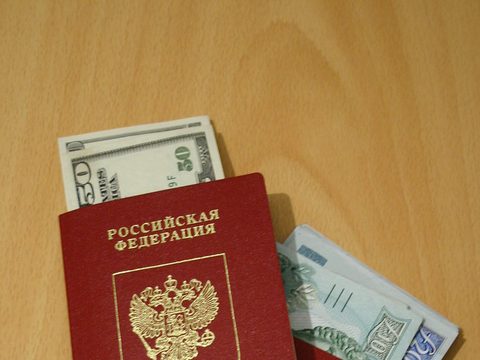 We have a small
_____ for this vacation, so we can only spend fifty dollars a day.
 My city has great
_____: the bars and clubs are open until four in the morning.
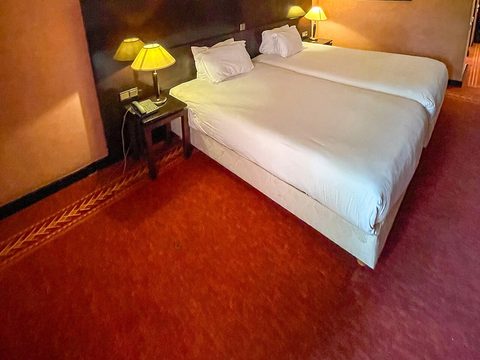 The hotel is clean, quiet and
_____: only forty dollars a night, with breakfast.
 Swimming with dolphins is on my
_____. I really want to do it one day.
 In some countries,
_____ the waiter is normal. In others, people never leave extra money.
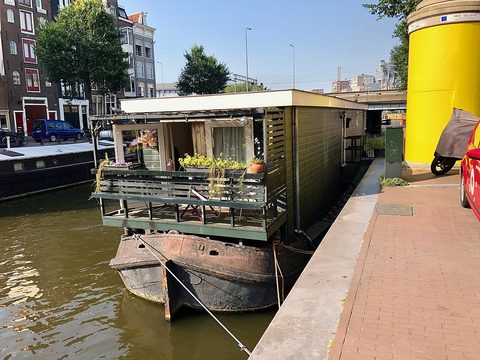 My uncle doesn't live in an apartment. He lives on a
_____, so his home moves a little on windy days.
 For breakfast, I eat a hot
_____ with honey in all its little squares.
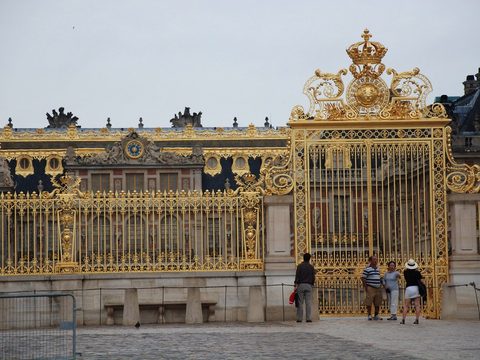 The king and queen live in a huge
_____ with three hundred rooms and a gold gate.
Amsterdam on a small budget
Read the story of a trip, planned with a one-page travel guide. The plans are in bold: be + -ing. Tap a dotted word to see what it means.
Amsterdam is on your bucket list, and this year you finally have the money. So you open a quick travel guide to plan your trip.
The guide starts with the best time to go. Spring and fall are good, but summer, from June to August, is the high season.
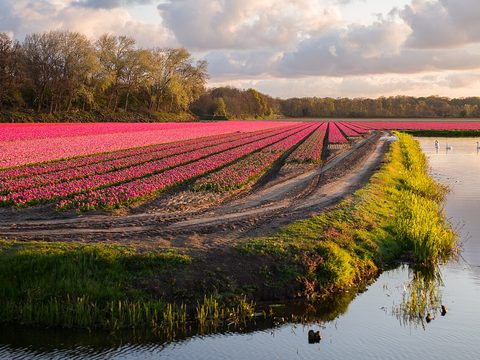
You don't like big crowds, so you choose spring. You're flying to Amsterdam in May, the season of the famous tulips.
Next, you need a bed. Your budget is small, so you're staying at the Tourist Inn, a two-star hotel close to everything, even the canals.
All those canals give you an idea. For your last night, you're sleeping on Rob's Houseboat, to see the relaxing side of Amsterdam.
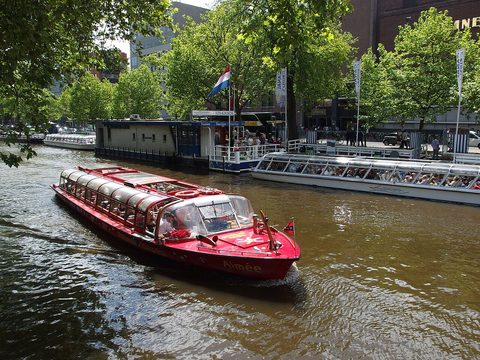

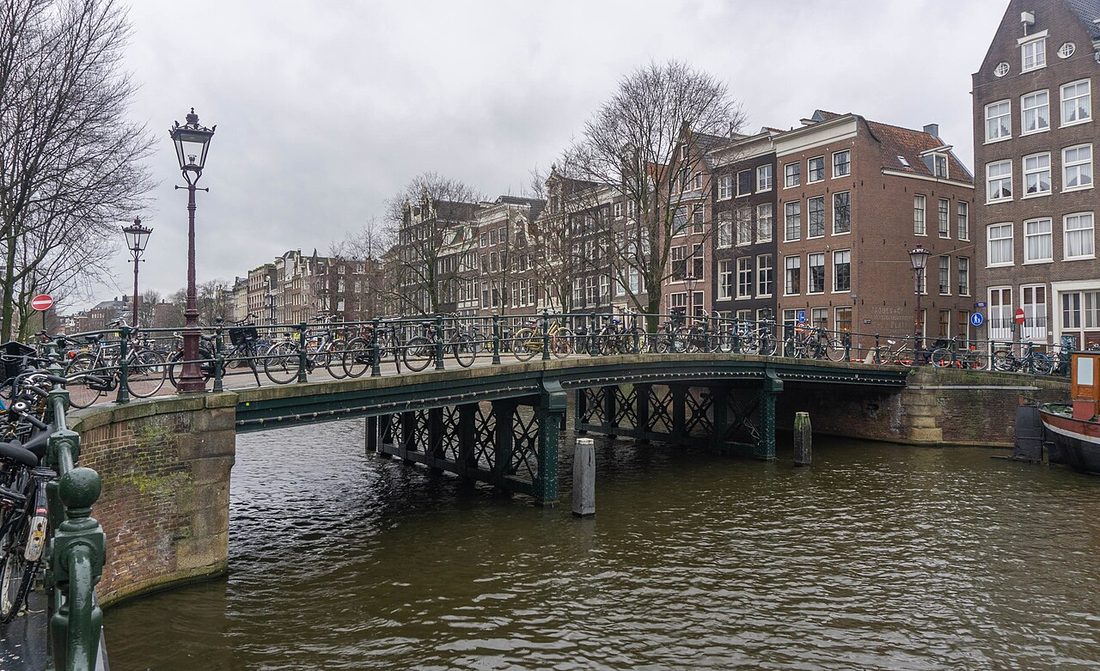
The canals are also the city's claim to fame, the guide says. So on your first day, you're taking a canal cruise.
After the cruise, you're visiting the guide's other top activities: the Van Gogh Museum, the Anne Frank Museum and the Royal Palace.
All that walking will make you hungry, so you read about famous dishes. You're trying a stroopwafel, a waffle with caramel, and poffertjes, tiny pancakes.
To pay for those treats, you need the local currency. The guide says euros are used exclusively, so you're changing some money before you go.
With euros in your wallet, you check tipping last. It isn't expected, but waiters get 5 to 10 percent, and taxi drivers one or two euros.
Multiple choice
Click an answer and read why.

-
Why do you open a quick travel guide?
Amsterdam is on your bucket list, and this year you finally have the money. The guide helps you plan it all: when to go, where to stay, what to do and what to eat.
-
According to the guide, when is the high season in Amsterdam?
Summer, from June to August, is the high season: the busiest time, with the most tourists. Spring (April and May) and fall (September and October) are good times, and winter, from November to March, is the low season, with few visitors.
-
Why are you flying in May, and not in July?
July is in the high season, the busiest time of the year. You don't like big crowds, so you choose spring. The text says nothing about ticket prices or closed museums.
-
Why are you staying at the Tourist Inn?
A small budget means a budget hotel. The guide also shows the Pulitzer Amsterdam, a five-star hotel in old canal houses, but that one is luxury. You see both in Exercise 06.
-
What is good about the Tourist Inn?
It only has two stars, but the location is great. The bed on the water is the houseboat, in the next paragraph.
-
Why are you sleeping on Rob's Houseboat on your last night?
All those canals give you an idea: one night on the water. The guide says the houseboat shows the relaxing side of the city. It says nothing about its price.
-
Why are you taking a canal cruise on your first day?
A claim to fame is what makes a place famous, and for this guide it is the historic canal system. A cruise shows it to you from the water.
-
After the cruise, which place are you visiting?
The Van Gogh Museum, the Anne Frank Museum and the Royal Palace are the guide's other top activities. So the guide talks about museums, and it has a list for kids too.
-
What are poffertjes?
Poffertjes are tiny pancakes, and a stroopwafel is a waffle with caramel. Both are sweet, so there are sweet options in Dutch food. Herring, a fish people eat as street food, and mint tea are on the guide's list too.
-
Why are you changing some money before you go?
The local currency is the euro, and the guide says it is used exclusively: only euros. Dollars and other money are no good there. The guide says nothing about cards.
-
How much do taxi drivers usually get as a tip?
Tipping is not expected in Amsterdam, but waiters get 5 to 10 percent and taxi drivers a euro or two. Hotel staff, tour guides, spas and hairdressers get no tip.
-
The best title for this story would be:
From the bucket list to the tip, the whole story is one trip, planned with a quick guide and a small budget. The canals are only one part of it, and you never stay in a luxury hotel.
Read the guide
This is everything the travel guide says, as a list. The story uses only part of it. Read it fast and find the answers: you don't need every word.
- When to go: spring (April–May): good · summer (June–August): high season · fall (September–October): good · winter (November–March): low season
- Claim to fame: the historic canal system
- Where to stay: Tourist Inn, a two-star budget hotel: close to everything, even the canals · Pulitzer Amsterdam, five stars, "affordable luxury": historic canal houses in a central location · Rob's Houseboat: the relaxing side of Amsterdam
- Best areas to stay: Westerpark: tourists · Oud Zuid: budget · De Pijp: nightlife · Jordaan: hip (cool and modern) · Plantage: families
- Top activities: canal cruise · Van Gogh Museum · Anne Frank Museum · Royal Palace
- For kids: Vondelpark · National Maritime Museum · city petting zoos · Discovery Corner
- Bucket-list places near the city: Defence Line of Amsterdam (0 km) · 17th-century canal system of Amsterdam (0 km) · Beemster Polder (31 km) · Rietveld Schröder House (41 km) · the windmills of Kinderdijk-Elshout (94 km). The Netherlands is number 27 on the Ultimate Bucket List.
- Famous dishes: stroopwafel (waffle and caramel) · herring (street food) · poffertjes (tiny pancakes) · mint tea
- Top local beers: Heineken · Amstel · Grolsch. The Netherlands is 24th in the world for beer drunk per person.
- Currency: only euros
- Tipping — not expected: hotel staff: no · waiters: 5–10% · spas: no · tour guides: no · taxis: 1–2 euros · hairdressers: no
-
Which information is NOT in the guide?
The guide has seasons, hotels, money, and food and drinks. It says nothing about clothes, shops, sports or restaurants, and it has no map of the city: only distances.
-
Which area is best for families?
Plantage is the family area. Westerpark is the area for tourists, and De Pijp is for nightlife.
-
You have a small budget. Which area is for you?
Oud Zuid is the budget area. Jordaan is the hip one, cool and modern, and Plantage is for families.
-
You love going out at night. Which area is for you?
De Pijp is the nightlife area: bars, clubs and going out with friends.
-
What does the guide recommend for kids?
Vondelpark, a big park, is the first place on the list for kids, with the National Maritime Museum, the petting zoos and Discovery Corner. So Vondelpark is interesting for children.
-
The Netherlands is number 27. Number 27 in what?
The guide doesn't say how many museums Amsterdam has. Number 27 is the country's place on the Ultimate Bucket List, a list of places to see in your life.
-
The Netherlands is 24th in the world for beer. What does the number tell you?
It is about beer drunk per person. The guide doesn't count types of beer: it names only three local ones, Heineken, Amstel and Grolsch.
-
According to the guide, what is from the 17th century?
The 17th-century canal system of Amsterdam is on the bucket list, 0 km from the city: it is the city. The guide gives no date for any park or museum.
-
Who doesn't get a tip in Amsterdam?
Tour guides, hotel staff, spas and hairdressers: no tip. You don't have to tip a tour guide. Waiters get 5 to 10 percent, and taxi drivers one or two euros.
-
Which hotel is more expensive?
The Pulitzer has five stars and calls itself "affordable luxury". The Tourist Inn is a two-star budget hotel. So the Pulitzer is not cheaper.
Find the word in the story
Go back to the story in Exercise 04. Find ONE word that means the same as the word on the left, and write it.

-
fasta ___ travel guide (paragraph 1)
-
calmthe ___ side of Amsterdam (paragraph 5)
-
moneythe money a country uses, like euros or dollars (paragraph 9)
-
onlyeuros are used ___: no other money (paragraph 9)
Famous things in the Netherlands
Click a word, then click what it is. Correct pairs turn green. The audio button says the word.
Present continuous for the future
First match each question with its answer. Then read the box and answer the questions below it.

A plan with a ticket, a booking or a time. When the plan is already made, English uses the same form as for now: be + -ing. The time expression tells you it is the future: I'm working now is today, I'm working on Sunday is a plan.
- Affirmative: I'm flying to Amsterdam next May. · She's having dinner with her parents on Friday.
- Negative: I'm not / he isn't / we aren't + verb-ing: We aren't staying at a hotel this time.
- Question: (question word) + am / is / are + person + verb-ing: When are you traveling? · Are they visiting Rome in June?
- The time tells you: I'm working now (now) · I'm working on Sunday (the future). With no time word, people usually understand now.
- Spelling: stay → staying, fly → flying · drive → driving (no e) · get → getting, swim → swimming (one more letter)
-
Look at the five questions you matched. What do they have in common?
Every question has are you + -ing, and every answer is about a trip that is not happening yet: next July, by plane, with the family.
-
To make the present continuous for future arrangements, we use:
Am, is or are, then the verb with -ing. And remember the time expression: next July, on Friday, tonight.
-
Which sentence is about the future?
On Saturday is the time expression: it shows a plan. Shh! I'm watching is happening now, and every Saturday is a habit, with the present simple.
-
Choose the correct question.
In the question, are goes before you. And there is no do: be makes the question alone.
-
Choose the correct negative.
Not goes after is: is not, isn't. No doesn't with -ing.
-
"Are you ___ to the party tonight?" Which spelling is correct?
Come ends in e, so the e goes: coming, with one m.
Complete with the right verb
Use these verbs: staying (two times), meeting, flying, driving. Read the whole sentence first: the end tells you which one.
-
aI'm ___ to Spain for a vacation soon. I have my plane ticket.
-
bHe's ___ at his friend's house tonight.
-
cI'm ___ my friend after school.
-
dWe're ___ to the airport.
-
eThey're ___ in a hotel for three nights.
Negatives and questions
Write the sentences from Exercise 10 again. NOT means the negative. ? means a question to the person who is talking: I becomes you, my becomes your, we becomes you.

-
NOTI'm flying to Spain for a vacation soon.
-
NOTHe's staying at his friend's house tonight.
-
NOTI'm meeting my friend after school.
-
NOTWe're driving to the airport.
-
NOTThey're staying in a hotel for three nights.
-
?I'm flying to Spain for a vacation soon.
-
?He's staying at his friend's house tonight.
-
?I'm meeting my friend after school.
-
?We're driving to the airport.
-
?They're staying in a hotel for three nights.
Where are you staying?
Part A is about the guide and the story. In Part B, talk about your life and your plans: use be + -ing and a time. Part C is for your opinions. Tap a card when you have answered it.
Useful language
My trip to Amsterdam
40–70 words. Imagine you're going on vacation to Amsterdam. Write your travel arrangements: when you're going, how you're traveling, who you're going with, where you're staying and what you're doing there. Use be + -ing at least five times.

My results
Check your score, then copy it and send it to your teacher on WhatsApp.

One job for this week. Every night, say your plans for tomorrow out loud, with be + -ing and a time: I'm meeting…, I'm working…, I'm going… Thirty seconds, in English.