Waking Up With Bruna Marquezine
A morning in New York with a Brazilian actress: glasses, medicine, tea, sunscreen, makeup. Her parents are waiting for lunch, so every step is fast, and every step is a routine verb.
Warm-up
Ask and answer with a partner, or with me. Tap a card when you have answered it.

Good morning! Today you wake up in New York with a Brazilian actress, and you learn the small verbs of every morning: wake up, get up, put on, take, have. But first, tell me: do you like mornings?

Useful language
Morning activities
Click an activity, then click its meaning. Correct pairs turn green. The audio button says the words.
Complete the sentences
Click an activity in the bank, then click a gap. Click a filled gap to clear it. Read the whole sentence first: the end tells you which activity fits.

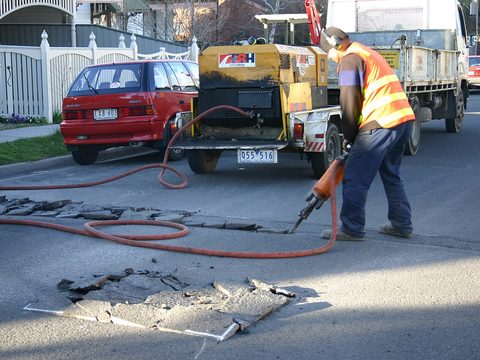 A loud noise in the street makes me
_____ at five, but I stay in bed with my eyes open until six.
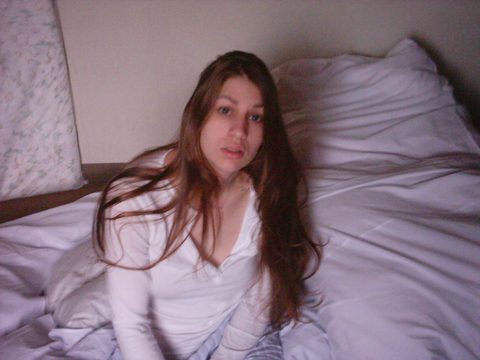 I open my eyes at seven, but I stay in bed for thirty more minutes. I finally
_____ at 7:30 and walk to the bathroom.
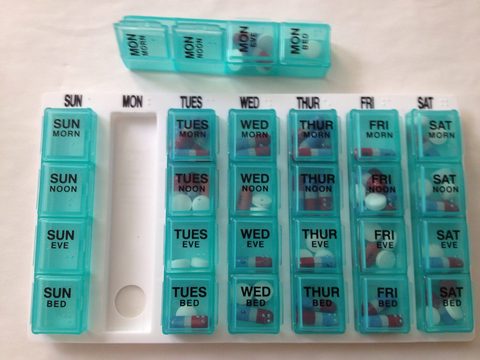 I
_____ in the morning and at night: one small pill with a glass of water.
 I don't
_____ on the weekend: no lipstick, no blush, just my natural face.
 I don't drink coffee, so I only
_____ for breakfast, with a little milk.
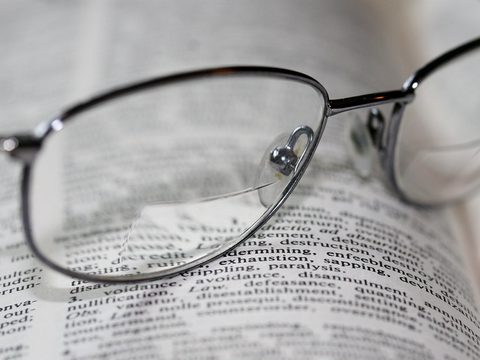 Small letters are hard for my eyes, so I always
_____ when I read a book or a menu.
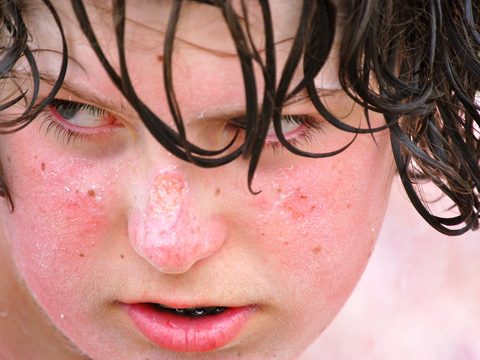 My skin turns red very fast in the sun, so I always
_____ before I go to the beach.
 I can't find my keys anywhere, so I can't
_____! I'm going to be late for work.
A fast morning in New York
Watch the video first: it is seven minutes long, with English captions. Then read the story. The routine verbs are in bold. Tap a dotted word to see what it means.
An alarm rings in New York, and Bruna Marquezine, a Brazilian actress, wakes up. Her parents are there too, on their first trip to the city.
Her parents don't speak English, so they probably need her today. She is meeting them for lunch, and she has to be quick.
So she starts right away and puts on her glasses first. Without them, she can't see anything at all.
Her thyroid medicine comes next, because she has to take it before she eats anything. So breakfast has to wait a little.
She is in a hurry, but waking up is really hard for her, so she spends a lot of time on her phone. She says it's not healthy.
She would like to meditate, but she thinks she would fall asleep again. Instead, she has her tea and does other things at the same time.
Her skin needs extra care on this trip. At home in Brazil, the air is humid, but when she travels, her skin gets really dry.
So she puts on a light cream for dry skin, and then sunscreen on her face and neck. She says everybody needs it every day.
With her skin ready, she puts on her makeup. She wants a natural look, so she uses concealer, not foundation, and some blush to look tan.
Last, she gets dressed. It's a warm day, and they will probably walk a lot, so she picks a dress and comfortable shoes. Now she's ready for lunch.
Multiple choice
The stamp shows the moment in the video. Click an answer and read why.

-
Who is in New York with Bruna? 00:40
"I'm in New York with my family," she says. It is their first time in the city, and later she calls them "my parents".
-
Why does she have to get ready fast? 00:44
She is going to meet them for lunch. "They don't speak the language," she says at 00:50, so they probably need her right now.
-
Why does she put on her glasses first? 00:54
"I actually can't see anything," she says. Then she jokes, "This is how I look with glasses." Before that, at 00:24, she takes off her mouth guard, a plastic cover for her teeth at night.
-
When does she take her thyroid medicine? 01:04
She has to take it before she eats anything, so it comes very early, right after her glasses. Breakfast has to wait.
-
Why does she spend a lot of time on her phone? 01:11
"I really have a hard time waking up," she says. She calls the time on her phone "an unhealthy amount": too much.
-
Why doesn't she meditate in the morning? 01:19
"I wish I could meditate," she says, but she feels she would fall back to sleep. Meditation is quiet and calm, and she is still very sleepy.
-
How does she usually have her tea? 01:26
Her ADHD doesn't let her do just one thing, she says, so she drinks her tea and does other things too. The tea has lemon and ginger, and sometimes propolis, a natural product that bees make.
-
Why does her skin need extra care in New York? 01:57
At home in Brazil, the air is humid, so she uses very little cream. When she travels, her skin gets "really, really dry", so she uses a light moisturizer, a cream for dry skin.
-
Why doesn't she use foundation in the daytime? 02:19
In the daytime, she uses only concealer and a sponge, "so we get a really natural look". She puts the concealer under her eyes and on small spots.
-
Why does she love blush? 02:47
She wants to look like she just came back from a vacation in Hawaii. She thinks she looks her best with a little sun on her face. Concealer is the one for small spots.
-
Why does she choose comfortable shoes? 05:58
"We're probably gonna walk a lot," she says. She picks a dress, too, because it's really warm in New York and she doesn't want to feel too hot.
-
Which sentence best summarizes the story?
Every step has a reason, and all the steps lead to one place: lunch with her parents. They don't speak English and they need her, so she can't be slow.
Put her morning in order
Watch the first part of the video again, from 00:00 to 02:31. Write the number of each step, from 1 (first) to 7 (last).
-
aShe has tea.
-
bShe puts on makeup.
-
cShe puts her glasses on.
-
dShe spends a lot of time on her phone.
-
eShe takes her medicine.
-
fShe puts on sunscreen.
-
gShe wakes up.
Morning verbs and sequence words

Two verbs that look the same. You wake up when your eyes open; you get up when your feet touch the floor. After that, a morning is a list of small verbs, put on, take, have, and four words that put them in order.
- Wake up = stop sleeping. Get up = get out of bed. The baby wakes up at five, so we get up at five too.
- Put on = start to wear something. Take off = stop wearing it. Put on a coat, a watch, perfume · take off a hat. Two orders are correct: put on your coat = put your coat on. With it or them, only one: put it on, never put on it.
- Have + meals, food and drinks: have lunch, have a sandwich, have a glass of juice. Take + medicine, a pill or a shower: take a pill, take a shower. (British people also say have a shower.)
- Sequence words give the order of the steps: Every day, I … First, I … Then I … After that, I … Put a comma after Every day, First and After that.
- Present simple for routines: with he, she and it, the verb takes -s: he gets up, she puts on, it takes. Have becomes has.
-
What is the difference between wake up and get up?
First your eyes open: you wake up. Then you leave the bed: you get up. Some people wake up and stay in bed for a long time, like Bruna with her phone.
-
Ben's alarm rings at 6:00, and he opens his eyes. He reads the news on his phone in bed, and at 6:40 he walks to the shower. When does Ben get up?
Ben wakes up at 6:00, when his eyes open. He gets up at 6:40, when he leaves his bed.
-
It's very cold outside. ___ your jacket before you go out!
Cold outside means you need to start wearing the jacket: put on.
-
Welcome home! Please ___ your shoes at the door. The floor is clean.
You stop wearing your shoes when you come in, so the floor stays clean: take off.
-
"Where are my glasses? Oh, here! I always ___ first."
With it or them, the little word goes in the middle: put them on. With a noun, both orders work: put on my glasses, put my glasses on.
-
Which verb completes all three? ___ breakfast · ___ a cup of tea · ___ dinner
Meals, food and drinks go with have: have breakfast, have a cup of tea, have dinner.
-
Which verb completes both? ___ your vitamins · ___ a hot bath
In American English you take vitamins, medicine and pills, and you take a bath or a shower.
-
"___, I open the window. ___, I make my bed."
First starts the list, and after that comes later. Both take a comma.
-
Bruna ___ tea every morning.
Bruna = she, and with she, have becomes has. It is a routine, so it's the present simple.
-
Which sentence is correct?
My dad = he, so the verb takes -s: takes. A routine needs the present simple, not taking alone.
Listen and complete
Watch again from 00:54 to 02:15 and complete her words with the seven verbs. Click a verb, then click a gap. Gotta is fast, informal English for have to.
- First thing when I wake up, I put my glasses on because I actually can't _____ anything. 00:54
- So yeah, this is how I _____ with glasses. 01:02
- And I have to take my thyroid medication before I _____ anything. 01:04
- And then I just _____ an unhealthy amount of time on my phone. 01:11
- I wish I could _____, but I feel like I would just fall back to sleep. 01:19
- Usually I _____ my tea while doing something else. 01:26
- You gotta wear sunscreen every day before you _____ the house. 02:11
Twelve things we do every day
Each picture is described in words. Click an activity, then click its picture. Correct pairs turn green. The audio button says the words.

The teacher's routine
A teacher tells her morning with pictures. Each picture is described in parentheses. Write the activity, with words from Exercises 02 and 09.
-
5:30Every day, I ___ at 5:30 a.m. (Picture: she sits up in bed and stretches her arms. She is still sleepy.)
-
firstFirst, I ___ … (Picture: toast, an egg and a hot drink on a plate.)
-
then… and then I ___. (Picture: a tube of toothpaste and a toothbrush.)
-
after thatAfter that, I ___ … (Picture: a girl puts on her jacket.)
-
and… and ___. (Picture: a woman touches her face with a small makeup sponge.)
-
thenThen, I ___. (Picture: a woman in a suit walks with a briefcase.)
Questions about your day
Put the words in order and write the whole question. Then ask a partner your seven questions in Exercise 12.

-
athe / up / usually / you / time / do / in / morning / What / wake / ?
-
bor / before / breakfast / you / your / after / brush / Do / teeth / ?
-
chave / you / What / breakfast / do / for / ?
-
dget / do / you / How / to / work / ?
-
edo / lunch / What / have / you / time / ?
-
fyou / the / in / What / do / like / do / to / afternoon / ?
-
gtime / bed / to / What / go / do / usually / you / ?
Your mornings, your days
Part A is about the video. In Part B, talk about your own day, and use first, then and after that. Part C is for your opinions. Tap a card when you have answered it.
Useful language
My morning routine
40–70 words. Write about your morning, step by step. Use Every day, First, After that and Then, and at least four activities from this lesson.

My results
Check your score, then copy it and send it to your teacher on WhatsApp.

One job for this week. Tomorrow morning, say each step out loud in English while you do it: I wake up. I get up. I put on… I have… I leave the house. Ten small sentences before breakfast.