Housework and Exercise
Mop, vacuum, iron, unload the car. Nobody calls it exercise, but your body does. The words for the jobs at home, the small words that say how often — always, usually, hardly ever — and where they go in a sentence.
Warm-up
Short answers are fine. Tap a card when you have answered it.

Three things we do: homework, exercise and housework. Today you find out that one of them is secretly another one — and you learn to say how often you do each of them.
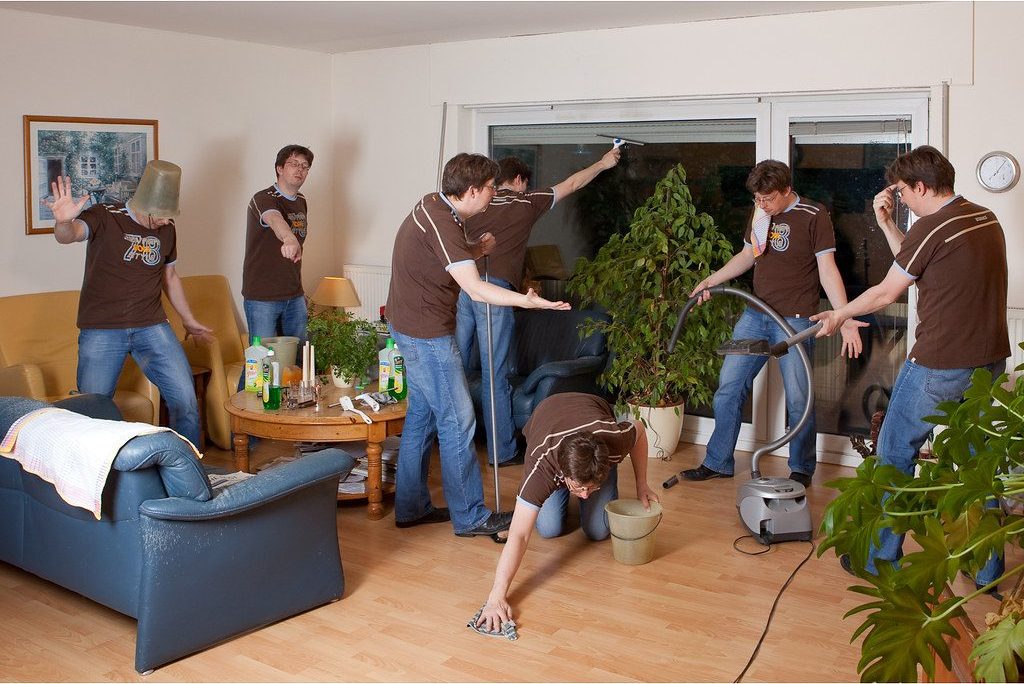
Useful language
Housework
Click a phrase, then click its meaning. Correct pairs turn green. The audio button says the phrase.
Complete the sentences
Click a phrase in the bank, then click a gap. Click a filled gap to clear it. Each sentence has a clue — a machine, a broom, water, clean clothes.

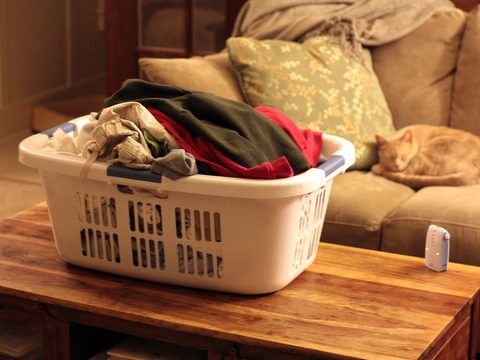 There are a lot of dirty clothes in the basket. I need to
_____.
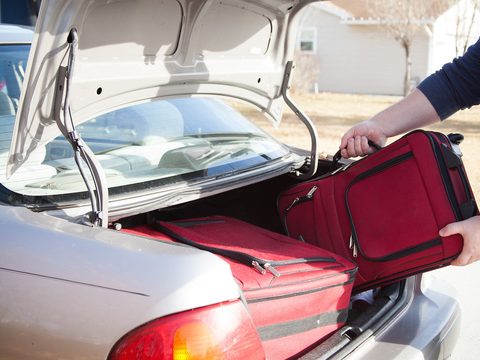 After a long trip, my father always
_____ and carries the bags into the house.
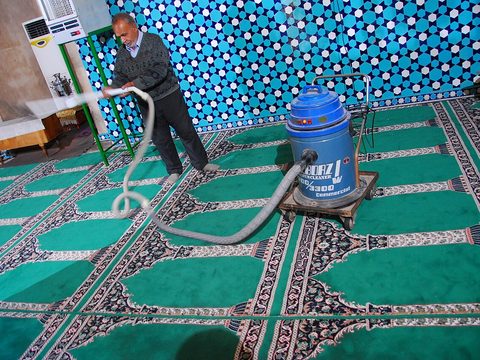 The carpet is full of dust. Please
_____ it — the machine is in the closet.
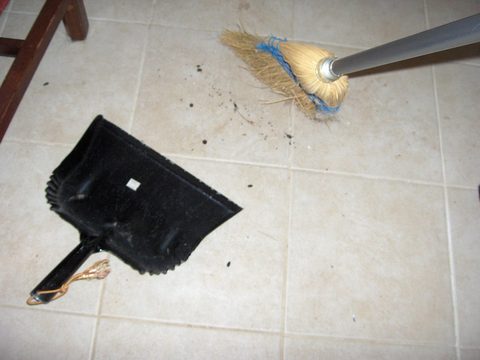 Take this broom and
_____ the floor. There is sand from the beach everywhere.
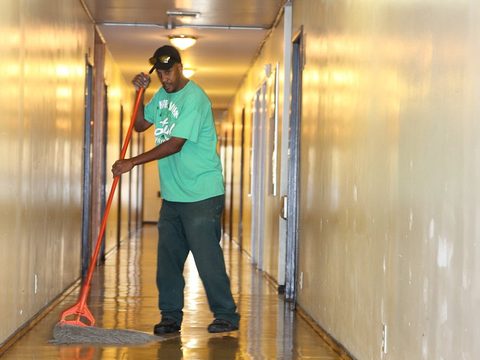 There is coffee all over the floor. Get the bucket and some water and
_____ it.
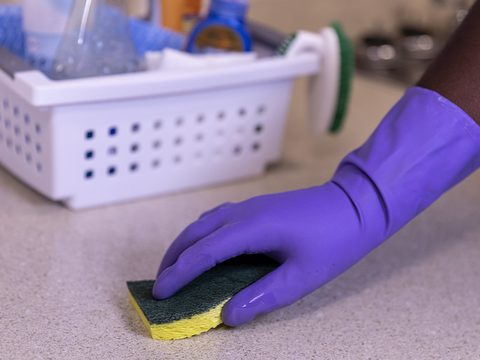 My husband cooks dinner, and I
_____ — the plates, the table and the stove.
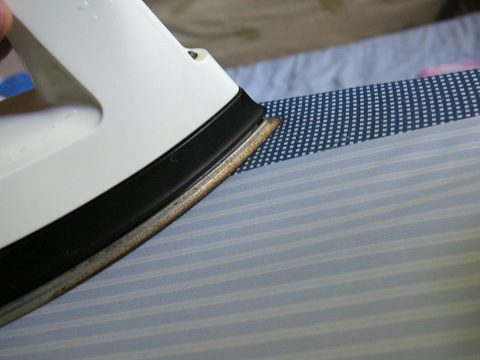 My shirts for work are clean, but they are not flat. I have to
_____ them.
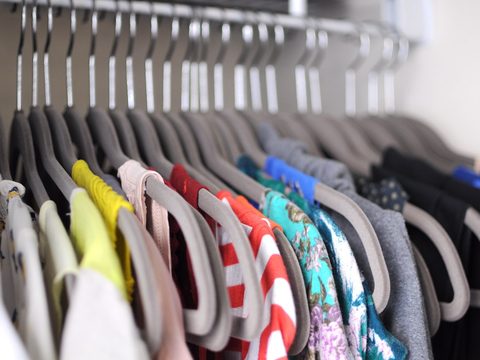 Lisa, can you
_____? They are clean and dry, and they go in your closet.
Marta's Saturday
Marta reads an article about housework and calories — and then she tests it in her own apartment. Listen and read. Words with a dotted line have a meaning: click them.
Marta pays for a gym every month, but she hardly ever goes. After work she is always tired, and on the weekend there is housework to do.
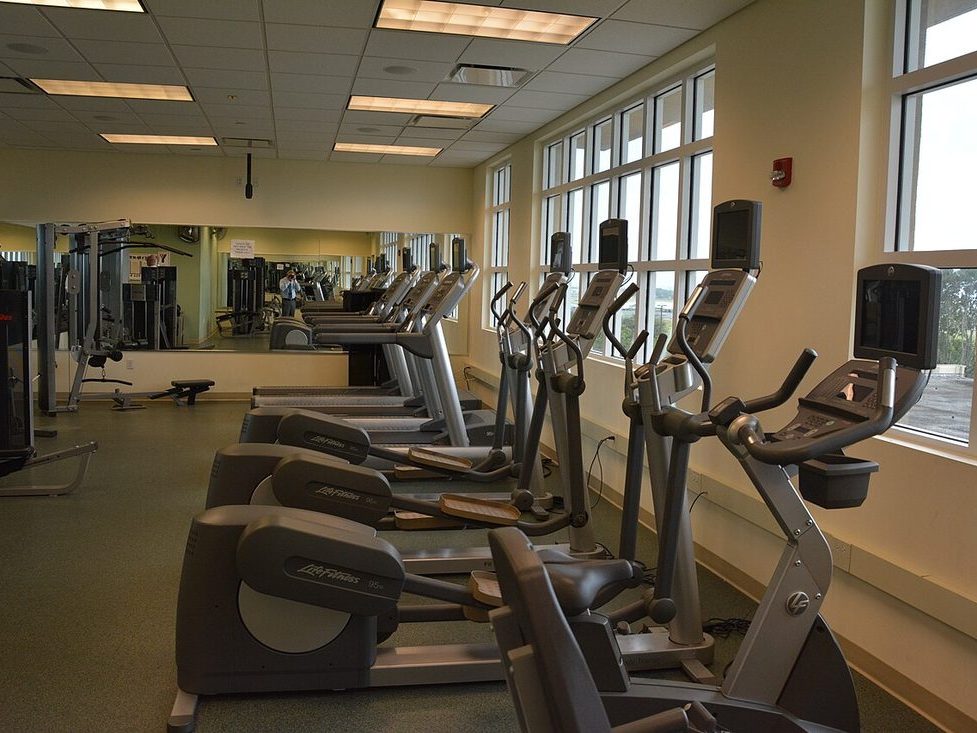

So one Saturday she chooses the housework, not the gym — and on her phone she finds an article: "Do housework, get fit!"
The article starts with bad news: only a few people enjoy housework. The good news? Housework burns calories — almost 1,500 a day, says one study.
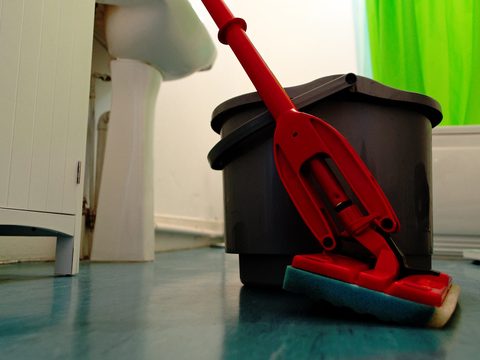
Marta wants to test this, so she gets the mop and starts with the kitchen floor. If you mop for 138 minutes every week, you burn 405 calories — like 340 squats.
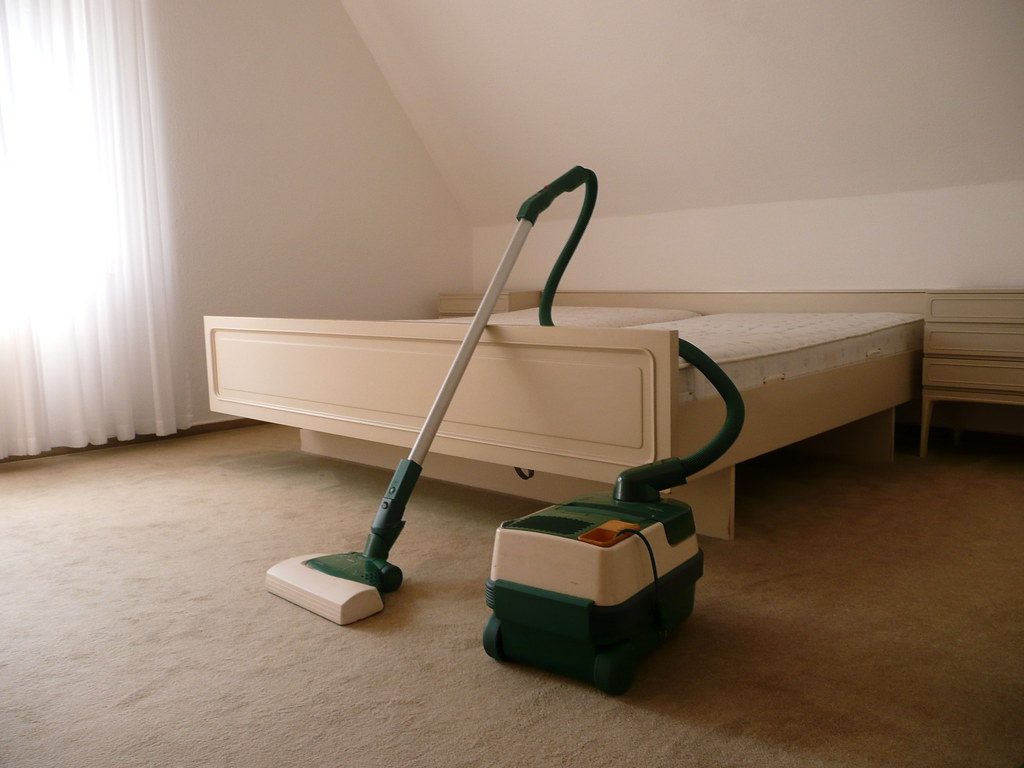
The kitchen floor is wet now, so she vacuums the living room. Vacuuming or sweeping for 50 minutes, three times a week, burns 387 calories.
The vacuum cleaner is heavy, and soon her arms hurt. That is good news too: vacuuming tones your arms and shoulder muscles.
With tired arms, she still has to take the supermarket bags out of the car. Unloading the car usually burns about 42 calories a day.
The bags are heavy, so she remembers the article: be careful with your back and posture. She carries them in slowly.
Inside, the laundry is waiting. It often makes her tired, because it is a workout: load, unload, iron, put away. Twice a week, that is about 200 calories.
Now the house is clean, so Marta sits down, puts her feet up and enjoys a treat, guilt-free. Maybe she can exercise every day at home.
Multiple choice
Click an answer and you get the result right away, with the reason.

-
Why does Marta hardly ever go to the gym?
Tired after work, and housework on the weekend. She pays for the gym every month, and it waits for her.
-
What does she choose one Saturday?
The housework, not the gym — and that is the day she finds the article.
-
What is the bad news in the article?
The article's list: cleaning the bathroom and the kitchen, doing the laundry, ironing. For most people, these things are hardly ever fun.
-
And what is the good news?
Almost 1,500 calories a day, says one study — its exact number is 1,478.
-
Mopping for 138 minutes every week burns 405 calories. That is like…
A squat: you bend your knees, go down and stand up again. Now do it 340 times.
-
Why does Marta vacuum the living room next?
She cannot walk on the wet floor she just mopped, so she moves to another room.
-
Vacuuming also…
That is why her arms hurt — and the article calls it good news. 387 calories, too, for 50 minutes three times a week.
-
Why is unloading the car hard for Marta?
Tired from the vacuum cleaner. And the 42 in the text is calories a day, not bags.
-
What does Marta do because the bags are heavy?
The article's warning: be careful with your back and your posture when you carry heavy bags or boxes.
-
Why does the laundry often make her tired?
Four jobs in a row, and the text's word for it is workout. Doing it twice a week burns around 200 calories.
-
What does Marta do when the house is clean?
That is the article's last piece of advice: after a long day of housework, put your feet up and enjoy a treat, guilt-free.
-
What is the story's final message?
Floor, vacuum, bags, laundry: every job burns calories. The gym she never goes to has a rival — her own home.
How often? Find it in the text
Every answer is in Marta's story. Read the clue, find the word or the expression, and write it.
-
aalmost always — about 90% of the time
-
ba lot, but not always — about 70% of the time
-
calmost never — about 5% of the time
-
dMonday, Tuesday, Wednesday … to Sunday
-
ethe first week, the second week, the third week …
-
fJanuary, February, March …
-
gon Tuesdays and Thursdays
-
hon Mondays, Wednesdays and Fridays
Where do they go?

Two rules, one for each size. The one-word adverbs live in the middle of the sentence: before the main verb, after be. The longer expressions, like twice a week, usually go at the end.
- From 100% to 0%: always · usually · often · sometimes · hardly ever · never
- Before the main verb: My dad usually cooks on Sundays.
- After be: The kids are never quiet.
- Between don't / doesn't and the verb: We don't often eat in restaurants.
- In questions, after the subject: Do you usually walk to work? · Is he always this late?
- Expressions of frequency usually go at the end: I call my mom twice a week. They can also open the sentence: Once a year, we …
-
Maria ___ her bed. Every morning, no exceptions.
Every morning = always, and always goes before the main verb.
-
The bathroom ___ clean when my mom visits.
With be, the adverb comes after it: is always, am never, are usually.
-
"___ do you vacuum the floor?" — "Twice a week."
How often asks about frequency, and the answer is a word like usually or an expression like twice a week.
-
I do the laundry on Saturdays only. I do it…
One day of the seven: once a week. Saturdays and Wednesdays would be twice a week.
-
Julia goes to the gym from Monday to Friday, but not on the weekend. She ___ goes to the gym.
Five days of seven is most of the time: usually. Hardly ever and never are for people who almost never go — and she goes five days a week.
-
"We hardly ever go to restaurants" means…
Hardly ever sits just above never in the pyramid.
-
Which sentence is WRONG?
An expression like every day does not go between the verb and the floor. Put it at the end.
-
Which sentence is correct?
In a question, the adverb goes after the subject and before the main verb: does your dad usually unload.
Complete with an adverb or an expression
One or two words in each gap. The second half of the sentence tells you how often.
-
aI mop the floor ___ a week, on Wednesdays and Fridays.
-
bHe ___ does housework. Not once in his life! His mom has to do everything.
-
cShe ___ finishes work at 6:00, but on Fridays she finishes at 5:00.
-
dI visit my grandparents ___ a year, at Christmas.
-
eI iron clothes ___ a week, only on Thursdays.
-
fThey work from home ___ a month: one day in the first week, one in the second and one in the last.
Put the words in order
Write the whole sentence. Find the verb first, then decide where the frequency word goes.

-
atwice / the / mop / a / floor / they / week
-
bwhen / you / do / usually / housework / do / ?
-
cis / work / late / sometimes / he / for
-
doften / the / my / don't / bathroom / friends / clean
-
eunload / car / do / the / often / you / ?
-
fthe / often / do / in / I / homework / my / evening
-
gis / ever / our / angry / dad / hardly
-
ha / go / we / shopping / once / month
Find and correct the mistake
Each sentence has one mistake: a word in the wrong place, or an expression that does not match the days. Write the correct sentence.
-
aI go every day to the gym.
-
bShe sweeps the floor once a week, on Tuesdays and Thursdays.
-
cI clean the kitchen every day, on Mondays, Wednesdays and Fridays.
-
dMy parents go never to the movies.
-
eWhy always are you angry?
-
fDo you sweep usually the floor?
-
gNever he puts clothes away.
-
hI'm hardly stressed ever.
Tom talks about housework
Listen first, without reading. Then answer in short sentences. Open the text only at the end, to check.

Read what Tom says
Hi, I'm Tom. I usually do the laundry on Sundays, but I never iron the clothes, because I don't like it. My sister always cleans the bathroom, and I sometimes sweep the floor. My parents often clean the kitchen together on Saturdays. We hardly ever mop the floor, only when it's really dirty. And once a week, we usually vacuum the floor in the living room.
-
aWhat does Tom usually do on Sundays?
-
bWhat does Tom never do?
-
cWhat does his sister always do?
-
dWhen do his parents clean the kitchen?
-
eHow often do they vacuum the floor?
-
fHow often do they mop the floor?
Does your housework make you fit?
Use a frequency word in every answer: I usually…, I hardly ever…, twice a week.
Part A — The text
Part B — Your life
- mop the floor (20 minutes) — about 50 kcal
- vacuum or sweep the floor (50 minutes) — 129 kcal
- do the laundry (once) — 100 kcal
- unload the car (once) — 42 kcal
- cook a meal (once) — about 50 kcal
- make the bed (once) — about 20 kcal
- play with the kids (50 minutes) — 154 kcal
Part C — What do you think?
Useful language
My housework week
50–80 words. Write about the housework in your home: which jobs you do, how often, and who does the rest. Use three adverbs (always, usually, hardly ever…) and two expressions (twice a week, every day…). End with your calories: how many do you burn a week?

My results
Check your score, then copy it and send it to your teacher on WhatsApp.

One job for this week. Every time you do a job at home, say it in English in your head, with a frequency word: I always make my bed. I hardly ever iron. Housework and English practice at the same time — that is two workouts for the price of one.