What Is the Answer?
Two actors, seven questions from kids and one real genius who checks every answer. How to build a question in English — with be, with do and does — and how to say where things are: in, on or at.
Warm-up
Read about the movie, then answer the cards. Tap a card when you have answered it.

Today is all about questions. Kids ask the best ones: How do planes fly? Why is the sky blue? In English every question has its own order, and by the end of the class you will have it. First, a movie about a little genius.
- Frank Adler (Chris Evans) lives in a small town on the coast of Florida. He is single, and he is raising his young niece, Mary (Mckenna Grace).
- Mary is a child prodigy: she is brilliant at math. Frank wants a normal school life for her.
- Then Frank's mother, Evelyn, discovers Mary's talent. Evelyn has her own plans for her granddaughter, and those plans can separate Frank and Mary.
Useful language
Words for big questions
Click a word, then click its meaning. Correct pairs turn green. The audio button says the word.
Complete the sentences
Click a word in the bank, then click a gap. Click a filled gap to clear it.

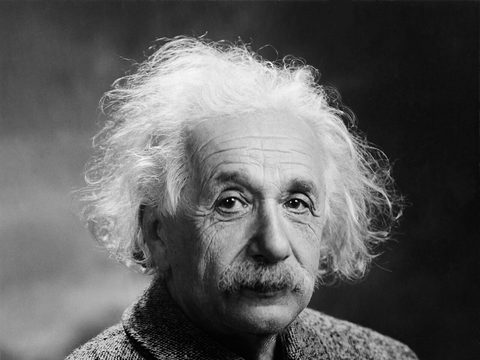 Albert Einstein was a
_____, and his ideas changed science forever.
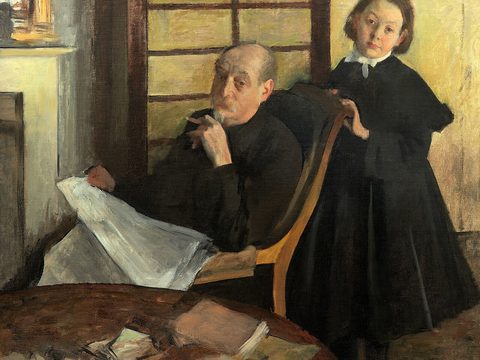 My brother's daughter is my
_____. She visits us every summer.
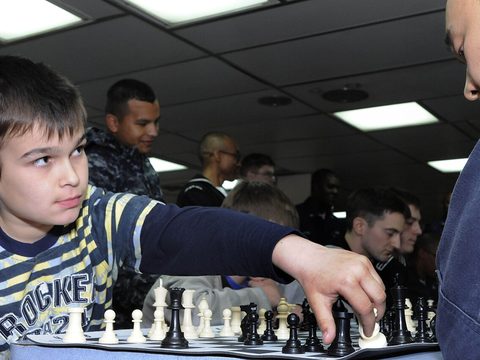 Leo is only eight, but he always wins at chess. He is very
_____.
 My son loves to
_____ stories about dragons before bed.
 It's going to rain soon. Look at those dark
_____!
 Wash your hands before dinner. They are full of
_____.
 The police have no
_____ that he took the money.
 Can you
_____ the cat while I'm on vacation?
The unicorns and the genius
Watch the video first, with the captions on. They talk fast — do not try to understand every word, only the questions. Then read: the text tells the same story.
Chris Evans and Mckenna Grace sit in front of a camera. In their movie Gifted, she plays Mary, a little girl who is a math genius.



Today they have a funny job for a Vanity Fair video: they answer real questions from kids, and a real genius checks every answer.
The first question is "How do planes fly?" They do not know, so they invent an answer: unicorns in the clouds hold the planes up.
Then the genius gives the real answer. Four forces keep a plane in the sky: lift, weight, thrust and drag. "Also, a pilot helps."
But the actors like their unicorns better, so they keep inventing. Do birds think? Of course! Big Bird from Sesame Street was a really smart guy.
Again, the genius has a serious answer. There is some evidence that birds think: their brain waves show patterns similar to ours.
So the game goes on, and the answers get sillier. Why is the sky blue? Because the dinosaurs painted it blue when they were alive.
Sometimes a silly answer is almost right. The biggest number? "Anything plus one," they say. And the genius explains that you can always add one.
They get close with air, too: oxygen and carbon dioxide. And people get sick because of germs and viruses. Not bad for two actors!
The last question is "Can we feed everyone?" Yes, they say, if we all eat dirt. In the end, the actors choose the unicorns over the genius.
Multiple choice
The stamp shows the second of the video where you hear the answer. Click an answer and you get the result right away, with the reason.

-
What is the actors' job in the video? 00:02
"Today we're going to be answering some real kids' questions" — the first thing they say.
-
Who checks their answers? 00:08
They say they are going to verify every answer "with a real genius".
-
Why do the actors invent an answer about planes? 00:13
No idea how planes fly — "it's magic, right?" — so the unicorns arrive.
-
According to the actors, what holds planes up? 00:16
Unicorns that live in the clouds. The dinosaurs come later, with the sky.
-
How many forces keep a plane in the sky? 00:20
Lift, weight, thrust and drag. Then the genius adds: "Also, a pilot helps."
-
What do the actors say about Big Bird? 00:31
Big Bird is the tall yellow bird from Sesame Street. So, of course, birds think.
-
What evidence does the genius give that birds think? 00:37
Their brain waves show patterns similar to ours. The genius only says there is "some" evidence — not that birds think like people.
-
Why is the sky blue, according to the actors? 00:47
When the dinosaurs were alive, they painted it. The genius has a different answer: sunlight has all the colors of the rainbow, and gas in the air sends the blue to our eyes.
-
What does the genius say about the biggest number? 01:20
Numbers never end, so there is always a bigger one. That is why "anything plus one" was almost right.
-
What do the actors say air is made of? 01:29
Close! But the genius says the biggest part is nitrogen: 78%. Oxygen is 21%, and argon is 1%.
-
According to the actors, can we feed everyone on the planet? 02:10
The genius says yes too, for real: we produce enough food for about ten billion people, the number of people on Earth expected for 2050.
-
Which sentence best summarizes the story?
The kids ask, the actors invent, and the genius corrects — every answer from the genius is right. But at the end the actors say their unicorn knowledge was "more correct". Maybe the geniuses should read a book about unicorns.
Quiz: Are you a genius?
Work with a partner. One of you reads a question out loud, the other one answers. Then click to check. Who is the class genius?
-
Which is the only vowel on a keyboard that is not on the top row of letters?
The top row is Q W E R T Y U I O P, so E, U, I and O are all there. A is one row down.
-
What does "HTTP" mean?
It is at the start of almost every web address: the rules computers use to send web pages to each other.
-
How many stars are there on the flag of the European Union?
Twelve gold stars in a circle on a blue flag. The number does not change when a new country joins.
-
What is the most famous dish from Spain?
A rice dish from Valencia. Spaghetti is Italian, and tacos are Mexican.
-
Who wrote The Adventures of Sherlock Holmes?
A Scottish doctor who became a writer. Poe wrote detective stories too, but not about Sherlock Holmes.
-
Which animal almost never makes a sound?
Many quizzes say giraffes have no vocal cords. That is not true: they have them, they just use them very little — scientists recorded giraffes humming at night.
-
How many countries are there in the United Kingdom?
England, Scotland, Wales and Northern Ireland.
-
What is Newton's first law of motion about?
A thing stays still, or keeps moving, until a force changes it. That is inertia.
-
When do people celebrate Pi Day?
In the US, March 14 is written 3/14 — like pi, 3.14.
-
How many electrons are there in a hydrogen atom?
Hydrogen is the smallest atom of all: one proton and one electron.
How to build a question

Look at the verb first. If it is be, it jumps in front of the subject. Any other verb needs a helper, do or does, and then the main verb stays plain. Two roads, and every question takes one of them.
- With be: (question word) + am / is / are + subject — Where is the bank? · Are you cold?
- With other verbs: (question word) + do / does + subject + verb — What do you eat for breakfast? · Does your dad cook?
- Does for he, she and it, and then the verb loses its
-s: When does the store open? — never
does the store opens. - Question words: what · where · when · who · why · how · what kind of · how many · what time · how often
- A preposition goes at the end: Who do you live with? · What is your city famous for?
-
How ___ planes fly?
Fly is a normal verb, so it needs a helper. Planes is they, so do.
-
Why ___ the sky blue?
Blue is not a verb. The only verb here is be, and it goes before the subject.
-
What is air made ___?
Made of — and in a question the preposition waits at the end.
-
— ___ do you do your English homework?
— In the evening.In the evening is a time, so the question asks when.
-
— ___ is your English class?
— At a school downtown.The answer is a place. When would need a day or a time, and How is your class? asks if it is good or bad.
-
— ___ is it so cold in here?
— Because the windows are open.An answer with because is the answer to why.
-
Which question is WRONG?
Get up is not be, so the question needs do: What time do you get up?
-
Which question is correct?
Question word, then be, then the subject — and from goes to the end.
Order the words to make questions
Use every word once. Example: you / live / where / do → Where do you live?
-
abrothers / how / do / many / you / have
-
bgreat / is / movie / the
-
ccolor / what / is / car / her
-
dsister / your / where / work / does
-
eyou / with / study / Angela / do
-
fkind of / what / do / music / you / listen to
-
gdo / what / does / weekend / he / on / the
-
hyou / are / today / tired
-
iyour / from / where / friends / are
-
jdo / spell / how / you / name / your
Am, is, are, do or does?
One word in each gap. First find the subject, then ask: is there another verb in the question, or not?

-
a___ your sister wake up early?
-
b___ this sofa comfortable?
-
c___ you happy today?
-
d___ they like to live there?
-
e___ I late for the meeting?
-
f___ he disappointed about the test results?
-
g___ her family excited about the wedding?
-
h___ it rain a lot in your city?
-
i___ he speak French?
-
j___ you work on Christmas Day?
Here is the answer. What is the question?
Write the question for each answer. The answer tells you the question word, the person and the verb.
-
aI usually get up at 6:30 during the week.
-
bNo, I'm not. I don't like history. But I'm interested in science.
-
cMy parents live in Canada.
-
dI go to the gym three times a week.
-
eI like pop music.
-
fShe prefers summer. She doesn't like winter.
-
gMy best friend is Theresa.
-
hI'm great today.
-
iShe studies Spanish because she wants to move to Spain.
In, on or at?

Three small words for "where". In is inside something, on is on top of a surface or a vehicle you can walk in, and at is a point on the map — the place where you do something.
- IN — countries and cities, rooms, buildings and some open spaces: in Canada · in Tokyo · in the bathroom · in a museum · in a field
- ON — public transportation and surfaces: on a train · on the subway · on the floor · on the table
- Exception: a car or a taxi is small, so you are in it:
in a taxi, not
on a taxi. - AT — home, work and school, and points in the city: at the station · at the bank · at the bus stop
-
The car is ___ the garage.
A garage is a room for the car: the car is inside it.
-
Are you ___ the bus?
A bus is public transportation — you can stand up and walk in it.
-
He's visiting his family ___ Italy.
Countries always take in.
-
Is he ___ work or ___ school?
Work and school are the places where you do something, so both take at.
-
She's walking the dog ___ the park.
A park is an open space with limits — she is inside it.
-
Look at that picture ___ the wall.
A wall is a surface, like a table or the floor.
-
Which sentence is WRONG?
The USA is a country, so in the USA.
-
Which sentence is correct?
The exception: a car is small, so you are in it — never on it.
Write in, on or at
One word in each gap. Ask yourself: a country or a room? A vehicle or a surface? Or a point where you do something?
-
aI usually ask how planes fly when I'm ___ a plane.
-
bLisa is ___ the kitchen.
-
cI usually arrive ___ Rio at 8 a.m.
-
dLet's stay ___ home today.
-
eThere are some pillows ___ the bed.
-
fThey give instructions to the people ___ the ship.
-
gWe need to be ___ the airport at 2 p.m.
-
hCan we have lunch ___ the backyard?
-
iMeet me ___ the movie theater at 8 p.m.
-
jShe lives ___ London.
Where is everybody?
Paul calls Susan. Read the call — the audio buttons read each line — then answer with a preposition and a place: in the …, on the …, at …

The phone rings.
Susan: Hello?
Paul: Hi, Susan! It's me, Paul. How are you?
Susan: Hi, Paul. I'm fine, thanks. I'm in the kitchen, preparing lunch. Where are you?
Paul: I'm on the bus, going to work.
A dog barks.
Susan: Oh, sorry! That's my dog. He's in the living room.
Paul: No problem! Hey, would you like to have dinner tonight?
Susan: I'm sorry, I can't. I'm meeting an old friend at a café. She's in town for a few days.
Paul: That's nice! Where is she from?
Susan: She's from Brazil. But she lives in Japan now.
Paul: Wow! That's great.
Susan: Yes. Anyway, I need to go. I have to pick up my mom at work.
Paul: Okay, talk to you later!
Susan: Bye!
-
aWhere is Susan?
-
bWhere is Paul?
-
cWhere is Susan's dog?
-
dWhere is Susan meeting her old friend?
-
eWhere does her friend live?
-
fWhere does Susan need to pick up her mom?
Ask me, and I ask you
Part A is about the video, Part B is about you, Part C asks for your opinion. Answer in full sentences, then ask the same question back.
Part A · The video
Part B · You
Ask with the right helper: Where do you …? · Who is …?
Part C · Your opinion
Start with I think … and give one reason.
Useful language
An interview at home
50–80 words. Interview a friend or somebody in your family. Ask six questions — three with be and three with do or does — and write each question with the answer you get.

My results
Check your score, then copy it and send it to your teacher on WhatsApp.

One job for this week. Ask five real questions in English every day — to a friend, to your phone, to yourself. Where is my key? Why does it rain so much? Check the helper each time: be, or do and does.