

A2 COURSE · CLASS 14

Today's Outfit

Plans, weather, one key piece and a mirror. How Lena gets dressed in twenty-five minutes, and the small words that point back to things: it, them, her, him, us.

A2 60–70 min Focus: subject & object pronouns · clothes Home
EXERCISE 01Speaking

Warm-up

Answer in full sentences. Click a card when you have answered it.

Teacher Alvaro

Look at what you are wearing right now. Every piece has a name in English. Today you also learn the small words that point back to them: I love it, I wear them every day.

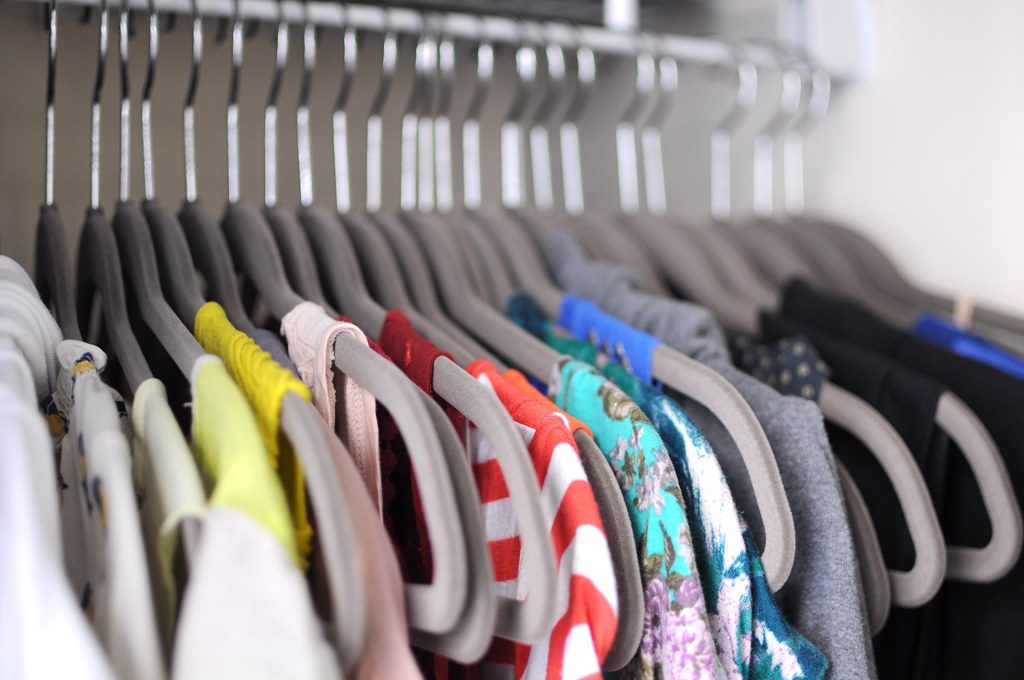
Colorful clothes on gray hangers in a closet: white, yellow and red tops, a striped T-shirt and a flowered shirt
Useful language
I'm wearing …It's … / They're … I choose my clothes …the night before It depends on the weather.
0 / 0
EXERCISE 02Vocabulary

Clothes

Click a word, then click its meaning. Correct pairs turn green. The audio button says the word.

Word
Meaning
EXERCISE 03Vocabulary in context

Complete the sentences

Click a word in the bank, then click a gap. Click a filled gap to clear it. You will meet all eight again in the reading.

Teacher Alvaro
  • These leggings are so _____! I can wear them all day.
  • These shoes don't _____ my skirt. The colors are all wrong together.
  • I put on a dress, but then I _____ and wear jeans instead.
  • Wow, Grandpa, you _____ in that jacket! Very handsome!
  • I don't want to cook tonight. Let's _____ and try that new restaurant.
  • I can't decide between the blue shirt and the brown one. Can you _____ one for me?
  • Before a trip, I always _____ my clothes on the bed. Then I put them in my suitcase.
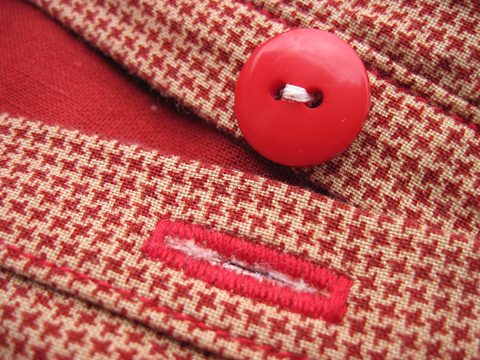
  • My shirt looks good with these pants, but it doesn't _____. The buttons are in the wrong holes!
EXERCISE 04Reading

Twenty-five minutes, one outfit

One woman, one Friday morning, four steps. The eight words in bold come back in Exercise 06. Click a dotted word to see what it means.

At seven o'clock on Friday morning, Lena is standing in front of her closet in her pajamas, and she has no idea what to wear.

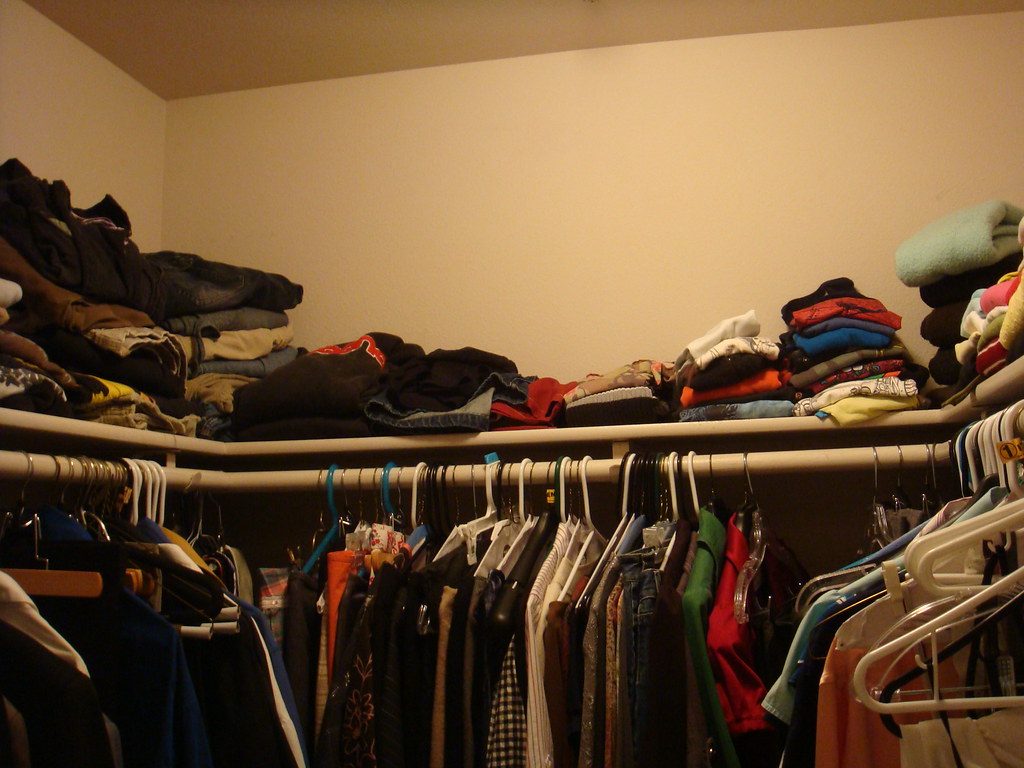
A walk-in closet full of clothes: shirts and jackets on hangers, and piles of sweaters and jeans on the shelf above
No idea what to wear
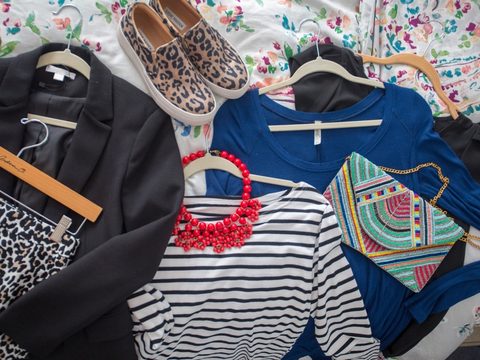
Clothes laid out side by side on a flowered bedspread: a black jacket, a blue top, a striped top, leopard sneakers, a red necklace and a small bag
Everything on the bed
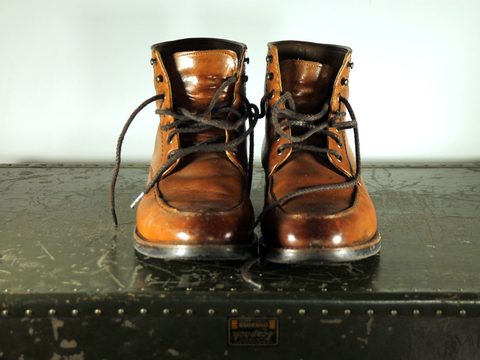
A pair of shiny brown leather boots with long laces, standing on an old trunk
The brown boots look great

So she asks herself the first question: what am I doing today? She works until six, and then she is going out for dinner with friends.

Her plans give her two rules. She sits at a desk all day, so her clothes must be comfy. But at dinner, they must look good.

She is going to be out late, so she checks the weather on her phone: warm now, but cold and windy tonight. She needs a jacket.

Now she knows what she needs, so she picks one key piece first: her bright yellow shirt. She loves it.

She lays out the shirt on the bed and puts other things next to it: black pants, white sneakers and her old jean jacket.

She looks at them together, and something is wrong. The shirt and the pants match, but the sneakers and the jean jacket don't look right for dinner.

So she tries different options. She tries on brown boots, a black jacket and a silver necklace, and she checks each one in the mirror.

The boots look great, and she loves the necklace. But the black jacket is too dark, so she changes her mind and tries the jean one again.

This time, with the boots, the jean jacket looks right. At 7:25 Lena is ready: comfy for work, nice for dinner and warm for the evening.

EXERCISE 05Comprehension

Multiple choice

Click an answer and you get the result right away, with the reason.

Teacher Alvaro
  • At seven o'clock on Friday, what is Lena's problem?

    She is in front of her closet, still in her pajamas, with no idea what to wear. Everything else in the story comes from this.

  • What is the first question she asks herself?

    Her plans come first. The weather is her second question, and a favorite color is never a question in her method.

  • What is Lena doing after work today?

    She works until six, and then she goes out with friends. So one outfit has two jobs: the office in the day and a restaurant at night.

  • Why must her clothes be comfy?

    Eight hours in a chair: nobody wants tight clothes for that. That is rule one. Rule two is for the evening: they must look good.

  • Why does Lena need a jacket?

    It is warm in the morning, but she is going to be out late, and the night will be cold and windy.

  • What does she pick first?

    One key piece first, then the rest around it. She loves the yellow shirt, so it is the start of the outfit.

  • Where does she put her clothes to see them together?

    She lays them out on the bed. From there she can see the whole outfit before she puts anything on.

  • Paragraph 7: "She looks at them together." What does them mean?

    The shirt, the pants, the sneakers and the jacket. Them points back to the things in the paragraph before.

  • What is wrong with the first outfit?

    The shirt and the pants are fine together. The problem is the white sneakers and the jean jacket: they don't look right for dinner.

  • What does she do next?

    Brown boots, a black jacket and a silver necklace, and she checks each one in the mirror. Shoes, jackets and jewelry are the things to change.

  • Why does she change her mind about the black jacket?

    The boots and the necklace stay. The black jacket goes, and she tries the jean jacket again. With the boots, this time it looks right.

  • Which sentence best summarizes the story?

    Four steps, in this order: What am I doing today? What is the weather like? One key piece. Then try other things in the mirror, and it's okay to change your mind. She is not late (she is ready at 7:25), and she buys nothing: everything comes from her own closet.

EXERCISE 06Vocabulary

Find the words in bold

Each meaning below is one of the eight words in bold in Lena's story. Write the word, in the text's form or in the base form.

  • ato look nice together; to combine well

  • bto put things on a surface, like a bed, so you can see them

  • cto decide something different from your first idea

  • dto seem correct

  • eto leave your home to have fun, at a party or a restaurant

  • fto choose; to select

  • gto be nice to see

  • hcomfortable

EXERCISE 07Grammar point

She or her? Subject and object pronouns

Teacher Alvaro

Same person, two forms. Before the verb, she. After the verb or after to, for, with, her. In everyday Portuguese the same word often does both jobs. In English the word changes, and the position tells you which one.

A subject pronoun does the action and goes before the verb. An object pronoun goes after the verb, or after a preposition (to, for, with, on, at).
  • Subject → object: I → me · you → you · he → him · she → her · it → it · we → us · they → them
  • After the verb: Can you give me this blue T-shirt, please? · This skirt is fantastic. I love it!
  • After a preposition: Talk to him about his brother's clothes. · Come shopping with us.
  • It points back: How much are these shoes? I like them. Here them = the shoes.
  • Two that never change: you and it are the same before and after the verb.
  • Careful with her: it is the object (Help her find a dress for the party) and also "of her" (her dress). It never starts a sentence as the subject: Her loves shoes → She loves shoes.
  • I'm talking to you! Why aren't you listening to ___?

    After the preposition to you need an object pronoun. The speaker is I, so the object is me.

  • My brother isn't very careful, so I don't usually give ___ my clothes.

    Give to who? My brother. After the verb, he becomes him.

  • Monica doesn't know what to wear to the party. Can you help ___?

    Help who? Monica. She only goes before a verb: She needs help.

  • "Try different shoes, jackets or jewelry until you find what works. If you don't like them, it's okay to change your mind." What does them mean?

    Them replaces the things you are trying on. A pronoun always points back to something you already said.

  • Look at those boots! ___ are perfect for the fall.

    The boots are the subject of are, and they come before the verb, so they.

  • Which sentence is WRONG?

    Us is an object. Before the verb you need the subject: We need new jackets.

  • Which sentence is correct?

    On is a preposition, so her. The other two should be They are my favorite sneakers and give the jacket to him.

  • Anna and Rick are my neighbors. I see ___ every day.

    Them is for people too, not only for things. See who? Anna and Rick, so them.

EXERCISE 08Writing practice

Replace the underlined words

Write one object pronoun: me, you, him, her, it, us, them. It must replace the underlined words.

  • aI love these jeans. I want to buy ___.

  • bSarah is wearing a new dress. I really like ___.

  • cMy friends and I want to buy new shoes. Do you want to come with ___?

  • dThe socks are dirty. Put ___ in the laundry basket.

  • eMom wants a hat. I'm giving ___ a new one.

  • fJulio is the new salesclerk. Give ___ the instructions, please.

  • gCan you help me and my sister find our coats? We can't find ___.

  • hJane wants this jacket. I'm giving ___ to her on her birthday.

EXERCISE 09Grammar practice

Choosing clothes for the day

A girl writes about her brother and their mornings. The sentences follow her text in order. Choose the right word for each gap.

Teacher Alvaro
  • Every morning, my brother and I pick our clothes. ___ likes to wear jeans and a T-shirt.

    Before the verb likes you need the subject: he.

  • …but ___ prefer to wear something more formal, like a dress or a skirt.

    I is the subject of prefer. Me never does the action in a sentence like this.

  • Right now, ___ are getting ready for school.

    My brother and I = we, before the verb are. Us goes after a verb: Wait for us!

  • My brother is looking for his jacket because ___ is cold outside today.

    For the weather English uses it: it is cold, it is hot. Its means "of it" (its color).

  • He usually asks ___, "Do you think this looks good on me?"

    Asks who? The girl who writes the text. After the verb, I becomes me.

  • Which sentence about her brother is WRONG?

    Him is an object. Before the verb takes the sentence needs He.

  • Today he is trying on a new pair of shoes. They are very nice, but he isn't sure if he likes ___.

    Likes what? The shoes, and they come after the verb, so them. The sentence before uses They, because there the shoes are the subject.

  • We need to leave soon, so I tell ___, "Let's go!"

    Tell who? My brother. After the verb, so him.

EXERCISE 10Writing practice

Right or wrong?

Some sentences have one wrong pronoun. Some are right. Write the correct pronoun, or write OK if the sentence is right.

  • aMe always buy my clothes online.

  • bI love she new skirt.

  • cThem are choosing shoes for the party.

  • dWe see her every time we go shopping.

  • eHim likes to wear caps.

  • fDo you know he?

  • gShe is helping we with our outfits.

  • hThey like to wear comfortable clothes.

  • iHer always wears earrings.

  • jI don't like this scarf. It doesn't look good on I.

EXERCISE 11Writing practice

Lucy and Dan at the mall

Lucy and Dan are shopping. Read their conversation in order and write one pronoun in each gap.

Teacher Alvaro
  • LucyHey, Dan! Look at this sweater! I love ___.

  • DanYeah, it looks great on ___!

  • DanAre you going to buy ___?

  • LucyI think so. What about you? Are ___ buying something?

  • DanMaybe. I saw a pair of jeans, but ___ are too expensive.

  • LucyTry ___ on anyway!

  • LucyMaybe they look better than ___ think.

  • DanHmm, okay. Oh, look! This hat is perfect for Tom. Should we get ___ for him?

  • LucyGood idea! ___ loves hats.

  • LucyLet's buy it for ___.

EXERCISE 12Speaking

The pronoun game

Every card on the left has a partner on the right. Look at the pronoun on the right: who or what does it point back to? When you find a pair, read both cards out loud.

First card
Its pair
EXERCISE 13Speaking

Clothes, choices and you

Answer in full sentences, with a pronoun in every answer: I love it, I wear them, my sister helps me.

Teacher Alvaro

A · Lena's morning

B · You and your clothes

C · What do you think?

Useful language
I love it. / I love them.It looks good on you. They don't match.It depends on … I usually pick …
EXERCISE 14Writing

People and their clothes

40–70 words. Write five short sentences about people in your life and their clothes. Use subject and object pronouns. Example: My dad doesn't care much about clothes. He usually wears jeans and T-shirts. I sometimes buy them for him.

0 words
ENDEnd of lesson

My results

Check your score, then copy it and send it to your teacher on WhatsApp.

Teacher Alvaro

One job for this week. Tomorrow, before you get dressed, ask Lena's two questions out loud: What am I doing today? What's the weather like? Then say one sentence about your outfit with it or them: I love these shoes, and I wear them every Friday.