I Love Cooking on This Day!
No snow and no sweaters: Australian podcast hosts explain their Christmas to American listeners. Plus every date on the calendar, said and written the American way, and the -ing that comes after love, enjoy and hate.
Warm-up
Read the invitation, then answer in full sentences. Tap a card when you have answered it.

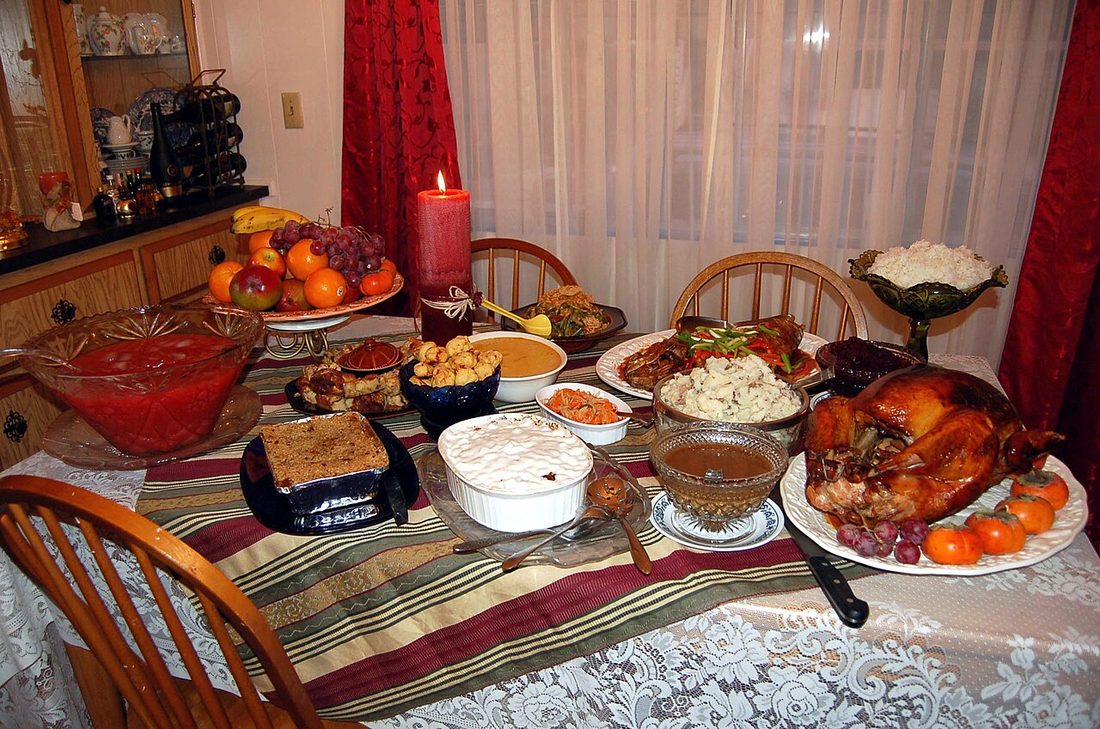
Look at this invitation. It has a date, a time and a lot of food. By the end of the class you can say the date the American way — November twenty-seventh — and say what you love doing on a day like this.
Please join us for a Thanksgiving dinner
7 p.m. on the 27th of November
The Wilsons' house · 123 Main Street, Alderbrook
Useful language
Celebrations
Click a word, then click its meaning. Correct pairs turn green. The audio button says the word.
Complete the sentences
Four celebrations from around the world. Click a date in the bank, then click a gap. Click a filled gap to clear it. Look for the clue in each sentence — a day, a month or a number. Only one date fits.

 Christmas Eve is on Thursday the 24th, and we open our gifts the next day:
_____.
 Children wear costumes and ask for candy on the last day of October. This year, that is Saturday,
_____.
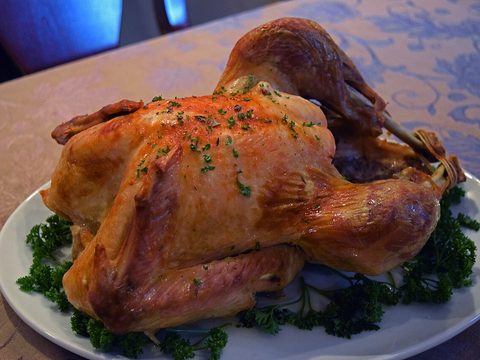 In the US, families come together for a big turkey dinner in
_____, the eleventh month of the year.
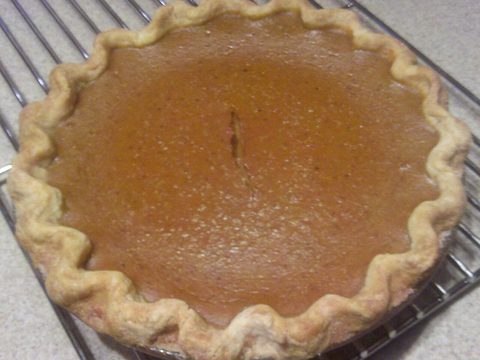 American Thanksgiving is always on a
_____, and many people take the Friday after it off too.
 Canadian Thanksgiving is in
_____, the month after September.
 In Canada, Thanksgiving is always on a
_____, so people get a long weekend.
 Our Chinatown has a lion dance show every Wednesday in January: on January 7th, January 14th,
_____ and January 28th.
 For Chinese New Year, the red lanterns stay up for two weeks: from Friday, February 6th, to Friday,
_____.
An Aussie Christmas
Watch the video first: 44 seconds of Australian English, fast and informal. Do not try to understand every word. Then read the story. Tap a dotted word to see what it means.
One day, the hosts of an Australian podcast look at their data and get a surprise: most of their listeners are not in Australia, but in the US.
So they decide to explain a classic Aussie Christmas, because their American listeners probably have no idea what it looks like.


Their explanation starts with the weather: in Australia, December 25th is in the summer. There is no snow, and the weather decides what kind of Christmas you get.
The first kind is rainy and really humid. It is not a day for the beach, so families sit indoors together.
Indoors, the whole family shares a Christmas meal of ham and prawns. Prawns is the word Australians use for shrimp.
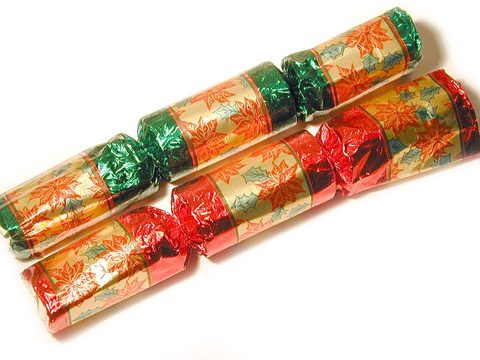
The meal comes with a fun tradition: Christmas crackers. Two people pull a colorful paper tube from each end until it opens with a small bang.
Inside each cracker there is a small gift, a joke and a paper hat. So everybody at the table puts on a funny little hat.
The second kind of Christmas is stinking hot. People turn on every fan in the house, and sometimes there are five fans in one room!
In that heat, nobody wears a warm Christmas sweater. People wear tank tops, board shorts and flip-flops. In Australia, a tank top is a singlet, and flip-flops are thongs.
So people sit around a pool with cold beers, and they all ask the same question: "When can this be over?"
Multiple choice
The stamp shows the second of the video where you hear the answer. Questions without a stamp are about the text.

-
What surprises the hosts when they look at their data? 00:02
Not in Australia — most of the listeners are in the US. So the sentence "Most of the podcast listeners are in Australia" is false.
-
So what do they decide to do? 00:11
Their American listeners probably have no idea what an Australian Christmas looks like, so the hosts describe one for them.
-
Why is there no snow at Christmas in Australia?
Australia is in the south of the world, and there the seasons are the opposite: winter in the US is summer in Australia.
-
What decides the kind of Christmas you get in Australia?
An Aussie Christmas comes in two kinds: a rainy, humid one or a stinking hot one. The rest of the story follows from that.
-
What is the first kind of Christmas like? 00:18
Summer does not always mean sun. So the sentence "Australian Christmas weather is always hot and sunny" is false.
-
Where do families spend a rainy Christmas? 00:21
A rainy, humid day is not a day for the beach, so everybody stays in the house.
-
What does the family eat? 00:23
Prawns is the Australian word for shrimp. Turkey and pumpkin pie belong to American Thanksgiving.
-
What happens when two people pull a Christmas cracker?
The paper tube breaks open with a little pop, and the small things inside fall out.
-
Where do the funny little hats come from? 00:26
Every cracker has a paper hat inside, so after the crackers everybody wears one. The sentence about crackers and funny little hats is true.
-
What happens on a stinking hot Christmas? 00:33
Sometimes there are five fans in one room. That is how hot the day is.
-
What do people wear in that heat? 00:35
Tank tops, board shorts and flip-flops — "singlets" and "thongs" in Australia. Careful: in the US a thong is underwear! And the sentence about thick Christmas sweaters is false.
-
What is the main message for the American listeners?
No snow and no sweaters. The weather gives Australians a rainy Christmas indoors, with ham, prawns and paper hats, or a stinking hot one, with fans, a pool and cold drinks.
The first of the month: saying and writing dates
- Three special ones: 1st first · 2nd second · 3rd third. After that, add -th: 4th fourth · 6th sixth · 10th tenth · 13th thirteenth.
- Spelling traps: five → fifth · eight → eighth (only one t) · twelve → twelfth. Numbers that end in -ty change to -tieth: twenty → twentieth.
- Big numbers: only the last part changes: 22nd twenty-second · 24th twenty-fourth.
- Saying the date: Americans usually say the month and the ordinal: March 10th → March tenth. The tenth of March is also correct, and very common in British English.
- Saying the year: in two parts: 1995 → nineteen ninety-five · 2026 → twenty twenty-six (Americans also say two thousand twenty-six). From 2000 to 2009: two thousand five.
- Writing the date: American style is month, day, year, with a comma: October 22, 2024. British style is day, month, year: 22 October 2024. A month always starts with a capital letter.
- Only numbers? Careful: 10/7 is October 7 in the US, but 10 July in the UK.
- in, on, at: in + month or year (in May, in 2025) · on + day or date (on Friday, on May 5th) · at + time (at 9 a.m.).
-
How do you write 9th in words?
Nine loses its e: ninth. Nineteenth is 19th.
-
How do you write 30th in words?
-ty becomes -tieth, like twenty → twentieth. Thirteenth is 13th: listen for the stress, thirTEENth and THIRtieth.
-
The Wilsons' dinner is on 27 November 2025. How do you write it the American way?
American style: the month first, then the day, then a comma and the year.
-
An American friend writes 7/4 on a card. Which day is it?
In the US the month comes first: 7/4 is July 4th, Independence Day. In the UK, 7/4 is the seventh of April.
-
How do you say the year 1987?
A year before 2000 goes in two parts: nineteen + eighty-seven, with no and in the middle.
-
How do most Americans say November 11th?
A date needs the ordinal (eleventh), not the normal number, and no the before the month.
-
The Wilsons' dinner is ___ November 27th, ___ 7 p.m.
On for a date, at for a time.
-
Which sentence is WRONG?
A day of the week takes on: The class starts on Monday. A month takes in, and a date takes on.
Say the date
Write the date in words, the American way: month + ordinal number. Example: March 10 → March tenth. Items a–e are important days in Emma's life.

-
aEmma's birthday: June 3
-
bHer first day at her new job: February 1
-
cHer brother's wedding: September 12
-
dThe day she moved to her new apartment: April 25
-
eThe start of her vacation in Italy: December 20
-
fJanuary 15
-
gMarch 5
-
hJuly 21
-
iAugust 30
-
jNovember 9
-
kThe Wilsons' Thanksgiving dinner: November 27
-
lNew Year's Eve: December 31
American or British?
Write the same date the other way, in numbers and words. US: month, day, comma, year. UK: day, month, year. Example: UK · August 9, 2023 → 9 August 2023.
-
US21 November 2021
-
UKApril 12, 2022
-
US30 July 2025
-
UKMarch 5, 2023
-
US25 December 2023
-
UKNovember 30, 2020
-
US15 August 2023
-
UKJuly 14, 2022
I love cooking: verbs + -ing

One verb, then another. After love, like, enjoy, don't mind, prefer and hate, the second verb takes -ing: I love cooking. In Portuguese the second verb stays in its basic form, so this -ing is the part Brazilian students forget.
- Verb + -ing: She loves dancing. · Do you enjoy playing video games? · I don't mind driving at night.
- enjoy and mind: only -ing. Never
I enjoy to swimorI don't mind to drive. - love, like, hate, prefer: -ing or to + verb. I like reading = I like to read. Both are correct.
- Never the base verb alone:
We love swim→ We love swimming. - Spelling: most verbs + -ing (read → reading) · verb ends in -e: drop the e (make → making, dance → dancing) · short verb with one vowel + one consonant: double it (get → getting, shop → shopping) · American English does not double the l: cancel → canceling.
- He / she: only the first verb changes: My dad enjoys gardening · He doesn't mind washing the dishes.
-
"Socks again? Every year! We ___ getting socks as presents."
"Again? Every year!" sounds tired and a little angry. Socks are the famous bad present.
-
"We ___ decorating our Christmas tree. It's a wonderful moment."
"A wonderful moment" is the top of the scale: love.
-
"I ___ working on Christmas Day. It's okay for me."
It's okay is exactly what don't mind means: not great, not bad.
-
"The food is delicious. I ___ having Christmas dinner."
Delicious food is a good thing, and like is the only positive verb here.
-
She doesn't mind ___ up early on weekends.
Mind takes -ing, and wake ends in -e, so the e goes: waking.
-
We prefer ___ by train.
American spelling has one l: traveling. British English writes travelling.
-
Which sentence is WRONG?
Enjoy only takes -ing. Like can take both, so I like to cook is fine.
-
Which sentence is correct?
Mind needs -ing, and he needs doesn't, not don't.
Two verbs together
Write two words: the first verb in the right form for the person, and the second verb with -ing. Example: like · swim — She ___ in the sea. → likes swimming. Items f–j are about Mark, an American, and his favorite days of the year.
-
love · decorateI ___ the Christmas tree with my family.
-
enjoy · watchShe ___ fireworks on New Year's Eve.
-
prefer · eatWe ___ turkey, not ham, on Thanksgiving.
-
not mind · carveHe ___ pumpkins for Halloween.
-
hate · cleanThey ___ up after the New Year's Eve party.
-
like · watchOn Christmas Day, Mark ___ Christmas movies.
-
love · eatOn July 4th, he ___ barbecue with his friends.
-
love · cookOn Thanksgiving, his mom ___ turkey and pumpkin pie.
-
not mind · helpMark ___ her in the kitchen.
-
not like · wearOn Halloween, he ___ costumes.
Right or wrong?
Some sentences have one mistake: a wrong preposition or a wrong verb form. Some are right. Write only the correct word (or words), or write OK if the sentence is right.

-
aHer birthday is in May 15th.
-
bI enjoy to listen to music in the evening.
-
cWe love go out on weekends.
-
dThanksgiving is on the fourth Thursday of November.
-
eShe started her new job at January 2nd.
-
fHe doesn't mind to get up early.
-
gWe moved to this house on April.
-
hMy mom likes spending time with her family.
-
iThey prefer stay home on rainy days.
-
jI don't like wait for people.
Write the questions
Put the words in order and add do. Use the -ing form after the first verb. Example: you / like / dance / at parties? → Do you like dancing at parties? You will use these questions in Exercise 13.
-
aWhat / you / love / do / on Christmas with your family?
-
byou / enjoy / decorate / your house for Halloween?
-
cyou / like / eat / special food on New Year's Eve?
-
dyou / prefer / celebrate / Christmas at home or traveling?
-
eyou / hate / shop / for Christmas presents?
-
fWhat / you / enjoy / do / with friends on New Year's Eve?
-
gyou / like / watch / Halloween movies?
-
hyou / mind / stay up late / to see the fireworks on New Year's Eve?
Holidays, dates and you
Answer in full sentences. Say every date the American way, and use love, like, enjoy, don't mind, hate + -ing as often as you can.

A · An Aussie Christmas
B · You and your holidays
C · What do you think?
Useful language
My favorite holiday
50–80 words. What is your favorite holiday, and when is it? Write the date with on or in. Then say what you love or enjoy doing on that day, what you don't mind doing, and what you don't like doing.

My results
Check your score, then copy it and send it to your teacher on WhatsApp.

One job for this week. Every time you see a date — on your phone, on a receipt, on a calendar — say it out loud the American way: September twenty-fourth. Then add one sentence about it: I don't mind working on Fridays.