The Lost Dog
A small dog, an open gate and one very long day. Lisa's search for Max brings back nine classes: the past simple and the past continuous, there was and there were, some and any, much and many, adverbs and comparatives.
What can you do?
Eleven things from Classes 21 to 29. Do each one out loud, then tap the card. The hard ones are your list for today.

Nine classes, one page. Start with your voice, not with the exercises. If a card is easy, tap it and go on. If it is hard, stop there and try again: that card is the reason for today's review.
Useful language
Places in a city
Click a word, then click its meaning. Correct pairs turn green. The audio button says the word.
Complete the sentences
Click a word in the bank, then click a gap. Click a filled gap to clear it.

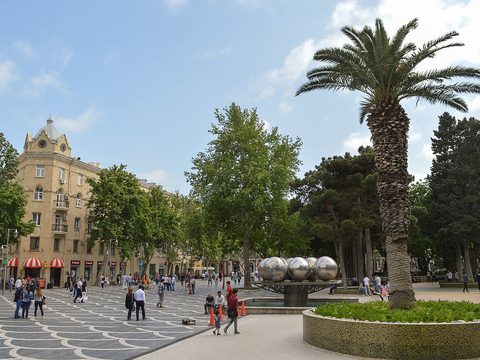 Nobody sells anything in the
_____: it is just a big open space with a fountain, where people sit in the sun and talk.
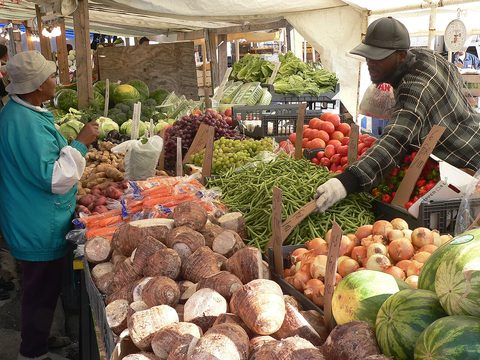 The
_____ near my house opens only on Saturday mornings: farmers sell eggs, cheese and vegetables there, and it is cheaper than a store.
 My grandmother goes to
_____ every Sunday morning, and then she has lunch with us.
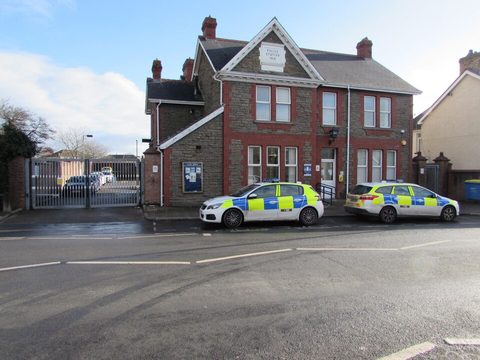 Someone took my wallet on the bus, so I went to the
_____ and talked to an officer.
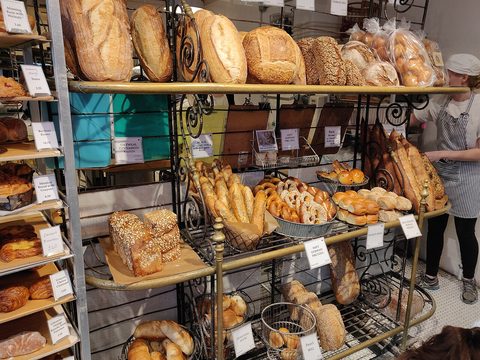 The small
_____ on our street sells only bread and cakes, and it bakes them fresh every morning.
 The new
_____ has six floors: clothes on the first floor, shoes on the second, and lamps and furniture on the top floor.
 The
_____ has ten rooms with only paintings in them, and tickets are cheaper for students.
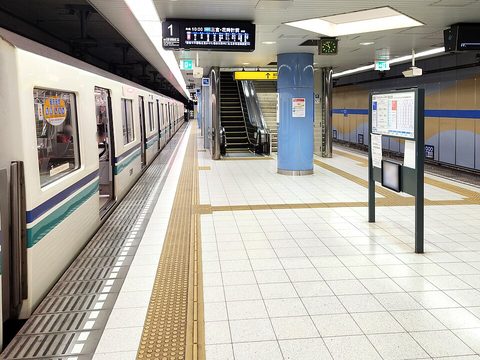 The traffic was terrible, so we went down to the
_____ and took the train.
The lost dog
Read the story, or listen with the audio buttons. Follow one question: how did Lisa find Max — the first time and the second time?
Lisa had a small brown dog named Max. He was faster than all the other dogs on her street, and she loved him very much.
One day, Lisa was carrying some grocery bags into the house when Max saw a cat. The gate was open, so he ran after it.
Lisa ran after him, but she couldn't catch him. Max was much faster, and a few seconds later, he disappeared around a corner.
So Lisa looked everywhere: in the square, at the market, behind the church and at the police station. Nobody could help, and that night she couldn't sleep.
The next morning, Lisa made twenty posters with a big photo of Max. Then she walked quickly around town and put them up.
While she was putting up a poster near the bakery, a woman looked at it. "I saw a dog like that near the park!" she said.
Lisa ran quickly to the park. There were a lot of dogs there, but there wasn't a small brown one, so she walked home slowly.
That evening, while she was having dinner, Lisa heard a noise outside. She opened the door, and Max was there! He was dirty and hungry.
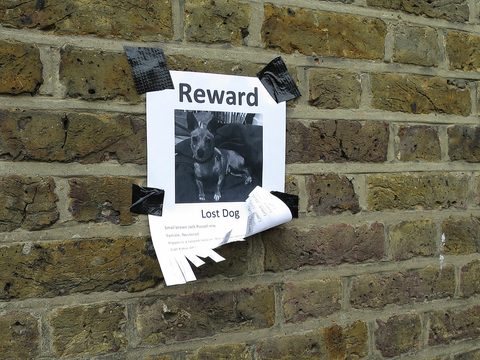
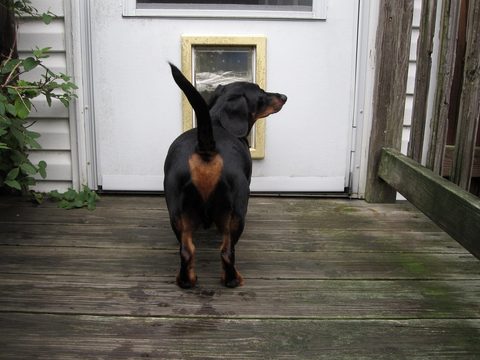
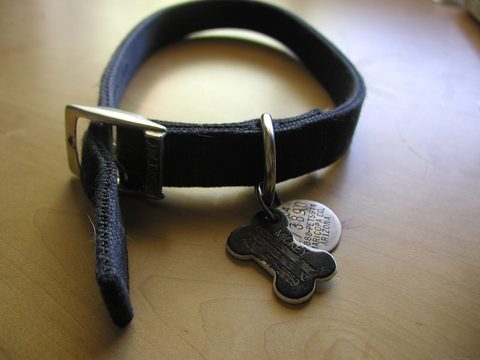
After that night, Lisa always kept Max inside, and she put her phone number on his collar. She didn't want to lose him again.
Months later, Max got out again. This time, a man read the number on his collar and called Lisa, so she found him more quickly.
Multiple choice
Click an answer and you get the result right away, with the reason.

-
Why did Max get out of the house?
Lisa was busy with her grocery bags, the gate was open, and Max saw a cat. That was enough.
-
What was Lisa doing when Max saw the cat?
The long action in the background — was carrying — and the short one in the middle of it: Max saw a cat.
-
Why couldn't Lisa catch Max?
The first paragraph tells you: Max was faster than all the other dogs on her street. A few seconds later, he was gone.
-
Who could help Lisa on the first day?
She tried the square, the market, the church and the police station. Nobody could help her.
-
What happened that night?
No Max and no help, so no sleep. The posters came the next morning, and Max came home the next evening.
-
What did Lisa do the next morning?
Twenty posters, and then she walked quickly around town and put them up.
-
Where was Lisa when the woman talked to her?
She was putting up a poster there. The woman looked at it — and knew the dog.
-
Where did the woman see a dog like Max?
That's why Lisa ran quickly to the park.
-
What happened at the park?
There were a lot of dogs, but there wasn't a small brown one. So she walked home slowly.
-
What was Lisa doing when Max came back?
She was having dinner — the long action — when she heard a noise outside. She opened the door, and there he was.
-
Why did the man call Lisa, months later?
After the first time, Lisa put her phone number on the collar. One small change, and a stranger could call her.
-
Which sentence best summarizes the story?
The first time, Lisa needed a long search, twenty posters and some luck. The second time, the number on the collar made it easy: one phone call was enough.
The short version: time words
This is the worksheet's short version of the story, in eight steps. Choose the time word for each gap: one day · the next day · while · then · after that · months later · again.
-
1. Lisa had a small dog named Max, and she loved him very much. ___, Max ran away from home.
The story starts here, with no earlier action. One day opens a story; after that needs something before it, and while needs a long action after it.
-
2. Lisa looked everywhere on Monday, but she couldn't find him. ___, on Tuesday, she made posters and put them up in the streets.
From Monday to Tuesday is one day. Months later can't be on Tuesday.
-
3. ___ she was putting up a poster, a woman saw her and said, "I saw a dog like that near the park."
A long action (was putting up) with a short one in the middle (a woman saw her), in one sentence: while.
-
4. Lisa ran to the park, but Max wasn't there. ___, she went home and waited.
The next step, on the same day: then. One day would start a new, different day.
-
5. ___ she was having dinner, she heard a noise outside. She opened the door, and Max was there!
The same pattern as gap 3: was having dinner is the long action, and the noise comes in the middle of it.
-
6. Lisa was so happy. ___ night, she always kept Max inside the house.
After that night = from that night on, every day. The next day night and months later night are not English.
-
7. Lisa kept Max inside all fall and all winter. ___, in the spring, he ran away a second time.
Fall, winter, then spring: that is months, not one day.
-
8. This time, he had a phone number on his collar, so someone called Lisa and she found him quickly. She never lost him ___.
Never … again = not one more time, from then on. While can't end a sentence.
Past simple and past continuous

Two past tenses, one picture. The past continuous is the long action in the background. The past simple is the short action that happens in the middle of it, or one finished step of the story. Read the note, then choose — and read the reason after every answer.
- Past simple, regular: verb + -ed — walk → walked, stop → stopped, study → studied. Irregular verbs change: go → went, take → took, buy → bought.
- Negatives and questions: didn't / did + the base verb — We didn't call. · Did she call? Never
didn't called. - Be and can: was / were, wasn't / weren't · could / couldn't — The store was closed, so we couldn't buy bread.
- Past continuous: was / were + -ing, an action in progress — At nine o'clock, we were cooking.
- When and while: when + the short action (past simple) · while + the long one (past continuous) — I was cooking when the lights went out. · While we were eating, it started to snow.
-
1. ___ you see the teacher yesterday?
Yesterday is the past, and the past of can is could.
-
2. I didn't see her because she ___ at school.
She takes was, so the negative is wasn't. Be never goes with didn't.
-
3. He ___ to bring his books.
Forget is irregular: forget → forgot. There is no
forgetted. -
4. The children ___ a message while sitting near the river.
The children = they, so were + -ing. Write loses its e, and the t does not double: writing.
-
5. She ___ for the bottle; she found it by accident.
By accident means she wasn't trying to find it. And she takes was, not were.
-
6. Were they waiting for you when you ___?
They were waiting — the long action. Your arrival is the short one, so past simple after when.
-
7. I ___ to the teacher, so I didn't understand the exercise.
You didn't understand, so you weren't paying attention: a negative. I takes was, so wasn't.
-
8. While my brother ___ a picture of me, a dog ___ into the shot.
While + the long action (was taking), and the dog is the short surprise in the middle (ran).
-
9. She ___ for the camera when the wind ___ her hat away.
The smile is the long action; the wind takes the hat in one second, after when.
-
10. My dad ___ us a story about his travels while we ___ at his photo album.
While + we were looking. We looking has no verb, and my dad tell is neither past nor correct present.
-
11. They ___ photos on the beach when it ___ to rain.
Taking photos is the long action. The rain starts at one moment, so started.
-
12. I ___ on the beach when I ___ the beautiful sunset.
A walk in progress, and a short moment inside it. See is irregular: see → saw.
-
13. Which sentence is WRONG?
After didn't, the verb goes back to the base form: I didn't know the answer.
There is, there was and a / an / some / any
- Now: there is + one thing · there are + more than one — There's a bank on the corner. · There are two cafés.
- Negatives and questions: there isn't / there aren't · Is there …? / Are there …? — short answers: Yes, there is. · No, there aren't.
- In the past: there was + one thing · there were + more than one — There was a movie theater here in 1990, but there weren't any stores.
- a / an: one thing you can count — a pear, an egg. The sound decides: an before a vowel sound.
- some / any: with plurals and with things you can't count (water, rice, bread) — some in positive sentences, any in negatives and questions: We bought some rice. · We don't have any bread.
-
1. ___ dining room in this café?
A question, so is comes first. Dining starts with a consonant sound: a.
-
2. ___ burgers on the menu today?
Burgers is plural: are there, in question order, and any because it's a question.
-
3. ___ exercise in your workbook.
One exercise, so there's. Exercise starts with a vowel sound, so an.
-
4. Tourists couldn't get information because ___ tourist office in the city.
They couldn't get information, so the office didn't exist: a past negative, singular — there wasn't a.
-
5. ___ a train station in the city?
One station: was. And a question puts was before there.
-
6. In my grandfather's town, there ___ many theaters, but there ___ many parks.
Theaters and parks are plural, so were. But needs a contrast: many theaters, not many parks.
-
7. Athletes usually eat ___ banana before training.
One banana, and banana starts with a consonant sound: a.
-
8. Is there ___ orange juice in the fridge?
You can't count juice, and it's a question: any. Many is only for plurals.
-
9. I ate ___ sandwich and ___ apple for lunch.
One sandwich and one apple. Apple starts with a vowel sound, so an.
-
10. Would you like ___ protein shake after your workout?
One shake, one glass: a. Protein starts with a consonant sound.
-
11. Which sentence is correct?
Plural buses, so weren't, and any in a negative. A park is one thing (there was), and cafés are plural (there weren't).
Much and many, adverbs and comparatives

Three small questions decide every answer here. Can you count it? Then many, or much if you can't. Does the word describe a person or a thing, or an action? Then careful or carefully. Is the adjective short or long? Then -er or more.
- much / many: much + things you can't count (sugar, water, time) · many + plurals (eggs, cookies) — mostly in negatives and questions. A lot of works with both. A few + plurals, a little + things you can't count.
- Adverbs of manner say how you do something: adjective + -ly (slow → slowly, quiet → quietly), after the verb — She speaks quietly. The adjective stays with a noun: a quiet street. Irregular: good → well, fast → fast, hard → hard.
- Comparative adjectives: short ones + -er (cheap → cheaper, big → bigger, easy → easier) · long ones: more + adjective (more expensive) · irregular: good → better, bad → worse — always with than.
- Comparative adverbs: more slowly, more quietly · but fast → faster, hard → harder, well → better.
-
1. We don't drink ___ Coke during the week.
The phrase is always a lot of — the a is part of it, and lot never takes an -s here.
-
2. Do you drink ___ juice at breakfast?
You can't count juice, and it's a question: much. Many and a few go with plurals, like eggs or cookies.
-
3. My neighbors talk ___ during family meals.
The word says how they talk, so an adverb: loud → loudly. Noisy is an adjective, and highly means "very".
-
4. He is a ___ driver.
Here the word describes a person — a noun, driver — so the adjective. With the verb it changes: He drives carefully.
-
5. The new treadmill works ___ than the old one.
Good and well are irregular: both become better. There is no
gooder. -
6. He runs ___ than his older brother.
Fast is short, so -er. And than always needs a comparative in front of it.
-
7. Which sentence is WRONG?
How she speaks needs an adverb, and the adverb of good is well: She speaks English very well.
-
8. Which sentence is correct?
Cheap is one short word, so -er, never more. And the word after a comparative is than, not that.
At the restaurant
Eight photos from the worksheet, described in words. Write the word — the first letter is given.
-
aPhoto: small pieces of toast with tomato and cheese on a long plate — you eat them before the main course. a___
-
bPhoto: six people in green aprons, smiling, in a dining room — everybody who works in the restaurant, as one group. s___
-
cPhoto: two tall piles of round white dishes — you put your food on them. p___
-
dPhoto: a napkin on a table and, next to it, two things with three or four points that pick up food. f___
-
ePhoto: a cook cuts green onions on a blue board with it. k___
-
fPhoto: two shiny silver ones, one big and one small — you eat soup with them. s___
-
gPhoto: white paper squares — you clean your mouth and your hands with them. n___
-
hPhoto: a paper with the prices of the meal, in a small folder, with a credit card on top. c___
Food and fitness
Rows a–f: six photos from the worksheet, described in words — the first letter is given. Rows g–j: write heart, cardio, strength training or lungs.

-
aPhoto: a bowl of warm, soft oats — a breakfast for athletes. o___
-
bPhoto: a tall glass of a thick purple drink, made with fruit in a blender. s___
-
cPhoto: a small pile of almonds, cashews and other hard little snacks. n___
-
dPhoto: big, shiny vegetables — one red, one green and one yellow. p___
-
ePhoto: small brown and white ones with a round top, like little umbrellas. m___
-
fPhoto: a green fruit cut in half, with a big brown seed in the middle. a___
-
gAfter a long run, my ___ beats very fast.
-
hJumping rope for twenty minutes is great ___.
-
iLifting weights and doing squats are kinds of ___.
-
jSmoking is very bad for your ___: you can't breathe well.
Big numbers
Rows a–d: write the number in digits. Example: two hundred ten → 210. Rows e–h: write the number in words. Americans usually say two hundred ten; the British say two hundred and ten. Both are accepted.
-
asix hundred thirty-one
-
btwo thousand one hundred forty
-
cthree thousand eight hundred
-
dforty-eight thousand seven hundred thirty
-
e450
-
f1,300
-
g2,015
-
h90,500
Conversation time
Part A is about Lisa and Max, Part B about you, Part C about your opinion. When you tell a story, use when or while at least once.

Useful language
The day I lost it
50–80 words. Write about a time you lost something — a phone, your keys, a friend at a festival, a pet. What were you doing when it happened? What did you do next? How did the story end? Use when or while, and three time words: one day, then, after that, the next day…
My results
Check your score, then copy it and send it to your teacher on WhatsApp.

One job for this week. Tell Max's story to someone at home, in English, in six sentences — with one day, while, the next day and after that. Then tell a story of your own: the day you lost something.