Get Fit!
Nora runs five mornings a week, so why is her brother the strong one? A short video has the answer, and the story needs the words we use to compare: stronger, more tiring, faster, better.
How fit are you?
Answer the quiz with a partner, or with me. The first answer on each card is worth 3 points, the second 2, the third 1 and the last 0. Tap a card when you have answered it.

Cardio or strength training? That is today's big question. But first, a quick quiz: five questions, some points, and one honest score. Then we compare — who sleeps more, who drinks more water, who is fitter.
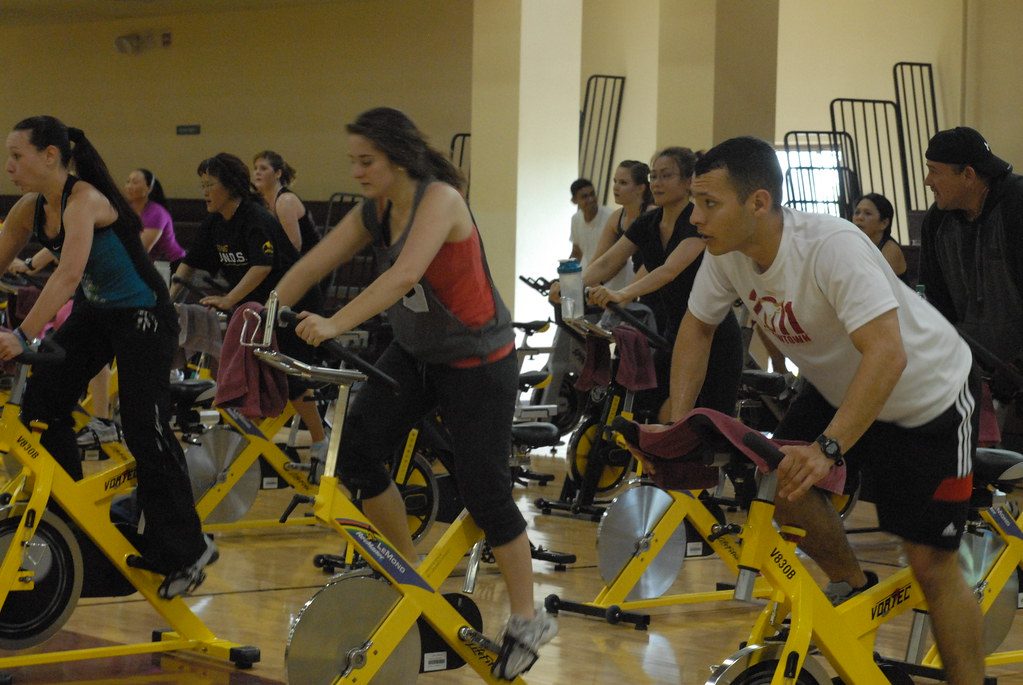
- 13–15: Super fit! You are very active and healthy. Keep it up!
- 9–12: Pretty fit! You are doing well, but you can be even healthier.
- 5–8: Not very fit. You need to move more and eat better.
- 0–4: Time for a change! Try to exercise more and eat healthier food.
Useful language
Your body and exercise
Click a word, then click its meaning. Correct pairs turn green. The audio button says the word.
Complete the sentences
Click a word in the bank, then click a gap. Click a filled gap to clear it.

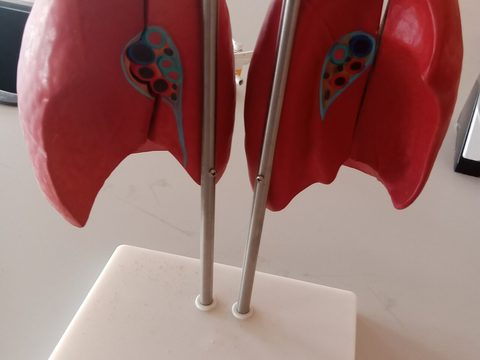 Take a deep breath and fill your
_____ with air.
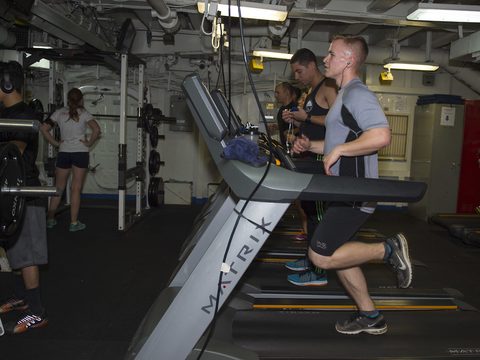 The treadmill won't give you big muscles, but it is good
_____: your heart works hard for forty minutes.
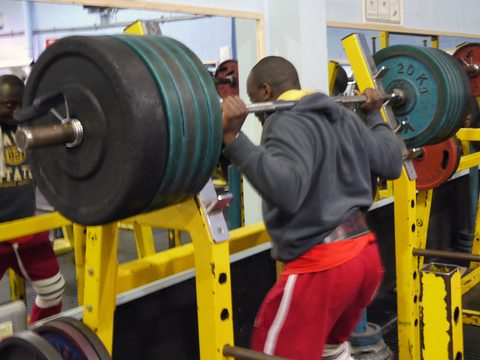 No running today. It's time for
_____: I put more kilos on the bar than last week.
 My
_____ beats very fast when I run up the stairs.
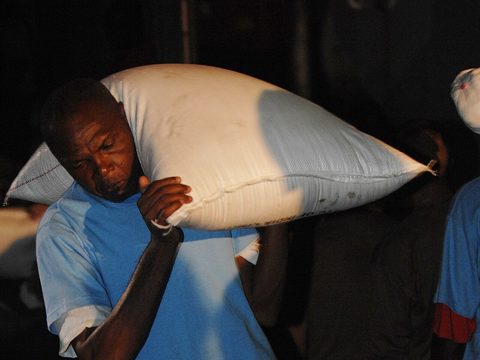 He carries heavy bags at work, so his arm
_____ are strong.
 Breakfast wakes up your
_____, and your body starts turning food into energy.
 The doctor checks the baby's
_____: 10 kilos.
 A short walk after lunch always
_____ my energy for the afternoon.
Only half the answer
First watch the video. It has no voice — only music and short sentences on the screen. Was your guess from the warm-up right? Then read Nora's story. Tap a dotted word to see what it means.
Nora loves running. She runs for thirty minutes before work, five mornings a week, and she thinks cardio is all she needs.
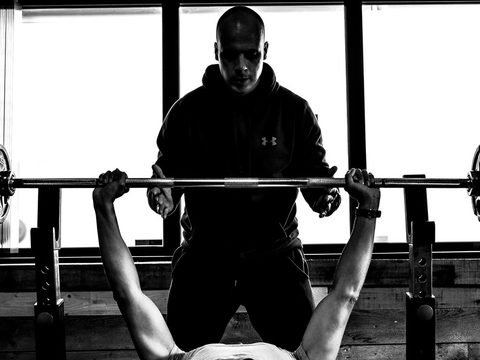
One Saturday, she helps her brother Leo move. The boxes are too heavy for her, but Leo, who lifts weights, carries them more easily.
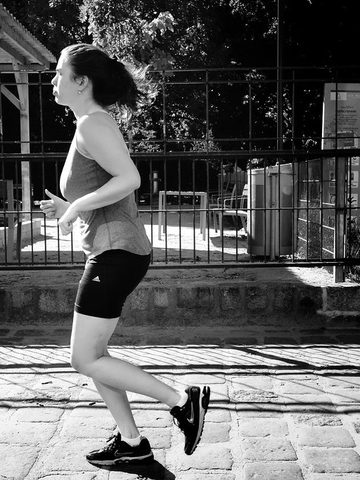

That night, Nora wants to know why Leo is stronger. She runs more than he does! Online, she finds a video from a cancer hospital.
The video says you need both cardio and strength training. Cardio, like running, swimming and cycling, helps your heart and lungs work better and burns calories.
So her running is good, but it is only half the answer. Strength training makes your muscles stronger and boosts your metabolism.
Strength training also burns calories while you exercise, and it helps you burn more calories when you aren't exercising. So Nora decides to try it.
Now she needs a plan. The video says: do strength training at least twice a week, and keep a healthy weight to lower your cancer risk.
The video also gives numbers for cardio: 150 minutes of moderate cardio or 75 minutes of vigorous cardio each week. Nora's runs are fast, so they're vigorous.
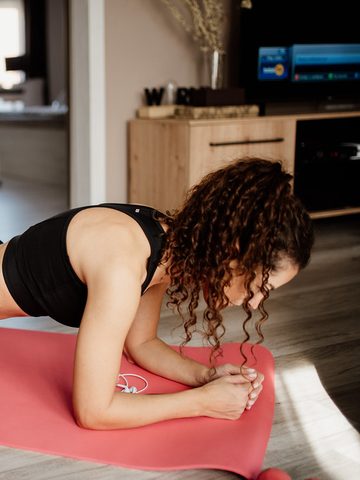
So three runs a week are enough, and she uses the other two mornings for strength training: push-ups, squats and sit-ups at home.
The first weeks are hard, but after two months, Nora is much stronger. When a friend moves in the fall, she carries more boxes than Leo!
Multiple choice
Click an answer and you get the result right away, with the reason.

-
At the start of the story, how often does Nora run?
Five mornings, thirty minutes each time, before work. That is 150 minutes of running a week — a number that comes back later.
-
What does Nora think at the start?
She loves running, so she is sure her runs are enough to stay fit. The rest of the story tests that idea.
-
What is the problem on Saturday?
She wants to help her brother move, but she can't carry the heavy boxes.
-
Why can Leo carry the boxes more easily?
Leo does strength training. And the text says Nora runs more than he does, so running is not his secret.
-
That night, what does Nora want to know?
It doesn't make sense to her: she runs more than he does, but he is the strong one. So she looks online.
-
What is the video's answer?
Both — the answer to the last question in the warm-up. The video comes from a cancer hospital, and it shows that the two kinds of exercise do different jobs.
-
Why does Nora decide to try strength training?
It boosts your metabolism, so your body burns more calories later, when you aren't exercising — in the video, even when you are driving your car.
-
What kind of cardio are Nora's runs?
Her runs are fast, and fast, hard exercise is vigorous. Vigorous cardio counts more, so the video asks for only 75 minutes of it a week, not 150.
-
Why are three runs a week enough for Nora now?
Three runs of thirty minutes are 90 minutes of vigorous cardio — more than the 75 minutes the video asks for.
-
What does Nora do on the other two mornings?
Strength training at home, twice a week — exactly what the video asks for.
-
What happens when a friend moves in the fall?
The same problem as on that Saturday, with a different ending: two months of strength training made her stronger.
-
What is the main idea of Nora's story?
Cardio made Nora's heart and lungs strong, but her muscles needed strength training. With both, she is fitter than before — the video's answer, in one person's story.
Correct the information
These sentences are about the video, and the part in bold is wrong in each one. Find the right information in Nora's story and write only the words for the bold part. Two bold parts? Write both words, in order.
-
aDoing cardio helps the function of your muscles.
-
bStrength training makes your heart stronger.
-
cStrength training helps you get more calories.
-
dYou can't burn calories after a strength training session.
-
eYou need to have a strength training session at least once a week.
-
fIt's important to do at least 150 hours of intense cardio a week.
-
gAn option is to do 75 minutes of vigorous cardio a month.
-
hKeep a healthy weight to be fit.
Comparative adjectives: stronger, more tiring

Two things, one comparison. A short adjective takes -er: strong → stronger. A long one takes more: tiring → more tiring. Then than brings in the second thing. And never both together: more stronger is always wrong.
- Short adjectives (one syllable): + -er — fast → faster · cheap → cheaper. A run in the park is cheaper than a gym.
- One vowel + one consonant: double the last letter — big → bigger · hot → hotter.
- Ending in -y: y → -ier — healthy → healthier · busy → busier.
- Two syllables or more (not ending in -y): more / less + adjective — Boxing is more exciting than yoga. · Running shoes are less expensive than a bike.
- Irregular: good → better · bad → worse · far → farther (also further).
-
My new running shoes are ___ than my old ones. (light)
One syllable, so just add -er. No double letter: light ends in two consonants, not one vowel + one consonant.
-
This yoga mat is ___ than my old one. (thin)
Thin ends in one vowel + one consonant (i + n), so the n doubles.
-
Walking is ___ than running. (easy)
Ending in -y: the y changes to i, then -er.
-
In Brazil, soccer is ___ than baseball. (popular)
Three syllables — po-pu-lar — so more goes in front, and the adjective doesn't change.
-
My cold is ___ today than yesterday. (bad)
An irregular one: bad → worse. There is no badder in standard English.
-
A marathon is ___ than a 10K race. (long)
One syllable ending in two consonants (n + g): just -er. A marathon is about 42 kilometers; a 10K is 10.
-
Which sentence is correct?
Never more + -er together, and the second thing comes after than, not that.
-
Which sentence is WRONG?
Cheap has one syllable, so it's cheaper. Difficult has three, so more difficult is right.
Write the comparative
Write the comparative form of the adjective in the gray box — one or two words. Read the whole sentence first: it tells you the meaning.
-
effectiveIf you want strong muscles, strength training is ___ than just stretching.
-
excitingRunning in the park is ___ than running on a treadmill: there is always something new to see.
-
hardLifting heavy weights is ___ than lifting light weights.
-
tiringA 10K run is ___ than a short walk.
-
farMy gym is ___ from my house than yours. I need twenty minutes to get there.
-
relaxingThis yoga class is ___ than the one I did last week — I almost fell asleep!
-
goodFor me, exercising in the morning is ___ than exercising at night.
-
boringIn my opinion, Pilates is ___ than Zumba. In Pilates I always look at the clock.
-
strongStrength training makes your body ___ than cardio does.
-
badToday's workout was ___ than yesterday's. I stopped after ten minutes.
Comparative adverbs: faster, more easily

Now compare how people do things. Leo is stronger — that is an adjective, about Leo. Leo carries boxes more easily — that is an adverb, about how he carries them. Most adverbs end in -ly and take more; a few short ones just take -er.
- Adverbs ending in -ly: more / less + adverb — Nora breathes more slowly now. · I eat less quickly than my son.
- Short adverbs with the same form as the adjective: + -er — fast → faster · hard → harder · high → higher · late → later
- Irregular: well → better · badly → worse. She cooks better than her mother.
- Never:
more faster·quicklier·more well.
-
My sister lifts weights ___ than I do.
Well is irregular: well → better, the same word as the comparative of good.
-
He runs ___ than his older brother.
Fast is a short adverb with no -ly, so it works like an adjective: -er.
-
After months of training, she swims ___ than before.
Quickly ends in -ly, so more goes in front and the adverb stays the same.
-
They exercise ___ than they did last year.
Hard is the adjective and the adverb, so -er. Never more and -er together.
-
After practicing, I can jump ___ than before.
High is short and has no -ly here: jump high → jump higher.
-
He does push-ups ___ than his friend.
Badly is irregular: badly → worse. Worse is already a comparative, so no -er.
-
This fitness routine helps me move ___ than before.
Move needs an adverb, easily, and -ly adverbs take more. More easy uses the adjective, and more easier mixes more with -er.
-
She exercises ___ than I do.
Frequently ends in -ly: more frequently. More frequent is the adjective, for a noun: more frequent workouts. And never more and -er together.
-
Which sentence is WRONG?
Fast takes -er: Nora runs faster than Leo.
-
Which sentence is correct?
Clearly ends in -ly, so more clearly. The other two mix the rules.
Correct the mistakes
The part in bold is wrong. Write only the correct form — one or two words. Ask yourself first: adjective or adverb?
-
aShe runs more fast than her teammate.
-
bThis workout is difficulter than the last one.
-
cI do yoga more frequentlyer than before.
-
dThis gym is expensiver than that one.
-
eRunning in the park is more better than running on a treadmill.
-
fThey train more harder in the winter.
-
gLeo's new apartment is more big than his old one.
-
hNow Nora carries heavy boxes more easy than before.
Cardio or strength training?
Ask yourself: does it make my heart beat fast for a long time (cardio), or do my muscles push or lift something heavy (strength training)?

-
running
The video's first example of cardio, and Nora's favorite.
-
weight lifting
Your muscles lift something heavy — Leo's secret.
-
jumping rope
Hundreds of small, quick jumps: your heart beats fast.
-
doing push-ups
Your arms lift your own body. The video uses push-ups as an example of strength training.
-
cycling
One of the video's three cardio examples, with running and swimming.
-
doing squats
Your legs lift your body again and again. It is part of Nora's two strength mornings.
-
playing soccer
Ninety minutes of running, stopping and running again.
-
swimming
In the video's list of cardio, and very good for your heart and lungs.
-
climbing stairs
Try five floors: you breathe fast and your heart beats fast. That is cardio.
-
dancing
You move for a long time without stopping, like in a Zumba class.
-
doing jumping jacks
Jump, open your arms and legs, close them, and again. Your heart beats fast in a few seconds.
Talking point
Part A is about Nora's story, Part B about your life, Part C about what you think — always say why. Use a comparative in every answer: harder, more fun, better.
Useful language
Do you agree?
60–90 words. Choose one idea and finish it your way: Cardio is better than strength training for… · Lifting weights helps you build muscles more quickly than… · Eating vegetables is healthier than… · A personal trainer explains exercises more clearly than… Say if you agree or disagree, and why. Then write four sentences that compare activities from this lesson.

My results
Check your score, then copy it and send it to your teacher on WhatsApp.

One job for this week. Every night, compare your day with yesterday in one sentence: I walked more than yesterday, I slept better, the stairs were easier. Seven nights, seven comparatives — and maybe one push-up more every day.