Packing to Study Abroad
Two suitcases for a whole year, and one volunteer who found her host by waiting. Clothes and travel words, and the future with be going to — for your plans and for the things you can see coming.
Leaving home
Answer each question and say one more thing. Tap a card when you have answered it.

Some people travel with one small bag. Others take their whole bedroom. Today: what goes in the suitcase when you move abroad, and how to talk about your plans with be going to.
Useful language
What to pack
Click a word, then click its meaning. Correct pairs turn green. The audio button says the word.
Complete the sentences
Click a word in the bank, then click a gap. Click a filled gap to clear it. Each word goes in one sentence only.

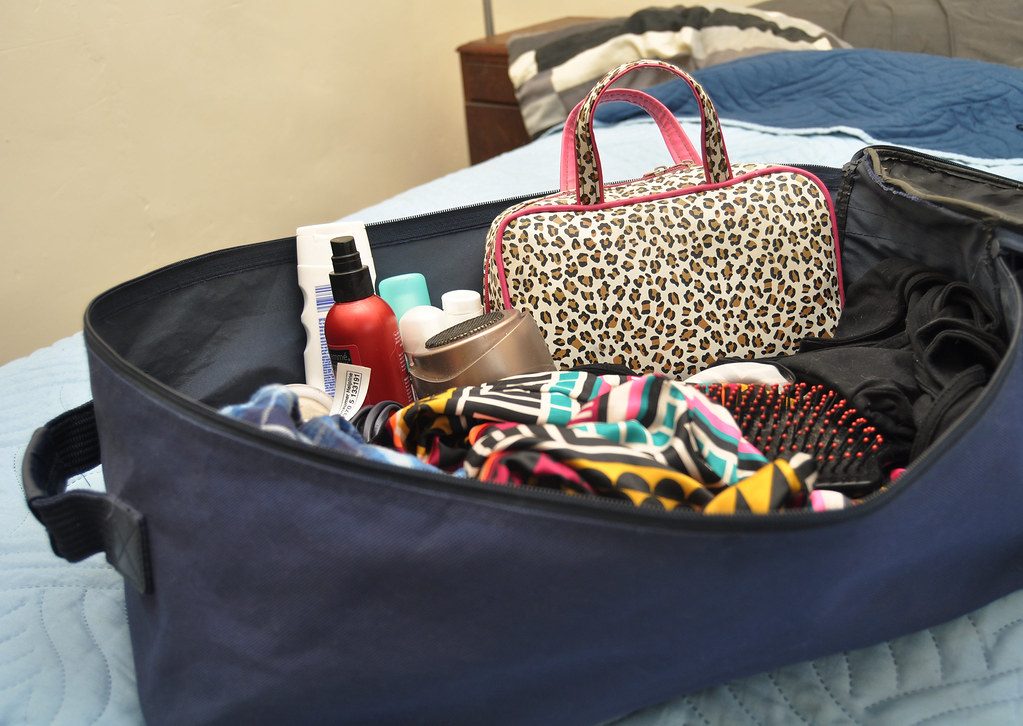
 On lazy Sundays, I stay home in my old gray
_____ with the hood up.
 My grandmother made me a wool
_____ for the winter — it has long sleeves and a high neck.
 It's cold and windy today, so wear your
_____ around your neck.
 Don't forget your
_____ — the hotel has a big pool.
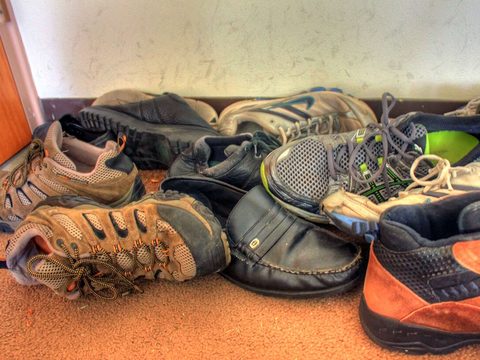 Winter boots, sneakers and nice shoes for parties:
_____ takes a lot of space in a suitcase.
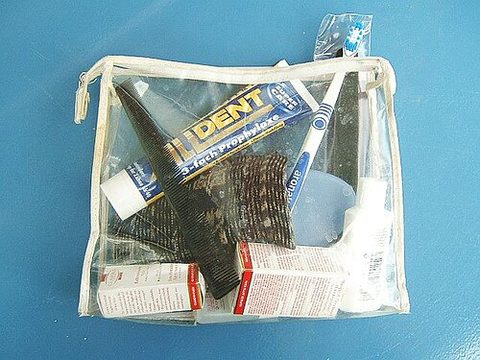 Hotels give you soap and shampoo, but I always bring my own
_____.
 Don't put your
_____ in the big suitcase. Keep your laptop and money with you.
 I take my
_____ every morning after breakfast, so I can't forget it on a trip.
Merilin finds a host
A real story, from Merilin's blog about her first trip as a volunteer. Read only the first sentence of each paragraph first — they tell the whole story. Then read everything.
One December, Merilin opened the Workaway website. She wanted her first trip as a volunteer, and she wanted to leave in February.
She wanted a really good place, so she searched for many weeks. She read the profiles of lots of different hosts.
When she liked a host, she wrote a personal message. She used the host's name, answered their questions and checked the dates they needed help.
She sent messages to six or seven hosts, but only about half of them answered. Hosts get a lot of messages, so they are often slow.
So a few days later, Merilin sent a follow-up message. She waited about two weeks, and then a yoga center in Costa Rica answered her.
Merilin and the yoga center exchanged phone numbers and talked on WhatsApp. She asked about the work, the schedule and nearby stores. After the call, she felt relaxed.
They agreed to work together, so Merilin had one month to get ready. She read about Costa Rica and made a list of things to pack.
The host also made a WhatsApp group for Merilin and two other volunteers. That way, they could plan their trip together before they arrived.
When Merilin arrived, she met another volunteer and then the host. She shared a room in a nice cabin with an outdoor kitchen and made new friends.



At the yoga center, she helped with social media, writing and the website. She also got benefits: free yoga classes and 40% off at the restaurant.
Multiple choice
Click an answer and you get the result right away, with the reason.

-
What did Merilin want to do?
Her first trip as a Workaway volunteer. On Workaway, volunteers usually help for four or five hours a day, five days a week, and the host gives them food and a room.
-
Why did she search for many weeks?
She started in December for a trip in February, so she had time to be careful — and she used it.
-
How did she contact the hosts she liked?
With the host's name, answers to their questions and the right dates. A personal message shows the host that you really read their profile.
-
How many hosts answered her first messages?
She wrote to six or seven hosts, so about three of them answered.
-
Why are hosts often slow to answer?
A busy host reads many messages every week. That is why the next step in the story helps.
-
What did she do after sending her first messages?
A few days later. Then she waited about two weeks — in her blog, she says it was Christmas time.
-
How did she talk with the host before the trip?
First they exchanged phone numbers. On the call, she asked about the work, the place, the schedule and the stores near it — and after that she felt relaxed and excited.
-
What did she do in her month to get ready?
A list of things to bring. She also read about the country she was going to: Costa Rica.
-
Why did the host make a WhatsApp group?
Merilin and two other volunteers were in the group. When she arrived, all the volunteers had a meeting with the host.
-
What work did she do at the yoga center?
There were no strict work hours: she had tasks for each week and finished them. She also followed the host's rules and respected the other volunteers.
-
What extra benefits did she get?
Extra, because the room was already part of the deal. The benefits are different with every host.
-
Which sentence best summarizes the story?
Personal messages, a follow-up, two weeks of waiting — not one day — and a long call. At the end: a yoga center, new friends and free classes. Her own summary: her first Workaway trip was very good.
Two suitcases only
Watch the video once: how many suitcases does it recommend? Then watch again and answer. The blue number is where to look in the video. The video is in British English and says hand luggage; in American English, the bag you take on the plane is your carry-on.
-
How many suitcases does the video recommend? 00:30
Two suitcases only: a carry-on for the plane and a main suitcase.
-
Why only two? 00:30
The video's word is overpack: to pack too much.
-
You forgot something at home. What does the video say? 00:35
There are probably a lot of things you can buy in your host country — the country where you are going to study.
-
In the video, valuables are… 00:58
Money in your host country's currency, your phone, your laptop and the chargers — all in the carry-on, with you.
-
Why is there a change of clothes in the carry-on? 01:11
For example, when your main suitcase arrives late, you still have clean clothes.
-
What does the video say about your warm jacket? 01:59
Not in the carry-on and not in the main suitcase: you wear it or carry it on the plane.
-
You don't have an adapter for the outlets in your host country. What does the video say? 02:30
An adapter lets you use your charger in another country's outlets — and you can buy one there.
-
What is the last thing to do with your main suitcase? 02:39
A name tag with your details — and then you're all done.
-
And when you arrive in your host country? 02:48
Then relax, have fun and good luck — the last words of the video.
Now the bags. Where does the video put each thing: in the carry-on, in the main suitcase, or in both?
-
your passport and plane tickets 00:51
Important documents stay with you — and the papers to register at the university too.
-
a book to read on the plane 01:08
You read it on the plane, so it can't be in the big suitcase. The video adds a journal and a pen.
-
your medication 01:18
Any medication you need goes with you — it is the last thing on the carry-on list.
-
toiletries 01:18
Some toiletries in the carry-on, and enough for a week in the main suitcase (01:32).
-
winter boots and nice shoes 01:44
Footwear is heavy and big: comfortable shoes, winter boots, and nice shoes for parties.
-
sweaters, a scarf, a hat and gloves 01:52
Clothes for the winter, with warm jeans. The video says jumpers, the British word for sweaters.
-
your swimsuit 02:05
Clothes for the summer, with a couple of tops and some shorts.
-
a hoodie for relaxing at home 02:16
Comfortable clothes for quiet days — and after that, underwear and warm socks.
Be going to

Two jobs, one form. Be going to talks about your plans — things you already decided — and about things you can see coming. The only part that changes is am, is or are.
- Plans and intentions: a decision you made before now. They're going to live in Canada because they got a job offer there.
- Predictions with evidence: you see or know something now. It's winter now in Canada. We're going to feel cold.
- Form: subject + am / is / are + going to + base verb — I'm going to pack · she's going to work · they're going to travel.
- Negative: add not — I'm not going to take a jacket. · He isn't going to fly.
- Questions: put am / is / are before the subject — Are you going to speak French? · When are you going to leave for France?
- Short answers: Yes, I am. · No, she isn't. — no going to in the short answer.
-
My brother ___ study engineering in Germany. He got a place at a university.
My brother is he, so is. And be can't disappear: going to alone is not a verb.
-
Look at those black clouds! It ___ rain.
A prediction with evidence — you can see the clouds. It takes is: it's.
-
___ you going to live with a host family?
The question starts with the be verb, not with do.
-
We ___ going to take three suitcases. Two is enough.
Negative of we are: we aren't — or we're not.
-
She's going to ___ a lot of new people abroad.
After going to, the base verb — no -s, even with she.
-
When ___ Paulo going to start his new job in Japan?
Question word, then be, then the subject: When is Paulo going to…?
-
Which sentence is correct?
Every piece is necessary: am + going to + visit. The first sentence has no am, the third has no to.
-
Which question is WRONG?
In a question, are comes before you: Where are you going to stay?
-
A: Are you going to buy an adapter? B: No, ___. I have one.
The short answer repeats the be verb from the question: Are you…? No, I'm not.
Plan or prediction?
Four people are talking about going abroad, and four more sentences follow. Is each one a plan (a decision) or a prediction (what you think is going to happen)?
-
"I'm going to work as a teacher in a language school."
The speaker already decided this about their own life.
-
"It's going to be hot there at this time of the year."
Nobody decides the weather. The speaker knows the season, and that is the evidence.
-
"I'm going to study business and improve my English."
An intention: the course is already chosen.
-
"You're going to learn a lot about Japanese culture."
The speaker is talking about another person's future: what they think is going to happen to you in Japan.
-
"Your suitcase is really heavy. You're going to pay extra at the airport."
Nobody plans to pay extra. The heavy suitcase is the evidence.
-
"We're going to stay with a host family in Dublin. We booked it last week."
They booked it: the decision is already made.
-
"My cousin sold her car. She's going to buy a bicycle."
Her intention — and selling the car was the first step.
-
"Look at all those clouds over the airport. Our flight is going to be late."
You can see the clouds now, so you predict the delay. Nobody plans a late flight.
Complete the conversations
Write am / is / are + going to + the verb in the cue. Who is the subject? That decides am, is or are.

-
studyA: What are your plans after high school? B: I ___ in Canada next year.
-
learnA: That sounds exciting! I think you ___ a lot about Canadian culture.
-
workA: Hey John, do you have any plans for the summer? B: Yes, I ___ in Japan as a teacher.
-
visitA: Wow, I believe you ___ many interesting places while you're there.
-
liveA: And what are you going to do after graduation, Stephanie? B: I ___ in Australia for some time.
-
studyA: Great idea! I think you ___ some new subjects at a local college.
-
you / takeA: What ___ for the trip on Saturday?
-
packB: I ___ some swimsuits.
-
beB: It ___ hot there.
What comes next?
Choose the sentence that continues each plan. Look at the people — who is she, they, we, my? — and at the places.
-
I'm going to study in Italy next year…
I goes with my. There is no they here, and Italy is not in Asia.
-
Paulo is going to work in Japan soon…
Japan is in Asia, not in South America. And Paulo is he, not we.
-
Samantha and Joseph are going to live in Canada after graduation…
Two people, so they. Canada is not in Asia.
-
Patricia is going to visit Australia this summer…
Patricia is she — and there is Australia.
-
Daniel and I are going to learn Portuguese next semester…
Daniel and I = we. And people speak Portuguese in Brazil.
Ask the question
Write the whole question with be going to. Question word first, then am / is / are, then the subject. No question word? Start with Are or Is. Then ask a partner.

-
aWhich country / you / move to
-
byou / learn a new language / when you live abroad
-
cWhat things / you / miss / from your home country
-
dHow / you / make new friends / in your new country
-
eyour sister / work abroad / next year
-
fWhat kind of job / your friends / do / abroad
-
gWhat subject / you / study / when you go abroad
-
hHow / you / travel / to your destination
Talking point
Part A is about Merilin and the video, Part B about your life, Part C about what you think — always say why. Answer the B questions with be going to: Yes, I am. I'm going to…
Useful language
My year abroad
50–80 words. Imagine you are going to study, work or volunteer abroad next year. Where are you going to go, and what are you going to do there? Then write two short lists: your carry-on and your main suitcase.

My results
Check your score, then copy it and send it to your teacher on WhatsApp.

One job for this week. Every night before bed, say three things you are going to do tomorrow — out loud, in English. I'm going to…, I'm going to…, I'm not going to… Three sentences, thirty seconds.