Moms and Teens Switch Roles
A mom who acts like a tween, a son who does the laundry, and a cup nobody can find. Verbs that come in pairs — borrow and lend, bring and take — and the small word that makes every request polite: could.
Moms or teens?
Start with the photo. Then answer M (moms) or T (teens) for each card — there is no single right answer, so always say why. Tap a card when you have answered it.

Moms wake up early, teens stay up late. Or is it the other way around? Today's video switches everything: the mom acts like a tween, and her son becomes the parent.
Useful language
Verbs in pairs
Click a word, then click its meaning. Correct pairs turn green. The audio button says the word. Careful: the words come in pairs, and each pair is easy to mix up.
Complete the sentences
Click a word in the bank, then click a gap. Click a filled gap to clear it. Each word goes in one sentence only — look at the form, too.

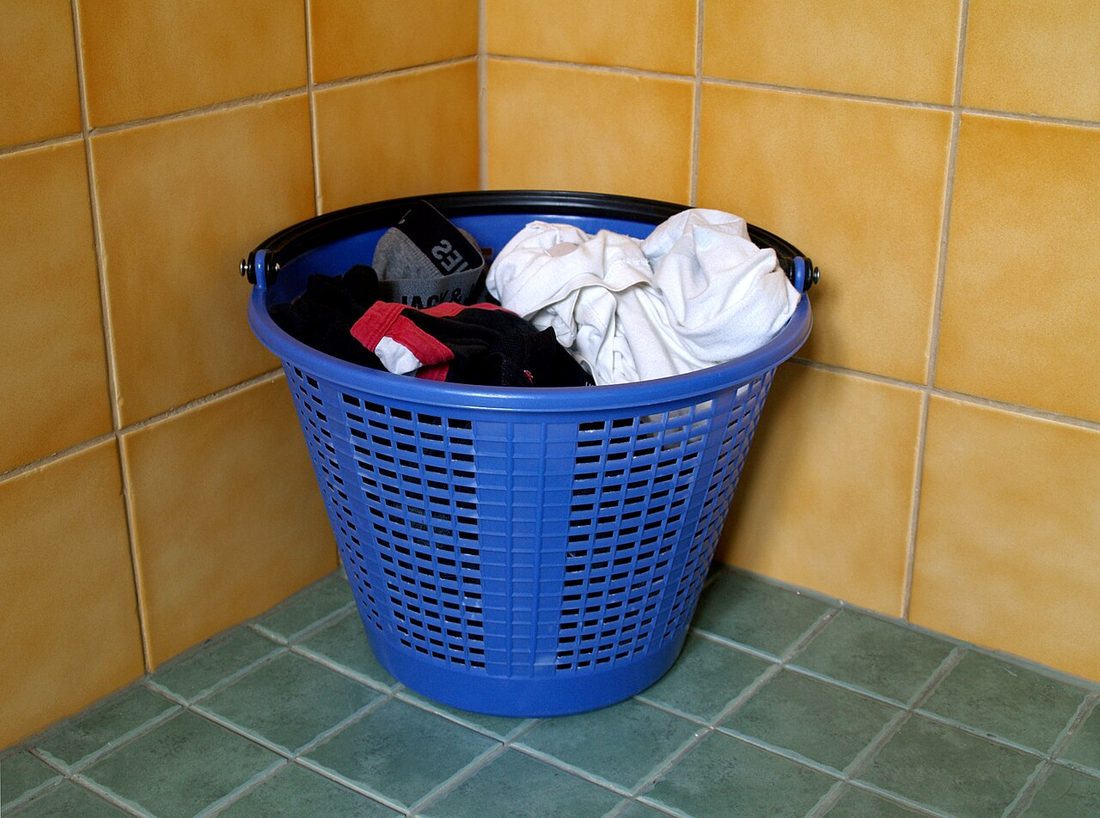
 Dad spent ten minutes
_____ his glasses — and they were on his head!
 I looked everywhere for my keys, and I finally
_____ them in my jacket.
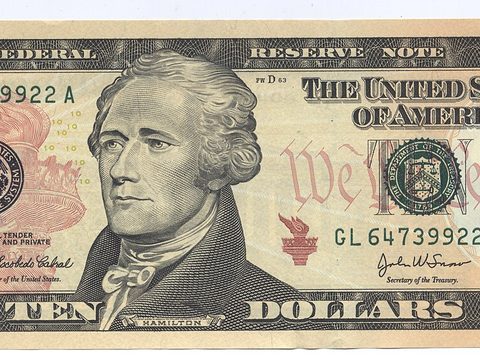 Could you
_____ me ten dollars until Friday? I'll pay you back.
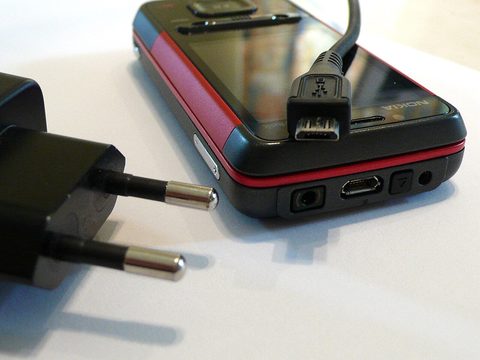 My brother always
_____ my charger and never gives it back.
 Can you
_____ me some water? I'm in the living room.
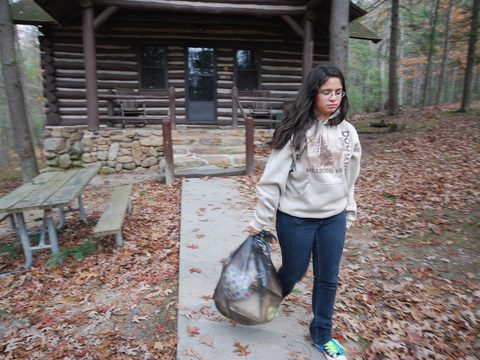 This trash smells terrible, and I don't want it here. Please
_____ it away.
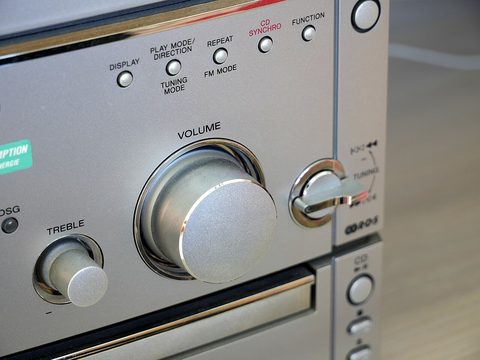 Can you
_____ the music a little? I'm on the phone.
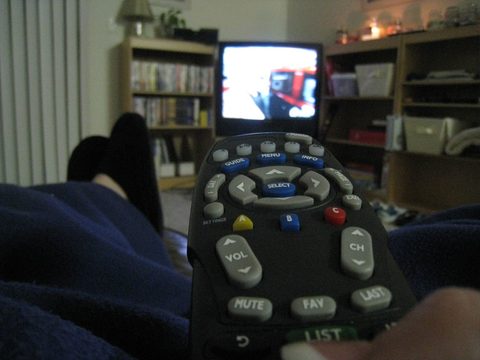 Dinner is ready! Please
_____ the TV — you can turn it on again after we eat.
A tween and her parent
Watch the video first — it is under four minutes, and the lines are short. What is strange about this family? Then read the story.
Mom is lying in bed next to lots of cups. Her son is holding a basket of laundry. "Where's my crop top?" she asks. "In the wash."
It's a funny video about a switch: Mom acts like a tween, and her son acts like the parent. So he does the housework.
He even goes into her room, looking for a cup. She isn't happy. "Check downstairs," she says — but the cups are next to her bed!
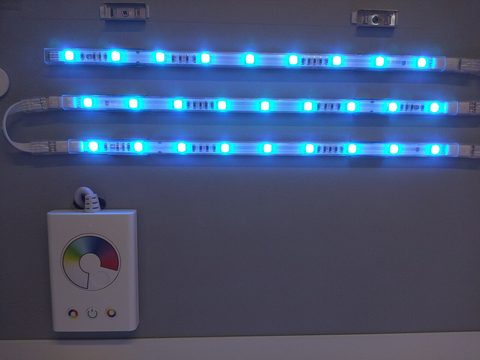
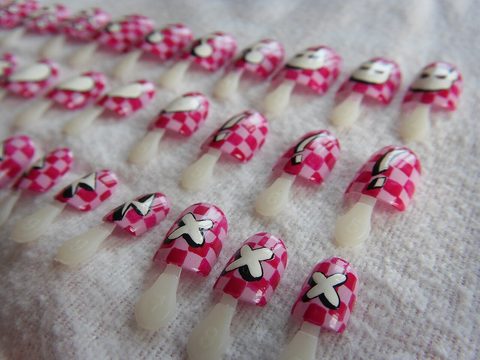
He says no like a parent, too: no boba tea. But he has LED lights, press-on nails and gum for her.

Nothing is right for her: the gum is watermelon, but she likes strawberry. She's "so bored," and she starts her skincare routine: "You want to watch?"
Her son watches, but then he needs to look something up for work. So he asks to borrow her phone. "Bring it right back!"
After at least sixteen steps, her face is ready, and she wants to go out. She and her friend Laura are going to the mall.
Like a real parent, her son wants to see their messages. But Mom needs her phone, and she's in a hurry: "Can we go now?"
But first, she asks him to do her hair. He is slow and bad at it, and it hurts: "Ow! Look at this bump!"
After the mall, it's bedtime. "Go to bed," he says. "I'm in bed." Then she asks him to lie down with her, like a little kid.
Multiple choice
Click an answer and you get the result right away, with the reason. The blue number is where to look in the video.

-
What does Mom ask her son at the start? 00:02
And his answer is "In the wash." He is holding the laundry basket, like a parent on laundry day.
-
Why does her son do the housework?
Mother and son switch roles: she acts like a tween, and he does the jobs that parents usually do.
-
What is her son looking for in her room? 00:15
"Sorry, I was just looking for a cup." She tells him to check downstairs — but there are lots of cups right next to her bed.
-
Her son says no to boba tea. What does he get her? 00:25
"No. But I did get you LED lights, press-on nails and gum." Real tween presents — from the "parent" of the house.
-
What's the problem with the gum? 00:31
"What flavor?" "Watermelon." "You know I like strawberry." A small problem — but for a tween, it's a big one.
-
Why does Mom start her skincare routine? 00:39
"I'm so bored," she says. So she starts the routine and invites her son to watch.
-
Why does her son need her phone? 00:54
He is the "parent", so he has work. He asks to borrow the phone, and she wants it back fast.
-
How long is her skincare routine? 01:55
Step seven is a lip moisturizer, and at 01:55 she is still going: step sixteen.
-
What does her son want to see? 02:12
"The mall? Can I see what they said?" A real parent question. Her answer: "I need my phone."
-
What happens when he does her hair? 02:15
"Ow! Look at this bump!" And a little later: "Why are you so bad at hair?"
-
At bedtime, what does Mom ask him to do? 03:37
A tween all day — and a little kid at night. Many children ask a parent to stay with them at bedtime.
-
Which sentence best summarizes the story?
Every scene is a normal family moment — cups, laundry, the phone, the mall, bedtime — with the roles upside down. It's a joke, not an opinion about real moms or kids: he isn't a great parent either (look at her hair!).
Who says it?
Watch the video again. Who says each line — Mom (the "tween") or her son (the "parent")? The reason shows the other half of the dialogue.
-
"Check downstairs." 00:18
Her son comes into her room and says, "Sorry, I was just looking for a cup." The cups are next to her bed!
-
"You know I like strawberry." 00:34
She asks, "What flavor?" and he answers, "Watermelon." Wrong gum!
-
"Hey, what are you doing?" 00:44
And Mom answers: "My skincare routine. You want to watch?"
-
"Bring it right back." 00:57
Her son asks, "Can I just borrow your phone? I need to look up something for work." It's her phone, so she wants it back.
-
"I have your laundry." 01:34
He brings her the clean clothes, like a parent on laundry day.
-
"I have to make dinner." 01:51
Mom wants to show him an app, but he has a parent's job to do.
-
"Can you do my hair?" 02:15
And then, from Mom again: "Ow! Look at this bump!"
-
"Go to bed." 03:29
Mom answers: "Bro, I'm in bed. Can you lay with me?" In careful English it is lie down with me, but you hear lay a lot in everyday speech.
Confusing verbs
Each item describes a picture. Choose the verb that matches it.

In Portuguese, one verb often does both jobs. Perder is miss and lose; fazer is do and make. In English you have to choose — and the words that come after the verb help you.
- wear clothes and things on your body — a uniform, sneakers · use a tool or a machine — a dictionary, a credit card
- miss something because you are late or not there — the train, a flight · lose a game, or a thing you can't find — a race, your wallet
- watch for some time, on purpose — a soccer game, a series · see with your eyes — a rainbow, a friend at the store
- do jobs and activities — the laundry, exercise · make something new — breakfast, a mistake
- remember — it stays in your head: your password · forget — it goes out of your head: your umbrella, to text back
- hear — the sound just comes to your ears: the doorbell · listen to — you pay attention: a podcast, your parents. Always listen to something.
-
A woman walks down the street in a black leather jacket. She is ___ a leather jacket.
A jacket is on your body, so you wear it.
-
A man sits in a café with his laptop and smiles at the screen. He is ___ his laptop.
A laptop is a machine you work with, so you use it.
-
Sports fans in red and white look very sad. Their team ___ the game.
The other team won. If the team missed the game, it wasn't there.
-
A woman lifts her finger and thinks, "Jenny!" At last, she ___ her friend's name.
The name comes back into her head: she remembers it.
-
A woman puts her hand on her head and thinks, "Mom!" Oh no — she ___ to call her mom.
A hand on the head and "Oh no" mean the call went out of her head.
-
A couple eats popcorn on the couch. They're ___ a movie.
A movie takes time, and you look on purpose: you watch it.
-
A woman closes her eyes and covers her ears. She can ___ a very loud noise.
She doesn't want the noise — it just comes to her ears. And listen would need to.
-
A woman smiles with big headphones on. She is ___ music.
She chose the music and she pays attention to it: listen to.
-
A woman cleans a table with a spray. She is ___ the housework.
Housework is a job, not a new thing, so it takes do.
-
A man puts cream on a cake with strawberries. He is ___ a cake.
At the end there is something new on the table — a cake — so it's make.
-
Which sentence is WRONG?
Washing the dishes is a job, so it's do the dishes.
Choose the right verb
Read each sentence to the end before you choose — the second half usually decides.
-
I always ___ sunglasses when it's sunny.
Sunglasses are on your face, like clothes: wear.
-
She ___ the bus and arrived late.
She wasn't there in time, so the bus left without her.
-
I need to ___ my homework before dinner.
Homework is a job, like housework: do.
-
We ___ a beautiful painting at the art gallery.
A painting doesn't move or change, so you don't watch it — you see it.
-
Please ___ carefully to the instructions.
Carefully means attention, and to comes after listen, never after hear.
-
I can't ___ where I left my keys!
The place is not in your head, so you can't remember it.
-
Can you ___ the volume? It's too loud.
Too loud means you want less sound: down.
-
Could you ___ me the book back tomorrow?
The book comes back to the person who is speaking: bring me.
-
I'm ___ my phone. I don't know where it is.
The search isn't over — she doesn't know where the phone is. When she has it, she finds it.
-
He always ___ the internet to check the weather.
The internet is a tool, not clothes: use.
-
She looked everywhere but didn't ___ her glasses, so she asked for help.
She looked — that was the search. The result was bad: she didn't find them.
-
Can you ___ the air conditioning? It's too cold in here.
Less air conditioning, less cold. Turn up would make the room even colder.
Being polite: could

In the video, the tween says "Can you do my hair?" With family and friends, can is fine. With your boss, a teacher or a stranger, change one word — could — and add please. Same request, much nicer.
- Could I…? — you want to do or have something: Could I use your pen?
- Could you…? — you want the other person to do something: Could you close the window, please?
- Other subjects work too: Could he call me later? · Could we start at ten?
- The verb stays in the base form: no -s, no -ing, no to. Never
Could you helps,Could you helping,Could you to help. - Please makes it even more polite: at the end, or after the subject — Could you please…?
- How to answer: Sure. · Of course. · Sorry, I can't right now. Not
Yes, I could— that sounds like "maybe, one day".
-
Could you ___ me the salt, please?
After could + subject, the verb is in the base form.
-
Could she ___ here for five minutes?
No -s with she here: could already does the work.
-
You want to use your friend's charger. What do you say?
You borrow from a person; the person lends to you. So: Could I borrow…? or Could you lend me…?
-
You want your brother to make the music quieter. What do you say?
He does the action, so Could you…? Could I…? means you do it yourself.
-
A: Could you carry this bag, please? B: ___
Sure or Of course. Yes, I could sounds like the person is not going to do it now.
-
Which one is correct?
Please goes after the subject or at the very end — never between could and you.
-
You need some water in a meeting with a new client. Which is the most polite?
Can is OK with friends. With a client, could + please is the safe choice.
-
Which sentence is WRONG?
No to after could: Could you check my email?
Make it polite
Each line is too direct. Write a polite request: start with Could, use the subject and the verb on the left, and finish with please. Example: Close the window. (you · close) → Could you close the window, please?
-
you · helpHelp me with my homework.
-
I · haveI want a glass of water.
-
you · openOpen the door!
-
I · borrowGive me your phone for a minute.
-
you · tellWhat time is it?
-
I · sitThis seat is free. I'm going to sit here.
-
you · speakI didn't understand. Speak more slowly!
-
I · getGive me a sandwich.
-
you · helpFind my keys with me.
-
I · askI have a question.
Moms and teens
Work in pairs: one is the mom, one is the teen. Read the example, then act out each situation with could, please and the verbs from this lesson. Swap roles every time, and tap the card when it's done.

- Teen: Mom, could you help me look for my phone? I think I lost it!
- Mom: Sure. Do you remember where you last saw it?
- Teen: I don't remember! Could you turn on the lights so I can see better?
- Mom: Okay, but could you turn off the TV first?
Useful language
Complete the questions
Choose the right verb of the pair on the left and write it in the correct form. Then ask and answer the questions with a partner.
-
miss / loseWhen was the last time you ___ a bus or a train? What happened?
-
miss / loseWhat do you do when you ___ your keys or your wallet?
-
do / makeWhat's something delicious you can ___ in the kitchen?
-
watch / seeDo you prefer to ___ TV or YouTube videos?
-
hear / listenWhat sound can you ___ outside right now?
-
remember / forgetWhat's something important to ___ when you travel?
-
turn up / turn downDo you like to ___ the music when you're happy?
-
turn on / turn offDo you always ___ the lights when you leave a room?
-
borrow / lendIs it a good idea to ___ money to friends? Why or why not?
-
look for / findDo you usually ___ your things quickly, or do you need help?
Talking point
Part A is about the video, Part B about your life, Part C about what you think — always say why. Choose the cards you want; nobody has to talk about private family things.

Useful language
The day we switched roles
50–80 words. Imagine you switch roles with a friend or a family member for one day, like the mom and her son in the video. What do you do? What does the other person do? Use three verbs from this lesson (look for, borrow, bring, turn off…) and two polite requests with could.
My results
Check your score, then copy it and send it to your teacher on WhatsApp.

One job for this week. Make one polite request with could every day — at work, in a store, at home. And the next time you can't find something, say it in English: I'm looking for my keys… I found them!