Family on Tour
Fifteen months, fifty countries, two boys and sixteen credit cards. One family's trip around the world — and the tense that tells you what they have done so far: the present perfect.
Where are they?
Look at the family and guess. There are no wrong answers yet — the video tells you later. Tap a card when you have answered it.

Meet a family that sold everything to travel. Before you watch, guess: where are they, how long is their trip, and who pays for it? Remember your guesses — today's video checks every one of them.

Useful language
Words for a long trip
Click a word, then click its meaning. Correct pairs turn green. The audio button says the word.
Complete the sentences
Click a word in the bank, then click a gap. Click a filled gap to clear it. Each word goes in one sentence only.

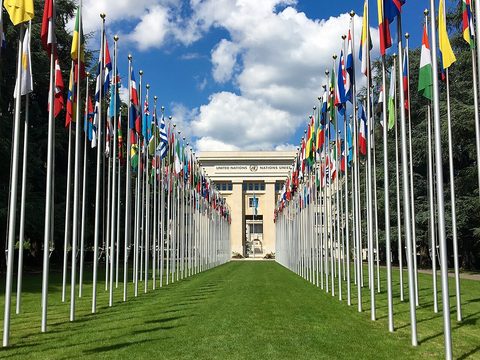 Our office is very
_____: the people come from twelve different countries.
 My
_____ never changes: coffee at seven, work at eight, gym at six.
 I want to
_____ 200 dollars a month for my next vacation.
 She flies a lot for work, so now she has enough
_____ for a free flight to Chile.
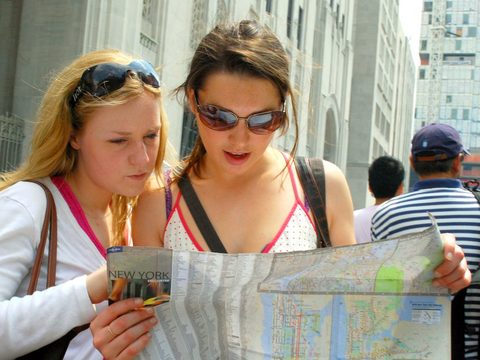 Our
_____ goes from Lisbon to Madrid, and then to Barcelona.
 Summer is busy, so it's a good idea to
_____ your hotel three months before you go.
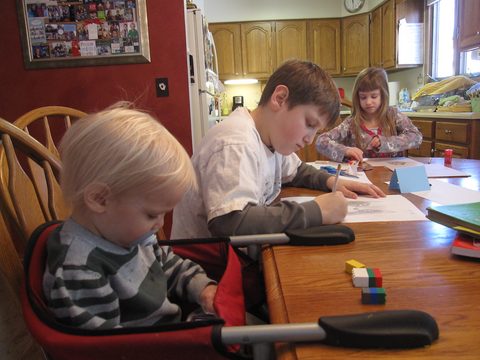 With
_____, the kids study at the kitchen table and never take the school bus.
 The line was very long, but my dad stayed
_____ and didn't complain.
Fifteen months, fifty countries
First watch the video: a travel vlogger meets the family in Sri Lanka. Don't try to understand every word — check your guesses from the warm-up. Then read the family's story, in order. Tap a dotted word to see what it means.
Poly Goy was born in France to Cambodian parents. His wife, Jessica, is Mexican, and their sons are from Quebec, Canada. It's a diverse family.
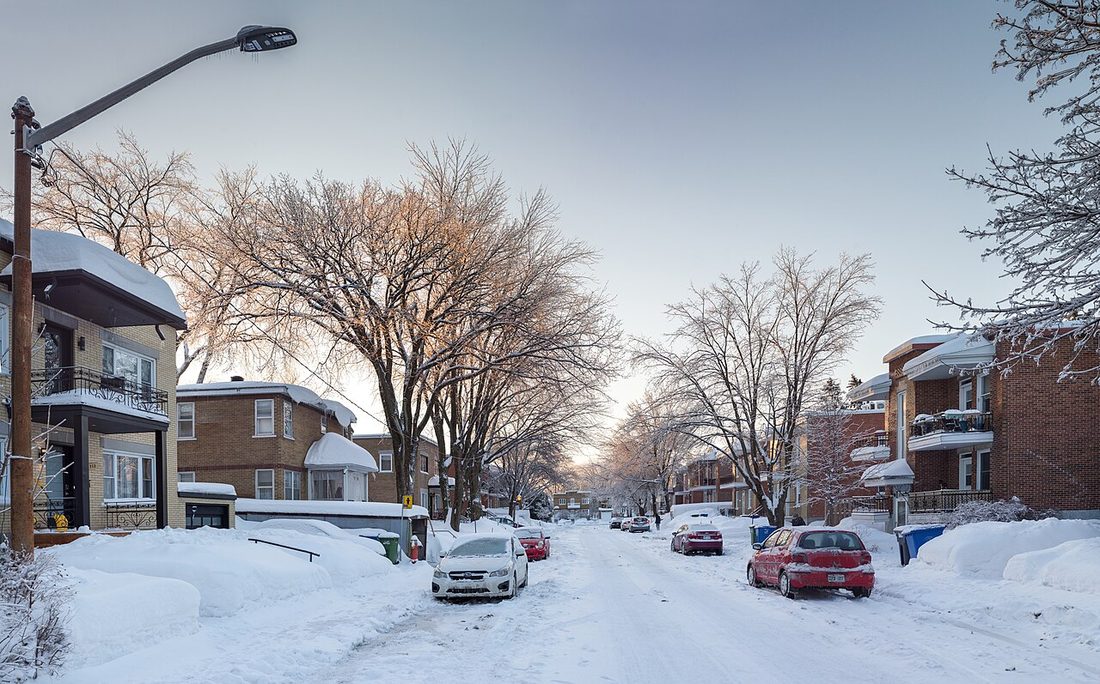
In Canada, the Goys didn't like their routine, and they had a dream: a trip around the world. When winter was coming, they decided to go.
A trip of fifteen months and fifty countries is expensive. But for years, the Goys saved money and bought property. Then they sold everything.
So they are traveling with their own money. They also have a trick: for six months, they collected miles with sixteen credit cards.
Thanks to their savings and the miles, they think the whole trip will cost less than 70,000 dollars — for four people and fifteen months.
With the money ready, Poly planned the route. He has already booked all the tickets and hotels, so they know where they're going.
But on the road, the boys, who are nine and seven, can't go to a normal school. So they do homeschooling.
The family has scanned the school books, and each boy has an iPad. Now the boys study math and French from PDFs.
Outside the iPads, the world is their school. In Cappadocia, Turkey, the family flew in a hot-air balloon, and the boys saw 150 balloons.
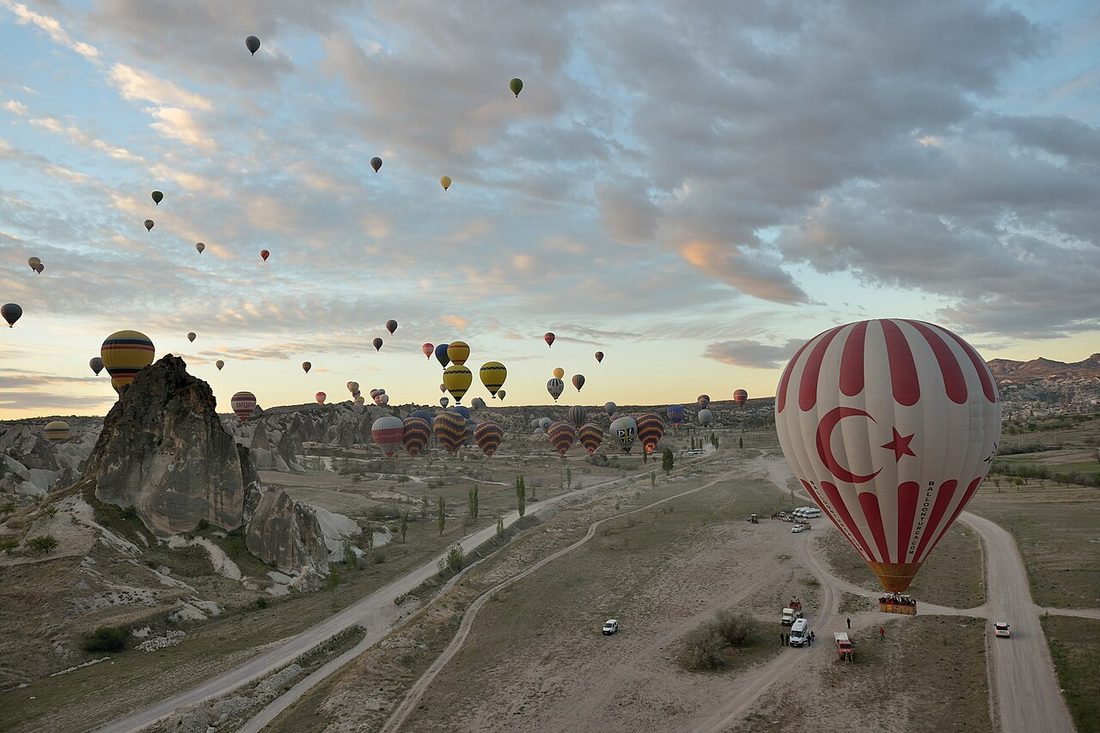
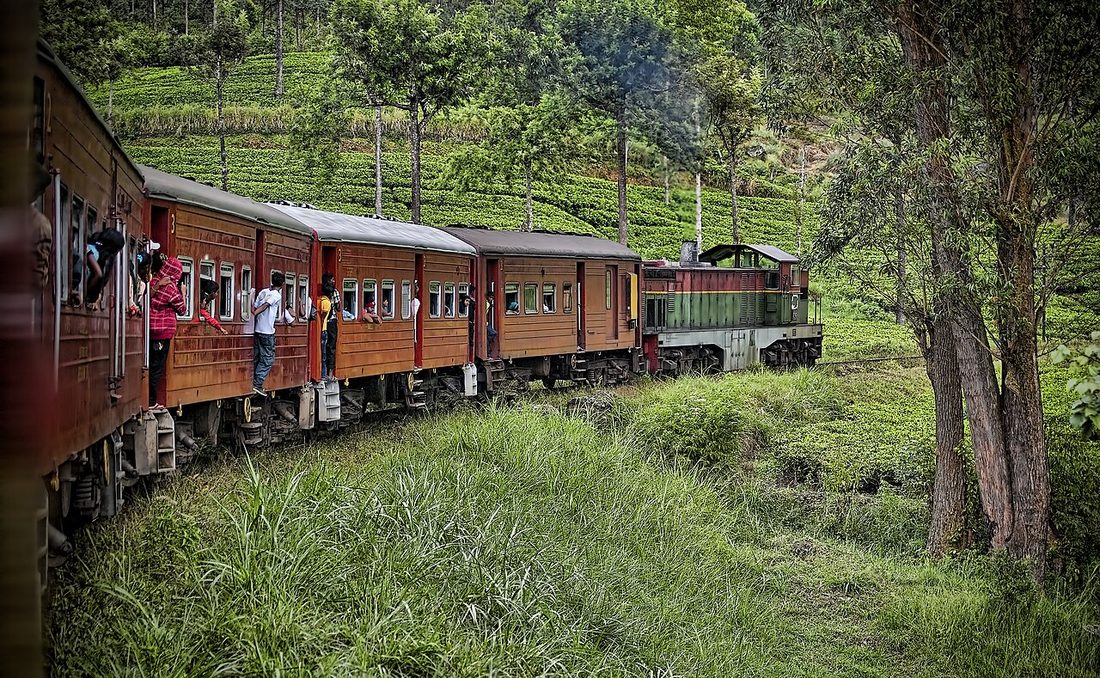
In Sri Lanka, a vlogger met them and saw how patient they are with the boys. Travel has taught them to be open and to appreciate life.
Multiple choice
Click an answer and you get the result right away, with the reason. The blue number is where to look in the video.

-
Where was Poly born? 00:23
His parents were born in Cambodia and his grandparents came from China. Jessica is Mexican, and it is the boys who are from Quebec. That is why the vlogger calls them one of the most diverse families he has ever met.
-
Why did the Goys decide to take the trip? 01:12
Their routine was "very bad", and the trip was an old dream. The winter only decided when: they left as another Canadian winter was coming (01:23).
-
How long is the trip? 00:39
Fifteen months and fifty countries — "a quarter of the world", the vlogger says.
-
How are they paying for the trip? 01:31
They started saving at their first jobs, put the money into property, and sold everything before they left.
-
How many credit cards do they use to collect miles? 01:53
Sixteen cards, and six months to collect about a million points (01:48). The vlogger calls this "travel hacking".
-
How much will the whole trip cost? 02:12
Less than 70,000 dollars — and that is for four people, for fifteen months.
-
What has Poly already booked? 01:01
"I have already booked all the tickets and all the hotels," he says — so the family always knows where they are going next.
-
Why do the boys do homeschooling?
Fifteen months on the road means no normal school. The boys are nine and seven, in third and second grade (02:25).
-
How do the boys study? 02:37
The family has scanned the books, and each boy has an iPad. They study math and French in PDF files.
-
What did the family do in Cappadocia? 02:55
The kids were so happy to see 150 balloons in the sky. Cappadocia is in Turkey; they met the vlogger later, in Sri Lanka.
-
What surprises the vlogger about the Goys? 03:04
He says not many parents could travel like this with two kids — "but for the Goys, it works perfectly." He met them by chance in Dambulla, Sri Lanka (00:13).
-
Which sentence best summarizes the story?
Savings and miles paid for it, with no TV company, Poly booked every ticket, and homeschooling solved the school problem: the boys still study, on their iPads. And the trip has taught them "to be open, to be tolerant, and most of all to appreciate life" (03:13).
The route, stop by stop
First listen to the places and repeat them. Then watch 00:43–01:01 again: Poly tells the whole route in twenty seconds. The blue number is where to look in the video.
- Asia /ˈeɪʒə/ · Australia /ɔˈstreɪljə/ · Canada /ˈkænədə/
- Europe /ˈjʊrəp/ · Fiji /ˈfidʒi/ · Iceland /ˈaɪslənd/
- Japan /dʒəˈpæn/ · the Middle East /ˌmɪdl ˈist/ · New Zealand /nu ˈzilənd/
- North Africa /nɔrθ ˈæfrɪkə/ · the Philippines /ˈfɪləpinz/ · Vanuatu /ˌvænuˈɑtu/
- Careful: the s in Iceland is silent, and Europe starts with a y sound, like you.
-
Stop 1: where did the trip start? 00:43
Iceland, in the North Atlantic. Canada is home — it is the last stop, not the first.
-
Where did they go after Iceland? 00:45
Europe is on the route twice: now, and again near the end.
-
And after Europe? 00:47
Then Asia — "now in Asia", Poly says (00:48). In the video they are in Sri Lanka.
-
After the Philippines, which country is next? 00:49
Australia first, and New Zealand right after it.
-
Which two island countries come after New Zealand? 00:53
Two small countries in the Pacific Ocean, east of Australia.
-
After Vanuatu, where do they go? 00:54
Back north, to Asia again.
-
After Japan, where do they go? 00:56
Europe for the second time, and North Africa, just south of it.
-
Stop 12: where does the trip end? 00:59
Home. "That's the plan," Poly says — and then he tells us he has already booked every ticket.
The present perfect

The present perfect connects the past to now. Something happened, but when is not important — or we don't say it. He's booked the tickets: we don't know the day, but the tickets are ready now.
- Positive: I / you / we / they have ('ve) · he / she / it has ('s) — I've traveled the world. · He's visited 50 countries.
- Negative: haven't / hasn't — We haven't booked the hotel. · She hasn't started the trip.
- Questions: Have / Has + subject + participle — Have they arrived in Canada? · Has he scanned the book? Short answers: Yes, I have. · No, they haven't.
- A past action, but we don't say when: We've sold everything. · My parents have visited Japan.
- Life experiences, with ever and never: I've never worked in an office. (at no time in my life) · Have you ever seen 150 balloons? (at any time in your life)
- Something recent, with a result now: I've lost my keys. (I don't have them now) · Dad has fixed the car. (it works now)
- Regular verbs: the same as the past simple — like – liked – liked · want – wanted – wanted.
- Irregular verbs: sometimes different — do – did – done · see – saw – seen.
- Careful with 's: it can be is or has. She's Mexican = she is. She's traveled a lot = she has, because a past participle comes after it.
-
"They're one of the most diverse families I've ever met." What does the vlogger mean?
Ever = at any time in my life. He has met many families, and this is the most diverse one.
-
"I have already booked all the tickets." What does Poly mean?
Already = before now. The job is done before the trip — and he doesn't say which day he did it.
-
"We have scanned the books." What is true now?
An action with a result now: the work is finished, and the PDFs are ready on the iPads.
-
"They've created incredible experiences all over the world." What does the vlogger mean?
So far = from the start of the trip until now — and the trip isn't finished.
-
In these four sentences from the video, do we know when the things happened?
No time words at all. That is the present perfect: a past action, but we don't say when.
-
My sister ___ visited thirty countries.
My sister = she, so has. Have is for I, you, we and they.
-
A: Have the boys finished their math? B: No, they ___.
A short answer repeats the helping verb: Yes, they have. / No, they haven't.
-
She's booked the tickets. What is 's here?
Booked is a past participle, so 's = has. In She's tired, 's = is.
-
Which sentence is correct?
See – saw – seen: after have, the participle. And never is already negative, so no haven't with it.
-
Which sentence is WRONG?
We takes have: We have booked or We've booked. Only he, she and it take has.
Write the short form
Write the whole sentence with a short form. Example: We have visited many countries. → We've visited many countries.
-
aShe has planned the trip.
-
bThey have not packed their clothes.
-
cWe have walked to the market.
-
dHe has not called the hotel.
-
eI have started homeschooling.
-
fYou have not washed your clothes.
-
gIt has rained every day this week.
Positive, negative or question
Write the whole sentence in the present perfect. + means a positive sentence, − a negative sentence and ? a question. Use short forms where you can. Example: we / arrive in Canada (+) → We've arrived in Canada.

-
+I / start a travel blog
-
−my friend / plan the trip
-
+we / pack our suitcases
-
?you / decide where to go
-
−they / arrive at the hotel
-
+she / book the tickets
-
?the kids / clean their room
-
−I / talk to other travelers
-
+my parents / help me prepare
-
?you / enjoy your vacation
What have they done?
Each line describes a photo. Choose a verb and write the missing words in the present perfect, with a short form: not finish · arrive · clean · ask · pack. Example: a young woman on the sofa with her phone and an open suitcase → She's booked a trip to Italy.
-
aTwo women in aprons and gloves, with a bucket and cleaning products. Everything behind them is clean. → ___ the room.
-
bAn older couple, smiling, hug two full suitcases. → ___ their suitcases.
-
cA young woman sits on her bed in front of a laptop. She looks stressed, and the page is still half empty. → ___ her travel blog.
-
dA woman at a hotel talks to a smiling receptionist, who is showing her the way. → ___ the hotel staff for help.
-
eA man with a suitcase stands at a hotel reception desk and checks his phone. → ___ at the hotel.
Irregular past participles
Each word is a past participle. Write the infinitive and the past simple, like this: been → be, was / were. Then open "Listen and repeat" and test a partner: one says the infinitive, the other says the past simple and the participle.

-
agone
-
bseen
-
ctaken
-
deaten
-
emade
-
fbought
-
ggotten (British English: got)
-
hhad
-
idriven
Listen and repeat
- be – was / were – been · go – went – gone
- see – saw – seen · take – took – taken
- eat – ate – eaten · make – made – made
- buy – bought – bought · get – got – gotten
- have – had – had · drive – drove – driven
Complete with the participle
Write the past participle of the verb in the box. One word in each gap.
-
beWe've ___ to three countries this year.
-
takeShe has ___ beautiful photos of the trip.
-
eatHave you ever ___ sushi in Japan?
-
makeMy parents have ___ a plan for the next vacation.
-
getI've ___ my boarding pass from the airline app.
-
goMy neighbors aren't home. They've ___ on vacation.
-
buyHe has ___ a new suitcase for his trip.
-
seeHave you ever ___ the Eiffel Tower at night?
-
haveWe've ___ a great time at the beach.
-
driveI've never ___ on the left side of the road.
Have you ever…?
Take turns. Choose a card, say the past participle of the verb in parentheses, and ask your partner. If the answer is yes, ask one more question: When? Where? Who with? How was it? If it's no, ask: Would you like to? Why or why not? Tap the card when it's done.

Useful language
Talking point
Part A is about the Goys and the video, Part B about your life, Part C about what you think — always say why. Try to use the present perfect: I've never…, They've learned…
A · The Goys
B · You and travel
C · What do you think?
Useful language
A travel experience
60–90 words. Choose one of the Have you ever…? questions from Exercise 13 — one where your answer is yes. Start with the present perfect (I've eaten local food in…), then answer the follow-up questions: when, where, who with, and how it was. End with one thing you've learned from that experience.

My results
Check your score, then copy it and send it to your teacher on WhatsApp.

One job for this week. Every night, say two sentences about your week: one thing you've done and one thing you haven't done. I've finished my report. I haven't called my mom. And ask one person a Have you ever…? question. Seven days, fourteen sentences.