Grab and Go!
A store with no lines, no checkout and no register — and some shoppers who are sure it's a trap. Words for shopping, and when to say I've been and when to say I went.
Do you buy things on Amazon?
Yes? Answer the Yes cards. No? Answer the No cards. Everybody answers the last one. Tap a card when you have answered it.

Online or in a store? Before we visit a very strange store, tell me how you shop: where, how often, and what goes wrong.
Useful language
In the store
Click a word, then click its meaning. Correct pairs turn green. The audio button says the word.
Complete the sentences
Click a word in the bank, then click a gap. Click a filled gap to clear it. Look at the words around each gap: the tense tells you which verb fits.

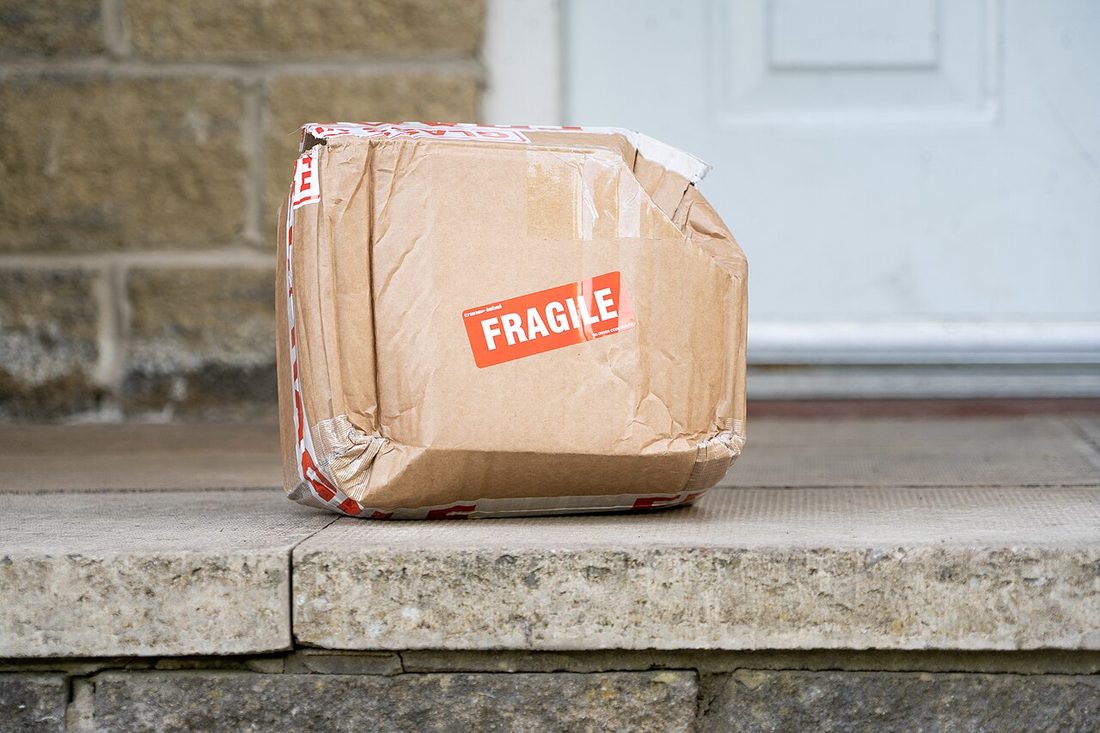
 I was late for work, so I
_____ a coffee and ran to the bus.
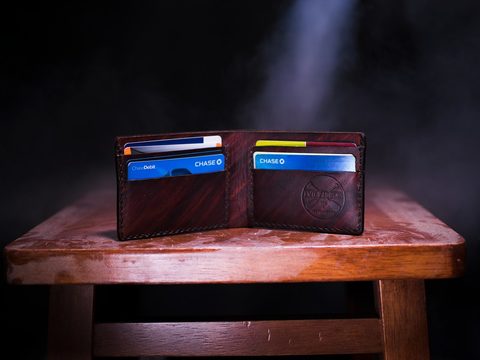 Don't forget to
_____ your wallet from the table before you leave!
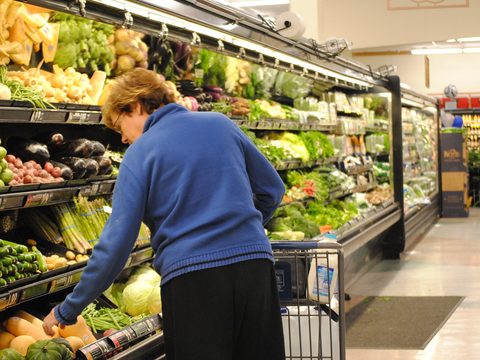 I always
_____ on Saturdays with my sister, because the prices are better.
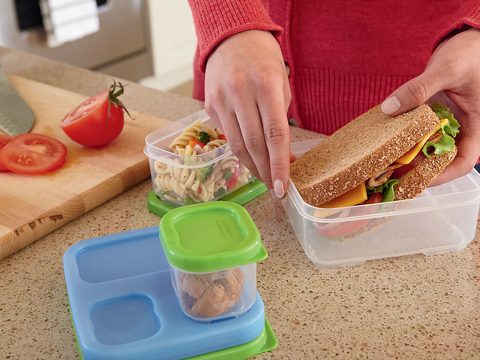 This sandwich is for your lunch, so
_____ it in your backpack.
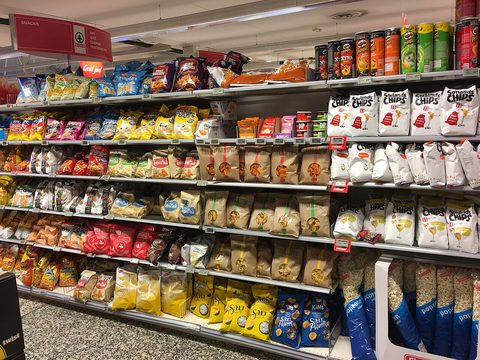 The chips were too expensive, so I
_____ on the shelf.
 They couldn't find anything they needed, so they just
_____ of the store.
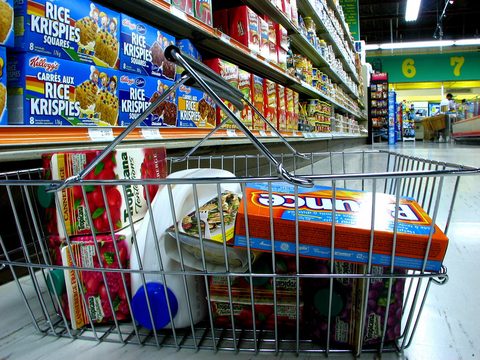 I only need three things, so I'll take a
_____, not a big cart.
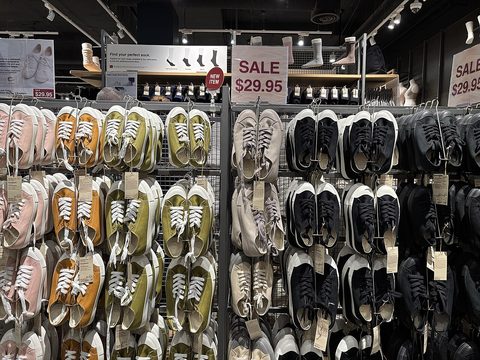 These sneakers are on
_____ today — they're 50% off!
Just walk out? No way!
This is not a real ad: it's a comedy sketch from Saturday Night Live, an American TV show, about a real kind of store. Watch it first — the jokes are fast, so just follow the shoppers. Then read the story. Tap a dotted word to see what it means.
It's 2018, and Amazon is showing some shoppers a new way to shop. The idea is simple: at Amazon Go, you grab what you want and go.

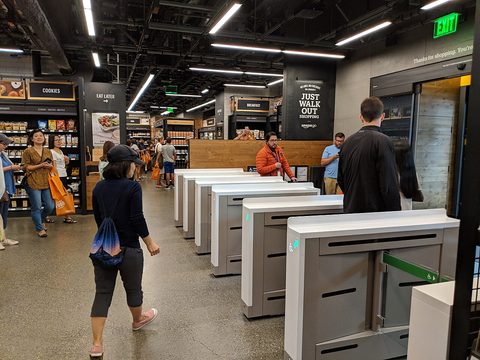
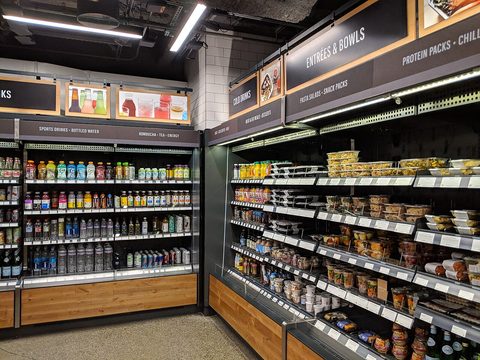
At first, the shoppers love the idea. "That's so easy!" one of them says. They only need the Amazon Go app to enter the store.
Then the ad explains the rest: there are no lines and no checkout. You take something, put it in your bag and walk out.
Walk out without paying? Now the shoppers aren't so happy. "Nice try," one of them says. They think it's a trick.
The ad knows that some people are skeptical, so it explains the technology: cameras, smart computer programs and sensors see what you take.
But the explanation only makes things worse. "Oh, okay. So it's a trap," one shopper says. Then comes the big question: "Where do you pay?"
The ad says there is no register: the technology does it all. But the shopper doesn't like that answer. "I always pay, okay?"
So the shoppers are careful. One of them sees a favorite drink, but nobody wants to pick it up. They tell each other to grab it.
Putting something back is a problem too. The ad says you can change your mind, so one shopper puts a sandwich back — and tells the whole store.
Finally, it's time to leave, and there is a loud beep. "I told you!" one shouts. But it's only the app sending their receipts.
Multiple choice
Click an answer and you get the result right away, with the reason. The blue number is where to look in the video.

-
What is Amazon's new way to shop? 00:05
You walk in, take what you want and leave. The ad says it again and again in the video.
-
How do the shoppers feel about the idea at first? 00:13
"Wow. That's so easy," one of them says. The problems start a few seconds later.
-
What doesn't one shopper want to do? 00:29
"You want me to just take something and walk out?" For this shopper, leaving a store without paying sounds very wrong.
-
Why does the shopper say "Nice try"? 00:36
Nice try means "I know what you're doing, and it won't work." The shopper doesn't believe the ad at all.
-
"We know some people are…" What does the ad say? 00:38
Skeptical people don't believe things easily. "Some people?" the shopper answers — as if to say "everybody!"
-
The ad explains the technology. What does the shopper think now? 00:48
Cameras, computer programs and sensors that see everything: for the shopper, that sounds like a way to catch people, not to help them.
-
What is there NOT in an Amazon Go store? 00:52
"There's no register." The grab-and-go technology does the job of the checkout.
-
Why does the shopper say "I always pay, okay?" 00:59
"Who do you think I am?" the shopper adds. Walking out without paying feels like stealing, and nobody wants to look like a thief.
-
A shopper sees a favorite drink. What happens? 01:06
The drink is a kombucha. "Can you grab it?" "Me? No, just grab it." Each one wants the other to take it off the shelf.
-
Why does a shopper talk so loudly about the sandwich? 01:30
The ad says you can change your mind and put things back — the app updates your virtual cart. But this shopper wants the whole store to see it happen.
-
What is the loud beep at the end? 02:04
"Here we go, I told you!" a shopper shouts — but it's only the receipts. And then: "It was him!" Even now, nobody wants to look guilty.
-
Which sentence tells the whole story of the video?
No lines, no checkout, no register — and still the shoppers can't relax. The ad ends: "No line, no checkout. No, seriously."
The ad in nine steps
Watch the video again and listen only to the ad voice. It has nine steps. Step 1 (a new way to shop, where you just grab and go) and step 9 (get your purchase and go) are done. Write 2, 3, 4, 5, 6, 7 or 8 next to the other seven.
-
aIf you change your mind, just put the thing back.
-
bNo lines, no checkout: walk in, grab something, put it in your bag and go.
-
cIt's simple: take what you want, use your own bag and walk out.
-
dSome people don't believe it, so here is the technology — and there is no register.
-
eUse the Amazon Go app to get in, and then start shopping.
-
fThe technology changes your virtual cart right away.
-
gThe store has everything you love.
Have you ever…? or When did you…?

Two questions, two tenses. Have you ever…? asks if something happened in your life — no time. The moment we say when, we jump to the past simple. That jump is the whole class.
- Present perfect — an experience, no time: we only want to know if it happened. Has she ever worked in a store? · I've used a self-checkout.
- Short answers: Yes, I have. · No, I haven't. · No, never.
- Past simple — the details: when, where, what happened. It goes with finished time words: yesterday, last week, on Monday, in 2023, two days ago. I went on Friday. It was fast.
- Never both together: a finished time word kills the present perfect.
I've ordered a pizza last night.→ I ordered a pizza last night. - A real conversation starts in the present perfect and continues in the past simple: Have you ever lost your wallet? — Yes, I have. I lost it on a bus in May.
-
— Have you ever been to an Amazon Go store? — Yes, I've been to one in Seattle. Which tense is the question?
Have + been: the present perfect. The question wants to know if it ever happened, not when.
-
— When was it? — It was last weekend. It was amazing. Which tense is the question?
Was is the past simple of be. Now we want a detail: the time.
-
Which of the two questions asks about a specific time in the past?
When asks for a time, and the answer — last weekend — is a finished time. That is past simple territory.
-
I ___ what I wanted on the Amazon website last night.
Last night is finished time, so the present perfect is not possible.
-
My friend ___ a snack at Amazon Go yesterday.
Yesterday tells you when, so it's the past simple.
-
We ___ the Amazon Go app to enter the store that morning.
That morning is a finished time — it's over. Past simple.
-
Which question is correct?
The first one mixes the present perfect with last month. The second one has did and returned together — after did, the verb goes back to return.
-
Which sentence is WRONG?
Yesterday is a finished time, so it needs I paid. I've never paid is fine: it's about your whole life, with no time.
-
— Have you ever bought clothes online? — Yes, I have. I ___ a jacket in May.
The answer starts in the present perfect (Yes, I have) and then gives a detail with a time — in May — so it switches to the past simple.
Been or gone?
- been = you went and came back. The visit is finished: She's been to Mexico twice.
- gone = the person went and is still there, or on the way: Where's Dan? He's gone to the bank.
- Experiences with ever and never take been: I've never been to a baseball game.
- Compare: They've been to the mall. (They're home now, with their bags.) · They've gone to the mall. (They aren't here. They're at the mall.)
-
Let's try Amazon Go. I've never ___ there.
An experience with never: you have not visited it in your life.
-
My dad isn't home. He's ___ to the supermarket.
He isn't home, so he isn't back yet: he is still at the supermarket.
-
I've never ___ to a store with no checkout.
Your whole life, no visit: never been.
-
My sister isn't in the house. She's ___ shopping.
She's out, and she's shopping right now: gone.
-
Have you ever ___ to the new mall in town?
Have you ever…? asks about a visit in your life, so it takes been.
-
We have lots of snacks because we've ___ to the supermarket.
The snacks are here, so the people are back from the supermarket.
-
My brother ___ to Amazon Go. He's shopping there now.
He's there now, so he hasn't come back: has gone.
-
Which sentence is WRONG?
Three visits means she came back every time, so it must be been. Gone … for a month is fine: she is in Japan now.
-
"Ana has gone to the store." Where is Ana now?
Gone means she hasn't come back yet. With been, she could be back at home.
An online order that went wrong
Present perfect or past simple? Write the missing words, in order. Example: A: Have you ever been to an Amazon Go store? (you / ever / be) — B: No, but I went to a similar store in Chicago last year. (go)

-
1A: ___ something online? (you / ever / buy)
-
2B: Yes, I have. I ___ some clothes last month. (order)
-
3A: ___ well? (it / go)
-
4B: Not really. The T-shirt was too small, and the company ___ me the wrong color. (send)
-
5A: Oh no! ___ it back? (you / send)
-
6B: Yes, I ___ it back, and they gave me a refund. (send)
-
7A: That's good. ___ on Amazon before? (you / shop)
-
8B: Yes, I have. I ___ some electronics there in March. It was a good experience. (buy)
-
9A: ___ any problems with deliveries? (you / ever / have)
-
10B: Just once. A package ___ late, but everything else was fine. (arrive)
Write the questions
Write a present perfect question. Careful with have or has, and with the past participle. Example: you / ever / use / a shopping app → Have you ever used a shopping app?
-
ayou / ever / take / something back to a store
-
byour mom / ever / forget / to pay for something
-
cyou / ever / spend / too much money shopping
-
dyour friends / ever / buy / the wrong size
-
eyou / ever / wait / many days for a package
-
fshe / ever / find / a great jacket on sale
-
gyou / ever / have / to ask for help in a store
-
hhe / ever / be / to a store with no checkout
Have you ever…?
Work in pairs. Student A asks the A questions, Student B the B questions. Give a short answer — Yes, I have / No, I haven't — then add one more detail in the past simple: when, where, what happened. At the end, share your best story with the class.

Useful language
Let's talk about shopping
Part A is about the video, Part B about your life, Part C about what you think — always say why. Use grab, pick up and put back, and try the present perfect and the past simple in your answers.
Useful language
My shopping story
60–90 words. Choose one question from Exercise 11 that you answered Yes, I have, and write the story. Start with the present perfect (I've … once, I've … many times), then use the past simple for the details: when it was, where you were, what happened and how you felt.

My results
Check your score, then copy it and send it to your teacher on WhatsApp.

One job for this week. Ask three people Have you ever…? Every time someone says yes, ask When was that? Two questions, two tenses — and you will hear the jump every time.