Ana's Year of English
Ana's English wasn't very good. A few months later, she ordered dinner in Tokyo. Her story and the last class of the course bring back everything from Class 1 to Class 39: be, questions, the two presents, the past, going to and Have you ever…?
Can you do all of these?
Answer in full sentences. Tap a card when you have answered it.

Class 40. The last one. Everything from the course comes back today, so we start with you. Six things from the school's checklist: every card you can answer is a class you really learned.
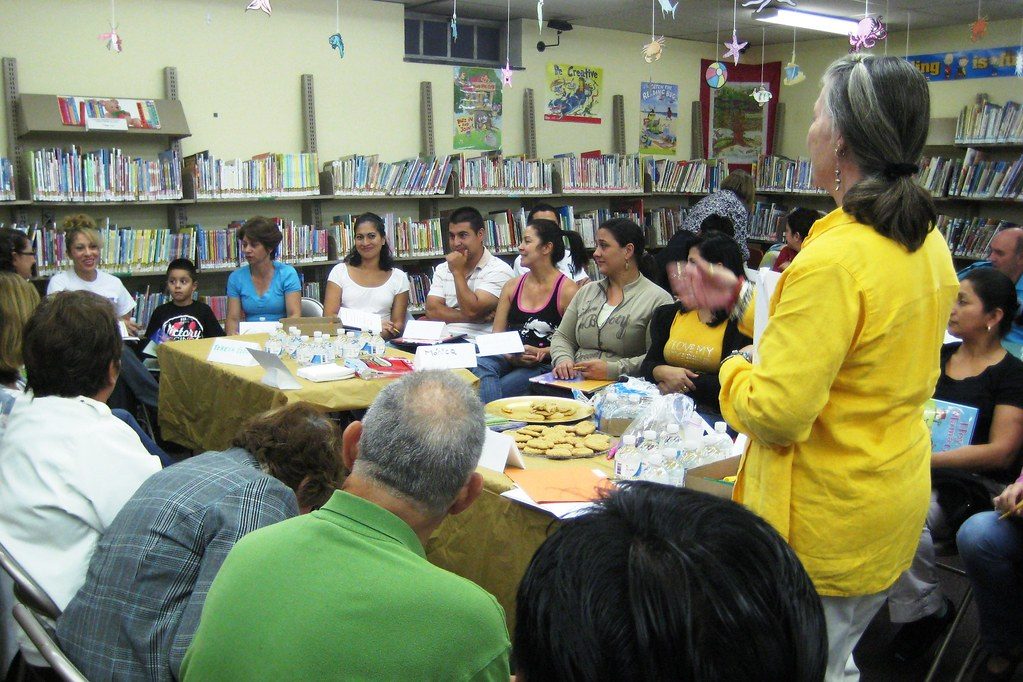
Useful language
Feelings and personality
Click a word, then click its meaning. Correct pairs turn green. The audio button says the word.
Complete the sentences
Eight people in eight pictures. Click a word in the bank, then click a gap. Click a filled gap to clear it. Anxious, stressed and worried are close in meaning, so read every word around the gap, even the small ones.

 The woman on the sofa looks relaxed. She feels
_____.
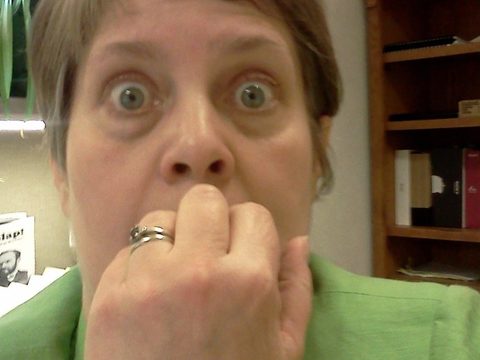 Her job interview is tomorrow morning, and she can't stop biting her nails. She has an
_____ face.
 The man with the laptop has too much work and no time for lunch, so he's really
_____ out.
 The little girl's dog stopped eating three days ago, and she's afraid it's serious. She's
_____ sick about him.
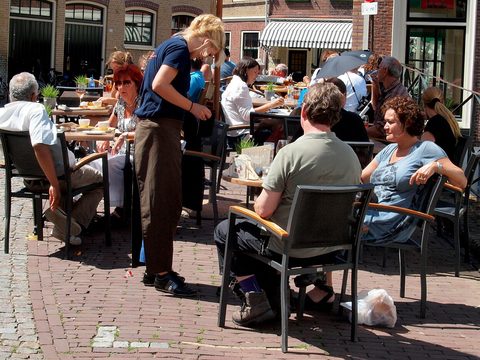 At the café, a man always says "please" and "thank you" to the waitress. He's very
_____.
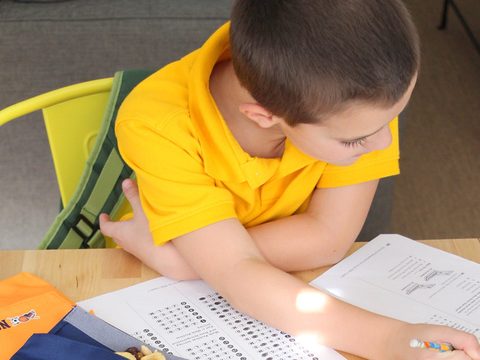 A little boy is doing difficult homework alone. His dad thinks, "I can't believe he's only seven!" The boy is
_____.
 A woman is shouting, and everyone near her covers their ears: "It's so noisy in here!" She's really
_____.
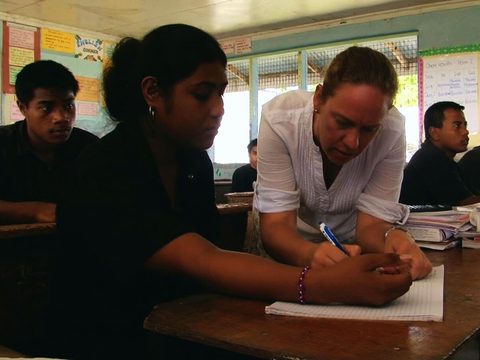 Some teachers are impatient when a student doesn't understand. This teacher is the opposite: she explains again and again. She's very
_____.
From a video to Tokyo
One year, told in order. Tap a dotted word to see what it means. Look for the tenses of the course: the past simple, the past continuous, could, Have you ever…? and going to are all here.
One night last year, Ana and her husband João were watching a video about Japan. Suddenly, João said, "I'd love to go there!"
So they decided to travel to Japan in April. But Ana was worried, because she couldn't speak Japanese and her English wasn't very good.
Because of that, she started English classes twice a week. She worked all day, so she studied at night and often went to bed at midnight.
After four months of late nights, Ana had her final exam, and she was very anxious. Her patient teacher said, "Don't worry. You're a great student!"
Her teacher was right: Ana passed the exam, and for the first time she felt confident. On the plane to Tokyo, she was calm.
On their first day in Tokyo, they got lost near a busy subway station, so Ana asked a man for help in English.
The man walked with them to their hotel, and on the way he asked, "Have you ever tried real ramen?" He was very polite.
Ana said no, so that evening he took them to a ramen restaurant near the station. It was tiny, but it was the best meal of the trip.



Ana ordered for both of them in English, and at the end she said, "Excuse me, could we have the check, please?" João couldn't believe it.
Now João wants to learn English too. Back in Brazil, they are both going to take classes, because their next trip is to New York!
Multiple choice
Click an answer and you get the result right away, with the reason.

-
What were Ana and João doing when João said, "I'd love to go there!"?
They were watching a video, and João wanted to go there right away. One video at night started the whole story.
-
Why was Ana worried about the trip?
She couldn't speak Japanese, and her English wasn't very good. The price of the tickets and the long flight are not in the story.
-
How often did Ana have English classes?
Twice a week in class, and at night at home, after work. The trip was the reason for all of it.
-
Why did Ana often go to bed at midnight?
She worked all day, so the only time to study was at night. Four months of late nights, and all of them for the trip.
-
How did Ana feel before her final exam?
Very anxious. That is why her teacher said, "Don't worry." Calm comes later, on the plane.
-
What happened after the exam?
Her teacher was right. She passed, and for the first time she felt sure of her English, so on the plane to Tokyo she was calm.
-
What happened on their first day in Tokyo?
They got lost near a busy subway station. This time Ana didn't panic: she asked a man for help, in English.
-
What did the man ask on the way to the hotel?
A question about experience, with Have you ever…? Ana said no, and that answer took them to dinner.
-
What was the ramen restaurant like?
A tiny place near the station, and the best meal of the whole trip. The story doesn't say how old it was.
-
Why couldn't João believe it at the restaurant?
Ana ordered for both of them and asked for the check, all in English. A few months before, she was worried because her English wasn't very good.
-
What are Ana and João going to do back in Brazil?
João wants to learn English too, and their next trip is to New York. So this time, they are both going to study.
-
What is the best summary of the story?
A video, a decision, four months of late nights, and English that worked in Tokyo. Now João wants the same thing. Each step comes from the one before.
Opposites
Write the opposite of the adjective on the left. Look at the word before the gap too: a or an tells you something about the answer.
-
aa big house → a ___ house
-
ban old car → a ___ car
-
ca young man → an ___ man
-
da fast train → a ___ train
-
ea cheap hotel → an ___ hotel
-
flong hair → ___ hair
-
ghungry → "No more pizza, thanks. I'm ___!"
Be, a / an, questions and possessives

Back to the beginning. Classes 1 to 10 built the base: be, a and an, the order of a question and the small words of time. Most A2 mistakes still live here, so read each sentence to the end before you choose.
- It's or its: it's = it is: It's a big city. Its = of it: The city is famous for its parks.
- A or an looks at the next sound, and the adjective goes before the noun: an old car · a new phone. Some plurals are irregular: woman → women · child → children.
- Imperatives and time: Don't be late! · at seven o'clock · on Friday · in July · go to work, but go home.
- Questions: question word + do / does + person + verb: Where does he work? With adjectives and places, be: Is he tired?
- How often: always, usually and never go before the verb (I usually cook) but after be (She's never late). Once a month goes at the end.
- Possessive 's: my brother's car · Whose bag is this?
-
The studio is in Los Angeles. ___ in California.
It = the studio, and the sentence needs a verb: it's = it is. Its has no verb inside; it means "of it". He is for a man.
-
They are French ___.
They is plural, and man → men is an irregular plural, with no -s.
Mensdoesn't exist. -
There's ___ in my bag.
Umbrella starts with a vowel sound, so an. There's is for one thing, so no plural.
-
This is ___.
The adjective goes before the noun, and a / an looks at the next word: easy starts with a vowel sound, so an.
-
A: The exam is tomorrow. — B: ___. You're a great student!
A negative imperative is Don't + verb, with no person and no to.
Not worryhas no do. Ana's teacher said the same thing in the reading. -
She always goes ___ bed ___ midnight.
Go to bed, and at with clock times: at midnight, at 10 p.m. The phrase without to is go home.
-
What kind of music ___ listen to?
Question word + do + person + verb. Listen is a verb, so do, not are, and do comes before you.
-
___ she at home in the evenings?
At home is a place, and there is no other verb, so be: Is she at home?
-
I mop the floor ___.
Once, twice, three times + a + day / week / month, at the end of the sentence. Ana had classes twice a week too.
-
Ana is ___.
Owner + 's + thing: João's wife. The apostrophe goes right after the owner's name. Joãos' is for more than one João.
-
Which sentence is WRONG?
Always goes before the main verb: She always goes to the gym. With be, it comes after: He is always late.
Choose the right word
1–4: each photo is described in words. Where is the thing? 5–9: verbs that Brazilian students often mix up.
-
Photo: an open brown bag, with a set of car keys at the bottom. The keys are ___ my bag.
The keys are inside the bag, so in. On is for the top of something: on the table.
-
Photo: a dog sitting on the floor, with a table on one side and a chair on the other. The dog is ___ the table and the chair.
One thing on each side → between. It always has two things around it: between the table and the chair.
-
Photo: a pair of brown shoes on the floor, with the end of the bed right above them. The shoes are ___ the bed.
The bed is above the shoes, so the shoes are under the bed. Over is the opposite.
-
Photo: a round clock high on the wall, and a sofa below it. The clock is ___ the sofa.
The clock is higher than the sofa: over the sofa, or above it. They don't touch.
-
I always ___ sunglasses when it's sunny.
You wear clothes, shoes, glasses and jewelry: things on your body. You use a phone or a computer.
-
Could you ___ me your pen for a moment?
Lend = give something for a short time. Borrow = take it for a short time. So: Could you lend me your pen? or Could I borrow your pen?
-
She ___ the bus and arrived late.
You miss a bus, a train or a class when you arrive too late. You lose a thing and can't find it: I lost my keys.
-
I need to ___ my homework before dinner.
Do homework, do the laundry, do the dishes. Make is for things you create: make dinner, make a cake.
-
We ___ a beautiful painting at the art gallery.
A painting doesn't move, so you see it or look at it. You watch things that move: a movie, a game, a show.
Can, the two presents, pronouns and was / were

Look for the time words. Right now and at the moment ask for am / is / are + -ing; every summer asks for the present simple. And before you choose a pronoun, find the verb: before it, they; after it, them.
- Can + verb: She can swim. · Can I open the window? No to after it, and no -s on it.
- Now or always? I'm cooking right now. · I cook every Sunday.
- Subject → object: I → me · he → him · she → her · it → it · we → us · they → them. These jeans are new. I love them.
- love / like / enjoy / don't mind + -ing: He enjoys cooking. · Do you like dancing?
- Be or do: be with adjectives, places and -ing (Are they tired?); do / does with the other verbs (Does she drive?).
- The past of be: I / he / she / it was · you / we / they were.
-
___ you ___ me? This exercise is too difficult!
A request: Can + person + verb, with no to. Can never goes with do.
-
She ___ a video call right now.
Right now asks for the present continuous: is / isn't + -ing. Having alone has no be, and doesn't have is for habits.
-
What ___ every summer?
Every summer is a habit, so the present simple. Your family is like it, so does, and then the main verb, do.
-
Jane is wearing a new dress. I really like ___.
One dress → it. Its means "of it" (its color), and them is for more than one thing.
-
The shoes are dirty. Put ___ in the laundry basket.
Shoes are plural, and here they come after the verb put, so them. They goes before a verb: They are dirty.
-
She ___ New Year's Eve at home.
After doesn't, the base form: like, never
likes. Then like + -ing.Not likehas no does. -
What ___ doing on Christmas with your family?
Love is a normal verb, so the question uses do, and the -ing goes on the second verb: What do you love doing?
-
She ___ smiling in the photo.
Smiling is an -ing form, so it needs be: she is smiling, the present continuous.
-
Marie Curie ___ a famous scientist who discovered radium.
One person, in the past: was. She discovered radium with her husband, Pierre, in 1898, so not are.
-
Which sentence is WRONG?
The present continuous needs be + -ing: My brother is studying right now.
Odd one out
Five foods in each group. Four have something in common. Which one doesn't belong? Say why before you click.
-
Which one doesn't belong?
Eggs, beef, salmon and turkey are all protein: meat, fish and eggs. An apple is a fruit.
-
Which one doesn't belong?
Pizza, pancakes, bagels and waffles are all made with flour. Lettuce is a vegetable.
-
Which one doesn't belong?
You drink a smoothie, juice, a protein shake and milk. You cook with olive oil or put it on a salad.
-
Which one doesn't belong?
Carrots, onions, peas and peppers are vegetables. Candy is almost all sugar.
The past, the future and the present perfect

Ask one question: when? A finished time, like yesterday or last Saturday, takes the past simple. No time, or ever and never, takes have + past participle. And after did and didn't, the verb goes back to its base form.
- Past simple: work → worked · go → went · see → saw. Negative and question with did + base verb: We didn't see it. · Did you call her?
- Past continuous = was / were + -ing, for an action in progress: At 9 p.m. we were watching TV.
- Compare: cheap → cheaper than → the cheapest · popular → more popular than → the most popular · good → better → the best.
- Plans and wishes: I'm going to study tonight. · I'd like to see Paris.
- Present perfect = have / has + past participle, for experiences with no time: Have you ever eaten sushi? · She's never been to Peru. With a finished time, the past simple: I ate sushi yesterday.
-
___ something to a store because you didn't like it?
An experience with no time → present perfect: have + past participle (returned). After did, the base form, never
returned. -
Last year, we ___ to travel to Japan.
Last year → past simple. Decide already ends in e, so add only -d. Ana and João made the same decision in the reading.
-
They ___ tickets early because the festival was very popular.
Buy is irregular: buy → bought.
Buyeddoesn't exist, and buying needs was / were in front of it. -
We ___ a good view of the ocean, because our hotel was far from the beach.
A hotel far from the beach means no view of the ocean, so negative. After didn't, the base form: didn't have. Doesn't have is the present.
-
I ___ a coffee at that new café last Saturday.
Last Saturday is a finished time, so the past simple: drink → drank. The present perfect never goes with a finished time.
-
___ your brothers play the guitar well?
Your brothers = they, and play is a normal verb, so Do. Does is for he, she and it.
-
___ he ever been to Rio de Janeiro?
Been is a past participle, so have / has: Has he ever been to Rio? Ever is the other clue.
-
What ___ she doing at the mall yesterday?
Doing + yesterday → past continuous: was / were + -ing. She → was.
-
___ they speak Italian fluently?
Can + person + base verb: Can they speak Italian? Is and Has can't go with speak.
-
Which sentence is WRONG?
Short adjectives take -er: taller than. More is for long adjectives: more famous, more expensive.
-
Which sentence is correct?
Last year is a finished time, so the past simple. The present perfect can't go with last year, and
I've wentuses the past form where the participle (gone) belongs.
A slice, a bottle, a box
Write the word that goes before of. The first letter is given.
-
aI like to eat a s___ of pizza as a snack.
-
bShe takes a b___ of water to school every day.
-
cI have a b___ of cereal with bananas for breakfast.
-
dHe gave me a b___ of chocolates for my birthday.
-
eI usually drink a c___ of soda with my lunch.
Big numbers, both ways
a–d: write the number in digits. e–g: write it in words. Americans often leave out the and after hundred; with it or without it, both are correct.

-
asix hundred thirty-five
-
btwo thousand one hundred fifty
-
cthree thousand nine hundred
-
dforty-five thousand eight hundred twenty
-
e560,000
-
f2,300,000
-
g7,950,000
Around town, around the house
a–f: write the place. Choose from: bank · drugstore · movie theater · park · post office · restaurant. g–k: write the gadget. Choose from: robot vacuum · smart fridge · smart thermostat · smartwatch · voice assistant.
-
aYou relax or walk outside here.
-
bYou sit down and have lunch or dinner here.
-
cYou watch a movie here.
-
dYou send letters and packages here.
-
eYou buy medicine and shampoo here.
-
fYou get money or open an account here.
-
gIt tracks your health, steps and sleep, and shows your messages.
-
hA machine that cleans your floors automatically.
-
iIt helps you check what's inside your fridge, using your phone.
-
jIt controls the temperature in your house automatically.
-
kA program on your phone or speaker that listens and helps you, like Siri or Alexa.
Ana, you and your opinion
Answer in full sentences. Part A is about Ana, Part B about you, Part C about what you think.

A · Ana's year
B · You
C · What do you think?
Useful language
My English story
60–90 words. Write about your English, like Ana's story: why you started, one thing you couldn't do before and can do now, a moment when English helped you (or could help you), and one plan with going to.
My results
Check your score, then copy it and send it to your teacher on WhatsApp.

Forty classes. Well done. One job before the next level: pick the three speaking cards that were hardest today and answer each one out loud, one minute a day, until it feels easy. That is how Ana got to Tokyo.