The Monkey Selfie
A photographer was working in the jungle when a monkey took a selfie with his camera. Then a long fight started: who was the owner of the photo? Today: how to say what people were doing, and what happened in the middle of it.
Warm-up
Ask and answer with a partner, or with me. Tap a card when you have answered it.

Yesterday, 9 a.m. Where were you? And what were you doing: sleeping, working, driving, drinking coffee? Today you learn the tense for "what was happening": was or were plus a verb with -ing.
Useful language
Words for today
Click a word, then click its meaning. Correct pairs turn green. The audio button says the word.
Complete the sentences
Click a word in the bank, then click a gap. Click a filled gap to clear it.

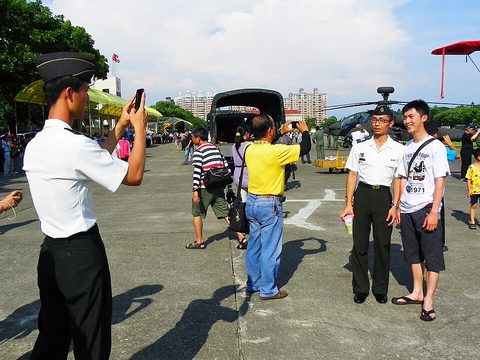 Stand next to the fountain and smile. I want to
_____ of you with my new phone.
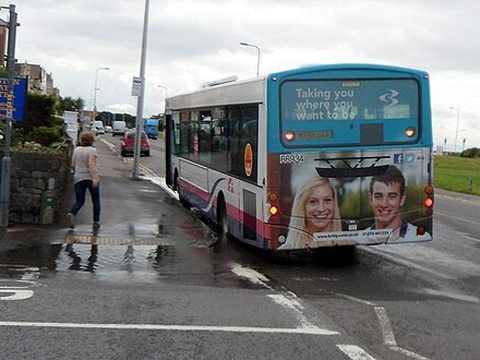 The bus was leaving, so I had to
_____ my bag and run to the door.
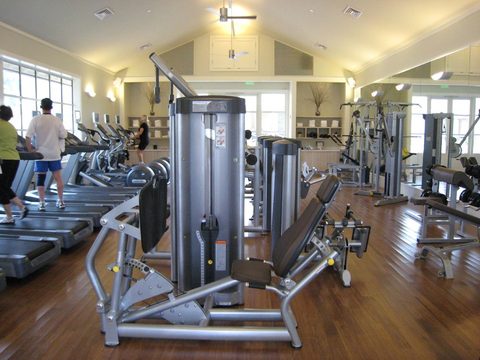 The gym has new
_____: bikes, weights and three treadmills.
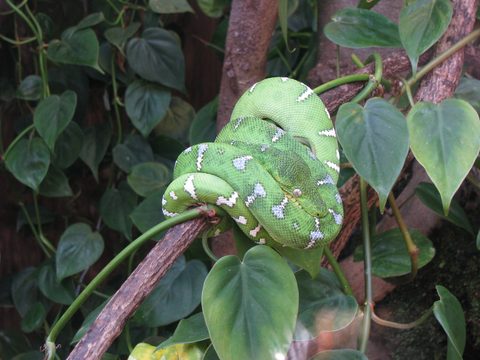 It is hot and wet in the
_____, and there are snakes and big insects in the trees.
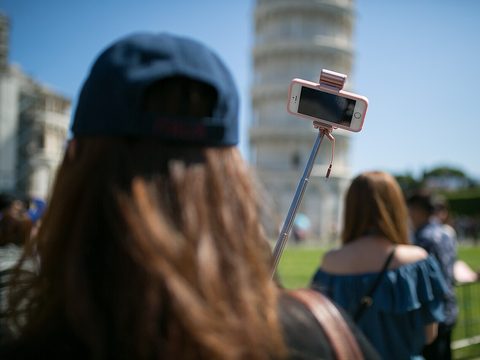 She held her phone up high and took a
_____ with the tower behind her.
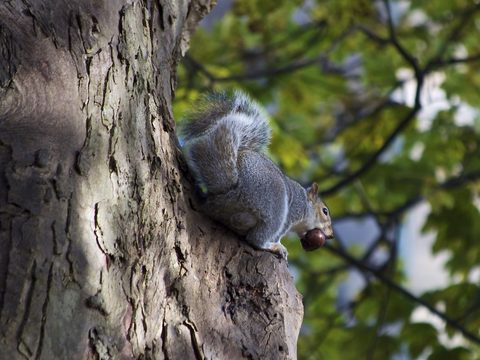 A small gray
_____ ran up the tree with a nut in its mouth.
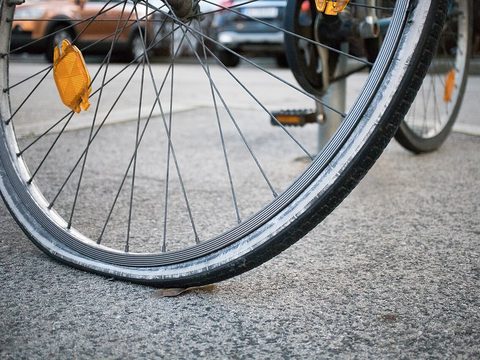 My bike has a flat tire, and I don't know how to
_____ it.
 I lost all my work because my old laptop started to
_____ every ten minutes.
Past continuous

Two actions, two sizes. The long one, in progress, takes the past continuous: was or were + verb-ing. The short one that happens in the middle of it takes the past simple. While goes with the long action; when usually goes with the short one.
- Affirmative: I / he / she / it was taking a photo. · You / we / they were taking a photo.
- Negative: I wasn't taking a photo. · They weren't taking a photo. (wasn't = was not · weren't = were not)
- Questions: was / were before the subject — Was she taking photos? · Were you taking photos? · What photos were you taking? · Where was she taking photos?
- Short answers: Yes, I was. / No, I wasn't. · Yes, they were. / No, they weren't.
- With the past simple: the long action is in the past continuous, and the short action that interrupts it is in the past simple — He was taking photos when he left his equipment in the jungle.
- While goes with the long action: While I was cooking, … · when usually goes with the short action: … when the phone rang. It can go with the long one too: I lost my keys when I was running in the park.
- Spelling: take → taking · write → writing · run → running · sit → sitting · study → studying · travel → traveling (one l in American English).
-
I was walking to work when I saw an old friend. Which action was longer?
Walking to work takes some time; seeing a friend happens in one second. Long action: past continuous. Short action: past simple.
-
We use the past continuous to talk about…
Something that was happening, at a moment or for some time. A short, finished action takes the past simple.
-
Which word can start the SHORT action, in the past simple?
I was sleeping when the phone rang. While goes with the long action: While I was sleeping, the phone rang. During goes with a noun, not a sentence: during the night.
-
It ___ snowing in the mountains last night.
It goes with was, like he and she. And last night means the past, so not is.
-
My parents ___ watching the news at 8 p.m.
My parents = they, so were. There is no did in the past continuous.
-
My sister ___ her bike to school.
My sister = she, so was, and the verb needs -ing: was riding. The e of ride disappears.
-
Which sentence is WRONG?
You always takes were, in sentences and in questions: Were you talking…?
-
Which question is correct?
Question word, then was / were, then the subject, then the verb-ing. No did.
-
Which spelling is correct?
A short verb that ends in one vowel + one consonant doubles the consonant: run → running, sit → sitting, swim → swimming.
What was happening
Write the whole sentence in the past continuous. Careful with the spelling of -ing: write → writing, make → making. The last sentence has a mistake: write it again, correctly.
-
aI / write an email yesterday.
-
bShe / drive to work.
-
cIt / rain yesterday.
-
dMy brother / study at home.
-
eThe dogs / sleep in the living room.
-
fI / make a cake.
-
gHelena / do housework an hour ago.
-
hYour phone / ring.
-
iThe baby / cry.
-
jFind the mistake: The children was watching a movie.
Not that, this
In each item, the first action did NOT happen. The action in parentheses is what really happened. Choose the pair of sentences that is correct.

-
Mom / make dinner. (talk on the phone)
The negative is wasn't + verb-ing. There is no didn't in the past continuous, and both verbs need -ing.
-
He / study for a test. (write a text)
He takes was / wasn't. Spelling: study keeps its y (studying), and write has one t (writing).
-
They / go to work. (travel)
They takes were / weren't, and every verb needs -ing: going, traveling.
-
We / do homework. (correct the exercise)
Not comes after were: were not = weren't. And correct is a verb here, so it needs -ing.
-
I / take a shower. (dry my hair)
I takes was / wasn't, never weren't. And dry needs -ing: drying.
-
The players / train. (play a game)
The players = they: weren't and were. And play needs -ing.
-
Paula / buy her lunch. (go to the bank) — Which sentence is WRONG?
She were is the mistake: she takes was. The other two say the same thing in a different order.
-
The children / play with toys. (watch a movie) — Which sentence is WRONG?
The children = they, so weren't, not wasn't.
Past simple or past continuous?
One action is long (past continuous), and one is short (past simple). Choose the pair of verbs that fits the two gaps.
-
I ___ the computer because it ___ a strange noise.
The noise was in progress for some time (long action). Switching off the computer takes one second (short action). Was make has no -ing.
-
My dad ___ the game when I ___ home from school.
Watching a game takes an hour or two; arriving is a moment. When goes with the short action.
-
We ___ video games when my mom ___, "Turn the volume down!"
The game was in progress; Mom's sentence took two seconds and interrupted it.
-
Thomas ___ his wife when they ___ at the university.
Studying at the university took years (long). Meeting somebody happens in one moment (short).
-
While we ___ the yard, it ___ to rain.
While goes with the long action, cleaning, and we takes were. The rain started in one moment.
-
While they ___ to fix the computer, all the lights ___ out.
Trying to fix a computer takes time, and they takes were. The lights went out in a second, in the middle of it.
-
I ___ to log on when the Wi-Fi ___ working.
The long action is trying to log on; the Wi-Fi stopped at one moment and interrupted it.
-
When we ___ at the picnic, our friends ___ for us.
Here the short action comes first in the sentence: we arrived (a moment), and the waiting was already in progress.
-
Which sentence is WRONG?
Was needs a verb with -ing: was raining. The other two sentences are the same idea in two orders.
-
Which sentence is correct?
They takes were, and the past simple of ring is rang, an irregular verb.
Put the words in order
Write the whole question. Remember the order: question word, then was / were, then the subject, then the verb-ing. Two questions start with Did, in the past simple. The last question has a mistake: write it again, correctly.

-
amet / what / doing / you / when / were / we / ?
-
bSofia / reading / a book / was / when / called her / the teacher / ?
-
cliving / where / you / were / when / met / you / ?
-
dit / raining / was / when / at the hotel / arrived / you / ?
-
esleeping / the children / were / when / got home / Daniel / ?
-
fdriving / were / you / when / called / I / ?
-
gvisit / did / you / the British Museum / when / you / were / studying / in London / ?
-
hgo / did / you / to grandma's house / when / you / were / staying / in Seattle / ?
-
iFind the mistake: Was they sleeping when you called?
Missing word
Click a word in the bank, then click a gap. Two words in the bank are extra, and one word is in the bank twice. Click a filled gap to clear it.
- She was _____ dinner when the guests _____ at the door.
- They were _____ soccer when it started to rain.
- I was writing an email when my computer _____ and I lost everything.
- We _____ driving to the party when Ana called to say it was canceled.
- While the teacher was _____ about the past continuous, the students were writing in their notebooks.
- While she _____ cooking, her boyfriend was doing the dishes.
- The kids _____ sleeping when I got home at midnight.
The monkey selfie
Was the warm-up story true? Read and find out, or listen paragraph by paragraph. The past continuous is in bold. Tap a dotted word to see what it means.

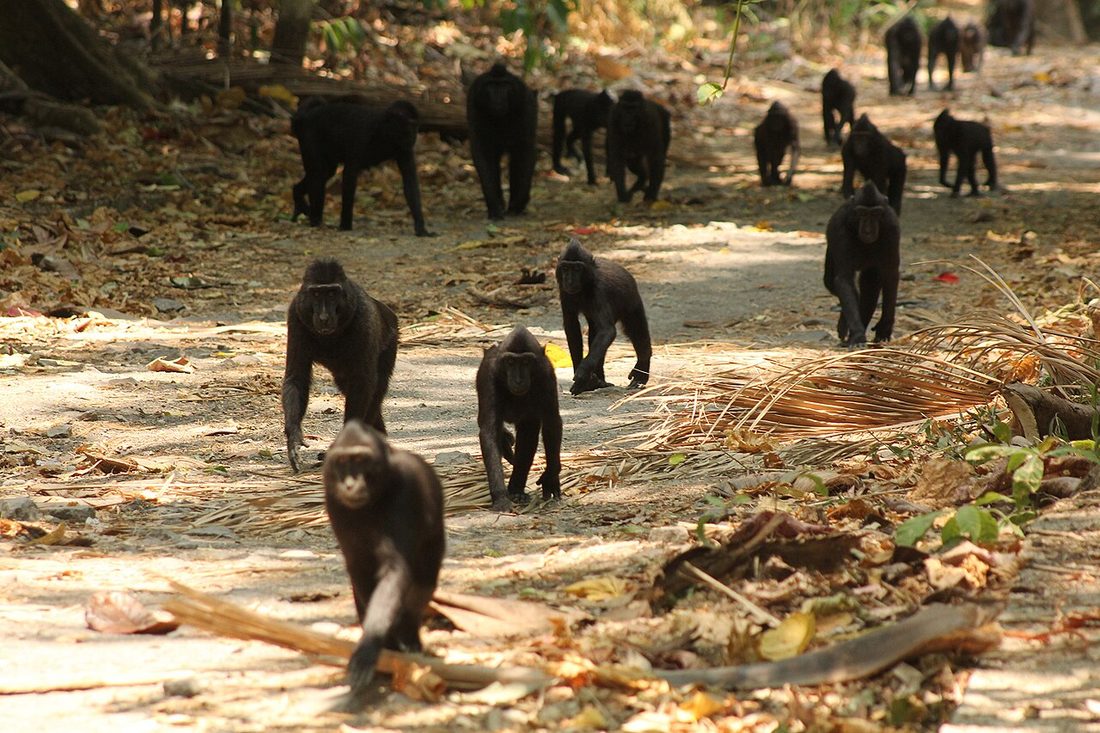
In 2011, a British photographer named David Slater was working in a nature reserve in Indonesia. He was taking photos of macaques, a type of monkey.
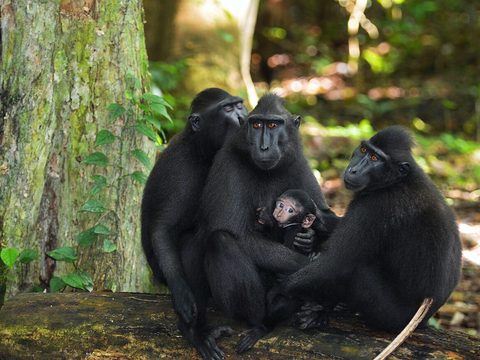
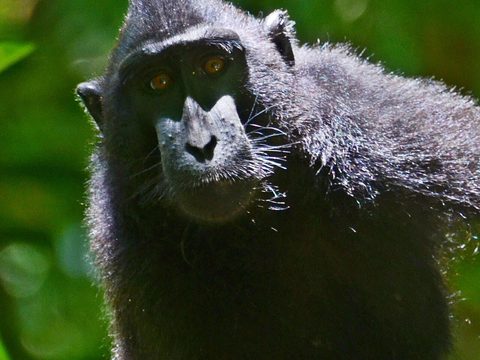

The monkeys were curious. While David was preparing his camera in the jungle, they came very close and started to play with his equipment.
Then one monkey found the button. It was looking at its face in the lens, and it pressed the button again and again.
So the monkeys took many photos. In one of them, a monkey was smiling straight into the camera. A perfect selfie!
In July 2011, newspapers published the photo, and it went viral. Then a discussion started: who was the owner of the photo, the man or the monkey?
The photo appeared on Wikipedia, free for everybody. David asked them to take it down, but they said no: a monkey took the photo, so nobody was the owner.
Then the fight got bigger. In 2015, an animal-rights group called PETA went to court for the monkey. They called it Naruto and said the photo was Naruto's.
The judge did not agree. In 2016, he said that an animal cannot be the owner of a photo. PETA did not stop, and the case went to a second court.
While the lawyers were fighting in court, David wasn't making much money from his famous photo. He had money problems, and he couldn't pay his lawyer.
In 2017, the two sides finally made a deal: David promised to give 25 percent of the money from the photo to groups that protect monkeys. In 2018, the second court said the same as the first judge.
Multiple choice
Click an answer and read why.
-
Where was David Slater in 2011?
In a nature reserve in Indonesia, in the jungle. The monkeys there are macaques, and they live free.
-
What was he doing there?
He went there to photograph the macaques. Was taking: an action in progress, for days.
-
What did the monkeys do while David was preparing his camera?
They were curious, not afraid. Preparing the camera is the long action; coming close is the short one that happened in the middle of it.
-
How did the monkey take the photos?
It was looking at its own face in the lens and pressing the button. David says his camera was on a tripod, a stand with three legs, so the monkey only pressed the button.
-
Why was one photo special?
A big smile, straight into the camera: it looked like a real selfie, and that is why so many people loved it.
-
What happened after the newspapers published the photo?
People shared it all over the internet. Then the discussion started: who was the owner?
-
The photo appeared on Wikipedia. What did David do?
On Wikipedia the photo was free for everybody, so nobody paid him for it. He wanted it off the site.
-
Why did Wikipedia say no?
Their idea was simple: David did not press the button, the monkey did. And a monkey cannot own a photo, so the photo is free.
-
Who gave the monkey the name Naruto?
The animal-rights group gave the monkey a name in 2015, when they went to court for it.
-
What did the judge say in 2016?
PETA did not stop, so the case went to a second court. In 2018, that court said the same thing.
-
What did David promise in 2017?
That was the deal with PETA: one quarter of the money goes to groups that protect monkeys like Naruto.
-
Which sentence best summarizes the story?
The selfie is the start, but the story is the fight: Wikipedia, PETA, two courts and a deal, from 2011 to 2018. David never lost the camera.
What were you doing when…?
Part A is practice in pairs: finish the sentences, then ask and answer. Part B is about your life. Part C is for your opinions about the story. Tap a card when you have done it.

Useful language
The story behind the picture
50–80 words. Choose one of these two viral photos and tell its story with the past simple and the past continuous. Photo 1: a cyclist is riding on a road in the snowy mountains, and a big bear is running behind him. Photo 2: a pilot is taking a selfie with a selfie stick out of the window of a plane, high above the clouds. By the way, both photos are fake. Your story can be true or not!
My results
Check your score, then copy it and send it to your teacher on WhatsApp.

One job for this week. Every night, say three sentences about your day: At 8 a.m. I was… At noon I was… At 6 p.m. I was… Then one more with when: I was … when … One minute, in English.