Look at the Sky
Dark clouds, a road full of cars, a suitcase on the bed: you see them, and you know what is going to happen. Today you talk about your plans and make predictions with going to, and you plan a busy week like a movie star.
Warm-up
Ask and answer with a partner, or with me. Click a card when you have answered it.

My suitcase is on the bed. What am I going to do? Easy: I'm going to travel. Today you learn to talk about the future in two ways: what you decided to do, and what you can see is going to happen.

Useful language
Plans and trips
Click a word, then click its meaning. Correct pairs turn green. The audio button says the word.
Complete the sentences
Click a word in the bank, then click a gap. Click a filled gap to clear it. Read the whole sentence first: it tells you the word.

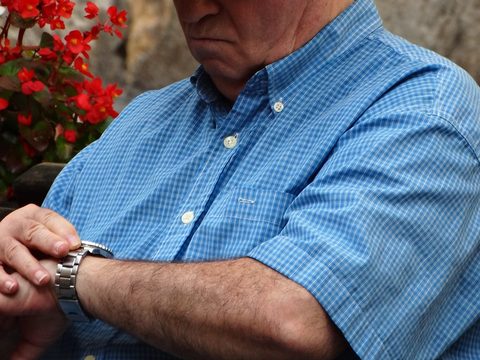 Hurry up! The bus leaves in two minutes, and we're still at home. We're going to
_____ it!
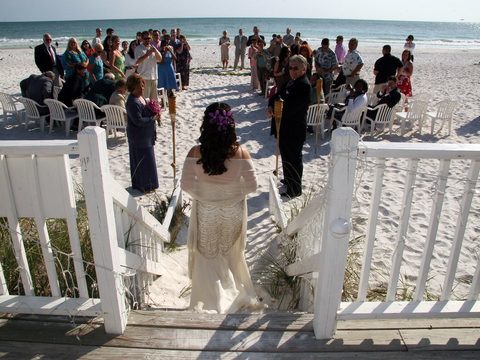 Emma and Jack are going to
_____ in June. The party is at the beach, and two hundred people are coming.
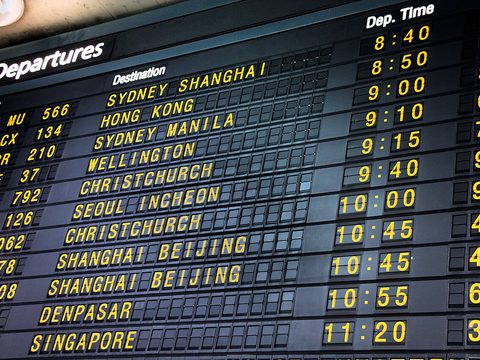 Our flight is at six in the morning, so I'm going to
_____ my suitcase tonight.
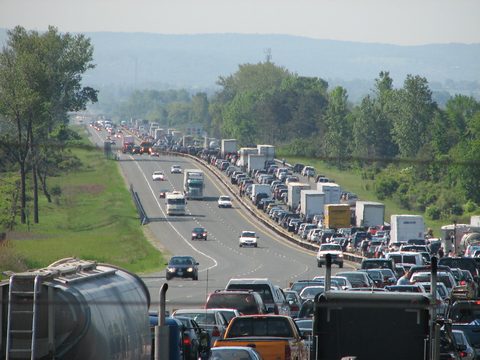 There's a lot of
_____ on the road this morning. The cars are moving very slowly.
 You can't get on the plane without a
_____. Show it to the agent at the gate.
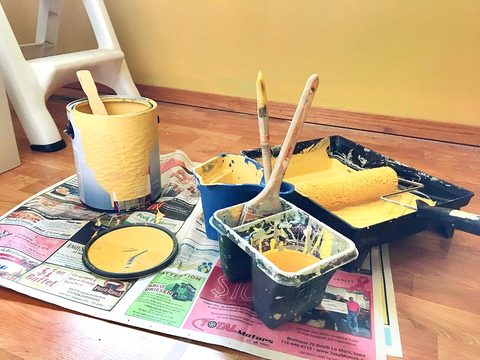 The kitchen walls are old and dirty. We're going to
_____ them yellow this weekend.
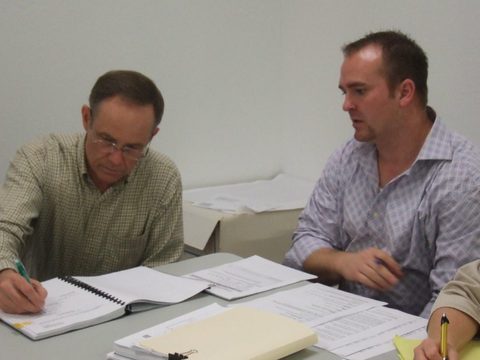 Read the contract carefully before you
_____ it. Your name goes on the last line.
 The model has a
_____ for a fashion magazine tomorrow. The photographer starts at eight.
Going to: plans and predictions
Read the notes. Then read each scene and decide: is the sentence a plan or a prediction? Click an answer and read why.

Two jobs, one form. A plan is something the person decided before now. A prediction is what you think is going to happen, usually because you can see something now. For both, it's be + going to + verb, and when we speak we use the short forms: I'm, she's, they're.
- A plan (the person decided before now): My sister is going to start a new job in March. · We're going to have a barbecue on Saturday. I bought the meat yesterday.
- A prediction (you think it is going to happen, because of what you see now): Look at that ball! It's going to hit the window. · She's so tired. She's going to sleep on the bus.
- A clue: nobody decides the weather, an accident or the result of a game. Sentences about them are always predictions.
- Affirmative: I am going to work tomorrow. · You / We / They are going to work tomorrow. · He / She / It is going to work tomorrow.
- Use the short forms when you speak: I'm going to work. · You're going to work. · She's going to work.
- Negative: be + not + going to + verb. I'm not going to work. · You aren't going to work. · She isn't going to work.
- The verb never changes: She's going to work — never
She's going to worksorShe's going to working. And never without be:She going to work.
-
A stadium full of fans with red and white flags. Their team is playing very well. The fans shout: "We're going to win the game!"
Nobody can decide to win a game. The fans see their team playing well and think about the result: that is a prediction.
-
Two friends bought tickets for tonight's game last month. "They're going to watch the game tonight."
They decided last month and bought the tickets. A decision made before now is a plan.
-
A woman smiles at the shoes in a store window. She saved money for them all month. "She's going to buy new shoes."
She saved money for a month: she decided a long time ago. That makes it a plan.
-
A cat touches a little bird with its paw. The bird looks at the cat. "They aren't going to understand each other."
A cat and a bird don't decide this. You look at them and think about what is going to happen.
-
A couple at the airport check-in counter. They booked this trip three months ago. "They're going to travel by plane."
They booked the trip three months ago. The decision came first, so it's a plan.
-
A cartoon cat shakes under a warm blanket. Outside, the wind is getting stronger. "It's going to get colder later."
Nobody decides the weather. The strong wind is the clue for the prediction.
-
A monkey and a frog talk on the phone. They choose a day, a time and a café. "They're going to meet each other."
On the phone, they decide the day, the time and the place. That is a plan, and a very organized one.
-
A teacher writes on the board. Her class is on the school schedule every Monday afternoon, and today is Monday. "She's going to teach this afternoon."
The class is on her schedule: it's decided. So it's a plan.
-
Which sentence is WRONG?
Going to always needs be in front: is going to, or the short form 's going to. Without is, the sentence is wrong.
Complete the predictions
Write be + going to + the verb on the left. Read the whole sentence first: it tells you if the verb is affirmative or negative. Short forms ('re, isn't) and full forms (are, is not) are both correct.
-
winThe team ___ the game. They're playing too badly.
-
getThey ___ married. Look at her white dress and all the flowers!
-
finishShe ___ her test before eleven o'clock. It's too long.
-
buyShe ___ those shoes. They're too expensive.
-
beWe ___ late for work. Look at all this traffic!
-
missThey ___ the train. It leaves at seven, it's seven now, and they're still in the taxi!
-
fallBe careful, or you ___ off your bike!
-
rainIt ___ later. Look at those dark clouds!
-
goHe ___ to work by train today. It's too crowded.
-
One more. Which sentence is correct?
Two things are necessary: be (it's = it is) and the verb with no -s after going to.
What's going to happen?
Read each scene. Click a prediction in the bank, then click the gap. Look at the person (he, she, it, they) and at the scene: only one prediction fits.

- A man in yellow overalls opens a bucket of white paint. There's a ladder next to him. He _____ the wall.
- A woman and a man work on the steps of an old house. They talk, they smile, and they forget about their work. They _____ in love.
- A woman in a swim cap puts on her goggles next to the pool. She _____ in a minute.
- Two friends are asleep in their seats at the movie theater, and the movie is starting. They _____ the movie.
- Two people close a big red suitcase full of clothes. They _____ tomorrow morning.
- The weather map on TV is red and orange. "Record heat," it says. It _____ very hot this weekend.
- A woman in a clothes store holds two dresses, an orange one and a green one. She looks at the orange one and smiles. She _____ the orange dress.
- A man with a bag gets on a train at the station. He _____ the bus today.
-
One more. Which sentence is WRONG?
The negative of going to uses be + not: isn't or 's not. Don't and doesn't are for the present simple, not for going to.
Questions with going to
Read the notes. Then put the words in order and write the whole question. Every one ends with a question mark.

To ask about plans, move be to the front. You are going to study becomes Are you going to study? Want more information? Put a question word before it: When are you going to study?
- Yes / no questions: be + person + going to + verb? Are you going to study English next year? — Yes, I am. / No, I'm not. · Is it going to be cold tomorrow? — Yes, it is. / No, it isn't.
- Questions with a question word: question word + be + person + going to + verb? When are you going to call your mom? — I'm going to call her tonight. · Where are they going to stay? — At a hotel near the beach.
- Short answers: Yes, I am. · Yes, she is. · Yes, they are. No short form in a "yes" answer: never
Yes, I'm.In a "no" answer, short forms are normal: No, I'm not. · No, she isn't. · No, they aren't.
-
anext / are / on / where / travel / you / your / going / vacation / to / ?
-
btravel / or / going / with / you / family / to / friends / are / ?
-
cteacher / do / is / tonight / what / going / the / to / ?
-
dSaturday / your / out / are / go / friends / next / going / to / ?
-
ebed / what / to / tonight / are / time / go / going / you / to / ?
-
fup / tomorrow / you / what / get / going / are / time / to / ?
-
gto / talk / who / tomorrow / going / are / to / you / ?
-
hrain / week / city / it / this / going / your / is / in / to / ?
-
ihomework / this / your / their / do / classmates / English / going / are / week / to / ?
-
One more. Which question is correct?
The question starts with be (are), then the person (you), then going to + verb. No do: be makes the question.
Will's week
Write the questions about Will's plans with going to. No question word at the start (what, where)? Then it's a yes / no question. After that, ask a partner, who answers with the schedule: He's going to…
- Monday: work hard on my next movie scenes
- Tuesday: fly to L.A.
- Wednesday: a birthday party at my friends' house
- Thursday: sign a contract for TV commercials
- Friday: dinner with my family
- Saturday: tennis with friends
- Sunday: relax at the beach
-
aWhat / he / do / on Monday?
-
bhe / fly / on Tuesday?
-
cWhere / he / be / on Wednesday?
-
dWhat / he / sign / on Thursday?
-
ehe / see his family / on Friday?
-
fWhat / he / play / on Saturday?
-
ghe / work / on Sunday?
-
One more. Which question is correct?
Question word, then be, then the person: What + is + she + going to wear? She goes between is and going to.
Kim's week
Read Kim's notes. Then answer the questions about her plans: click the answer that is true and correct.

- Monday: New York Fashion Week
- Tuesday: the gym in the morning, yoga in the afternoon
- Wednesday: a photo shoot for a magazine in Miami
- Thursday: the beauty salon, for my hair and nails
- Friday: happy hour with my sisters
- Saturday: shopping for clothes, then dinner at a restaurant with friends
- Sunday: lunch with my family
-
Where is she going to go on Monday?
Monday is New York Fashion Week. Miami is on Wednesday, and her sisters are on Friday.
-
What is she going to do on Tuesday?
The gym in the morning, yoga in the afternoon: a very active Tuesday.
-
Is she going to stay at home on Tuesday?
She is going to the gym and to yoga, so the answer is no. The question uses is, so the short answer uses is too: No, she isn't.
-
What is she going to have on Wednesday?
On Wednesday she works: a photo shoot for a magazine, in Miami. Lunch with her family is on Sunday.
-
Is she going to go to the beauty salon on Thursday?
Thursday is the beauty salon, for her hair and nails. Is she…? → Yes, she is. Does is for the present simple.
-
Who is she going to see on Friday?
Friday is happy hour with her sisters. The beauty salon is on Thursday, and her friends are on Saturday.
-
What is she going to do on Saturday?
Shopping for clothes, then dinner at a restaurant with friends. Notice the verb: go shopping.
-
Is she going to meet her family on Sunday?
Sunday is lunch with her family, so the answer is yes. And a "yes" short answer never uses the short form: Yes, she is, never Yes, she's.
-
Which sentence is WRONG?
After going to, the verb has its base form: have, never has, even with she.
Plans and predictions
Part A: practice with a partner, then change roles. Part B is about your plans. Part C is for your opinions. Click a card when you have talked about it.
Useful language
Four plans, four predictions
50–80 words. Write four plans (for tonight, tomorrow, next Saturday and your next vacation) and four predictions (about sports, this class, the weather and your next weekend). Then read them to a partner. Example: Tonight I'm going to cook pasta. I think it's going to rain tomorrow.

My results
Check your score, then copy it and send it to your teacher on WhatsApp.

One job for this week. Every night before bed, say two sentences out loud: one plan for tomorrow (I'm going to…) and one prediction (It's going to…). Ten seconds a night, and going to becomes automatic.