The Best Sleep Positions
Side, back, fetal or stomach: every position helps some part of your body and bothers another. A three-minute video, the four positions and their trade-offs, and the adjectives that never travel without their preposition.
Warm-up
Ask and answer with a partner, or with me. Tap a card when you have answered it.

A third of your life happens in bed. Today we find out whether your favorite sleep position is helping your body or quietly hurting it, and we sort out the adjectives that always bring a preposition with them: fond of, good for, used to.
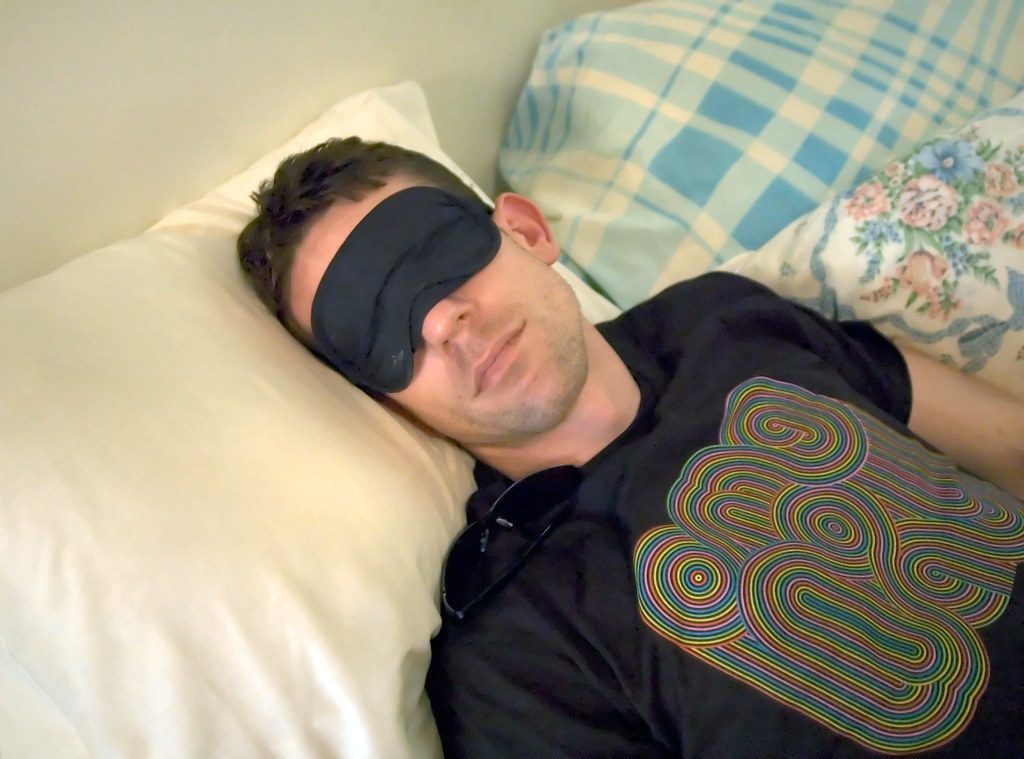
Useful language
Match the words
Eight words about sleep and the bed. Click a word, then click its definition. Correct pairs turn green. The audio button says the word.
Complete the sentences
Click a word in the bank, then click a gap. Read the whole sentence first: the clue is always inside it. Click a filled gap to clear it.

 The hotel
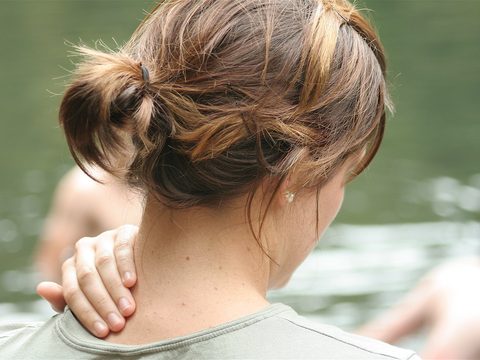
_____ was so thick and hard that it pushed my head up all night, and now my neck hurts.
 The bed frame is fine, but the
_____ is so old and soft that we sink into the middle of it.
 Change the
_____ on your bed every week: you sweat on them all night, and clean cotton feels wonderful.
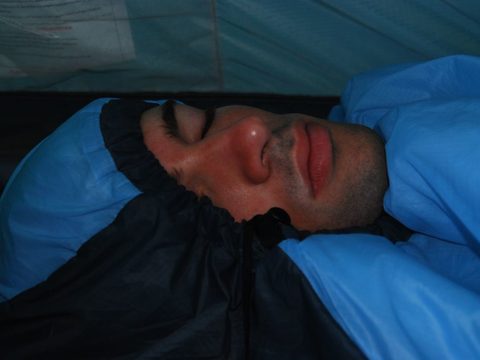 It was freezing in the tent, so I pulled a thick wool
_____ up to my chin and finally felt warm.
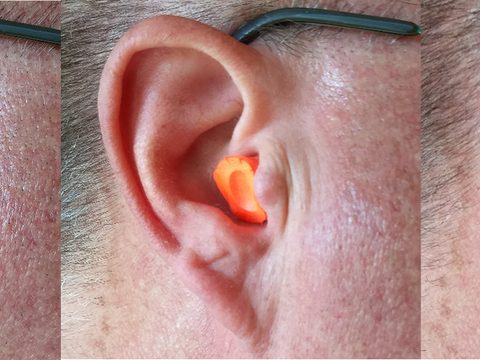 My two roommates
_____ so loudly that I can hear them through the wall, so I sleep with earplugs now.
 The lecture was so boring that I had to cover my mouth to hide a huge
_____.
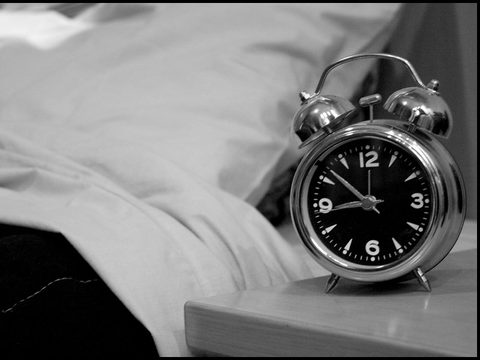 I set the
_____ for 6:15, but I pressed the snooze button three times and was late anyway.
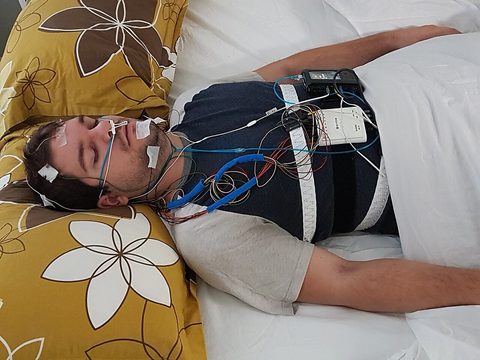 The doctor explained that his breathing stops for a few seconds many times a night, a condition called sleep
_____.
Four positions, one stiff neck
Watch the video first: three minutes, with captions. Then read the story, which retells it. Dotted words have a definition: hover or tap them. The audio button reads each paragraph aloud.
Seven in the morning. The alarm rings, you sit up, and your neck is stiff again. Imagine you sleep on your stomach, face down, head turned to one side. Could the position be the problem?
It could, because during the night your body works hard to repair itself. A good position helps that repair; a bad one can hurt it, night after night, for years.
So what is the best position? It depends on your body, but the rule is simple: support the natural curve of your spine, help your body recover, and stay comfortable.
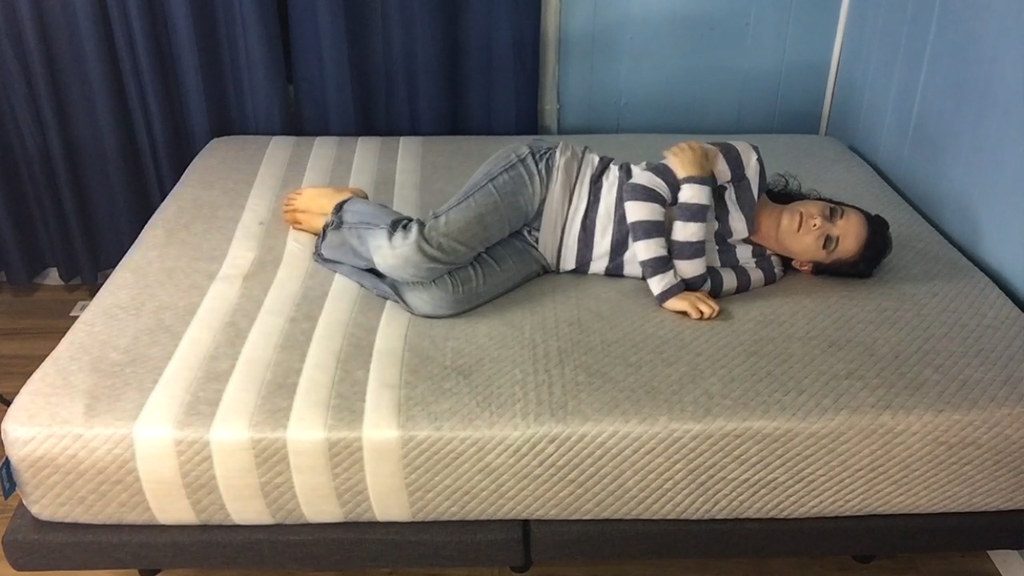
Side sleeping passes this test well, which is why it is the most popular. It keeps the spine aligned, has the lowest risk of back pain and keeps the airways open, so you snore less.
The same position has a price, though. Your face presses into the pillow, which some people connect with wrinkles, and your weight rests on one shoulder, so shoulder pain can get worse.
The fetal position is side sleeping with the legs bent and pulled in, so it shares the same benefits and problems. The only extra advice: stay loose and relaxed when you curl up.
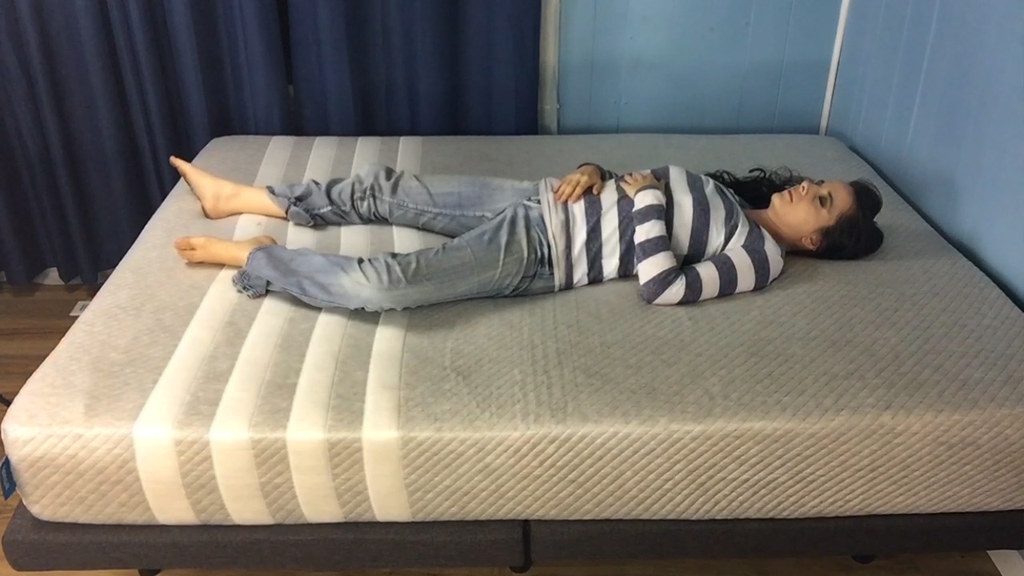
Sleeping on your back comes second in popularity, and it can help a sore neck as long as your head stays in line with your body. Nothing presses on your face, so fewer wrinkles.
But lying flat makes the airway narrower, so people who snore or have sleep apnea sleep worse this way. It is also not ideal during pregnancy or with some kinds of back pain.
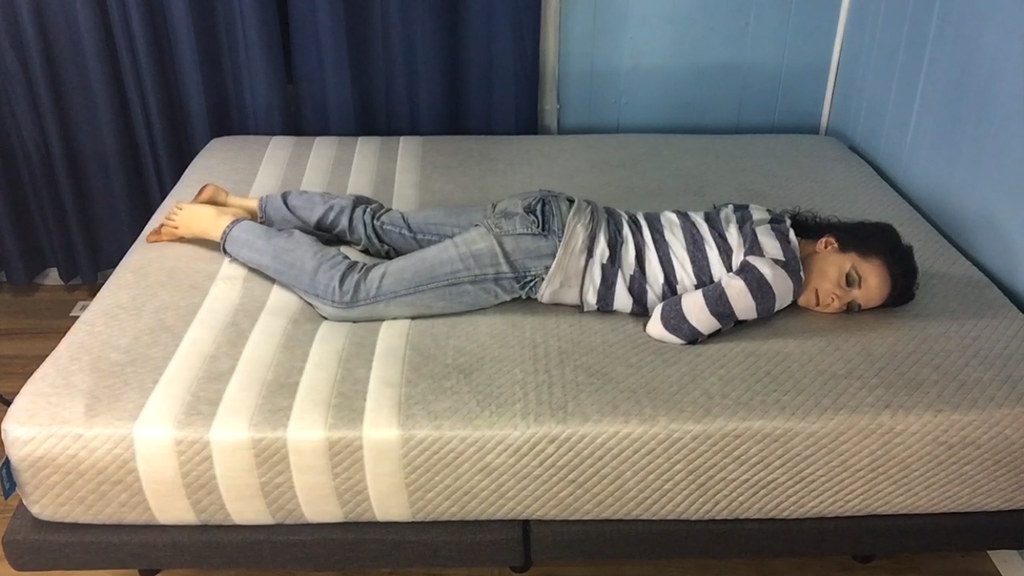
Stomach sleeping, your position, is the least popular, and hard on the neck. It opens the airway and helps with snoring, but the head must turn to one side, which twists the neck all night.
If none of this applies to you, sleep in the pose that feels best; stomach lovers can try a very thin pillow, or none. If the pain continues, see a doctor or a sleep specialist.
Multiple choice
The stamp shows the moment in the video. Click an answer and read why.

-
Why does your sleep position matter, according to the text? 00:11
The video says the body works hard to mend itself while you sleep, and that the position "can actually help or hurt this process." Nothing about waking up or about the number of hours.
-
What should a good sleep pose do, according to the text? 00:26
Three conditions: the natural curvature of the spine, the nightly recovery, and comfort. The spine has a curve; "completely flat" would work against it.
-
Which position do most people sleep in? 00:40
Side sleeping is the most popular position, the back comes second, and the stomach is the least popular of all.
-
Why does side sleeping help people who snore? 00:50
Open airways mean less snoring and less mild apnea. The video adds that side sleeping may also be good for pregnant and older people and for people with acid reflux. The pillow and the shoulder are the downsides, not the benefit.
-
What is the problem with side sleeping for your face? 01:06
Sleeping on your side "presses your face against the pillow," so people worried about sleep wrinkles may prefer another position. Breathing is actually better on the side.
-
How is the fetal position different from side sleeping? 01:16
Fetal = side sleeping "with bent legs curled in toward the body." The pros and cons are the same; the advice is to keep the posture loose and relaxed.
-
When does back sleeping help with neck pain? 01:34
"As long as your head and neck are in line with your body." A small pillow at the nape of the neck helps with that; a thick pillow would push the head out of line.
-
Who should think twice before sleeping on their back? 01:55
On the back, the airway becomes more narrow, so snoring and apnea get worse. The video also lists pregnant people in the second or third trimester and people with some types of back pain. Wrinkles are the reason to choose the back, not to avoid it, and the stiff shoulder is the side sleeper's problem.
-
What extra support does the video suggest for back sleepers? 02:04
"Put a thin pillow under your lower back or under your knees." It keeps the natural curve of the spine instead of flattening it.
-
Why can stomach sleeping hurt your neck? 02:25
Face down, you have to turn your head to breathe, and that twists the neck. Over time, the video says, this asymmetry can hurt your sleep posture.
-
What is the advice for people who love sleeping on their stomach? 02:34
A very thin pillow "or no pillow at all" keeps the head aligned with the spine. The video does not tell anyone to change position, only to see a doctor if there is pain.
-
Which sentence best summarizes the text?
Every position has pros and cons, and the text ends with "sleep in the pose that feels best" plus the doctor if the pain continues. It never crowns one position for everybody.
Parts of the body
The video names ten parts of the body. Put each one in the sentence that describes it. Click a word in the bank, then click a gap.
- Your _____ is the long line of small bones that runs down the middle of your back.
- He lay flat on his _____ in the grass and looked up at the stars.
- Doctors call the area just above your hips the _____; lifting heavy boxes with straight legs is the fastest way to hurt it.
- He can't raise his right arm at all: he hurt his _____ playing tennis.
- The collar of this shirt is too tight around my _____.
- Nod your _____ if you agree, and shake it if you don't.
- She washes her _____ with cold water every morning to wake up properly.
- Don't swim right after lunch: a full _____ and cold water are a bad combination.
- Babies crawl on their hands and _____ before they learn to walk.
- Runners with long _____ take fewer steps to cover the same distance.
The small words that hold a text together
These eleven words do the connecting work in the video: they add, contrast, condition and emphasize. Each one fits exactly one sentence. Click a word, then click a gap.

- By the time the alarm rang, she had _____ been in the shower for ten minutes.
- Last night the cat jumped on the bed _____ I was falling asleep.
- Many people think a hard mattress is best, but a medium one is _____ better for most backs.
- Some people need _____ five hours of sleep and still feel great.
- A good pillow is not only for comfort but _____ for the health of your neck.
- Side sleepers often put one arm under the pillow, _____ can make the shoulder numb by morning.
- It's not the number of hours _____ the quality of sleep that matters.
- Try a lower pillow _____ you wake up with a stiff neck.
- Naps are fine as _____ as they don't last more than twenty minutes.
- Everyone should stretch in the morning, _____ people who sleep on their stomach.
- He was so tired that he didn't hear the alarm _____ all.
Adjective + preposition
Read the note, then choose the preposition that goes with each adjective. Click an answer and read why.

The adjective picks the preposition, not the meaning. The video says side sleeping is beneficial for older people, lying on your back is not ideal for pregnant people, and your head should stay in line with your body. There is no rule to work out, only pairs to learn, so learn the adjective and its preposition as one word with two halves.
- about — feelings about a topic: anxious about the exam · sorry about the noise · crazy about tennis
- of — fond of cats · capable of running a marathon · aware of the risk · scared of the dark
- at — skills and reactions: brilliant at math · hopeless at cooking · surprised at the news
- for — ready for bed · late for work · bad for your teeth
- in — involved in a project · successful in business
- with — bored with the movie · happy with the result · in line with the body
- to — used to the noise · kind to animals · close to the window · addicted to coffee
- from — far from home · safe from harm · absent from class
- Same adjective, two prepositions, two meanings: good at singing (a skill) but good for your health (a benefit); sorry about the delay (a situation) but sorry for the victims (a person you feel for).
- After the preposition, a verb takes -ing: fond of reading · bored with waiting · used to getting up early.
-
People worried ___ sleep wrinkles may prefer to sleep on their back.
Worried about: a feeling about a topic. This is the sentence the video uses at 02:41.
-
I'm fed up ___ waking up tired every single day.
Fed up with = you have had enough of something, like bored with. You may hear fed up of in informal British English; American English says with.
-
The fetal position is very similar ___ side sleeping.
Similar to, always. The same as takes as, which is where the confusion comes from.
-
I'm tired ___ waking up with a sore shoulder every day.
Tired of + -ing = fed up with something. Tired from exists too, but it means physically exhausted by an activity: tired from the trip.
-
Caffeine is responsible ___ many sleepless nights.
Responsible for. Portuguese says "responsável por," and the translation pulls people toward "by": resist it.
-
Side sleeping is popular ___ people who snore, because it keeps the airway open.
Popular with a group of people. Popular among also works; of and between do not.
-
My brother is allergic ___ feather pillows, so he uses cotton ones.
Allergic to, like sensitive to and addicted to.
-
She was nervous ___ her first night in the new apartment.
Nervous about, in the same family as worried about and excited about: feelings about something that is coming.
-
He is terrible ___ waking up early; three alarms are never enough.
Skills, good or bad, take at: terrible at, great at, useless at. Note the -ing after it.
-
Keep your bed separate ___ your work: no laptop under the blanket.
Separate from, like different from and far from: distance and difference take from.
Ten questions for a partner
Complete each question with a preposition from the bank. Two of them are used twice. Check your answers, then choose three questions and ask a partner.
- What is your country famous _____?
- Are you proud _____ anything you have done at work or at school?
- Are you interested _____ history? Why, or why not?
- Is there anything you are pleased _____ this week?
- What were you bad _____ when you were at school?
- Do you consider yourself good _____ learning English? Why, or why not?
- Are you excited _____ your next vacation? Why, or why not?
- Would you get married _____ someone you met on the Internet?
- Do you have brothers or sisters? Are you very different _____ each other?
- What were you most afraid _____ when you were a child?
Talking point
Part A is about the video and the text. Part B is about your own nights. Part C is for opinions: agree, disagree, and say why. Tap a card when you have discussed it.

Useful language
How to sleep well: a one-minute talk
Write 80–120 words for a short presentation on how to sleep well. The class infographic gives five things to do (warm milk, a fixed bedtime, a light dinner, meditation, a comfortable temperature) and five to avoid before bed (hard training, stress, alcohol, coffee, social networks). Use at least three of them, add one tip about sleep position from the text, and use three adjective + preposition pairs. Then present it to the class.
My results
Check your score, then copy it and send it to your teacher on WhatsApp.

One job for this week. Tonight, notice which position you fall asleep in, and tomorrow, which one you wake up in. Then send me one sentence about it with an adjective and its preposition: I'm used to…, I'm worried about…, it's good for…