Fika, a Relaxing Coffee and Cake Break
In Sweden, even a mighty car plant stops for coffee. A daily ritual that is good for the brain, for friendships and, it turns out, for business. Plus six coffees explained by a barista, and four small words that end in -ever.
Warm-up
Ask and answer with a partner, or with me. Tap a card when you have answered it.

Coffee first, grammar later. Today we visit Sweden, where a whole factory stops for a cup of coffee and a piece of cake, and we learn four small words that say "it doesn't matter": whatever, whenever, wherever and whoever.
Useful language
Coffee break words
Click a word, then click its meaning. Correct pairs turn green. The audio button says the word.
Complete the sentences
Click a word in the bank, then click a gap. Click a filled gap to clear it. Read the whole sentence first: the clue is always in it.

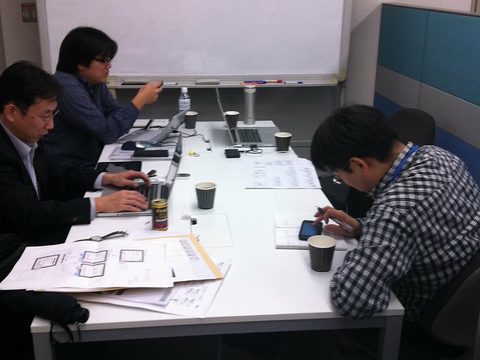 My _____ sits at the desk next to mine, so we have lunch together almost every day.
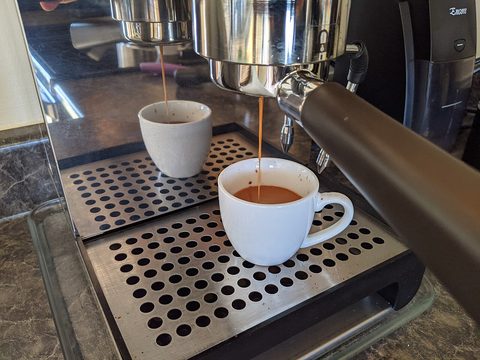 I don't want any milk this morning, just something small and strong to wake me up: one _____, please.
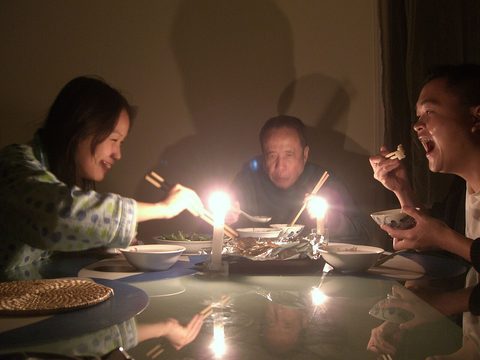 The power went out in the middle of dinner, so we finished the meal by _____, which was actually very romantic.
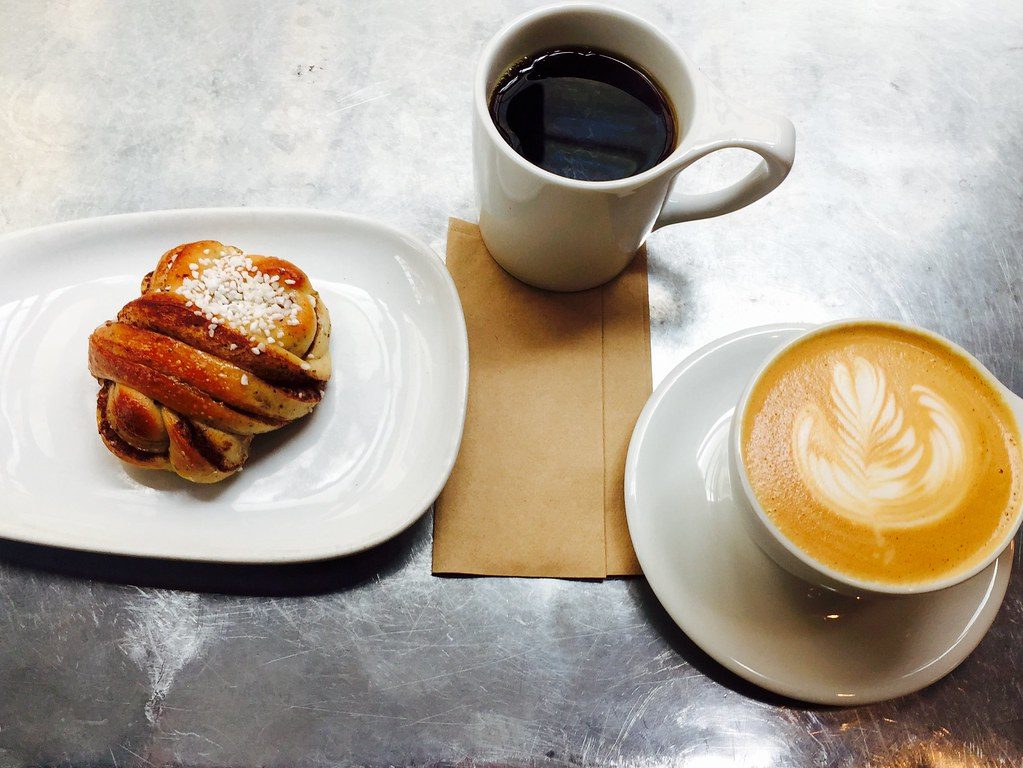
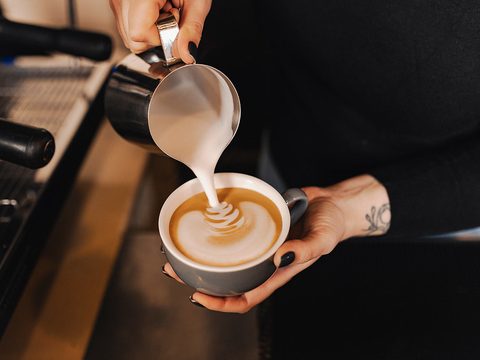 If you like your coffee mild and milky, order a _____: it has more steamed milk than any other drink on the menu.
 The company's new car _____ will employ two thousand workers and build three hundred vehicles a day.
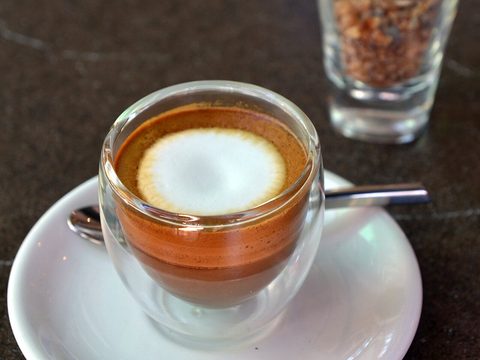 The barista put one tiny spot of foam on top of my espresso, handed me the small cup and called it a _____.
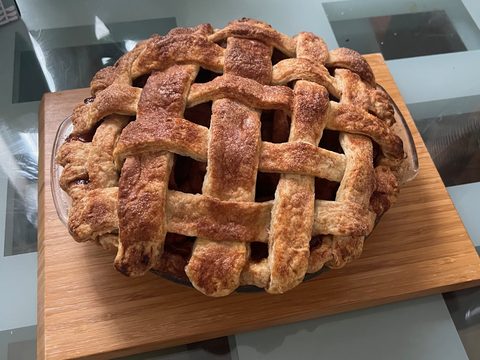 Nothing from the bakery tastes as good as my grandmother's _____ apple pie.
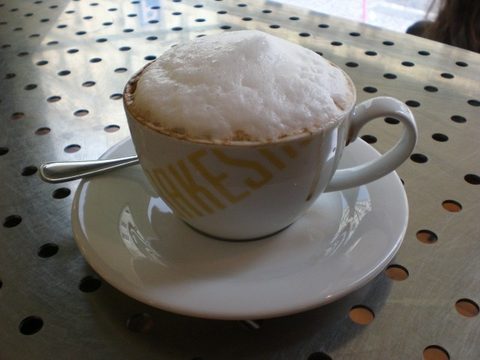 A latte has too little foam for me and a macchiato is too small, so I always order a _____, with its thick, tall cap of foam.
The plant that stops for coffee
Read the story of fika, retold from an article by John Duxbury. Dotted words have a definition — hover or tap them. The two -ever words are marked; you will need them in Exercise 08. The audio button reads each paragraph aloud.
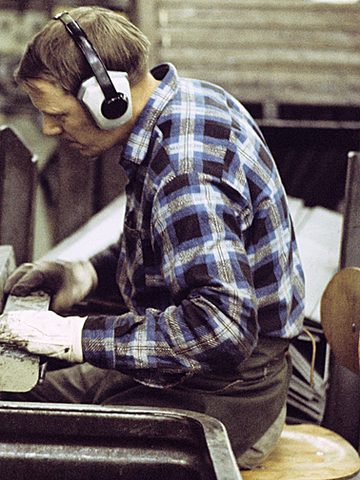
Picture a mighty Volvo plant in Sweden. At a certain moment, the machines stop, the noise dies down, and the workers walk away from their stations. Nobody is worried. It is fika.
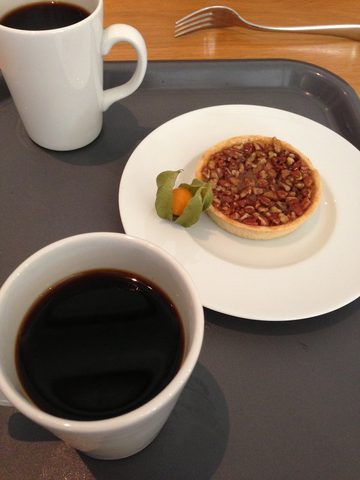
In English, fika is usually called "a coffee and cake break", and that is partly correct. But for Swedes it is much bigger: an attitude, a way of thinking, a central piece of their culture.
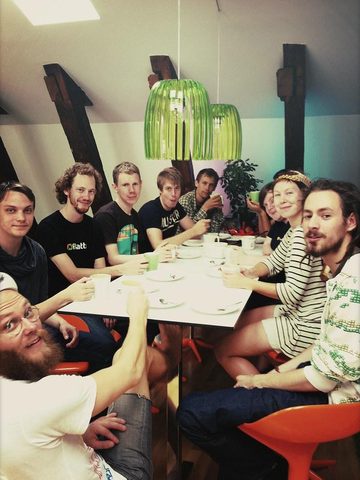
Because it is an attitude, it has rules. First: you cannot fika alone at your desk. That is just coffee and cake. Fika means making time to share a cup with friends or colleagues.
Because everyone stops together, fika becomes a ritual. For many Swedes, a day without it hardly feels complete. The brain gets a rest, and the relationships get stronger.
Companies noticed that too. Where fika is part of the routine, firms build better teams and get more work done. The break that looks like lost time is good for business.
Because fika is so common, the word even works as a verb. A colleague can say, "Let's go fika!", and two friends who get along well fika together nicely.
Because the point is the people, what you eat is not really important. The food is incidental: what matters is the conversation and catching up with the people around you.
Still, whatever you bring should be fresh and nicely presented, and ideally homemade. Many Swedish team leaders take this seriously: they often bake at home and bring the result to work.
Around that homemade cake, the group often lights a candle, even in an office or a corner of the factory. Candlelight helps everyone slow down while they sip their coffee and share a small treat.
Even the name comes from the drink. In nineteenth-century slang, coffee was kaffi; flip the syllables and you get fika. Wherever you live, give fika a try: nobody is too busy for it.
Multiple choice
Twelve questions about the story. Click an answer and read why.

-
What happens at the Volvo plant in the opening scene?
Not even a huge car plant keeps working through fika. It is the first sign that fika is a ritual for everyone, not a personal habit.
-
"A coffee and cake break" is a translation of fika that the writer finds…
The translation is not wrong, only too small: fika is also an attitude and a central piece of Swedish culture.
-
Why can't you fika alone at your desk?
Fika needs company: it means making time to share a cup with friends or colleagues. The same cup, alone, is only a snack.
-
According to the text, what does fika do for people?
The brain gets a rest and the relationships get stronger: those are the two benefits the article names. Getting more work done is a result for companies, and the text never mentions tired afternoons or lunch.
-
Why do firms like fika?
Where fika is part of the routine, people work better as a team and get more done. That is why the text calls the break good for business.
-
What does it mean that fika "works as a verb"?
A colleague can say, "Let's go fika!" The noun is still there; the verb is an extra. And the text never mentions coffee shops.
-
What matters most during fika?
The food is incidental, says the article: the point is catching up with the people around you.
-
What do many Swedish team leaders do?
Homemade is the ideal, and many team leaders take that seriously: they bake at home and bring the result to work for everyone.
-
Why do people light candles at fika?
Fika is about slowing down, and candlelight helps, even in a corner of a factory.
-
Where does the word fika come from?
In the nineteenth century, coffee was kaffi in slang. Flip kaf-fi to fi-ka and you have the word.
-
What is the writer's advice at the end?
Wherever you live, give it a try: the ritual travels. And the last words are a small warning: nobody is too busy for fika.
-
Which sentence best summarizes the text?
Cake and factories appear in the story, but fika is not a cake or a machine. It is the pause, shared with others, from the Volvo plant to the writer's last piece of advice.
Words from the text
First, find in the text a word that means the same as the cue. Then use the same words to complete the sentences: mighty, firm, incidental and while. The original article is British and writes whilst; in American English we say while.
-
powerfulA word in the text that means powerful, very big and strong.
-
companyA word in the text that means company, business.
-
secondaryA word in the text that means secondary, not the main point.
Now complete each sentence with one of the four words.
-
aShe's just started working for an accounting ___.
-
bI read it ___ you were drying your hair.
-
cIn the next game they will face the ___ Patriots.
-
dThe points you make are true, but they're ___ to the main problem.
Six coffees, one barista
Before you watch: questions 1–3 describe the three cups from the class slide. Name each coffee. Then watch: a barista makes six of the most famous coffees in the world. The stamp shows the moment in the video, and the captions are on.

-
Cup 1: a layer of milk foam on top, a layer of steamed milk under it, and coffee at the bottom.
Foam and steamed milk over the coffee: that is a cappuccino. A latte would have more milk and less foam, but it is not on this list.
-
Cup 2: only coffee, filling less than half of the cup.
Small, black and strong, with no milk at all.
-
Cup 3: coffee with just a thin line of milk foam on top.
Macchiato means "stained" in Italian: an espresso stained with a little foam. The barista explains it at 00:45.
-
The barista is the co-founder of a coffee company in… 00:02
He greets us with "G'day", an Australian hello, but his company is in Turkey, "at the moment".
-
When he makes an espresso, what is really important? 00:25
"Really important how we extract the coffee." A good extraction gives the golden crema he shows at 00:32.
-
He extracts the coffee for a perfect… 00:57
Twenty-three to twenty-four seconds of extraction, and the coffee gets the golden crema it needs. Without it, he says, "your coffee is not a coffee".
-
Compared with the other drinks, a latte gets a little more… 01:25
"You get a little bit more milk into a latte. It's all in the pouring." The foam on top is only about a finger thick.
-
In a cappuccino, what are the 30 ml? 01:35
Thirty milliliters of coffee, and the rest is froth: that is why a cappuccino has a dome on top and does not spill when you shake it.
-
Where did the flat white originate? 02:03
"It originated from Australia." He compares it to a piccolo latte: the same amount of coffee, less milk.
-
Nitro coffee is basically… 02:18
Cold brew plus nitrogen gas, poured like a beer: it even gets "a nice little beer head" on top.
Whatever, whenever, wherever, whoever
Two sentences from the text: "Whatever you bring should be fresh" and "Wherever you live, give fika a try." Read the note, match the meanings, then complete the sentences.

-ever means "it doesn't matter". Add -ever to a question word and it stops asking a question: it says that the answer is not important, or that every answer is fine. Bring whatever you like: the cake, the cookies, the fruit, all fine.
- whatever = anything or everything; it doesn't matter what. Order whatever you want; I'm paying.
- whenever = at any time; it doesn't matter when. Call me whenever you need a hand.
- wherever = in any place; it doesn't matter where. Sit wherever you like.
- whoever = any person; it doesn't matter who. Whoever gets there first should save a table.
- Form: the -ever word opens a clause with its own subject and verb (whatever you bring, wherever you live). The clause can come first or second; when it comes first, add a comma: Whatever happens, keep calm.
- Careful: whenever is not when. When you arrive = at that moment. Whenever you arrive = at any time, early or late, it doesn't matter.
- Same family: whichever (any one of a group: Take whichever seat is free) and however (in any way: Do it however you like).
Now complete each sentence with whatever, whenever, wherever or whoever. Read to the end of the sentence first: the second half tells you which one.
-
aYou can come over ___ you like. I'm home all week.
-
bI'd like to speak to ___ is responsible for the sales department.
-
cThe model comes in all these colors. Choose ___ you like.
-
dWe can do ___ you like tomorrow. I have a day off.
-
eI always have a good time with Angela ___ we go, even to the supermarket.
-
f___ wins the office bake-off gets to choose next month's cake.
-
gMy grandmother lights a candle ___ we sit down to eat: morning, noon or night.
-
hThis coffee chain looks the same ___ you go, from Tokyo to Toronto: the menu never changes.
Talking points
Part A is about the text and the video. Part B is about your own coffee habits. Part C is for your opinions. Tap a card when you have discussed it.

Useful language
Fika, your way
60–100 words. Design a daily break for your team, your class or your family: when it happens, where, who comes, what you eat and drink, and one rule. Use at least two of the words from Exercise 08. Example: Whoever arrives last makes the coffee.
My results
Check your score, then copy it and send it to your teacher on WhatsApp.

One job for this week. Have one real fika: no desk, no phone, one colleague or friend, one drink and one small treat. Then tell me in English what you talked about, with at least one whatever, whenever, wherever or whoever.