Seeing the Cast for the First Time
Alice Oseman drew a comic on her own and posted it online. A few years later she was standing on a Netflix set, watching real actors play her characters. The words of the creative industry, and the tense that tells what had happened before.
Warm-up
Read the two character profiles and watch the author's one-minute video (it has no captions, so just look at the pages). Then answer the cards with a partner, or with me. Tap a card when you have answered it.

Today we follow a comic from a web page to a TV set, with its author. Before we start, guess what the story is about: two profiles and one short video are all the clues you get.
- Charles "Charlie" Spring — who are you: Nick's boyfriend · school year: Year 10 · age: 15 · birthday: April 27 · MBTI: ISTP · fun fact: "I love to read!"
- Nicholas "Nick" Nelson — who are you: Charlie's boyfriend · school year: Year 11 · age: 16 · birthday: September 4 · MBTI: ESFJ · fun fact: "I'm great at baking cakes."

Check your answer
It is a love story. Heartstopper started as a webcomic about Nick and Charlie, two students at the same British school: first they are friends, and then they fall for each other. Around them there is a warm group of friends, and the books also talk about coming out and mental health. Volume One reached bookstores in 2019, and a Netflix series with real actors arrived in April 2022.
Useful language
The creative industry
All eight words come from the video. Click a word, then click its definition. Correct pairs turn green. The audio button says the word.
Complete the sentences
Click a word in the bank, then click a gap. Click a filled gap to clear it. Each sentence has its own clues: only one word fits.

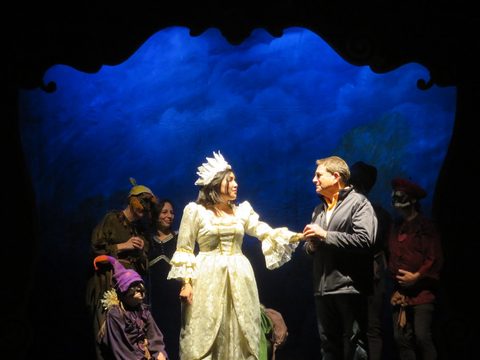 The actors arrived at the theater at nine in the morning for one last
_____ before the show opened that night.
 My nephew reads one
_____ after another: he loves stories told in pictures, with only a few words on each page.
 At the end of the play, the whole
_____ came on stage together and bowed while the audience applauded.
 The movie was filmed on a
_____ built inside a studio: the street, the houses, even the trees were fake.
 My phone fell on the floor and now the
_____ is cracked, so I can't read my messages.
 The novel is six hundred pages long, so the movie
_____ had to cut several characters and change the ending.
 Forget the small details and tell me the
_____ of your idea in one sentence.
 From a customer's
_____, a lower price matters more than a beautiful package.
From a webcomic to a TV set
Watch the video first: three minutes with Alice Oseman on the set of Heartstopper, with captions. Then read the story. The past perfect is in bold. Tap a dotted word to see what it means.
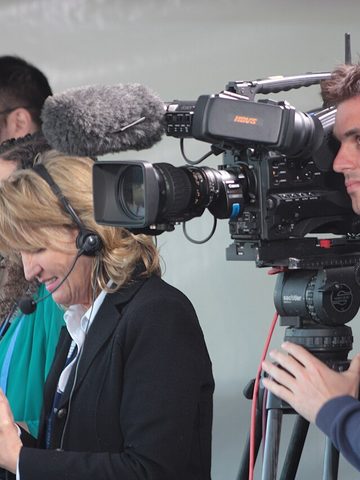
Alice Oseman sits on a busy TV set while a camera crew works around her. A few years earlier, she was a writer who drew a comic on her own and posted it online.

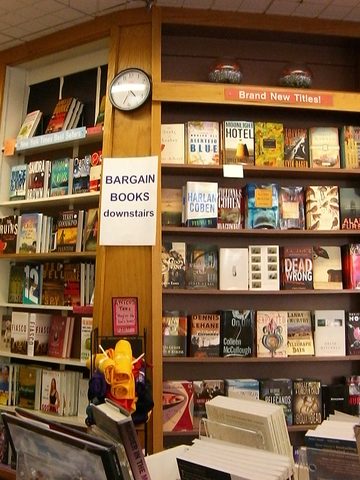
That comic was Heartstopper, the story of Nick and Charlie, two teenage boys at a British school who become friends and then fall in love. Alice published it online, page by page.
Readers found it on Tumblr and Tapas, and a big fan base grew around it. Today its pages have over fifty million views. Alice asked those fans to crowdfund a limited printed edition.
They reached the funding goal in less than two hours. Then a publisher took it on: Heartstopper Volume One reached bookstores in 2019, and the series has since sold a million printed copies.
Success like that attracts television. Netflix made a live-action series, and the adaptation reached screens in April 2022, with Alice as its writer. But adapting a comic is not simple.
The lesson she learned: something that works in one format might not work in another. So the team looked at the story from a TV perspective and made the world bigger.
The core story did not change. Beyond Nick and Charlie, the show follows Tao, Elle, Tara and Darcy more closely, and it adds new characters too.
Then came the strangest moment: seeing her characters as real people. It happened during rehearsals, when the whole Heartstopper gang stood together for the first time. Alice found it surreal.
She had never been on a TV set before, but she was there every day to represent the comic and its readers. With Patrick, a producer, she watched every scene and talked to the director.
She worked with the costume, art and props teams too. By the end, a writer used to working alone had found a team. She hopes this joyful story will inspire young people, especially LGBTQ+ ones.
Multiple choice
Some questions come from the story, some from the video: the stamp shows the moment in the video. Click an answer and read why.

-
What was Alice doing a few years before the TV show?
The story opens on the set and then jumps back: a writer, alone, drawing a comic and publishing it online, page by page.
-
Where did readers first find Heartstopper?
It began as a webcomic. The book reached bookstores in 2019 and the series came in 2022, years after the first readers found it online.
-
What happened when Alice asked her readers to crowdfund a printed edition?
Less than two hours: the readers who had found the comic online paid for the book at once. The publisher came after that, and Netflix later still.
-
Is Alice happy with the adaptation? How can you tell? 01:20
"They're all amazing, and it's just been wonderful." She also says the core story is still there and that expanding it has been part of the fun.
-
What did Alice learn about adaptations? 00:42
Something that works for one format might not work for another. That is why the team had to look at the story from a TV perspective.
-
What did the team keep, and what did they change? 00:28
"We haven't changed what is in the comic. We've just made the story bigger." The show is an expanded version, not a different story.
-
Which characters from the comic get more attention in the show? 00:35
Beyond Nick and Charlie's story, we learn a lot more about those four. The show also adds new characters, but Alice names only these four from the comic.
-
When did Alice see the whole cast together for the first time? 01:11
"It was probably during rehearsals when we first saw them all together": before the cameras, when the actors practice the scenes.
-
How did she feel when she saw them? 01:06
Seeing the characters for the first time was "so surreal", and the whole gang together was "just very weird". Strange, not bad: she says they are all amazing.
-
Why did Alice stay on set every day? 02:00
"I kind of feel like it's my role to represent the comic and the readers." She watches the scenes with Patrick, talks to the director and consults the departments. She never mentions acting or rewriting episodes.
-
What does Alice mean by "a team effort"? 02:22
A writer is used to working by herself; the show highlighted what you can do when so many talented people are involved.
-
The best title for this story would be:
Every paragraph is one step of the same trip: a comic online, a book, a series, and its author on the set for the first time. The text never teaches drawing, and the director appears in one sentence.
Which word does Alice say?
Choose the word you think is right first. Then watch the moment on the stamp and check.
-
"___ Nick and Charlie's story, we learn a lot more about Tao and Elle and Tara and Darcy." 00:35
Beyond their story = further than it, in addition to it. Outside would suggest that the other characters are not part of the story at all.
-
"We're just there to ___ them…" 01:34
To support someone is to help them. To carry them would mean they can't do it alone, and Alice says the opposite: "they just are the characters".
-
"…and see them ___." 01:36
To thrive is to grow and succeed. Decline is the opposite: to become weaker or less successful.
-
"So, my day-to-day experience ___ set, because I've been here every day…" 01:38
A fixed expression: on set or on the set, never in set. The same for a stage: on stage.
-
"…and we're also ___ consultation with all the different departments…" 01:53
Another fixed expression: to be in consultation with someone is to talk to them and ask their opinion before deciding.
-
"…like costume and the art department and ___." 01:57
Props, short for properties, are the objects the actors use in a scene: a cup, a phone, a school bag. Objects is a normal word, but it is not the name of the department.
-
"It really is a ___ effort." 02:22
A team effort is the usual collocation: work that many people do together. Group effort exists, but it is not what Alice says.
The past perfect

The past of the past. Alice says, "I had never been on a TV set before." Two moments: the day she joined the show, and all her life before that day. The past perfect points at the earlier one.
- Positive: She had finished the script before the first rehearsal. Short form: She'd finished…
- Negative: hadn't + participle — The actors hadn't met before that day.
- Question: Had + subject + participle — Had you read the comic before you watched the show? Short answers: Yes, I had. · No, I hadn't.
- Two past events, one before the other. The earlier one takes the past perfect, the later one takes the past simple: When the publisher called, she had already drawn two hundred pages. First the pages, then the call.
- Signal words: already, never, before, by the time, after, until then — By the time we got home, the rain had stopped.
- Present perfect or past perfect? I have never been on a set = up to now. I had never been on a set before = up to that moment in the past — and then it happened.
- Careful with 'd: it can be had or would. Before a past participle it is had: They'd left = they had left. They'd leave = they would leave.
-
"So, I had never been on a TV set before." The tense is called… 02:08
Had + been = past perfect. Have never been would be the present perfect.
-
What does the past perfect show in that sentence? 02:08
One event happened before another in the past: no set in her life, and then the show. The third option is what the present perfect would mean, and it is not true: she is on a set now.
-
The structure of the past perfect is…
Had for every person, then the participle: had been, had seen, had written.
-
"When the actors arrived on set, the crew had already built the classroom." Which happened first?
The past perfect marks the earlier event. When they arrived (past simple), the classroom was already there.
-
"We'd seen the trailer, so we knew the story." What is 'd here?
Seen is a past participle, so 'd = had. With would the verb would be the base form: we'd see.
-
Before 2022, Alice ___ a TV show.
Before 2022 closes the period in the past, so past perfect. The present perfect would connect to now, and she has written one now.
-
She ___ on set every day since filming started, and she is still there.
Since + still there: the period continues to now, so present perfect. The past perfect needs a second, later event in the past.
-
Which sentence is WRONG?
By the time we arrived is in the past, so the earlier event needs had, not has.
-
It was the first time she ___ a real camera crew.
It was the first time + past perfect: before that moment, it had never happened. Compare: It is the first time I have seen…, in the present.
Match the sentence halves
Each beginning has one ending. Read the pronouns and the meaning: they tell you which half is which. Click a beginning, then click its ending.
Past perfect or past simple?
Write the verb on the left in the right tense. Decide first which event happened earlier. The first sentence describes a timeline: a plane takes off, then a woman arrives at the airport with her suitcase, then now.

-
already / take offBy the time she got to the airport with her suitcase, the plane ___.
-
forgetThe car wouldn't start in the morning because we ___ to turn off the lights.
-
you / ever / see___ a real TV set before you visited the studio?
-
already / leaveWhen we arrived at the party, most of the guests ___.
-
readShe recognized the ending of the movie immediately because she ___ the book twice.
-
not / finishThe actors couldn't rehearse the last scene: the writer ___ it yet.
-
never / workUntil that summer, he ___ in a team. He had always been alone.
-
arriveBy the time the director ___, the cast had already rehearsed the scene three times.
-
beIt was the first time she ___ on a movie set, and she loved every minute.
Talking points
Talk for about a minute about each card and ask your partner follow-up questions. Part A is about the video and the story, Part B about your life, Part C about the message of the show. Use the past perfect whenever you can.
Useful language
Your life timeline
80–120 words. Choose five moments of your life (your first day at school, a move, a trip, a job, a person you met) and tell them in order. For each moment, say what had already happened before it: at least four sentences with the past perfect. Example: When I was two, the Berlin Wall had already fallen.

My results
Check your score, then copy it and send it to your teacher on WhatsApp.

One job for this week. Every evening, tell one thing you did during the day and one thing that had already happened before it: "When I got to work, my boss had already left." Two sentences, out loud, in English.