The Young Mom Who Changed the High Street
British stores had no card with a brown-skinned princess, so Jessica Huie made one herself, and a company was born. Her story, her morning pages and the day she got off the treadmill, with the past simple for what happened and the present perfect for what still matters today.
Warm-up
Ask and answer with a partner, or with me. Click a card when you have answered it.

Today we meet Jessica Huie, a mother who went shopping for a card and came home with a business idea. We follow her story and, on the way, sort out two tenses: the past simple for what happened, and the present perfect for what is still true now.
Useful language
Words for the story
Click a word, then click its definition. Correct pairs turn green. The audio button says the word.
Complete the sentences
Click a word in the bank, then click a gap. Click a filled gap to clear it. Read the whole sentence first: only one word makes sense in each one.

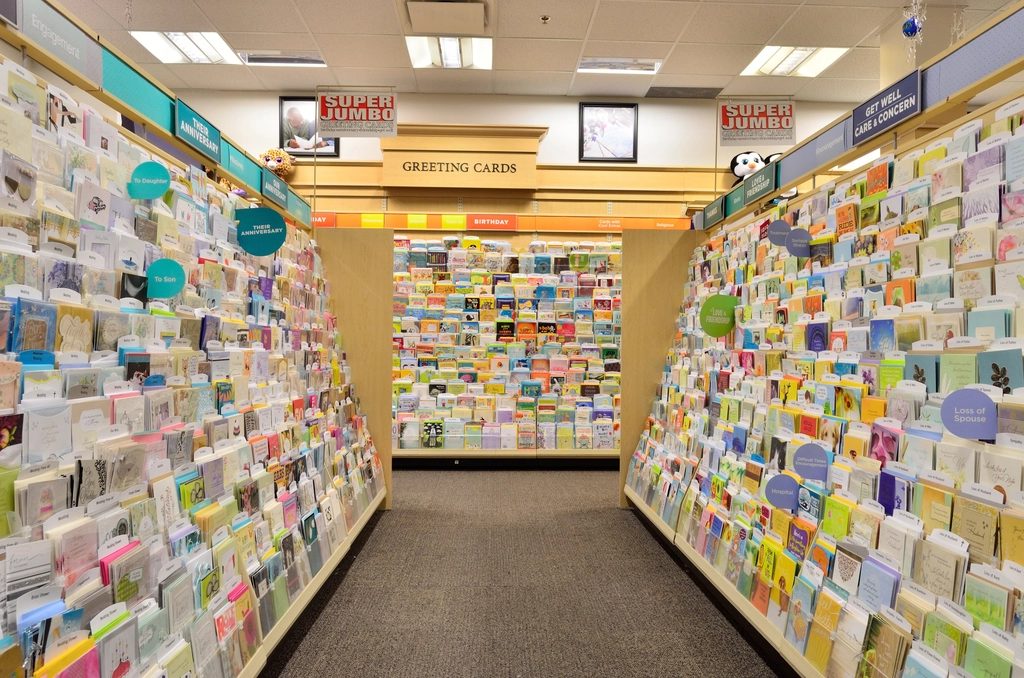
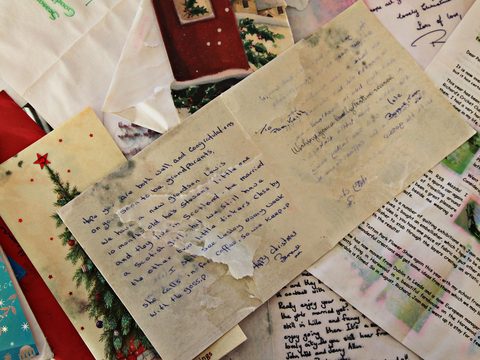 My grandmother keeps every
_____ we send her, from birthdays to Mother's Day, in a shoebox under her bed.
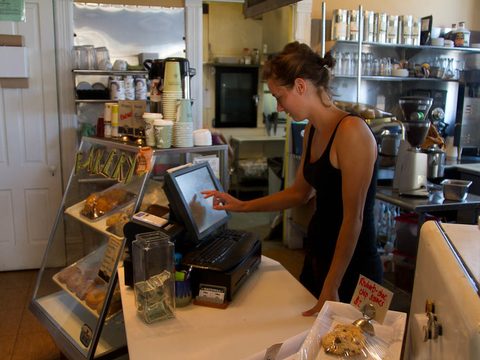 At 25 she was already an
_____: she had opened two coffee shops and was planning a third.
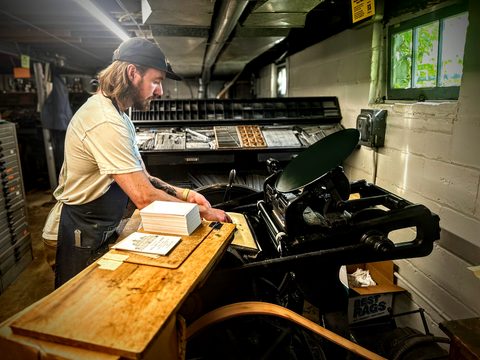 The author finished the manuscript in March, but the
_____ didn't print the book until October.
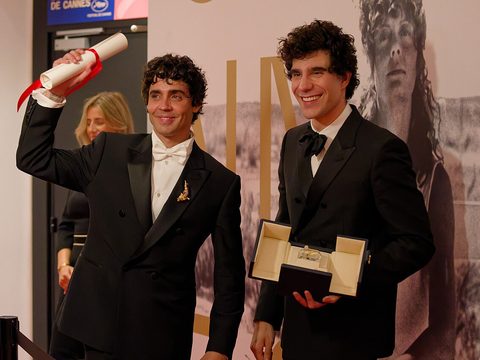 The movie won three
_____ last night, including one for best director.
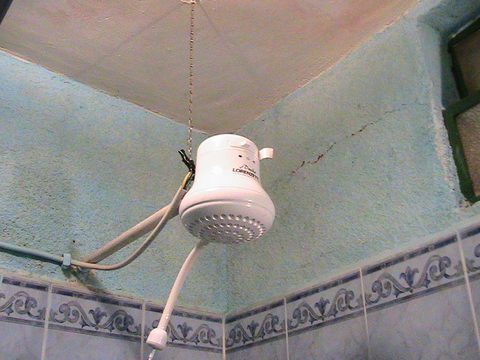 I had an
_____ in the shower: the problem was not the price of the product, it was the name.
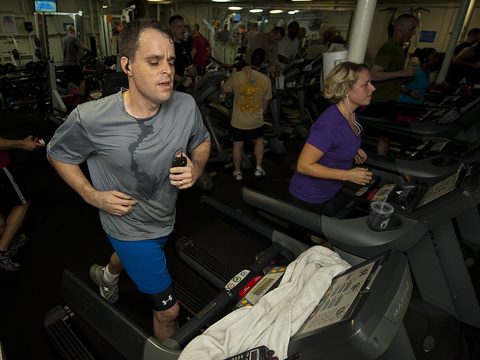 It rained all week, so I ran on the
_____ at the gym instead of in the park.
 Turn off your notifications when you study: every little sound is a
_____.
 The doctor
_____ her with pneumonia after looking at the X-ray, and started the antibiotics the same day.
The card that wasn't there
Watch the video first, with the captions on: just over four minutes. Then read the story. The past simple and the present perfect are highlighted. Hover or tap a dotted word to see what it means.
When Jessica Huie's daughter was seven, the girl was unhappy with her hair, which grew out instead of down. Jessica wanted a card that could build up the girl's sense of self.
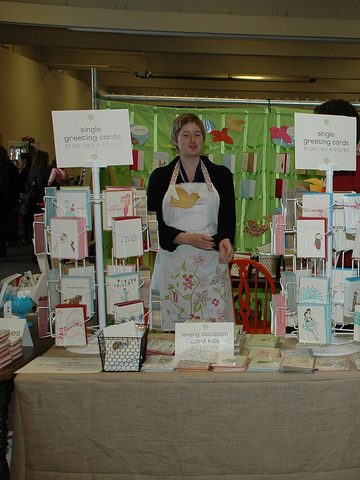

So she went to the stores to find a greeting card with a brown-skinned princess on it. She quickly discovered that no card on the shelves looked like her little girl.
The missing card gave her an epiphany: if nobody made these cards, why not make them herself? Instead of letting the thought go, she acted on it, and that decision changed her life.
She founded her own company, Color Blind Cards. No independent publisher before it had managed to put black and multicultural cards on the British High Street.
Success followed. The company won a number of awards, its cards were sold as far away as America and South Africa, and they helped start a conversation about representation in stores.
Motherhood, Jessica says, got her career started, and she is proud of what she has built. Yet in all those busy years, she never really stopped working.
Two and a half years ago, her father, who was very close to her, was diagnosed with terminal cancer. For the first time in her working life, Jessica stopped.
Suddenly, the work that had always felt so urgent seemed far less important. Since then, Jessica has learned to step off the endless treadmill of work every now and then.
Now she goes on a date with herself: two hours alone, with no phone and no schedule to distract her, just time to slow down and be in the moment.
Jessica has not lost her ambition, but it comes from a healthier place now. Every morning she fills three notebook pages with her thoughts before the day starts, and by the end she feels centered.
Multiple choice
The stamp shows the moment in the video. Click an answer and read why.

-
What is special about the card Jessica shows at the start? 00:00
Her little girl's hair "kept growing out rather than down", and the princess has the same hair. Nobody gave it to her and nobody drew it at school: Jessica created the card because she couldn't find it in the stores.
-
What does Jessica say motherhood did? 00:23
"Motherhood launched my life in many ways, certainly launched my career." The card for her daughter was the start of everything.
-
Why did Jessica go looking for a card in the first place? 00:28
Not a birthday: the girl was "going through this stage where she didn't like her hair", so Jessica wanted a card that would subtly reinforce her sense of self. A card, not a gift.
-
What did she find in the stores? 00:41
She expected to find a brown-skinned princess and "realized quickly that there was a complete absence of anything that was representative." That absence is the start of the business.
-
What did Jessica do with her idea? 00:54
Her epiphany moment was "Oh, why don't I do this?" and then, "rather than discarding the thought, I stepped into it." Doing it changed her life.
-
What did Color Blind Cards achieve? 01:07
The first independent publisher "to secure a presence" for black or multicultural cards on the British High Street. The cards were distributed in America and South Africa; the video says nothing about stores of their own, or about being the biggest.
-
Besides the awards, what is Jessica very proud of? 01:22
The cards "started this, or were certainly part of this early conversation around why representation and diversity and inclusion are so important in retail." "I'm very proud of that," she says.
-
What does Jessica do when she wakes up? 01:37
Pad and pen, and "I just let a stream of consciousness hit the page before I start my day." Sometimes it is ideas, sometimes just "really tired, need tea." She writes about the tea; she never mentions the news, her email or her phone.
-
How does she feel by the end of the three pages? 01:54
"By the end of this three pages of writing I'm centered", and she can "step into my day really knowing how I'm feeling." Sometimes she even has answers to problems, "which is just brilliant."
-
What does Jessica think it is very important to stop doing? 02:13
"I think it's very important to stop apologizing." It is difficult, she says, because we are programmed to feel there is a certain way we should be, behave and look.
-
What happened two and a half years before the video? 03:12
"My dad had been diagnosed with terminal cancer and we were very close." For the first time in her professional life she "stopped doing", and the things that had felt so critical were put into perspective.
-
Which sentence best summarizes the story?
The card that wasn't there became Color Blind Cards; the business became a conversation about representation; and her father's illness taught her to get off the treadmill. The awards and the morning pages are details, not the story.
Listen for the details
Three parts of the video, one task each. Watch each part again with the captions off if you can. The stamp shows where to look.
A · The card, 00:00–01:32
Choose the word or phrase that matches what Jessica says.
-
Jessica was looking for a ___ for her 7-year-old daughter. 00:28
"I was looking for a card for my little girl who was seven." A greeting card, not a gift.
-
Her daughter was going through a stage where she didn't like her ___. 00:31
"Going through this stage where she didn't like her hair." That is why the princess on the card has hair that grows out, not down.
-
Jessica wanted a card that reinforced her daughter's ___. 00:34
"A greeting card that would subtly reinforce her sense of self." Nothing about reading.
-
She realized there was ___ representative cards, with brown-skinned princesses. 00:45
"A complete absence of anything that was representative." If there had been lots of them, there would be no story.
-
After that, Jessica decided to ___. 00:53
"Oh, why don't I do this?" She didn't complain; she stepped into the idea and started a company.
-
She set up the first independent publisher to produce ___ cards on the British High Street. 01:09
"Black cards or multicultural cards." Sustainable is about the environment, and it is not in the video.
-
They won lots of awards and got distributed in ___. 01:16
"We won lots of awards and got distributed in America and South Africa." Asia and Eastern Europe are never mentioned.
B · Her morning pages, 01:37–02:10
Jessica explains how she gets inspiration to write. Match each beginning to its ending, then watch and check.
C · Stop apologizing, 02:13–03:32
Ten short lines from the third part of the video, one word or phrase missing in each. Click a word in the bank, then click the gap.
- "I think it's very important to stop _____." 02:13
- "… we live in a world where often we're _____ to feel like there is a certain way we should be …" 02:19
- "… what we have _____, our unique point of difference, is all about who we are." 02:30
- "… a woman who grew up on a council estate, who is very _____ …" 02:38
- "… family and friends who are _____ or have experienced the challenges …" 02:42
- "… a reality for people from _____ socio-economic backgrounds …" 02:53
- "… all of it has contributed to my unique _____." 02:59
- "… my dad had been _____ with terminal cancer …" 03:13
- "… those things that had felt so _____ and had held so much importance …" 03:22
- "… how important it is for us to sometimes _____ the treadmill." 03:32
Present perfect vs. past simple

Two sentences from the video. "It changed my life" and "friends who have experienced the challenges". The first is a finished moment: the day she stepped into the idea. The second is their life up to now, and it is still going on. That is the whole difference: is the time closed, or still open?
- Form: verb + -ed, or the irregular past (went, bought, left). Questions with did, negatives with didn't + base form: Did she call? She didn't call.
- Signals: yesterday, last night, last week, in 2019, two years ago, when I was a child. The time is over, even if it was five minutes ago.
- Jessica made the card because no store sold it. · We moved to Denver two years ago.
- Form: have / has + past participle. Negatives haven't / hasn't; questions Have / Has + subject + participle: Has she written? She hasn't written.
- A result now: I have lost my keys (so I can't get in). An experience, no date: Have you ever been to Mexico? An unfinished period: She has worked at the bank for ten years (and she still does).
- Signals: ever, never, just, already, yet, recently, so far, this week, and for + a length of time (for ten years), since + a starting point (since 2020).
- ago, last … and in + year always close the time: I saw her two days ago, never
have seen her two days ago. - How long …? about a situation that continues takes the present perfect: How long have you had your car?
- Participles you need today: call – called – called · return – returned – returned · live – lived – lived · want – wanted – wanted · travel – traveled – traveled · buy – bought – bought · know – knew – known · hear – heard – heard · eat – ate – eaten · leave – left – left · see – saw – seen · be – was/were – been.
-
This tense is used with finished events in the past.
Finished event, finished time: "It changed my life" happened once, on a day that is over.
-
We use this tense to refer to something that started in the past but is still important in the present.
"All of it has contributed to my unique perspective", and it still does: the past with a result now.
-
Its form is a regular or irregular past verb in affirmative sentences, with the auxiliaries did in questions and didn't in negatives.
Past simple: -ed or the irregular form (went, bought), and did / didn't + base form for questions and negatives.
-
Its form is have / has + past participle, haven't / hasn't + participle in negatives, and have / has + subject + participle in questions.
Present perfect: the auxiliary have / has does all the work in negatives and questions, and the participle never changes.
-
Use this tense with time expressions such as yesterday, last night, last week.
A finished time (yesterday, last night, in 2019, two years ago) closes the period: past simple.
-
Use this tense with time expressions such as ever, never, just, already, yet.
Ever, never, just, already and yet look at your life, or at the situation, up to now: present perfect.
-
"It changed my life." The tense is …
The day she stepped into the idea is a finished moment, even without a date. Her life is different now, but the change happened then.
-
"… family and friends who have experienced the challenges …" The tense is …
No date, and the experience is still part of who they are today. Notice the pair in the video: "who are experiencing or have experienced."
Choose the correct form
Find the time clue in each sentence first: is the time closed, or still open? Then click the form.
-
I'm really hungry. I ___ yet.
Yet looks at the situation up to now: I haven't eaten yet, and that is why I'm hungry.
-
They ___ a week ago.
A week ago is a finished time: past simple. Ago never goes with the present perfect.
-
We ___ here for three years, and we love the neighborhood.
For three years and "we love the neighborhood": the period continues, so present perfect. If they had moved away, "we lived here for three years" would be the past simple story.
-
They ___ me at yesterday's meeting.
Yesterday's meeting is a finished time: didn't see.
-
Our friend ___ in the hospital since Monday.
Since Monday opens a period that is still going on: has been in the hospital, and still is.
-
___ abroad many times?
Many times in your life, no dates: Have you traveled? "Did you travel abroad many times" would need a finished period, like "when you were a student."
-
My sister ___ her first business when she was 24, and it still exists.
When she was 24 is a finished time: started. The business still existing does not change the tense of the start.
-
I ___ so many inspiring stories this year, and it's only March.
This year is not over ("it's only March"): have heard. The count can still grow.
Past simple or present perfect?
Write the verb on the left in the correct tense. Where the cue has more than one word, write them all in the right order. Contractions are accepted.

-
not callAmanda ___ me recently.
-
buyThey ___ a new apartment last month.
-
not returnThe teacher ___ the tests yet.
-
she / knowHow long ___ about this situation?
-
you / ever / hear___ such an inspiring story?
-
liveWhen I was a child, I ___ in Chile for two years.
-
buyHe ___ me a beautiful dress for my birthday last month.
-
always / wantI am so excited to finally have a dog. I ___ one, ever since I was a child.
Talking point
Part A is about Jessica and the video, Part B about your life, Part C about what you think. Always say why. Watch your tenses: I did it last year, but I have done it this year.
A · Jessica and the video
B · Your life
C · What do you think?
Useful language
Interview a success story
Think of a successful person you admire, an entrepreneur or anyone else. First complete the interview questions with the missing auxiliary: the cue on the left tells you if the question is about the past or the present. Then answer them in Exercise 12.

-
the pastWhen and where ___ he or she born?
-
the pastWhat ___ he or she do as a child?
-
the pastHow ___ he or she reach success?
-
the presentWhat ___ he or she do nowadays?
-
the presentWhere ___ he or she live?
-
the presentHow long ___ he or she lived there?
-
the presentWhich of his or her achievements ___ really inspired you?
A success story
100–140 words. Write about the person you chose in Exercise 11: the past (where they were born, what they did when they were young, how they reached success) in the past simple, and the present (what they do nowadays, how long they have lived where they live, which achievements have inspired you) in the present simple and the present perfect. Use at least three sentences in the past simple and three in the present perfect.
My results
Check your score, then copy it and send it to your teacher on WhatsApp.

One job for this week. Every day, tell someone one thing you did yesterday and one thing you have done this week, in English. A time word for the past simple, no time word for the present perfect. And if you feel brave, try Jessica's three pages tomorrow morning.