Stonewall: The Event That Started Pride Month
A small bar in New York, a police raid at one in the morning, and the night when nobody ran away. The story behind Pride Month, and the grammar of what was done to people: the passive voice.
Warm-up
Talk with a partner, or with me. Tap a card when you have answered it. The box under the cards has the acronym, letter by letter.

Every June, the flags come out. Today we find out why: one bar, one night in 1969, and a protest that lasted six nights. Along the way we learn the grammar of what was done to people, the passive voice.
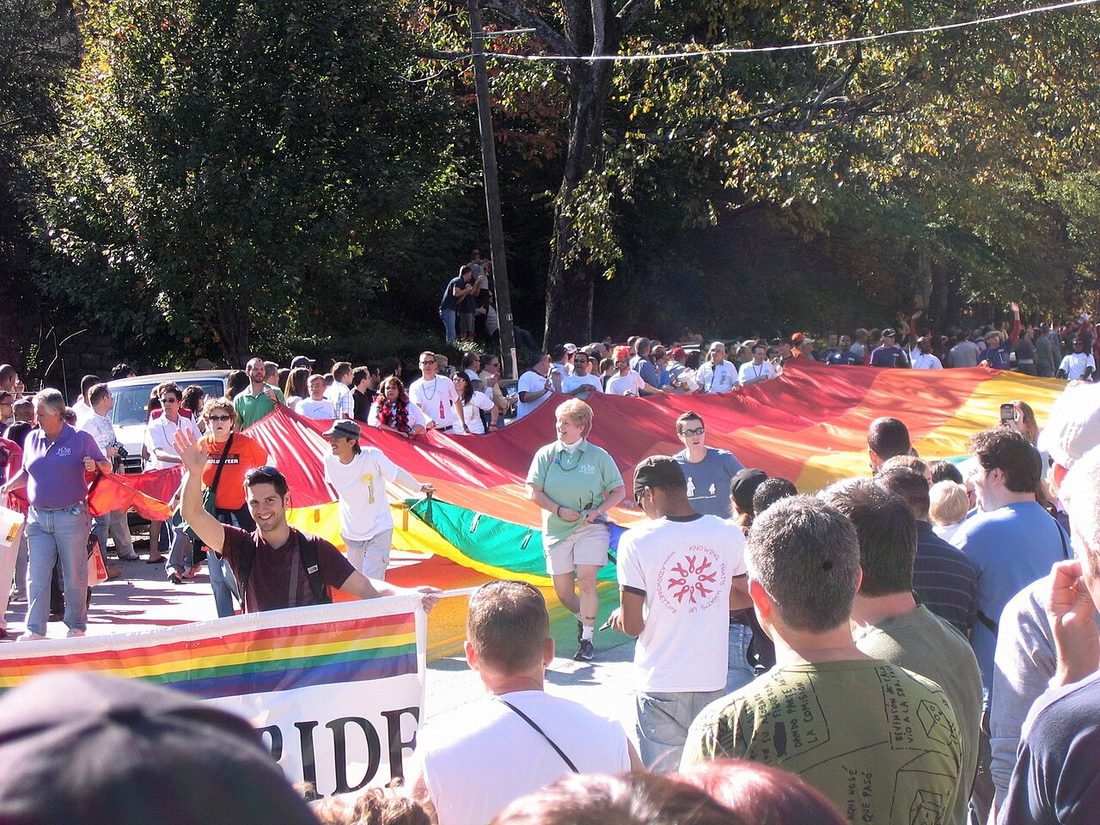
LGBTQIA+, letter by letter
Useful language
Words from the video
All eight appear in the video and in the reading. Click a word, then click its definition. Correct pairs turn green. The audio button says the word.
Complete the sentences
Click a word in the bank, then click a gap. Click a filled gap to clear it. Read the whole sentence: the clues are all there.

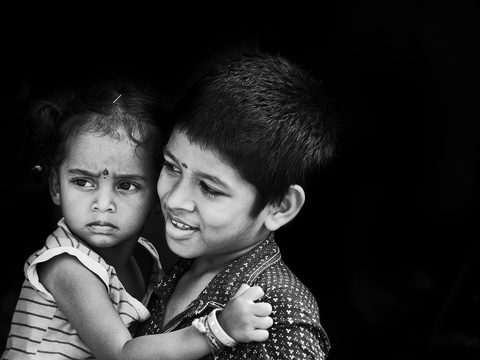 When the other kids laughed at my little sister, I had to
_____ her, so I told them to stop.
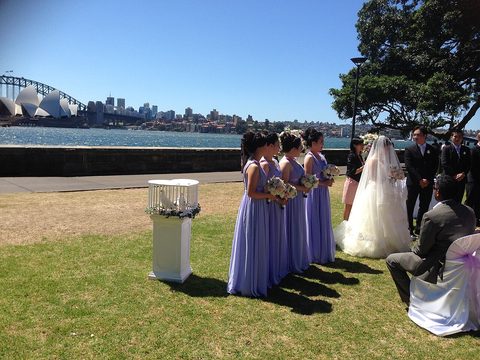 The wedding will
_____ in the garden if the weather is good, and in the hall if it rains.
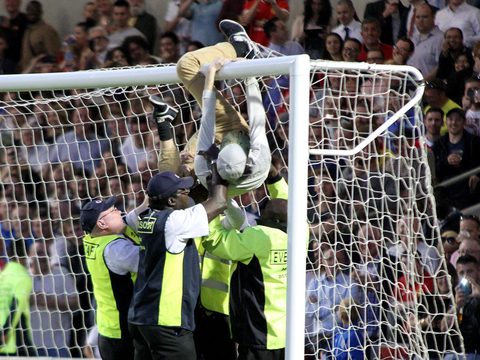 Two guards had to
_____ a fan who ran onto the field; he was still shouting when they got him to the exit.
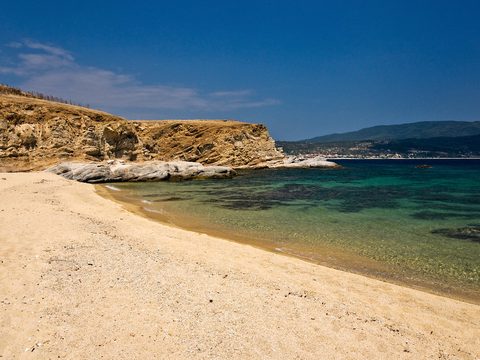 She wanted to sunbathe away from
_____, so she chose a quiet corner of the beach behind the rocks.
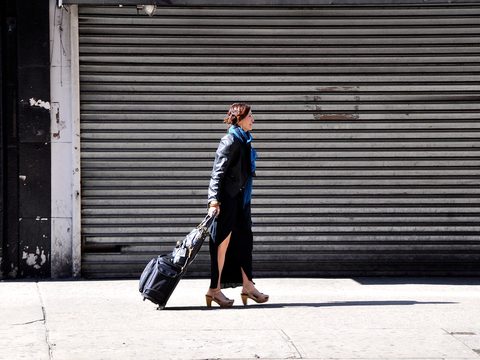 My cousin was tired of her quiet little town, so she packed a suitcase and moved to
_____, a huge city full of tall buildings and bright lights.
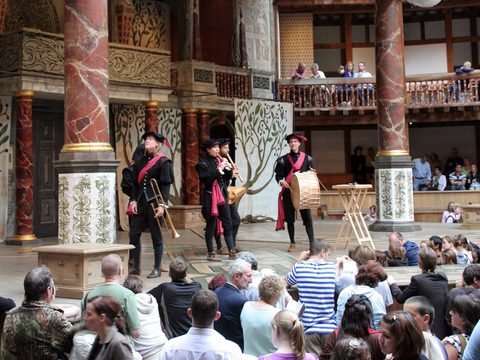 In Shakespeare's time,
_____ was normal on stage: young men played all the female roles, because women were not allowed to act.
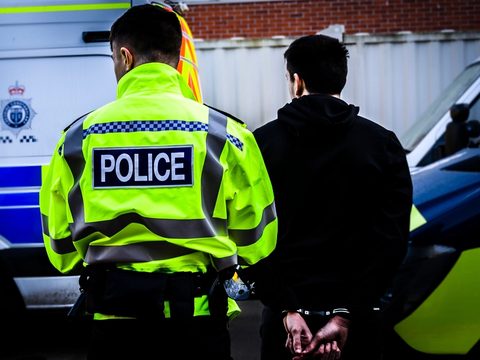 The officer locked the man's wrists together behind his back with a pair of
_____, so he could not fight back.
 Little by little, phones with buttons began to
_____ touch-screen phones, and today almost nobody buys a phone with buttons.
Six nights in June
Read the box, then watch the video: four and a half minutes, with captions. Then read the story, which retells the video in its own words. Passive verbs are in bold. Tap a dotted word to see what it means.
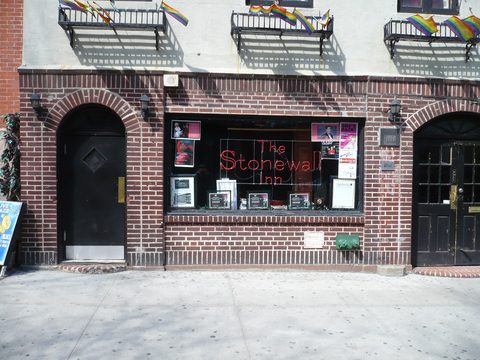
In the summer of 1969, the Stonewall Inn, a small bar in the Big Apple, was a rare safe spot where LGBTQIA+ people could relax together, away from prying eyes.
They needed a place like that because the law was against them. They had no right to marry or adopt children, and they were barred from the armed forces and federal jobs.
New York had gone even further. Under its rules, a bar could not sell alcohol to an LGBTQIA+ customer, and wearing the clothes of the opposite sex was against the law.
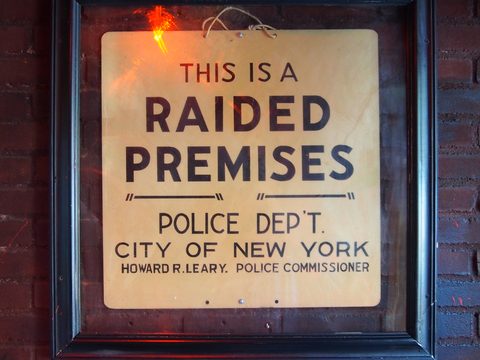
Because the bar was a well-known meeting place, the police raided it again and again. Officers came without warning and arrested whoever they could catch, so every night out was a risk.
The next raid took place on June 28, 1969, at about 1:00 AM. Officers flooded in, and staff, drag queens and cross-dressing patrons were put in handcuffs and hauled off to the station.
This time, however, nobody ran away. The customers stayed together on the sidewalk outside, and the noise soon brought neighbors out of their homes to join them.
Soon about 600 people were protesting in the street, angry at the police, the unfair laws and the way the community was treated. The unrest went on for six full nights.
News of the protest shocked the city first and then the rest of the country. In the newspapers, the event was called "the Stonewall Uprising," and it became a rallying cry for LGBTQIA+ rights.
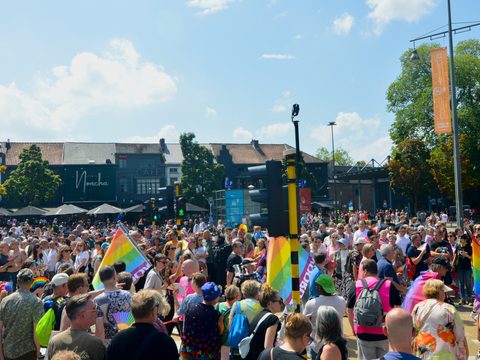
One year later, thousands filled New York's streets to commemorate the riot. That march is often called the first Pride parade, and Los Angeles, San Francisco, Boston and Chicago followed New York's lead.
Across the country, LGBTQIA+ people stood up for their rights as one community, and older groups gave way to stronger ones. Today, Pride Month is celebrated worldwide, because in many places people are still oppressed.
Multiple choice
The stamp shows the moment in the video. Click an answer and read why.

-
In 1969, what could LGBTQIA+ people in the United States not do? 00:20
The video lists four things: marriage, adoption, the military and federal jobs. Of the nine items in the before-you-watch box, it mentions six: get married, be served a drink, adopt children, cross-dress, serve in the military and work for the federal government. Boy Scout leaders, blood donation and medical decisions are not in the video.
-
In 1969, New York City had a rule about LGBTQIA+ people. What was illegal? 00:48
An "adult drink" is an alcoholic drink. The city's other rule was about clothes: dressing as a member of the opposite sex was illegal too. The video calls the rules ridiculous.
-
Why did the police visit the Stonewall Inn so often? 01:15
The bar was one of the few places where people could meet in private, so it became well known, and a well-known gathering place got regular visits from the police.
-
What happened at about 1:00 AM on June 28, 1969? 01:50
It started like any other night, with people talking, laughing and dancing. Around 1:00 AM the mood changed: the police came in, like many times before.
-
Who was arrested that night? 01:56
The officers grabbed as many people as they could, mostly the staff, drag queens and patrons in the clothes of the opposite sex. Not only the owner, and not everyone inside: whoever they could catch.
-
What was different this time? 02:08
In earlier raids, people left as fast as they could. This time, most of the patrons stayed and gathered outside the bar. That decision is the turning point of the story.
-
How many people joined the protest, and who were they? 02:17
The commotion brought residents from the nearby streets, and soon around 600 people were protesting against the police and the unjust laws. Not police officers: the protest was against them.
-
How long did the unrest last? 02:37
Things got intense, and the unrest went on for six full nights: not one night, and not six weeks. Long enough for the news to reach the whole country.
-
What name did the newspapers give the event? 03:00
The newspapers called it "the Stonewall Uprising." The video also calls it a riot; the Big Apple and Christopher Street are not part of the name.
-
What happened one year later? 03:09
In 1970, thousands marched to commemorate the riot. Many consider that march the first Pride parade, and Los Angeles, San Francisco, Boston and Chicago organized celebrations the same year. Nothing in the video says the bar was renamed or that the laws changed that year.
-
According to the video, what changed after Stonewall? 03:28
For the first time, LGBTQIA+ Americans saw themselves as a community that could fight together, and older organizations gave way to newer, more effective groups, like the GLF and the GAA. The laws did not change overnight.
-
Which sentence best summarizes the story?
The laws and the raids are the background; the heart of the story is the night nobody ran away, and what grew from it: Pride parades, then Pride Month around the world. The video never says the bar closed, or that a new law was passed in 1969.
Which word does the narrator say?
Choose the word you think is right first. Then watch the moment on the stamp and check. The explanation gives you the meaning.
-
"…faced all kinds of ___ and unfair discrimination…" 00:10
Overt means open and obvious, not hidden. The discrimination was written in the law, for everyone to see.
-
"They were ___ from working for the federal government." 00:27
To be barred from something is to be officially not allowed to do it. A passive: the government did the barring.
-
"Some cities ___ even stricter laws…" 00:37
To enact a law is to make it official. Stricter laws: those cities made things worse, not better.
-
"The rules were ridiculous and ___ oppressive." 00:59
Brazenly means openly and without shame. Barely and slightly would mean "only a little", the opposite of what the video says.
-
"They started ___ as many people as they could…" 01:56
To wrangle people is to round them up, like cattle: an informal word for grabbing and arresting.
-
"They were put in ___ and hauled off to the station." 02:04
Handcuffs, the word from Exercise 02. Put in handcuffs, then hauled off: two passives in one sentence, and the model sentence of Exercise 07.
-
"Instead of ___, most of the people from the Stonewall Inn gathered outside." 02:11
To flee is to run away from danger. Nobody fled, and that is why the night is remembered.
-
"Things got intense and the ___ lasted for six full nights." 02:37
Unrest is a period of angry protest and disorder. Six nights of it.
-
"The news sent a ___ across the city…" 02:42
A shockwave is the wave of energy after an explosion; here, the shock the news caused, first in the city and then in the whole country.
-
"…where LGBTQ+ people are routinely ___…" 04:20
To oppress people is to treat them cruelly and unfairly and take away their freedom, usually by those who have power over them. Routinely: as a normal, regular thing. That is the video's reason to keep showing support.
Passive voice
Three questions about a sentence from the video, then six more. Choose the option that fits.

The passive puts the action first. Subject + be + past participle: what happened, and to whom, before who did it. Use it when the doer is unknown, obvious or less important, and add by when the doer matters.
- Active to passive: A journalist took the photo. → The photo was taken (by a journalist). The object of the active sentence becomes the subject of the passive one.
- Every tense: is spoken (present simple) · was built (past simple) · has been sold (present perfect) · will be opened, can be seen, must be paid (modals).
- When we use it: the action or the person affected is the point, and the doer is unknown, obvious or unimportant. News and history love it: Same-sex marriage is now allowed in the UK.
- The doer, if you need it, comes after by: The song was written by two teenagers.
- Verb + preposition keeps its preposition: discriminated against, barred from, hauled off to.
- Not every -ed is passive: The concert lasted three hours is active. There is no be, and nobody did anything to the concert.
-
"They were put in handcuffs and hauled off to the station." This sentence is in the…
Were put, (were) hauled off: be + past participle, twice. The people did not put anything anywhere; it was done to them.
-
We form the ___ voice with subject + verb to be + past participle.
That is the formula of the passive. The active voice is subject + verb + object, with no be in front of the main verb.
-
In this case, the narrator used the passive voice to…
We know who did it (the police, in the sentence before). The point is what happened to the people: handcuffs, the station. The action and its victims come first, so the doer disappears.
-
Which sentence is in the passive voice?
Was raided: be + past participle, and the doer after by. Were raiding looks similar but is the past continuous, active: the police were doing it.
-
Pride Month ___ in June.
A month does not celebrate anything; people celebrate it. Present simple passive: is + celebrated.
-
In 1969, LGBTQIA+ people ___ from federal jobs.
Past simple passive: were + barred. The government barred them; they did not bar anyone.
-
The first Pride parade ___ in New York in 1970.
Hold a parade = organize it. The parade was held by the people who marched, so the parade takes the passive: was held.
-
Which sentence is NOT in the passive?
Gathered ends in -ed, but there is no be in front of it. The patrons did the gathering: past simple, active.
-
Since 1969, many unjust laws ___ by the courts.
Since 1969 asks for the present perfect, and by the courts asks for the passive: have been + changed.
Put the words in order
Write the whole sentence. Every sentence is in the passive: find be and the past participle first, then build around them.
-
abrave / be / were / forced / to / patrons
-
bvoice / is / the / used / passive / frequently
-
copen / had / left / window / the / been
-
dagainst / people / are / discriminated / LGBTQIA+ / still / often
-
ewas / a / parade / in / held / pride / San Francisco
-
fknown / rights / is / the Stonewall Uprising / for / its / importance / in / advancing / gay
-
gregularly / the bar / was / by / raided / the police
-
hwere / to the station / hauled off / the patrons / that night
Write the passive form
Use the verb on the left in the passive. Read the whole sentence first: the time words and the modals tell you which tense. Short forms are fine.

-
holdToday, Pride parades ___ in many cities around the world every June.
-
rememberNext June, the Stonewall Uprising ___ again at Pride events around the world.
-
arrestSeveral people ___ by the police that night, but this time nobody ran away.
-
putThe suspect ___ in handcuffs before he was taken to the station.
-
formAfter 1969, new groups ___ to fight for equal rights.
-
winSince Stonewall, many rights ___ by LGBTQIA+ activists, but the fight is not over.
-
not allowIn some countries, same-sex couples ___ to marry yet.
-
respectEvery person's rights must ___, whoever they are.
Talking point
Part A is about the video, Part B is about your world, and Part C is for your opinions. Use the passive whenever the action matters more than the doer: was changed, are respected, should be taught.
Useful language
A news report in the passive
60–100 words. Think of a recent news event, real or imaginary, and write it as a short news report with at least five passive verbs (was approved, has been opened, will be built…). Example: Same-sex marriage is now allowed in the UK. Then read it to the class.

My results
Check your score, then copy it and send it to your teacher on WhatsApp.

One job for this week. Every day, read one headline and say it in the passive: a new law was approved, the game was canceled, the bridge will be reopened. Seven headlines, and the passive is yours.