How to Know If You Should Quit Your Job
A YouTuber who quit his own job walks through four questions from a bestselling career book: are you happy and learning, what's the job after the next job, will you use your strengths, and what if the problem is your manager? With a review of can, could, may, might and will, and the nouns hiding inside adjectives.
Warm-up
Talk with a partner, or with me. Tap a card when you have answered it.

Should you stay or should you go? Today's decision is a hard one. First, six reasons on a spidergram; then one book, four questions, and the small verbs that say how sure you are: might, may, could, will.

Useful language
Words from the video
All eight appear in the reading. Click a word, then click its definition. Correct pairs turn green. The audio button says the word.
Complete the sentences
Click a word in the bank, then click a gap. Click a filled gap to clear it. Read the whole sentence: the clues are all there.

 He painted the ceiling standing on a tall
_____, and his wife held the bottom so it wouldn't slip.
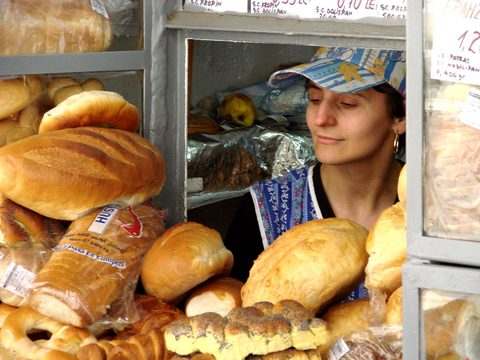 After ten years at the same company, she finally
_____ and opened her own bakery.
 The restaurant was so
_____ that the waiters wore white gloves and the menu had no prices.
 My
_____ is paid on the twenty-fifth of every month, so the week before it is always the hardest.
 Her new business card says "Head of Customer Experience": a long
_____ for the same work she did before.
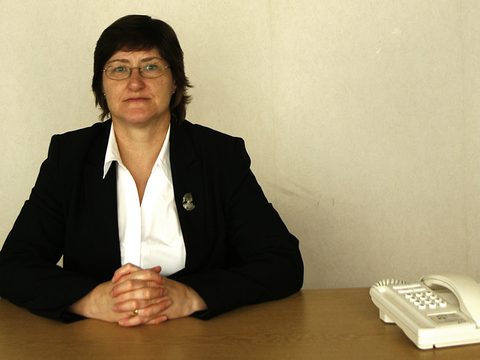 If you need a day off, don't ask me. Talk to your
_____: she is the one who approves the schedule.
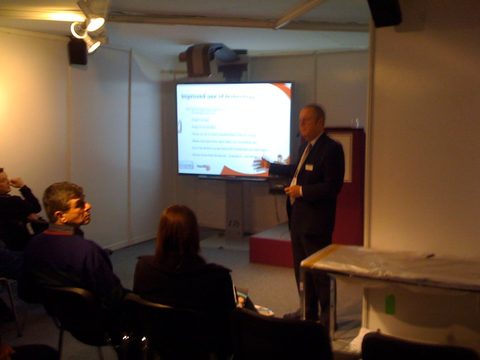 After the presentation, my colleagues gave me honest
_____: speak slower and use fewer slides.
 It took a lot of
_____ to jump from the ten-meter platform, but once she was in the water she laughed.
Stay or go?
Watch the video first, with the captions on: six minutes. Take notes under each of the four questions and compare them with your predictions. Then read the story. The modal verbs are highlighted; hover or tap a dotted word to see what it means.
When YouTuber Tintin Smith quit his own job, he found the decision really hard. So he made a short video with four questions to help other people decide for themselves.



The questions come from The Squiggly Career, a book whose cover invites readers to ditch the ladder and design their own careers. The first one is simple: are you happy and learning?
People who are both happy and learning might want to stay where they are. But when one of the two is missing again and again, it might be time to look for something new.
Being happy at work does not mean smiling every minute. It means most of your days are good ones. Learning matters just as much, because new knowledge gives people a sense of purpose.
The second question looks further ahead: what's the job after the next job? When Tintin quit, he had tutoring, part-time work and YouTube videos lined up, all leading him toward a career in education.
He did not know his exact destination, only the direction. For people who feel uncertain about their future, his advice is simple: try more things, then think carefully about what each one taught you.
Question three asks: will you use your strengths and live your values? The book warns about shiny objects: a high salary, a nice office, a fancy job title. They distract you from what matters.
Values could be freedom, achievement or variety. If you know yours, ask whether the next job will offer them. And there is evidence that using your strengths every day makes you feel fulfilled.
The last question is about people: do you love your job but not your manager? According to research, seventy percent of how engaged you feel at work depends on your boss.
The book suggests giving the relationship time, then giving your manager feedback: stressful, but you learn whether they are open to it. Either way, deciding takes courage, and even a wrong decision teaches you something.
Multiple choice
The stamp shows the moment in the video. Click an answer and read why.

-
How does Tintin describe his own decision to quit his job? 00:06
"I quit my job earlier in the year and it was really difficult." That hard experience is the reason for the video: four questions to make the decision easier for other people.
-
According to the first question, what should you do if you are both happy and learning? 00:25
Yes to both means you might consider staying. For some people the answer keeps being yes, and they stay in the same job for quite a while.
-
Does "happy" mean happy all the time? 00:38
Nobody feels happy every minute at work; what counts is that most days are good. Learning matters for a reason too: people love learning new things, and it gives them a sense of purpose.
-
When does Tintin say it might be time for a move? 00:55
Consistently: again and again, not one bad week. If you are not regularly happy or learning, staying is not a good idea.
-
What did Tintin have lined up when he quit? 01:08
His own example for question two. It wasn't a full-time job, but each of those activities was preparing him for a future in education: he knew the direction, not the exact job at the end of it.
-
What is his short answer for people who feel uncertain about their future career? 01:44
His short answer: try more things. If you are still unsure, you probably haven't experienced enough yet, or you haven't thought carefully about the experiences you have had. For more help, he points to his own playlist on figuring out what to do with your life.
-
What are "shiny objects", in the book? 02:18
Shiny objects are attractive features of a job, not things you buy. They distract you from the real question: will you use your strengths and live your values?
-
Which three values does Tintin give as examples? 02:31
If those are your values, you can ask: will this job let me make my own choices, help me reach my goals, and make each week a little different? Knowing what is important to you lets you decide based on it.
-
What does the research about managers say? 03:21
Engagement is how interested and involved you are in your work, and seventy percent of it is determined by the person you work for. The video says nothing about how many managers are engaged.
-
What two things do the authors suggest if you love your job but not your manager? 03:38
Feedback is stressful, but you learn whether your manager is open or closed to it. If they are closed, progress is hard, and a new job may be the better choice.
-
What does Tintin say about the uncertainties of the future? 04:58
Uncertainty is part of every life. Evaluate what you can, make a decision you feel comfortable with, and be brave enough to act on it; if it goes wrong, you learn from it. His last tip: imagine it all working out.
-
Which sentence best summarizes the video?
Happy and learning, the job after the next job, strengths and values, and the manager: four questions, one decision. The video never says "quit now", and it calls a high salary a shiny object.
Nouns made from adjectives
Five families from the video: stressful / stress, varied / variety, strong / strength, uncertain / certainty, free / freedom. Complete each sentence with the other member of the family of the word in capitals. The placeholder tells you whether you need the noun or the adjective.
-
STRESSThe last week before a deadline is always the most ___ of the month.
-
VARIEDIn her new job every day is different, and she loves that ___.
-
STRONGListening to people is her greatest ___: she remembers every detail of a conversation.
-
CERTAINTYI'm still ___ about the new schedule; nobody has confirmed it yet.
-
FREEWorking from home gives me the ___ to start early and finish early.
-
STRESSFULToo much ___ at work can make you sick.
-
VARIETYThe menu is really ___: pasta, sushi, tacos, even Ethiopian food.
-
UNCERTAINAfter three interviews, I finally have some ___ about my future: I start on Monday.
Now five sentences from the video. Click a word in the bank, then click a gap: the sentence tells you which member of the family fits.
- Is it going to give me the _____ to do the things that I want?
- It can be really difficult to know what the next job might be, especially if you're really _____ about your future career.
- Trying to give feedback to your manager can be super _____.
- I had _____ roles lined up in education.
- When you feel like you've used your _____ throughout the day, this just means that you're getting the chance to do things that you think you're good at.
Review of modals: can, could, may, might, will
Five sentences from the video, then three more. For each one, choose what the modal verb is doing.

Five small verbs, one rule. The verb after a modal never changes: no to, no -s, no -ed. What changes is the attitude: how sure you are, whether it is allowed, whether you could do it back then, and what you decide right now.
- can — permission, possibility, ability, requests. can / can't / Can + subject + verb? — It can be really useful. · You can't use your phone during the test.
- could — past of can, polite requests, hypothetical situations. could / couldn't / Could + subject + verb? — Values that you could have are freedom, achievement and variety. · I couldn't sleep last night.
- may — a high degree of probability. may / may not / May + subject + verb? — Things may just continue to be yes. Also the formal way to ask permission: May I come in?
- might — a lower probability. might / might not / Might + subject + verb? — It might be time to reconsider your job.
- will — future possibilities, predictions, offers and instant decisions. will / won't / Will + subject + verb? — If you are able to do it, then you will learn something. · The phone's ringing. I'll get it.
- be able to does the job of can where can has no form: after to or in the future. I want to be able to choose. · You'll be able to decide.
-
"It might be time to reconsider your job." Here, might expresses…
A soft suggestion: maybe it is time, maybe not. Might keeps the door open.
-
"Things may just continue to be yes, and in that case these people stay in their jobs for quite a while." Here, may expresses…
Probable, not certain: for some people, the answer to both questions keeps being yes. In the table, may is a step more likely than might.
-
"It can be really useful when we're thinking about our next job." Here, can expresses…
Something is possible in general: thinking about the job after the next job is sometimes useful. Nobody is asking for anything or allowing anything.
-
"Values that you could have are freedom, achievement and variety." Here, could expresses…
Imagine your values were these three: a hypothetical example, in the present. Nothing happened in the past, and nobody is asking a favor.
-
"If you are able to do it, then you will learn something." Here, will expresses…
The result of giving feedback: you will learn whether your manager is open or closed to it. Are able to, in the if-clause, means can.
-
"Could you give me some feedback on my presentation?" Here, could expresses…
Could you…? is a softer, more polite Can you…?. The presentation already happened, but the request is about now.
-
"When I was twenty, I couldn't decide what I wanted to do." Here, couldn't expresses…
When I was twenty puts the sentence in the past: I was not able to decide back then.
-
"Sorry, you can't bring food into the library." Here, can't expresses…
A rule: it is not allowed. Anybody is able to carry a sandwich, so it is not about ability.
Can, can't, could or couldn't?
Complete each sentence with can, can't, could or couldn't. Read the whole sentence first: the other verbs tell you whether it is present or past, and the meaning tells you whether it is positive or negative.
-
aYou ___ park here, it's forbidden.
-
bJohn ___ go to the party because he was too busy.
-
cShe doesn't have her swimsuit, so she ___ go into the pool.
-
d___ you ride a bike when you were seven?
-
ePaola is a ballerina, so she ___ dance very well.
-
fI ___ come to the meeting tomorrow: I have a doctor's appointment at the same time.
-
gMy grandmother ___ speak three languages when she was a child, but she has forgotten two of them.
-
hWe ___ finish the report last night because the system was down.
Rewrite with a modal
Say the same thing with may, might, can, could or will, and keep the rest of the sentence. Follow the table: may for a high degree of probability, might for a lower one (both are accepted; the answer shown first is the school's), can for ability and permission, could for past ability, will for an instant decision.

-
aIt's possible that my family and I travel to Canada next month.
-
bThey have the ability to play really well.
-
cIt's highly possible that we buy a new car at the end of this year.
-
dIt's very cold here. I want to turn on the heater. → It's very cold here. ___
-
eHe didn't go with his friends because he didn't know how to swim.
-
fIt's not permitted to take photos here.
-
gIt's possible that we buy the tickets to the concert tonight.
-
hIt's highly possible that Andrew is at the party on Saturday.
Talking point
Part A is about the video, Part B is about you, and Part C is for your opinions. Use a modal whenever you can: I might…, it could be…, I'll probably…
Useful language
Your own career video
80–120 words. Imagine you are uploading a video about choosing a career or quitting a job to your YouTube channel. Choose the topic, then write your script: ask and answer two questions about it, with at least three modal verbs. Review your notes, then present the script to the class as if you were recording the video.

My results
Check your score, then copy it and send it to your teacher on WhatsApp.

One job for this week. Every day, ask yourself the first question, "am I happy and learning?", and answer in English with a modal: I might…, I could…, I'll… Seven answers, one honest week.